

The distances in Myanmar are deceptive. On a map, Yangon, Mandalay, Bagan and Inle Lake sit close enough to feel like a single easy loop. On the ground, mountains, rivers and the realities of the road stretch those distances into full travelling days. Moving between the accessible core-circuit hubs is one of the most rewarding parts of a slow journey here, but it rewards planning rather than improvisation. This is a practical, honest guide to how travellers actually get around the country's central circuit: by air, by road, by river and by rail.
Slow travel does not mean rushing to fit everything in. It means choosing the right mode for each leg, leaving room in the schedule, and treating the journey itself as part of the experience rather than dead time between sights. A ten-hour boat down the Ayeyarwady is not a delay; it is one of the trip's highlights. Before you fix any of this in stone, it is worth deciding where you actually want to go and when, because the season shapes every transport decision that follows.
Domestic Flights: The Backbone of the Core Circuit
For most visitors, domestic flights are the practical spine of a Myanmar itinerary. The core circuit connects four main airports: Yangon (RGN), Mandalay (MDL), Nyaung-U for Bagan (NYU) and Heho for Inle Lake and Kalaw (HEH). Flying between them turns what would be a punishing overland day into a hop of roughly an hour or less, which is why almost every classic loop leans on at least one or two flights.
Several domestic carriers operate these routes, including Myanmar National Airlines, Air KBZ, Mann Yadanarpon Airlines and Golden Myanmar Airlines, among others. Between them they link Yangon with Mandalay, Bagan and Heho, and connect the northern hubs to each other, so you can string together legs such as Yangon to Bagan, Bagan to Mandalay and Mandalay to Heho. Schedules cluster heavily in the morning, with many flights departing soon after dawn, so an early flight day usually means an early start.
A few things are worth knowing before you rely on flights. Timetables and the roster of active airlines change from season to season, so a route that ran last year may not run this year, and departure times are adjusted with little notice. Aircraft are often smaller turboprops, baggage allowances can be modest, and some flights make an intermediate stop, so confirm whether your leg is direct. None of this is cause for alarm; it simply means you should verify current schedules close to your travel dates rather than trusting older information.
One request. Up to five tailored proposals.
Skip contacting agencies one by one — share your trip once and let up to five trusted Myanmar agencies come to you. Free, with no obligation.
Get my free quotesBooking Flights and the Cash Economy
Booking domestic flights in Myanmar is not always the seamless online experience travellers are used to elsewhere. International cards frequently fail on local airline websites, and the payment infrastructure that many countries take for granted can be patchy. In practice, most travellers book domestic flights through a local travel agent or tour operator, who holds seats, confirms the current schedule, issues the ticket and handles payment. It is usually cheaper in stress, if not always in fare, than fighting an unfamiliar booking portal.
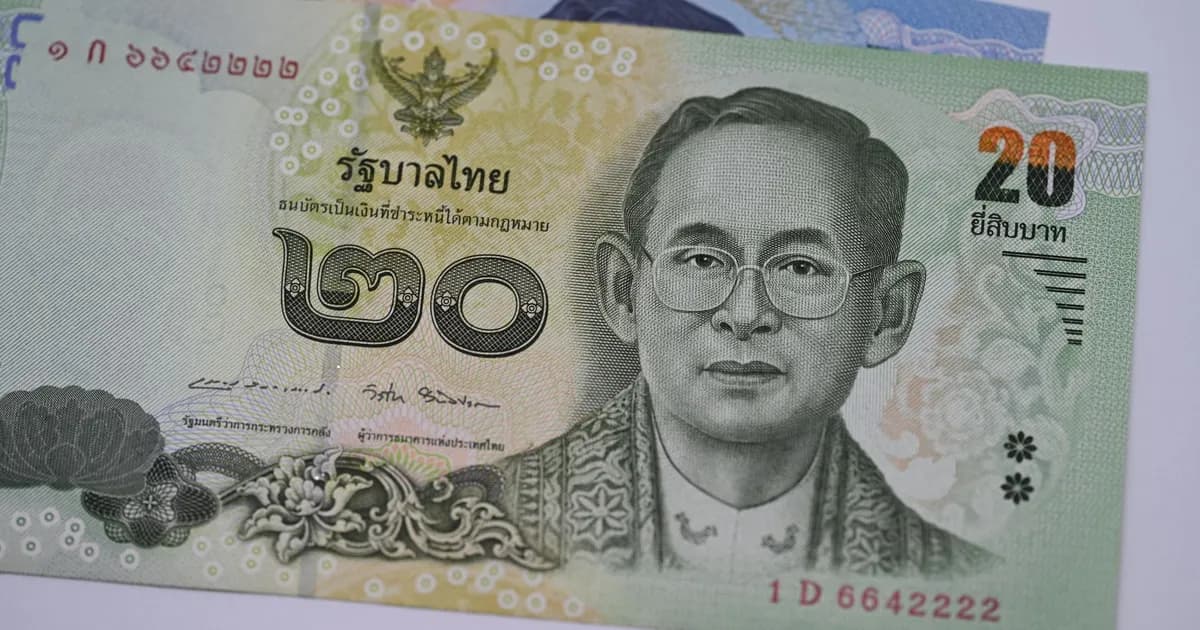
This connects to a larger point about how Myanmar works day to day: it remains a heavily cash-based country. Tickets, entrance fees, boats, taxis and much else are commonly settled in cash, and access to reliable card payments and functioning ATMs cannot be assumed. Bring enough clean, undamaged notes for the trip, keep a sensible reserve, and plan your cash on the same timeline as your transport. Our Myanmar budget guide goes into how to plan and carry money sensibly, and it is worth reading before you lock in flights.
Book internal flights earlier than you might elsewhere, particularly across the October to March high season, when popular morning departures fill and choice narrows. A good operator will also tell you honestly when flying is genuinely the better option and when a road or river leg would serve you better.
VIP Overnight Buses and the Expressways
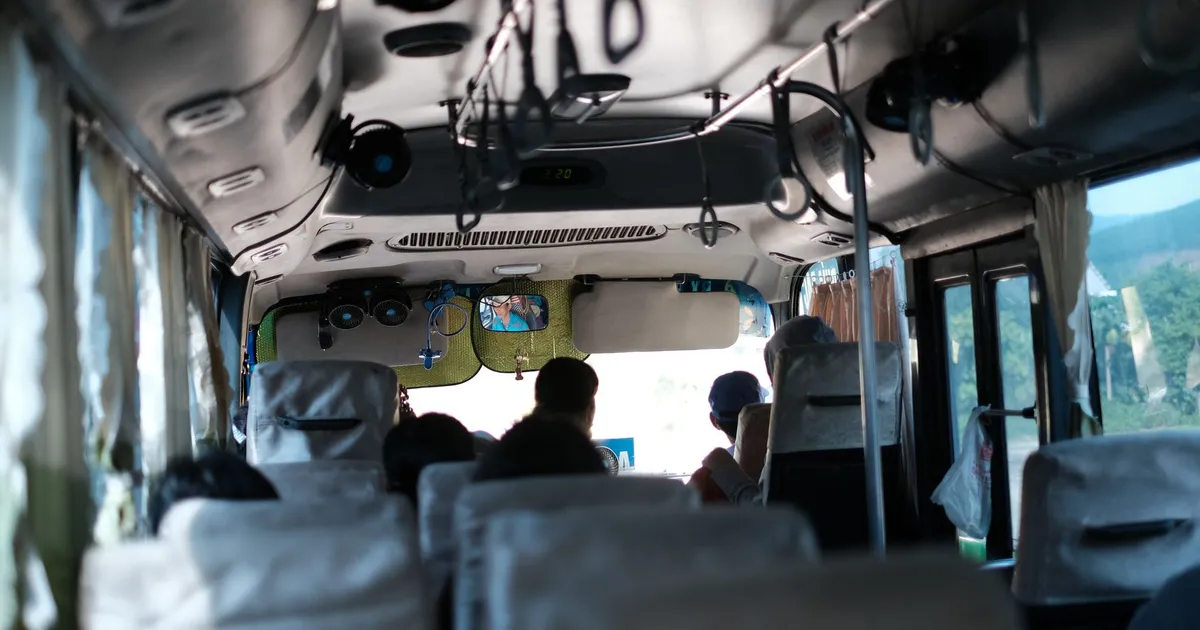
Long-distance buses are the workhorse of domestic travel, and the better ones are far more comfortable than newcomers expect. The best-known operator on the tourist circuit runs so-called VIP coaches with a 2x1 seat layout, generously reclining seats, blankets, an attendant, and snacks or a meal along the way. These buses connect Yangon, Mandalay, Bagan and the Inle gateway towns, and they are a popular, economical alternative to flying.
The overnight service is the classic choice for the long Yangon to Mandalay run. You board in the evening, settle into a wide seat, and arrive in the morning, saving both a travelling day and a night's accommodation. For the vast majority of that route you travel on the expressway, one of the better-quality roads in the country, which has made this corridor markedly faster and smoother than it once was. Bring a warm layer, because the air conditioning runs cold, and an eye mask, because interior lights and rest stops interrupt the night.
Buses are not perfect for every leg. Rest stops in the small hours are frequent, mountain roads to hill destinations are slower and windier than the flat expressway, and arrival times are approximate rather than exact. For shorter hops or for travellers who simply want to watch the landscape roll by, though, a good bus is comfortable, sociable and a fraction of the cost of flying. It is also a far greener way to cover ground, which matters if you are travelling with a lighter footprint in mind.
Get matched with up to 5 trusted Myanmar agencies
- Free
- No obligation
- Up to 5 agencies
The Mandalay–Bagan River Boat
If there is one journey worth slowing down for, it is the river boat between Mandalay and Bagan along the Ayeyarwady. This is the classic Myanmar voyage, and it is the rare case where the transport is the attraction. The river is the country's great central artery, and drifting along it past sandbanks, riverside villages, working fishing boats and distant pagodas is a very different experience from watching the same distance blur past a bus window.
Journey times depend on the direction and the vessel. Downstream from Mandalay to Bagan runs with the current and is faster, while the upstream return takes longer. Faster express boats cover the route in roughly a day, typically leaving at dawn and arriving in the late afternoon, while slower ferries and multi-day cruise boats stretch the same water into an unhurried voyage with stops along the way. There is a whole spectrum of vessels, from simple local ferries to boutique teak cruisers, so you can match the boat to your budget and pace.
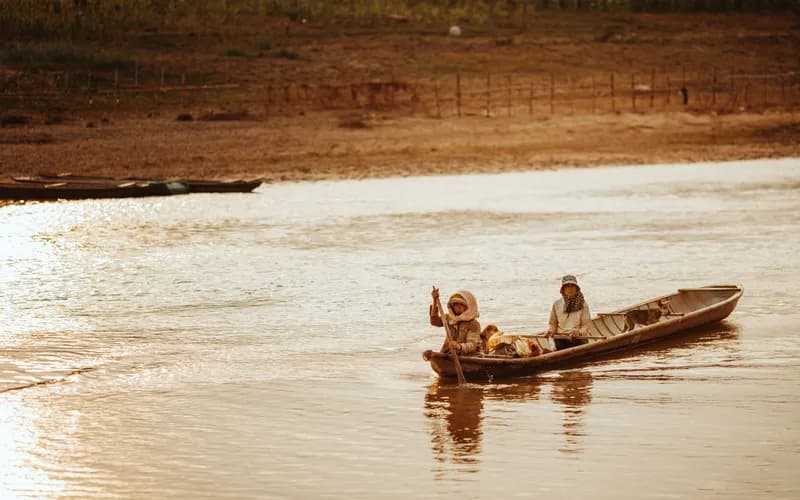
A few practicalities matter. Boats run most reliably in the October to March high season, when the river is busiest and schedules are firmest; in the low-water months some services thin out or pause. Departures are early, seating on the simpler boats can be basic, and you should bring sun protection, water and snacks for a long day on the water. Book ahead in peak season, because the better boats fill. For ideas on weaving a river day into a wider route, see our slow traveller's guide to where to go and when, which maps the circuit season by season.
Trains: Slow, Scenic and for the Patient
Myanmar's railway is not the way to save time, and no one should board expecting speed or punctuality. Trains are slow, they sway and bounce on aged track, and delays are normal rather than exceptional. What the railway offers instead is atmosphere and scenery, and for travellers with time and patience, certain stretches are genuinely memorable.
The most celebrated is the line east of Mandalay through the hills, which climbs to the old British hill town of Pyin Oo Lwin and continues towards Hsipaw. Along the way it crosses the Gokteik viaduct, a soaring early-1900s steel trestle set high above a forested gorge, one of the country's great engineering landmarks and a genuinely dramatic crossing. Many travellers ride only this scenic segment rather than a full long-distance line, joining and leaving at the towns that bracket the best of the views.
Set expectations accordingly. Carriages are simple, seats are hard, and journeys take far longer than the equivalent road trip. Availability of specific services and the accessibility of particular routes vary and can change, so treat the train as an experience to be enjoyed for its own sake, confirmed locally in advance, rather than as reliable transport between fixed appointments.
Getting Around Town: Taxis, Pick-ups, E-bikes and Horse Carts
Once you arrive in a hub, getting around locally is straightforward and often charmingly low-tech. In Yangon and Mandalay, metered or negotiated taxis are the easy default, and ride-hailing apps operate in the larger cities. Agree the fare or confirm the meter before you set off, and carry small notes, since drivers rarely have change for large bills.
Beyond the cities the options get more characterful. Shared pick-up trucks, with passengers on benches in the back, are the local workhorse for short intercity and rural hops and cost very little. In Bagan, electric bikes, known locally as e-bikes, are the signature way to explore the temple plain at your own pace, quietly and without a guide hovering; they are simple to ride and widely rented. Bagan is also where you may still find horse carts, a slower and more traditional way to move between temples. Around Inle Lake, long-tail boats are the main means of getting across the water to villages, markets and workshops.
For these local legs, a little local knowledge goes a long way, and a good operator or guesthouse can arrange a reliable driver, boat or bike far more smoothly than you can cold. If you want to build a trip that leans into these unhurried, ground-level ways of moving, our guide to off-the-beaten-path Myanmar is a good place to start.
Planning Around Restrictions and Changing Conditions
There is one honest, practical caveat that shapes all of the above, and it deserves plain language rather than either alarm or evasion. Overland travel and access in Myanmar can change. Some regions and roads are restricted or closed to visitors, permits are required in certain areas, and the accessibility of particular overland routes and services shifts over time. This is a normal part of planning a trip here, not a reason to abandon one; the accessible core circuit of Yangon, Mandalay, Bagan and Inle remains the well-trodden heart of most itineraries.
The single most useful habit is to verify current conditions close to your travel dates with a reputable local operator rather than relying on older guidebooks or blog posts, however good. A local specialist knows which routes are open, which flights are actually running this season, whether a given road leg is advisable, and how to sequence your legs so the plan holds together. That local, current knowledge is worth far more than any generic timetable.
Build slack into the schedule so a cancelled flight, a slower boat or a changed route does not topple the rest of your trip. Keep your plans a little flexible, keep a cash buffer, and lean on people who are on the ground. Handled this way, moving around Myanmar becomes part of the pleasure of a slow journey rather than a source of stress.
What to Do Next
- Decide your route and season first, then choose transport to fit. Start with our slow traveller's guide to where to go and when so the shape of the trip drives the logistics, not the other way round.
- Sketch which legs are best flown, which suit a VIP bus, and where a river day earns its place. Aim for a mix rather than defaulting to flights for everything.
- Plan your cash alongside your transport, since tickets and fares are commonly paid in cash. Read the Myanmar budget guide before you book.
- Confirm current flight schedules, boat departures and route accessibility close to your dates, not months out, because they change.
- Ask a reputable local operator to hold flights and boats, confirm what is running this season, and advise on any restricted areas. Browse vetted Myanmar travel agencies or start with plan your journey.
- Build in buffer days so a changed schedule never forces you to rush.
Frequently Asked Questions
What is the main way to travel between Yangon, Mandalay, Bagan and Inle Lake?
Domestic flights are the practical backbone for most visitors, linking Yangon, Mandalay, Nyaung-U for Bagan and Heho for Inle in roughly an hour per leg. Many travellers combine one or two flights with a VIP overnight bus and the classic river boat, choosing the right mode for each leg rather than flying everything.
How do I book domestic flights, and can I pay by card?
International cards often fail on local airline websites, so most travellers book through a local travel agent or tour operator who confirms the current schedule, issues the ticket and handles payment. Myanmar remains a heavily cash-based country, so bring enough clean notes and do not assume reliable card payments or ATMs.
Is the Mandalay to Bagan river boat worth it?
For travellers with a spare day, yes. It is the classic Myanmar voyage and one of the rare cases where the transport is itself a highlight. Faster express boats run the route in roughly a day downstream, while slower ferries and multi-day cruises stretch it out. Boats run most reliably in the October to March high season, so book ahead.
Are the overnight VIP buses comfortable?
The better operators run genuinely comfortable coaches with wide reclining seats, blankets, an attendant and refreshments, and much of the Yangon to Mandalay run is on a good expressway. Bring a warm layer for the strong air conditioning and an eye mask for the interior lights and rest stops.
Can I take a scenic train, such as over the Gokteik viaduct?
Yes, the hill line east of Mandalay through Pyin Oo Lwin towards Hsipaw crosses the dramatic Gokteik viaduct and is prized for its scenery. Trains are slow and often delayed, so ride them for the experience rather than to save time, and confirm current services locally before you plan around them.
How do I get around once I arrive in each town?
Taxis and ride-hailing apps cover the bigger cities, shared pick-up trucks handle cheap short hops, e-bikes and sometimes horse carts are the way to explore Bagan's temples, and long-tail boats cross Inle Lake. Agree fares in advance and carry small notes for change.
Are some areas restricted or hard to reach overland?
Yes. Some regions and roads are restricted or closed to visitors, permits apply in places, and overland access can change over time, though the core circuit of Yangon, Mandalay, Bagan and Inle stays well travelled. Verify current conditions close to your dates with a reputable local operator rather than relying on older sources.