
In March 2026 two things happened within days of each other in Myanmar: the electricity ministry announced rotating power cuts across the country, and most domestic airlines suspended the bulk of their flights because there was not enough jet fuel. Both were symptoms of the same squeeze, and both have continued to shape daily logistics since. This is a time-sensitive update, accurate as described to September 2026, written for people who already have a legitimate reason to be in the country and for those following the situation closely. It is not an argument that travel is advisable.
The Advisory Frame Comes First
Myanmar has been under military government since the coup of February 2021. Armed conflict continues across multiple states and regions, martial law applies in parts of the country, conscription has been enforced since 2024, and consular assistance is limited. As of September 2026, France discourages travel to Myanmar and formally advises against travel to large parts of it, while the United States, United Kingdom, Canada and Australia maintain advisories against all or non-essential travel.
Energy disruption is a logistics problem layered on top of a security and humanitarian one, not a standalone inconvenience. Read your own government's position in full, and see our companion briefing on what the advisories say and how to check them before treating anything below as a plan.
One request. Up to five tailored proposals.
Skip contacting agencies one by one — share your trip once and let up to five trusted Myanmar agencies come to you. Free, with no obligation.
Get my free quotesWhat Happened in March 2026
On 18 March 2026 the Ministry of Electric Power announced rotating outages nationwide, scheduled to run through at least June. Reported figures put national daily demand at around 4,664 megawatts against roughly 3,600 megawatts of generation and distribution capacity, and residents of major cities described far longer outages than that arithmetic alone would suggest.
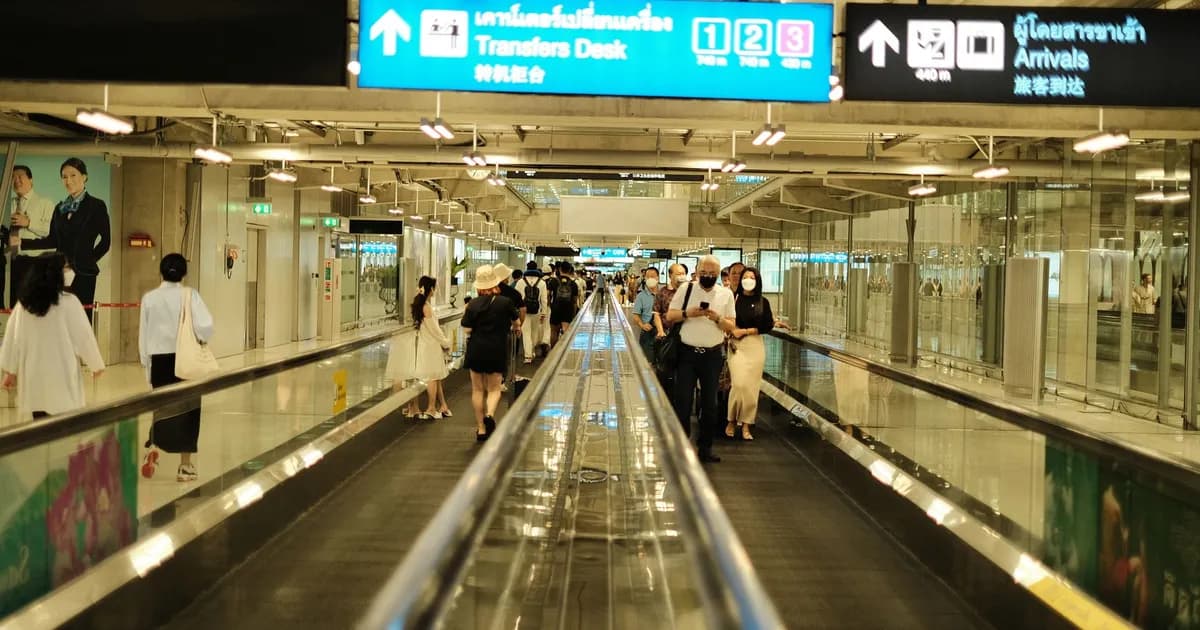
Two days later, on 20 March, carriers including Myanmar Airways International, Myanmar National Airlines, Mingalar Airline, Air Thanlwin and Mann Yadanarpon began suspending domestic services to ration critically low aviation fuel. Routes such as Yangon to Heho and Mandalay to Tachileik became unavailable across all operators, with only the Mandalay to Yangon corridor partially running. The transport ministry announced that full domestic operations resumed on 25 March 2026, after roughly four days. International services to Bangkok and Singapore were reported to have continued throughout.
Why the Squeeze Happened
The proximate trigger was an external shock: global fuel supply disruption linked to conflict in the Middle East, which raised prices and tightened availability across Asia. Several countries in the region saw flight cancellations for the same reason.
The underlying vulnerability, however, is domestic and long-standing. Myanmar's generation mix leans heavily on natural gas and hydropower, both of which have faced supply and maintenance problems since 2021. Grid infrastructure has been damaged in conflict areas. Foreign investment and technical support have withdrawn. Diesel is needed both for generators and for transport, so a fuel shortage and a power shortage reinforce one another. That is why a temporary external shock produced such a sharp local effect.
Get matched with up to 5 trusted Myanmar agencies
- Free
- No obligation
- Up to 5 agencies
Fuel Rationing and Road Transport
Fuel rationing has become routine rather than exceptional. Reported measures have included odd-and-even purchase days, quota systems administered by QR code, and caps on the value of fuel that can be bought per visit. Queues form overnight at stations in Yangon and Mandalay. Prices reached post-coup highs during 2026, with reported increases of over fifty percent for petrol and over seventy percent for diesel.
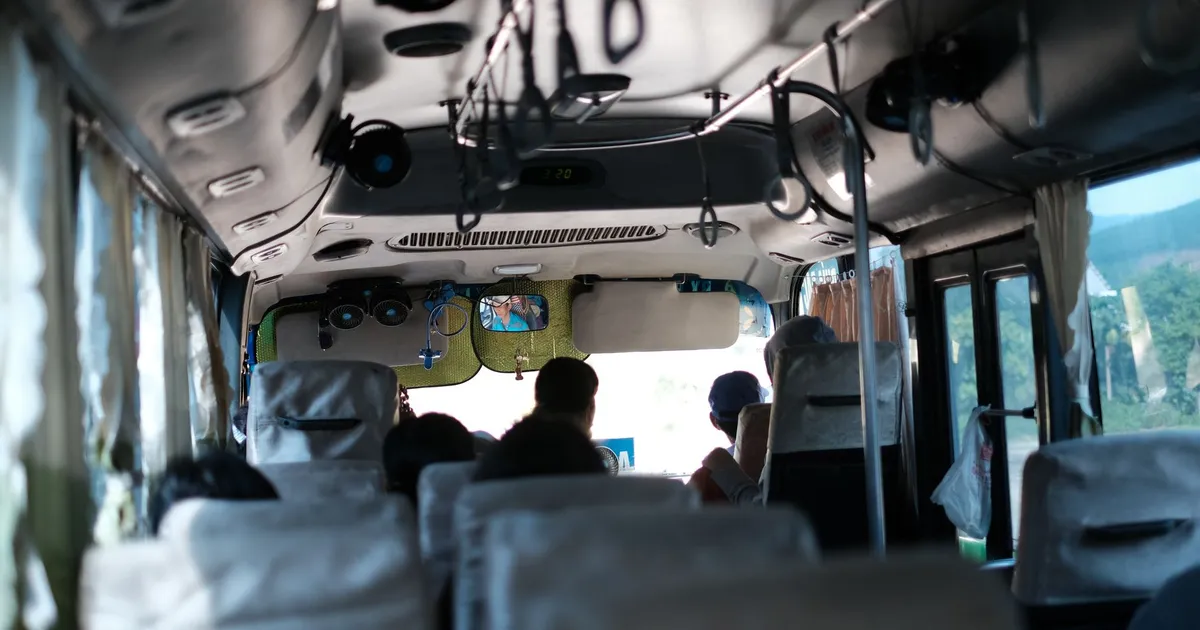
For road travel the consequences are direct: higher fares, fewer departures, longer journeys as drivers hunt for fuel, and last-minute cancellations. Long-distance buses remain the backbone of domestic movement for most people, but schedules have become unreliable. Our overview of getting around Myanmar by flight, bus and river boat describes the network in normal conditions; in 2026 every element of it should be treated as provisional.
Domestic Flights: Fragile by Design
The March suspension was resolved quickly, but it revealed how thin the margin is. Myanmar's domestic aviation runs on a small number of carriers with limited fuel reserves, and jet fuel is imported. When supply tightens, the response is immediate and blunt: suspended ticket sales, cancelled routes, tripled fares and reduced baggage allowances have all been reported during 2026.
The practical lesson is not that flights never operate. It is that a domestic flight in Myanmar cannot carry a plan on its own. If a connection, a visa expiry or an international departure depends on a single domestic sector, the plan is fragile. Build slack of at least a day or two, and keep an overland fallback in mind even if you never use it.
What This Means Day to Day
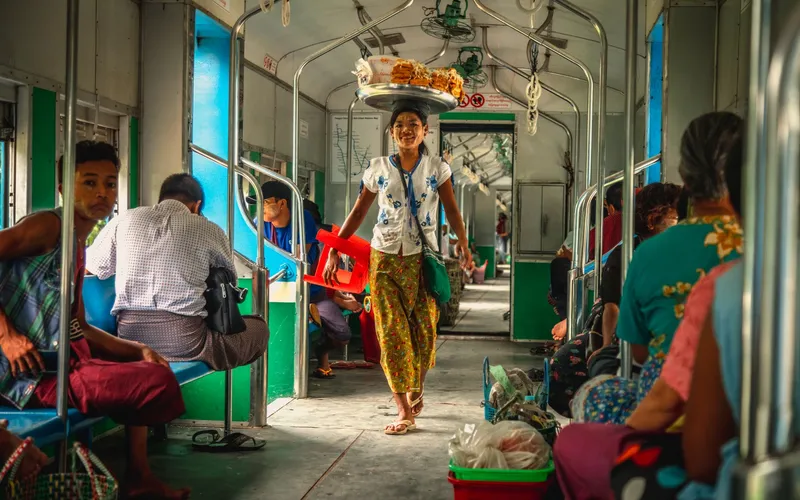
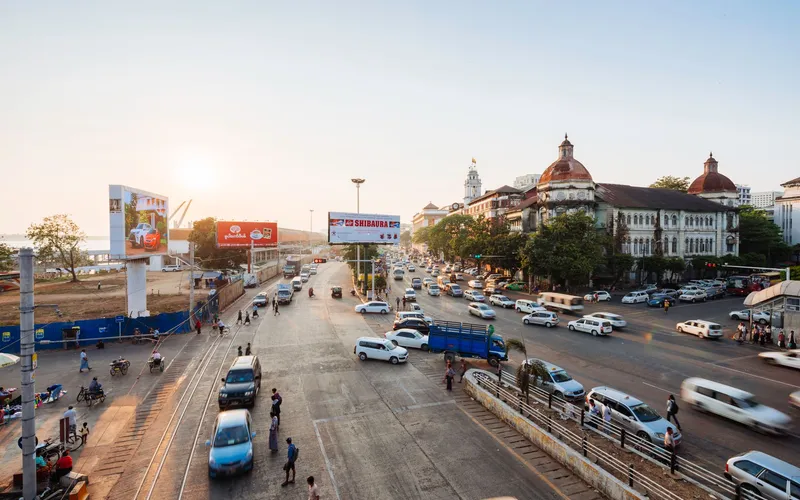
In Yangon and other cities, rotating cuts mean lifts stop, water pumps fail in tall buildings, air conditioning and refrigeration become intermittent, and businesses open and close around the schedule. Hotels that can afford a generator run one, which is why the better-equipped places cost more in a year when diesel is expensive. Internet and mobile connectivity degrade when towers and exchanges lose power.
The imbalance matters here. For a visitor this is inconvenience. For residents it is a year of household disruption, lost income for small businesses, spoiled food, interrupted schooling, and clinics running on generators. Any account of the situation that presents blackouts as atmosphere rather than hardship is getting it wrong. We describe the lived texture of this in our piece on Yangon's heritage streets and everyday rhythm.
Money and Power Are the Same Problem
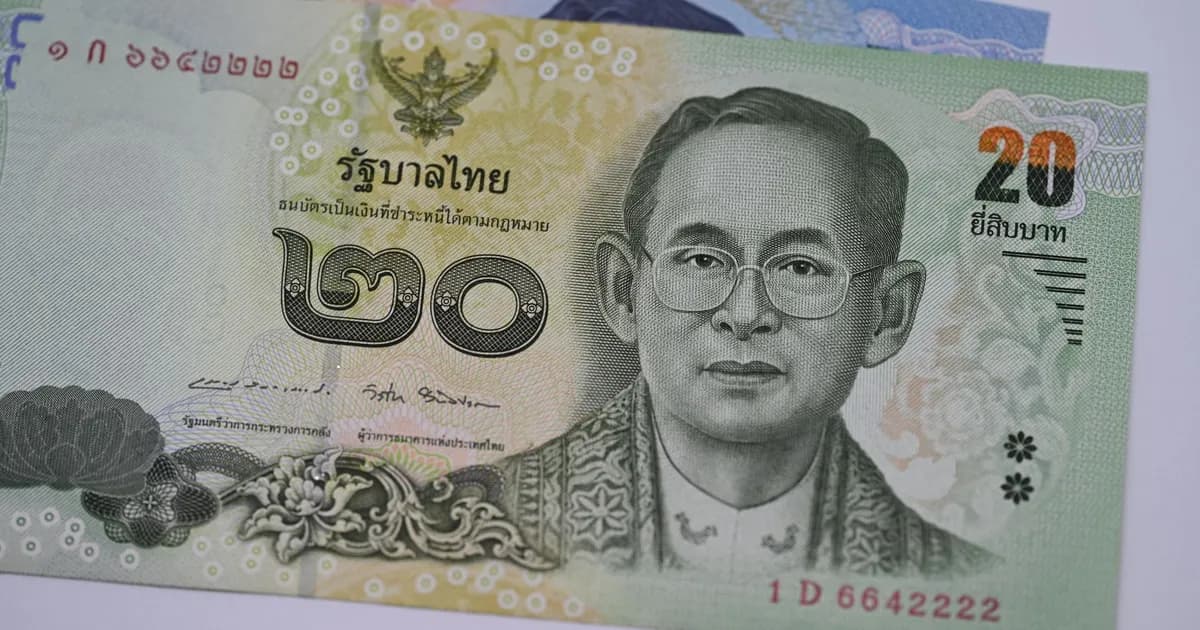
Electricity failures feed straight into payments. Card terminals stop. ATMs go offline or empty out. Bank branches shorten hours. In a country that already runs on cash and where international banking links are constrained by sanctions, a power cut can make an already limited payment system unusable for hours at a time.
This is the strongest practical argument for holding a larger cash contingency than you would elsewhere, in a mix of denominations, split between secure places. Our guide to handling money in Myanmar covers exchange rates, note condition requirements and the limits of card use.
Rail, River and the Overland Fallback
When flights falter, attention turns to the alternatives, and it is worth being realistic about them. Myanmar's railway network is extensive on paper but slow, and services have been reduced, rescheduled and in places interrupted in recent years. Power shortages affect signalling and maintenance as well as timetables. A rail journey that once took a long day should be assumed to take longer, and any published schedule should be checked locally on the day rather than trusted from a website.
River transport on the Ayeyarwady has a similar profile. Some services run, fuel costs are passed through to fares, and departures depend on water levels as well as diesel. Seasonal variation matters as much as the energy situation: low water in the dry months restricts some stretches regardless of anything else.
Long-distance buses remain the most widely used fallback, and in practice the most likely one. They are also the option most exposed to fuel rationing, checkpoints and road conditions, and overnight road travel carries its own risks that several foreign ministries specifically flag.
The honest summary is that there is no reliable substitute for a cancelled domestic flight, only a set of slower and less predictable options. This is why margin in the itinerary matters more than any particular choice of backup. A plan that works only if one specific sector operates on one specific day is not a plan in Myanmar in 2026, whatever mode of transport it relies on.
Dating Your Information
Everything above is dated deliberately. The March 2026 flight suspension lasted four days. The rotating power cuts were announced to run through at least June 2026. Fuel rationing measures have been adjusted repeatedly. Any of these positions may have changed again by the time you read this, in either direction.
Treat published travel content about Myanmar, including this article, as a snapshot with a date attached rather than a description of a stable present. Verify close to departure through your own government's advisory, through airline notices directly, and through people on the ground you already trust. Do not rely on undated blog posts or on operator marketing, which tends to lag reality and to understate disruption.
What to Do Next
- Read your government's current advisory in full before making any plan dependent on internal travel.
- Assume domestic flights may be suspended at short notice, and never place a visa deadline or international connection behind a single domestic sector.
- Build at least one or two spare days into any itinerary that must end on a fixed date.
- Confirm bookings directly with carriers and operators close to the date rather than relying on aggregator listings.
- Carry a larger cash contingency than usual, in mixed denominations, since power cuts disable card terminals and ATMs.
- Pack a charged power bank, a torch and offline copies of documents and maps for extended outages.
- Expect fares and baggage allowances to change, and budget for a road fallback on any route you care about.
- Check the practical framework in our journey planning resources before committing to dates.
Frequently Asked Questions
Are domestic flights in Myanmar operating in 2026?
They have operated for most of the year, but with episodes of severe disruption. In March 2026 most carriers suspended domestic services for roughly four days due to a jet fuel shortage, with full operations reported as resumed on 25 March. Fares and baggage allowances have also been adjusted during the year. Confirm directly with the airline shortly before travel.
How long do the power cuts last?
The rotating outages announced from 18 March 2026 were scheduled to continue through at least June, with national demand reported at around 4,664 megawatts against roughly 3,600 megawatts of available supply. Residents in major cities have described only a handful of hours of grid electricity on some days. Actual duration varies by city, township and day.
Is fuel available for road travel?
Generally yes, but subject to rationing, queues and quota systems, with prices at post-coup highs during 2026. Availability fluctuates, and drivers may adjust schedules or fares at short notice. Assume road journeys will take longer than published timings suggest.
Does this affect international flights?
International services to regional hubs such as Bangkok and Singapore were reported to have continued during the March 2026 domestic suspension. That said, international schedules to Myanmar are thinner than before 2021 and are also subject to change, so build in margin on either side of an international connection.
What should I pack because of the outages?
A high-capacity power bank, a torch or headlamp, offline maps, downloaded copies of essential documents, and enough cash to cover several days without working card terminals or ATMs. A universal adaptor and a charging habit of topping up whenever power is available also help.
Is the energy crisis a reason not to travel to Myanmar?
It is one factor among several, and not the most important one. The advisories from France and other governments rest primarily on armed conflict, arbitrary detention risk and limited consular assistance. Energy disruption compounds those problems rather than defining them. Many travellers weigh all of it and decide not to go, which remains a legitimate conclusion.
Where can I check the current situation reliably?
Start with your own foreign ministry's advisory page, then airline notices directly, then established news organisations covering Myanmar. United Nations agencies publish humanitarian updates. Avoid relying on undated travel blogs or promotional material, which typically lags events and understates disruption.