Temple and Monastery Etiquette in Myanmar: A Respectful Traveler's Guide
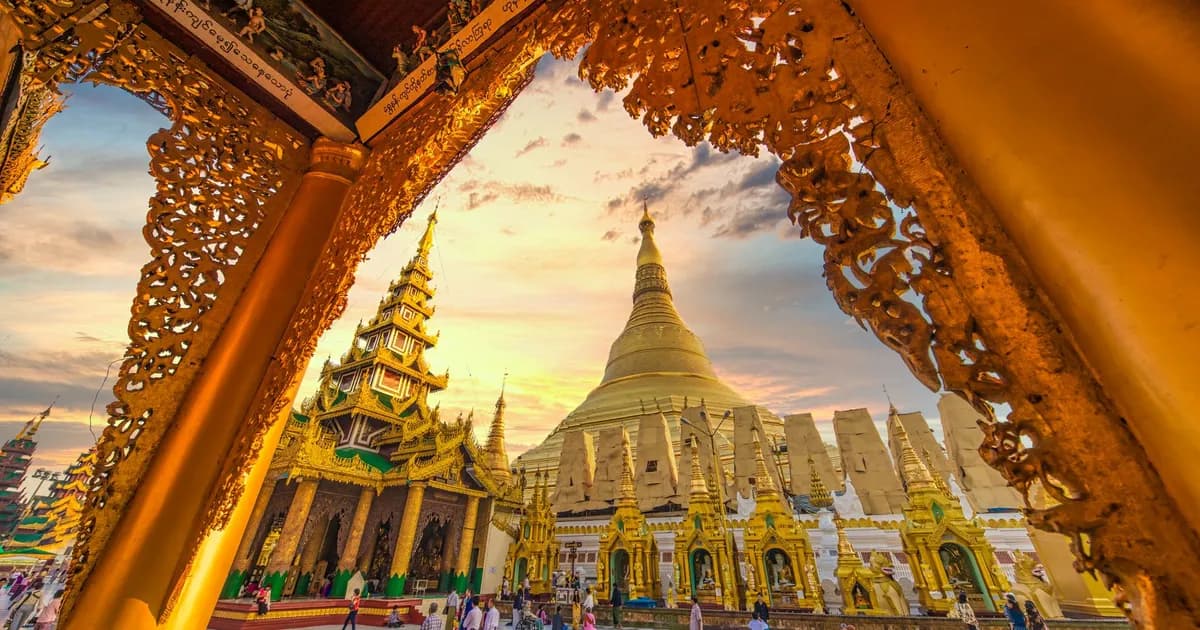
Myanmar rewards the traveler who slows down, and nowhere is this more true than at its temples and monasteries. The country is often called the Land of the Golden Pagoda, and for good reason: gilded stupas rise over rice fields, cave shrines glimmer in lamplight, and small village monasteries hum with the low sound of chanting long after dark. These are not museum pieces or photo backdrops. They are living places of devotion, woven into daily life in a way that can feel unfamiliar to visitors arriving from more secular cultures.
That is exactly why a little preparation matters. Most offence caused by travelers in Myanmar is accidental, born of not knowing rather than not caring. The good news is that Burmese people are famously gracious and quick to forgive a genuine mistake made in good faith. The better news is that the customs are not complicated once you understand the thinking behind them. This guide walks through the etiquette that actually counts at sacred sites and in everyday encounters, so you can move through the country with confidence and leave a good impression behind you. If you are still shaping your route, our companion piece on where to go and when in Myanmar pairs naturally with this one.
Shoes, Socks and Dress at Sacred Sites
The single most important rule at any pagoda or temple in Myanmar is that you remove your shoes and your socks before entering. This is not optional, and it is not limited to the inner shrine. The barefoot zone usually begins at the outer wall or the base of the stairway, well before you reach the stupa itself. You will often walk a considerable distance across stone or tile with nothing between your feet and the ground, which is precisely the point: arriving barefoot is an act of humility and respect for the sacred space.
Socks count as footwear here, and leaving them on is one of the most common mistakes visitors make. The rule applies to everyone equally, monk and pilgrim and tourist alike. Practically, this means you should wear shoes that slip on and off easily, such as sandals or simple flats, because you will be doing this many times a day. Carry a light bag for them, or leave them at the designated shoe stands, where a small tip to the attendant is customary and appreciated. In the dry season, midday stone can grow genuinely hot, so many temples are best visited in the softer light of early morning or late afternoon anyway.
Dress is the other half of the equation. At sacred sites you should cover your shoulders and your knees, and this applies to all genders, not only women. Sleeveless tops, short shorts, mini skirts and tight or sheer clothing are inappropriate. A light scarf, a sarong or a longyi, the traditional Burmese wraparound cloth, is easy to carry and solves the problem in seconds. Many travelers buy a longyi early in their trip and keep it in their day bag for exactly this reason. Aim for modest and comfortable rather than formal; loose natural fabrics are kinder in the heat and read as respectful in every setting.
One request. Up to five tailored proposals.
Skip contacting agencies one by one — share your trip once and let up to five trusted Myanmar agencies come to you. Free, with no obligation.
Get my free quotesRespect Around Monks and Nuns
Monks and nuns hold a revered place in Burmese society, and the way you behave around them says a great deal about you. Buddhist monks are recognizable in their maroon or ochre robes; nuns typically wear pink and often carry alms bowls. They are not tourist attractions, and photographing them at close range without acknowledgement, or trailing them for a shot, is poor form. A quiet nod, a small gesture of respect, and asking before you raise a camera go a long way.
One rule deserves particular attention: by monastic discipline, monks do not have physical contact with women. If you are a woman, you should not touch a monk, hand anything directly into his hands, or sit pressed beside him. When offering something, place it down on a cloth or surface for him to pick up, or hand it via a male companion. This is not a judgement about women; it is part of the vows monks take, and respecting it is simply courtesy. When giving or receiving anything from a monk, or indeed from most people in Myanmar, use your right hand, or both hands together, rather than the left hand alone.
Keep your body lower than a monk's when you can. If a senior monk is seated, avoid standing over him or towering nearby; sitting or lowering yourself slightly is the polite instinct. Inside prayer halls and meditation spaces, keep your voice low and your movements calm. Many monasteries welcome respectful visitors and some offer meditation sessions or short stays, which can be one of the most rewarding slow-travel experiences in the country, but they are places of study and practice first and foremost.
Photography and Sensitivity
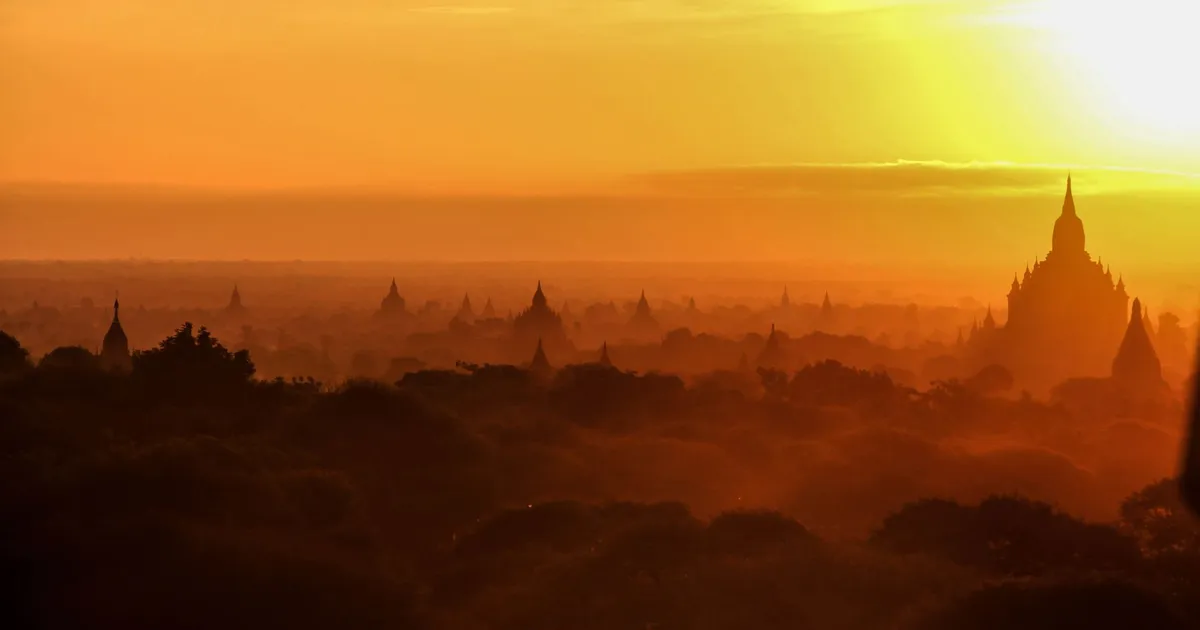
Photography is generally permitted at temples, and Myanmar is extraordinarily photogenic, but a few habits keep you on the right side of etiquette. Turn off your flash near delicate murals, gilded surfaces and, above all, people in prayer. Never climb on stupas, Buddha images or ancient structures to get a better angle. At Bagan in particular, climbing on the temples has been prohibited to protect both the fragile monuments and the sanctity of the site, so admire the sunrise from a permitted viewpoint rather than scrambling up a shrine.
Always ask before photographing individuals, especially monks, nuns and worshippers, and accept a refusal gracefully. A smile and a gesture toward your camera is usually enough to make your request clear. Avoid posing in ways that place you above or in front of a Buddha image as though it were a backdrop, and never turn your back to a large Buddha statue for a selfie. The image is sacred, and framing it as set dressing for a personal photo reads as disrespectful even when no offence is intended.
Get matched with up to 5 trusted Myanmar agencies
- Free
- No obligation
- Up to 5 agencies
Feet, Hands and Body Language
Burmese body language follows a clear vertical logic: the head is the most sacred part of the body and the feet are the lowest and least clean. Almost everything flows from that idea. Never point the soles of your feet toward a Buddha image, a monk, a shrine or, frankly, another person. When you sit on the floor inside a temple, tuck your feet behind you in the graceful side-saddle posture that locals use, rather than stretching your legs out in front. Stepping over someone, or over an offering, is best avoided; walk around instead.
By the same logic, do not touch anyone on the head, including children, however affectionately you might mean it. The head is considered the seat of a person's spirit. Pointing at people or at Buddha images with a single finger is impolite; gesture with an open hand instead. When you beckon someone, do it with your palm facing down and fingers waving toward you, not palm up. These are small adjustments, but making them signals that you have taken the trouble to understand where you are. For a fuller sense of everyday Burmese culture beyond the temple gate, our guide to Myanmar's food and what to eat is a good companion, since the table has its own gentle etiquette too.
Buddha-Image Sensitivities: A Factual Note
This is the area where well-meaning travelers have run into serious trouble, so it is worth stating plainly. In Myanmar, the image of the Buddha is treated with deep reverence, and depictions that are seen as disrespectful, decorative or commercial can carry real legal consequences, not merely social disapproval.
The most cautionary example concerns tattoos. In 2016, a Spanish tourist was detained in Bagan after monks noticed a large tattoo of the Buddha on his lower leg, and he was subsequently deported. The sensitivity is compounded by the vertical logic described above: a sacred image placed on the leg, one of the lowest parts of the body, is considered especially offensive. If you have a Buddha tattoo, keep it covered, particularly at religious sites. In a separate and widely reported case, a foreign bar manager in Yangon was jailed in 2015 for using a psychedelic image of the Buddha wearing headphones to advertise a drinks promotion; the depiction was deemed an insult to religion. Deportations and prosecutions of this kind are uncommon, but they are real, and they illustrate how seriously these matters are taken.
The practical takeaways are simple and non-alarmist. Do not use Buddha imagery in a flippant, commercial or decorative way. Do not buy Buddha heads or figures as souvenirs to display casually, and be aware that exporting genuine antiquities and religious artifacts is restricted. Do not place Buddha images on the floor, below your feet, or in a bathroom. Treating the image the way a devout local would is the whole of the rule, and it is an easy one to keep once you are aware of it.
Donations and the Alms Round
Generosity, or dana, sits at the heart of Burmese Buddhism, and giving is woven into temple life in ways travelers can join respectfully. Most pagodas have donation boxes for the upkeep of the site, and gilding a stupa with a square of gold leaf is a common act of merit you are welcome to take part in, though at some famous sites the innermost gilding areas are reserved for men. A modest contribution toward maintenance, or a tip for the shoe attendant, is always appropriate.
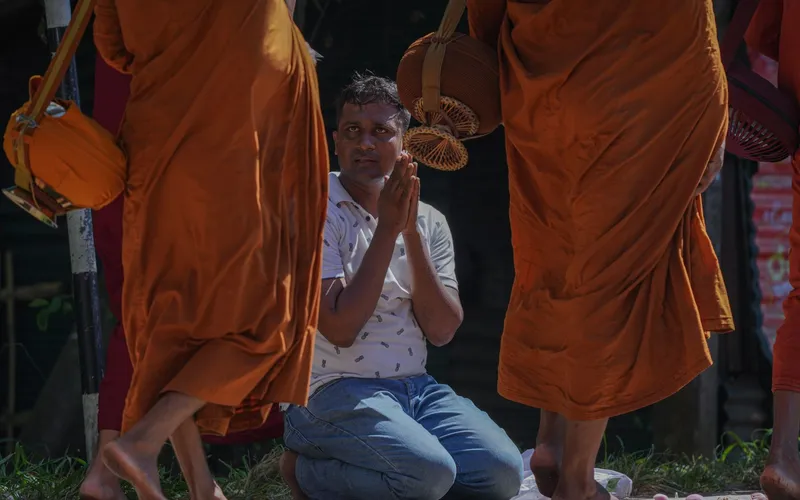
The alms round, or the morning procession of monks collecting food, is one of the most moving sights in the country. Just after dawn, lines of barefoot monks walk in silence through towns and villages, bowls in hand, receiving cooked rice and small offerings from residents kneeling by the roadside. If you wish to give, do so quietly and with both hands, kneeling or lowering yourself, and remember the rule about women placing items rather than touching. If you only wish to watch, keep your distance, stay silent, lower your camera or ask first, and do not treat the ritual as a performance staged for you. In some towns, particularly around Mandalay, alms rounds at large monasteries have become heavily touristed; the more gently you behave, the more you help keep them dignified. When you are ready to build these moments into a thoughtful route, our plan your journey page and the local travel agencies we work with can help you do it responsibly.
Everyday Etiquette Beyond the Temple
The respect you show at pagodas extends naturally into daily life, and the same instincts serve you everywhere. Shoes come off at the threshold of most homes, many guesthouses, some shops and even certain teashops, so watch for a pile of sandals at the door and follow suit. When you sit down to eat or drink, the feet-and-head logic still applies: keep your feet tucked away and do not prop them on furniture.
Thanaka, the pale yellow paste you will see painted on cheeks across the country, is worn as sunscreen, skincare and a mark of beauty, ground from tree bark; admire it warmly and you may well be offered some to try. The longyi is everyday dress for men and women alike and makes a genuinely useful, respectful purchase. Dress modestly in towns and villages even away from temples, greet people with a smile, keep public displays of affection restrained, and be mindful that conversations about sensitive national matters are best approached with humility and listening rather than opinion. Above all, keep your conduct calm and quiet. The Burmese value composure, and a traveler who moves gently through the country is met, almost always, with warmth. For the quieter corners where this approach pays off most, see our guide to Myanmar off the beaten path.
What to Do Next
- Pack a longyi or a light scarf and keep it in your day bag so you can cover shoulders and knees at a moment's notice.
- Choose slip-on footwear you can remove quickly, since you will be barefoot many times a day at sacred sites.
- If you have a Buddha tattoo, plan to keep it covered, especially in Bagan and at other religious sites.
- Learn the two reflexes that prevent most offence: feet never pointed at Buddha images or people, and the right hand or both hands for giving and receiving.
- Decide in advance how you want to engage with the alms round, whether to give quietly or simply to watch from a respectful distance.
- Build unhurried temple time into your itinerary with the help of a trusted local operator via our plan your journey resources.
- If you would rather travel with a guide who can interpret these customs in the moment, consider our charter a slow journey service.
Frequently Asked Questions
Do I really have to remove my socks as well as my shoes at temples?
Yes. At pagodas and temples in Myanmar, both shoes and socks must be removed, usually from the outer wall or the foot of the stairway. Socks count as footwear, and keeping them on is one of the most common mistakes visitors make. Wear slip-on shoes and expect to walk barefoot across stone, especially in the cooler hours of early morning or late afternoon.
What should I wear to visit a pagoda or monastery?
Cover your shoulders and your knees, regardless of gender. Avoid sleeveless tops, short shorts, mini skirts and tight or sheer clothing. A longyi, sarong or light scarf packed in your day bag is the easiest solution, and loose natural fabrics keep you comfortable in the heat while reading as respectful.
Can women interact with monks in Myanmar?
Women can speak with monks respectfully but should not touch them or hand objects directly into their hands, as monastic vows forbid physical contact with women. To make an offering, place the item on a cloth or surface for the monk to collect, or pass it through a male companion. Using your right hand, or both hands together, is the polite way to give and receive.
Is it a problem to have a Buddha tattoo in Myanmar?
It can be. A Buddha tattoo, particularly on the lower body, is considered disrespectful, and in 2016 a Spanish tourist was deported from Bagan after monks noticed a Buddha tattoo on his leg. Such cases are uncommon but real. If you have one, keep it covered, especially at religious sites, to avoid causing offence.
Can I take photographs inside temples and of monks?
Photography is generally allowed at temples, but turn off your flash near murals, gilded surfaces and people at prayer, and never climb on stupas or Buddha images. Always ask before photographing monks, nuns or worshippers, and accept a no gracefully. Do not pose in front of or above a Buddha image as though it were a backdrop.
How should I behave during the morning alms round?
Watch quietly and keep your distance, or give respectfully if you wish to take part. Offer food with both hands while lowering yourself, and remember that women should place items rather than touch a monk. Do not treat the procession as a staged performance, and ask before photographing or simply lower your camera.
Why do people take their shoes off in homes and teashops too?
The feet are considered the least clean part of the body in Burmese culture, so removing footwear keeps sacred and living spaces clean and shows respect. Watch for a pile of sandals at the threshold of homes, guesthouses and some shops and teashops, and follow the local lead by slipping yours off before you step inside.