
Far to the north of the Philippines, closer to Taiwan than to Manila, lies a small cluster of islands unlike anywhere else in the country. Batanes is a place of rolling green hills falling into a wild sea, of stone houses built to withstand typhoons, and of the Ivatan people, whose culture of honesty and mutual help has become quietly legendary. It is remote, it is not cheap, and it can be maddening to reach when the weather turns. It is also one of the most beautiful and genuinely slow places to travel in all of Southeast Asia, and for those willing to make the journey, it rewards like nowhere else.
The Northernmost Islands
Batanes is the smallest and northernmost province of the Philippines, a scattering of islands in the strait between the Philippine Sea and the South China Sea. Only three are inhabited: Batan, home to the capital Basco; Sabtang, the most traditional; and remote Itbayat. Battered by the open ocean on all sides, the islands earned the nickname "Home of the Winds", and the weather is as much a character here as the landscape. What draws travellers is a scenery of extraordinary purity: treeless hills of vivid green, dramatic cliffs, lighthouses on lonely headlands and a sea that shifts from turquoise to slate. For travellers seeking the parts of the country the crowds never reach, Batanes is the ultimate example, and our guide to the Philippines off the beaten path places it among the archipelago's quietest corners.
One request. Up to five tailored proposals.
Skip contacting agencies one by one — share your trip once and let up to five trusted Philippines agencies come to you. Free, with no obligation.
Get my free quotesThe Ivatan and Their Stone Houses
What makes Batanes more than a pretty landscape is its people. The Ivatan have adapted over centuries to a harsh, storm-lashed environment, and their culture reflects it: resilient, communal and deeply honest. Their signature is the traditional stone house, thick-walled and low-roofed, built from limestone and cogon grass to survive the fiercest typhoons.
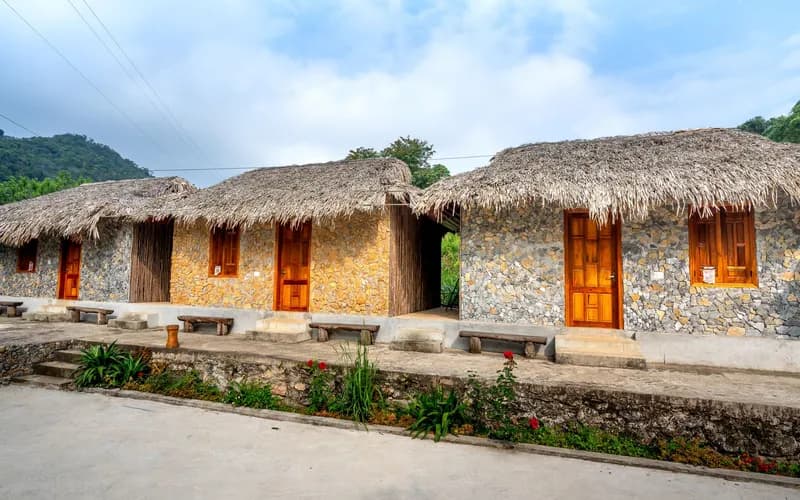
Equally striking is the vakul, a headdress of shredded palm worn by Ivatan women against sun and rain. The islands are famous for an almost vanished level of trust: unmanned roadside stalls where you leave payment in an honesty box, and a near-absence of crime. Encountering this culture, rooted in the spirit of bayanihan, or communal cooperation, is as memorable as any view.
Basco and North Batan
Most journeys begin in Basco, the small provincial capital on Batan island, a walkable town of low buildings backed by the volcano Mount Iraya. From here the classic North Batan tour takes in the icons of Batanes: the Basco Lighthouse on Naidi Hills, with sweeping views over the town and sea, and the Vayang Rolling Hills, where green slopes tumble to dramatic coastal cliffs in one of the country's most photographed landscapes. These are gentle sights, best absorbed slowly on foot or by bicycle, with time to sit and watch the light and weather move across the hills.
Get matched with up to 5 trusted Philippines agencies
- Free
- No obligation
- Up to 5 agencies
South Batan: Lighthouses and Coastlines
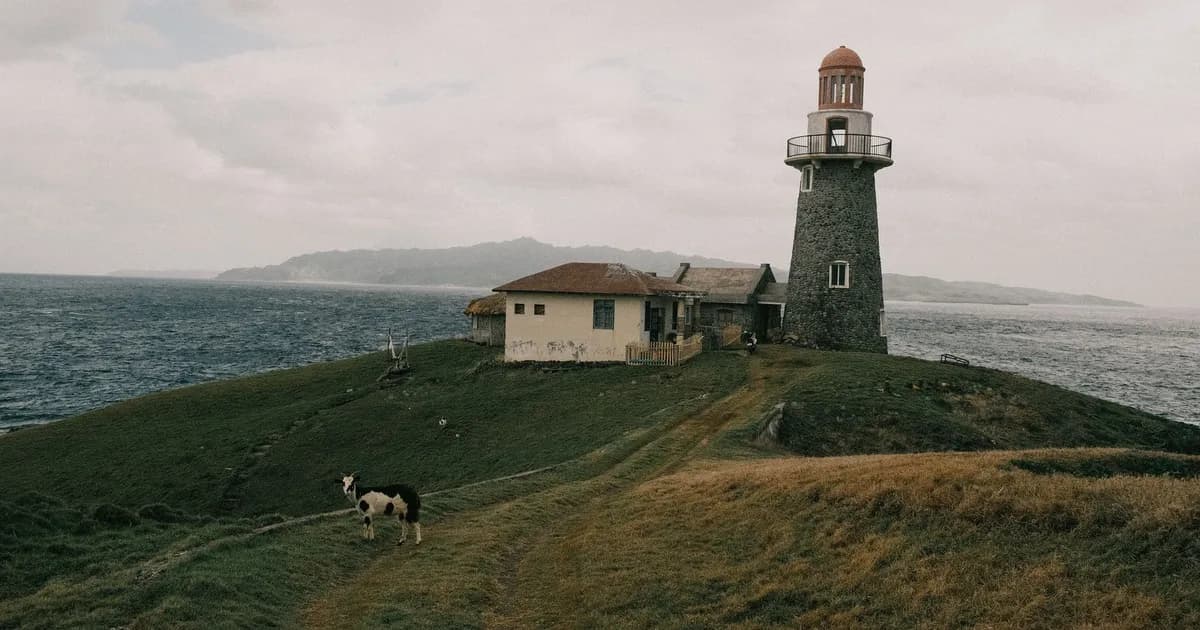
The South Batan loop reveals a different face of the island: rugged coastlines, old churches, and the beautiful Tayid Lighthouse standing sentinel above the sea. The route passes through the town of Ivana, home to the centuries-old House of Dakay, one of the oldest stone houses in Batanes, and along coast roads where the Pacific crashes against black rocks. It is a landscape that feels raw and elemental, and touring it slowly, with an Ivatan guide who can explain the history and the houses, turns sightseeing into genuine understanding.
Sabtang: The Old Ways Preserved
A short but sometimes rough boat crossing from Batan reaches Sabtang, the most traditional of the islands, where the old Ivatan way of life is best preserved. Its stone villages, such as Chavayan and Savidug, are among the most beautiful in the province, and here you are most likely to see the vakul worn in daily life rather than for show. The crossing depends entirely on the sea, and rough weather can strand you or prevent the trip altogether, which is part of travelling in Batanes: the elements set the schedule, not you.
The Weather and When to Go
Batanes lives by its weather, and understanding it is essential. The dry season from around February to May is the most reliable, with the fewest flight and boat cancellations, though the famous hills turn golden-brown rather than green and it is peak season for both crowds and prices.
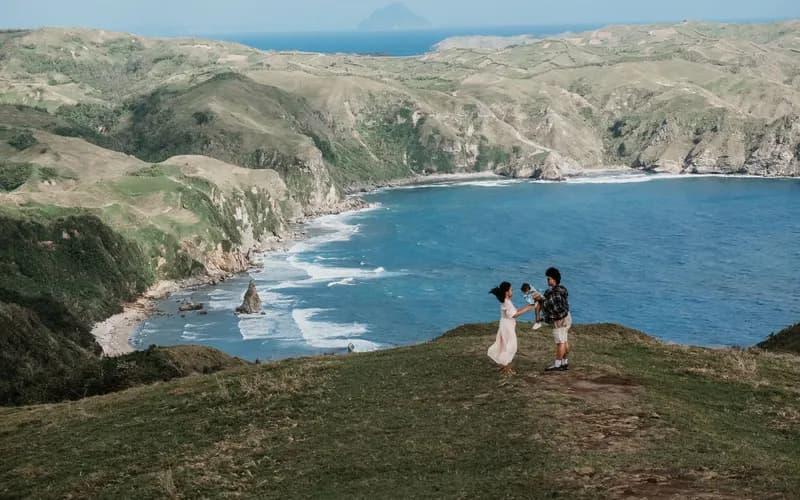
The monsoon months, roughly June to October, bring the greenest hills and the cheapest flights but frequent rain and a real risk of cancellations, as typhoons and rough seas close the airport and the Sabtang crossing. Whenever you go, build in buffer days: Batanes is not a place to visit on a tight schedule, because the weather may simply refuse to cooperate.
Getting There: Only by Plane
There is no ferry to Batanes from the rest of the Philippines; the only way in is to fly to Basco airport, with flights from Manila and, at times, Clark. This makes Batanes both harder to reach and more expensive than most Philippine destinations, and it is the single biggest reason the islands stay uncrowded. Flights are small, subject to the weather, and prone to cancellation, so book ahead, allow spare days on either end, and treat any delay as part of the adventure rather than a disaster.
How to Get Around
Once on Batan, getting around is part of the pleasure. Many travellers rent a bicycle to explore at the slowest and most sustainable pace, though the hills demand some fitness. Others hire a cogon-roofed tourist tricycle or a motorbike, or join guided tours that cover the North Batan, South Batan and Sabtang circuits. Distances are short and the roads quiet, which makes Batanes ideal for unhurried, self-directed exploration between the organised island tours.
Why Batanes Rewards Slow Travel
Batanes is the antithesis of a quick, box-ticking trip. Its remoteness, its weather and its cost all conspire to slow you down and keep the crowds away, and its rewards, the honesty of its people, the purity of its landscapes, the sense of being somewhere truly apart, only reveal themselves to those who stay long enough to feel them. It embodies exactly the kind of destination that the Philippines is increasingly keen to promote, a shift our analysis of the country looking beyond Boracay explores. Come with time, patience and an open mind, and Batanes will give you something few places still can: the feeling of the world slowing right down.
Food and the Ivatan Table
Batanes has a distinctive cuisine shaped by isolation and the sea. Look for uved, meatballs made from banana pith; the local root crops and yams that thrive in the volcanic soil; fresh fish and the prized coconut crab; and Ivatan flying fish, or dibang, caught in season. Meals are simple, hearty and rooted in what the islands can grow and catch, and eating them, often in a family-run turo-turo eatery, is a window into how the Ivatan have sustained themselves in a place where little arrives from outside. It is honest food for an honest place.
A Fragile Kind of Paradise
Part of what makes Batanes so moving is a sense of fragility. Its beauty and its culture have survived precisely because the islands are hard to reach, but that isolation is slowly eroding as flights improve and word spreads. The Ivatan honesty stalls, the untouched hills and the deep quiet are exactly the qualities that mass tourism tends to wear away. Visiting thoughtfully, spending with local families, respecting the land and the customs, and resisting the urge to treat the islands as a backdrop for photographs, is how travellers can help Batanes stay itself. Come now, and come gently: this is a place that deserves to be met on its own terms.
The Feeling of the Edge of the Country
There is a particular sensation to standing at the northern tip of Batanes, with nothing between you and Taiwan but open, restless sea, that stays with travellers long after they leave. Batanes sits at the very edge of the Philippines, geographically and in spirit, and that marginality is central to its appeal. It feels like a place slightly apart from the rest of the country, shaped more by wind and ocean than by anything happening in distant Manila, and the sense of remoteness is not an inconvenience to be endured but the whole point. Here the horizons are vast, the silences deep, and the reminders of the modern rush few. For travellers worn down by the noise and speed of ordinary life, Batanes offers a rare kind of quiet: not just the absence of crowds, but the presence of something older and steadier, a landscape and a people that keep their own unhurried time. It is the feeling of having reached the edge of things, and finding it unexpectedly peaceful.
What to Do Next
- Fly to Basco and give Batanes at least four or five days, building in buffer days for weather delays.
- Take the classic North Batan, South Batan and Sabtang tours with an Ivatan guide to understand the culture, not just the views.
- Rent a bicycle or tricycle to explore Batan island slowly between the organised tours.
- Travel in the February-to-May dry season for reliability, or the greener monsoon months for lower prices and higher risk.
- Plan the trip, including flights and buffer days, with our Philippines plan-your-journey resources.
Frequently Asked Questions
How do I get to Batanes?
The only way to reach Batanes is by air, flying into Basco airport from Manila or, at times, Clark. There are no passenger ferries from the rest of the Philippines. Flights are small and weather-dependent, so book ahead and build in spare days, as cancellations are common when the sea and skies turn rough.
How many days should I spend in Batanes?
Plan for at least four or five days, and build in buffer days for weather. Batanes rewards a slow, unhurried visit taking in the North Batan, South Batan and Sabtang tours, plus time to explore by bicycle. Weather can delay flights and boat crossings, so a tight schedule risks disappointment.
What is Batanes known for?
Batanes is known for its rolling green hills, dramatic coastlines and lighthouses, its distinctive Ivatan stone houses built to withstand typhoons, and the honesty and communal culture of the Ivatan people, including unmanned honesty stalls. As the northernmost, most remote province of the Philippines, it offers a purity and calm rare elsewhere in the country.
When is the best time to visit Batanes?
The dry season from around February to May is the most reliable, with the fewest cancellations, though the hills are golden rather than green and prices and crowds are higher. The monsoon months of roughly June to October bring greener scenery and cheaper flights but frequent rain and a real risk of weather cancellations.
Is Batanes expensive to visit?
By Philippine standards, yes. Its remoteness means flights are the only way in and are relatively costly, and prices on the islands are higher than on the mainland. Many travellers consider the expense worthwhile for the extraordinary scenery, culture and tranquility, but Batanes is not a budget backpacking destination.
How do I get around in Batanes?
On Batan island you can rent a bicycle for the slowest, most sustainable exploration, hire a cogon-roofed tourist tricycle or a motorbike, or join guided island tours. Distances are short and roads quiet. Reaching Sabtang island requires a boat crossing that depends entirely on the weather and can be cancelled in rough seas.