How to Travel the Philippines Around Typhoon Season
The Philippines is one of the most storm-exposed countries on earth, crossed by many tropical cyclones every year. For travellers this sounds alarming, but with a little understanding it is entirely manageable, and millions of people visit safely and happily even in the wetter months. The key is knowing when and where the risk is highest, how to read the warnings, and how to build a trip flexible enough to bend with the weather rather than break against it. This is a practical, calm guide to travelling the Philippines with typhoon season in mind.
Understanding the Philippines' weather year
The Philippines has a tropical climate shaped by two monsoons and a long typhoon season, and the pattern varies enormously by region across the archipelago's thousands of islands. Broadly, there is a drier, cooler stretch and a wetter, stormier one, but which months are which depends on where you are, because the two monsoons hit different coasts at different times. The single most useful planning habit is to match your destination to the season rather than assuming the whole country shares one weather calendar. Our slow traveller's guide to the Philippines breaks down where to go and when in more detail.
One request. Up to five tailored proposals.
Skip contacting agencies one by one — share your trip once and let up to five trusted Philippines agencies come to you. Free, with no obligation.
Get my free quotesThe two monsoons: habagat and amihan
Two seasonal winds dominate. The habagat, the southwest monsoon, runs roughly from June to October and brings wet, humid weather to the western side of the country, including Manila and the western coasts. The amihan, the northeast monsoon, runs roughly from November to February or March and brings cooler, drier and more settled conditions to much of the country, particularly the popular central and southern islands. For most travellers, the amihan months are the classic time to visit, with the best chance of sunshine across the main tourist regions, while the habagat months are wetter and less predictable.
When typhoon season is
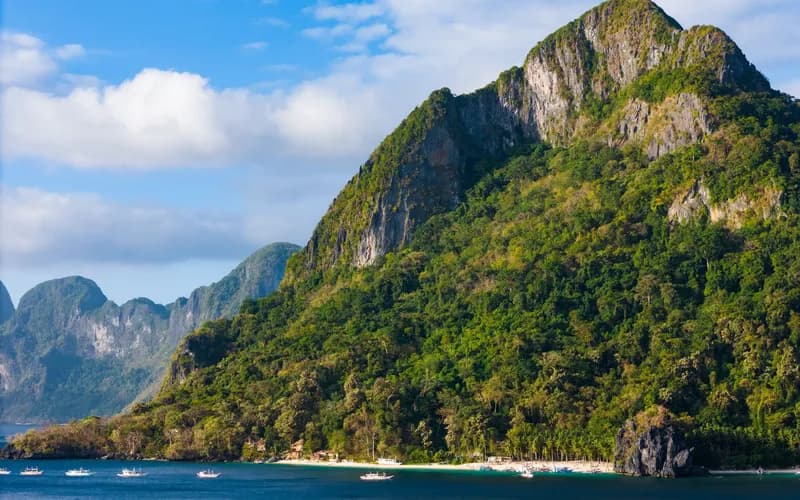
Overlaid on the monsoons is the typhoon season proper, which broadly runs from around June to November and peaks in the late summer and autumn months, roughly August to October. This is when the strongest storms are most likely, and when travel disruption is most common. It does not mean these months are unvisitable, many days are fine, but it does mean higher risk of heavy rain, cancelled ferries and flights, and the occasional serious storm. The dry, cooler months from about December to May are the safest and most reliable window for most of the country, which is why they are peak tourist season.
Get matched with up to 5 trusted Philippines agencies
- Free
- No obligation
- Up to 5 agencies
Where typhoons hit hardest, and where they don't
Crucially, typhoons do not strike the whole country equally. The eastern seaboard, facing the Pacific, takes the brunt: eastern Luzon, the Bicol region, Samar, Leyte and the eastern Visayas are the most exposed and most frequently hit. By contrast, some regions sit largely outside the main typhoon belt and are far less affected: Palawan and the far south, including much of Mindanao, are hit comparatively rarely. This geography is a powerful planning tool. If you travel during the risky months, weighting your trip toward the less exposed western and southern regions dramatically reduces your chances of serious disruption.
Reading the warnings: PAGASA and storm signals
The Philippines has a well-developed warning system, and learning to use it is the single best thing a traveller can do. The national weather agency, PAGASA, issues forecasts and tropical cyclone warnings, including a system of storm signals numbered by intensity, which indicate the level of wind expected in a given area. When a storm approaches, these signals tell you how serious it is and where. Follow PAGASA and reputable local news, take the warnings seriously, and never dismiss them; local authorities know these storms intimately, and when they say do not travel, they mean it.

Ferries, flights and the no-sail rule
The most common way a storm affects a traveller is not danger but disruption, and much of it flows through transport. When a tropical cyclone threatens, the coast guard enforces a no-sail policy, and ferries, the backbone of island-hopping, are suspended, sometimes for days. Flights are cancelled, and travellers can find themselves stranded on an island or unable to reach one. This is precisely why island-hopping in the risky months demands slack in the schedule, a point we stress in our guide to island-hopping the Philippines slowly. Never plan a tight connection to a flight home immediately after an inter-island ferry in typhoon season.
How to plan a trip during the risky months
Travelling in the wetter months is entirely doable with the right approach. Build generous buffer days into your itinerary, especially before international flights home, so a cancelled ferry or a storm day does not cascade into a missed flight. Favour flexible, refundable bookings over the cheapest non-refundable ones. Keep your itinerary loose and be willing to change plans as the forecast develops. And do not try to cram too much in; a relaxed plan absorbs a lost day gracefully, while a packed one collapses. This flexibility is not a compromise but the very essence of slow travel, which handles the Philippines' weather far better than a rigid schedule ever could.
Choosing typhoon-safer regions
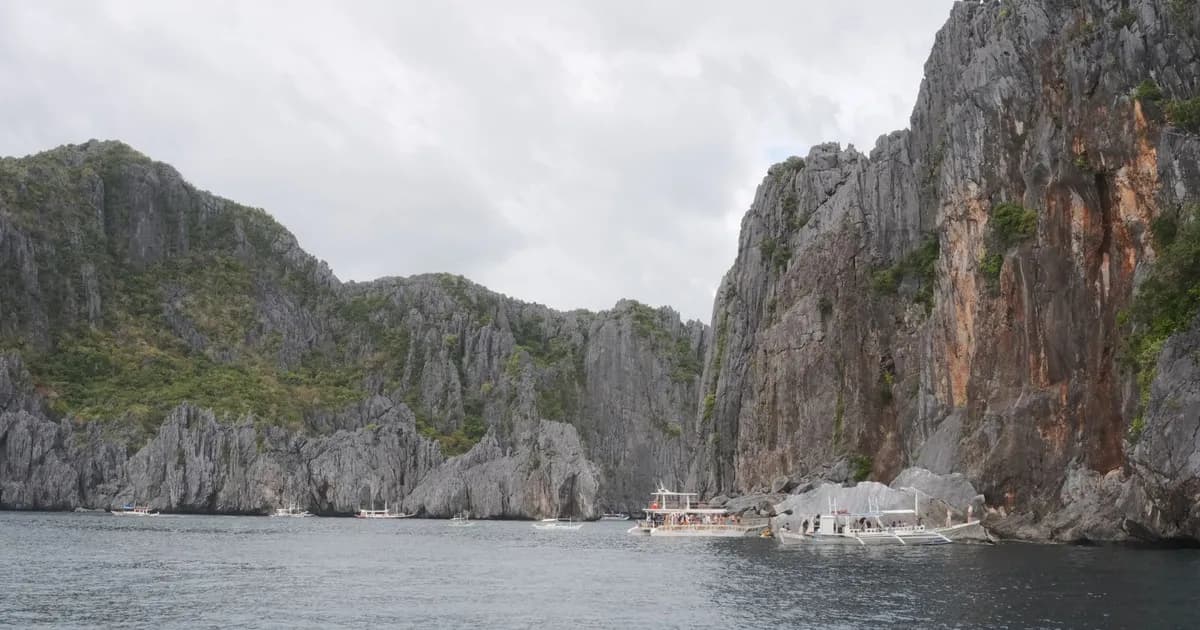
If your dates fall in the risky season, let geography work for you. Base your trip in the less exposed regions, Palawan, with its famous islands and lagoons, and the southern islands are the obvious choices, being hit comparatively rarely. Save the storm-exposed eastern seaboard for the drier months. You can still have a wonderful trip in August or September; you simply weight it toward the parts of the country the typhoons tend to miss, and keep your plans adaptable. Combining a typhoon-safer base with the flexibility above is the formula for a smooth wet-season trip.
Travel insurance and buffer days
Two practical safeguards are non-negotiable in typhoon season. First, comprehensive travel insurance that covers trip disruption, cancellation and delays, so a storm that strands you or scraps a booking is a financial inconvenience rather than a disaster. Second, real buffer days, at least one or two before any onward international flight, and ideally slack throughout. Together these turn the worst realistic weather outcome, a lost day or two, into a manageable hiccup. Skipping either is the false economy that turns a storm into a genuine problem.
If a typhoon hits while you are there
Should a serious storm arrive during your trip, the rules are simple. Follow the guidance of local authorities and your accommodation without argument, do not travel or take a boat when warnings are in force, stock a little food and water and keep your phone charged, and stay put somewhere safe until it passes. Storms move through, and the safest response is patience, not an attempt to outrun the weather. Keep your travel insurer's details handy, stay in contact with anyone expecting you, and treat an enforced pause as exactly that. Respecting the storm is not timidity; it is the local wisdom that keeps people safe.
The upside of the wet months
It is worth remembering that the risky season is not all downside. The wetter months bring their own rewards: landscapes at their greenest, waterfalls in full flow, far fewer tourists at famous sites, and noticeably lower prices on flights and accommodation. Many days are bright and dry between systems, and a passing tropical shower can be a warm, brief and even pleasant part of the day rather than a washout. For the flexible, patient traveller who chooses the right regions and keeps plans loose, the low season can offer a quieter, cheaper and more atmospheric Philippines than the crowded dry-season peak. The trade is simply certainty for space and value.
Packing and preparation for wet-season travel
A little preparation makes wet-season travel far smoother. Pack a good rain jacket and a dry bag to protect electronics and documents on boats and in downpours, quick-drying clothes, and sturdy footwear for muddy ground. Keep digital and paper copies of your key documents and your insurance details somewhere waterproof. Download offline maps and keep a power bank charged, since power can flicker during storms. And keep a modest reserve of cash, as card systems and ATMs can go down when the weather does. None of this is heavy, but it turns the practical annoyances of the wet season into non-events, leaving you free to enjoy the greener, quieter country the rain brings.
What to do next
- Match your destination to the season: visit storm-exposed eastern regions in the dry months, and favour Palawan and the south if travelling in typhoon season.
- Follow PAGASA forecasts and storm signals, and take every warning seriously.
- Build generous buffer days into your itinerary, especially before international flights, and keep bookings flexible.
- Take out comprehensive travel insurance covering cancellation, delay and disruption.
- Plan a flexible, weather-aware route using our plan your journey page, and confirm entry formalities via our eTravel guide.
Frequently Asked Questions
When is typhoon season in the Philippines?
Typhoon season runs broadly from around June to November, peaking in the late summer and autumn, roughly August to October, when the strongest storms and most disruption are likeliest. The drier, cooler months from about December to May are the safest and most reliable time to visit most of the country, and are the peak tourist season.
Can you still travel to the Philippines during typhoon season?
Yes, with the right approach. Many days in the wetter months are fine, and by weighting your trip toward less exposed regions like Palawan and the south, building in buffer days, keeping bookings flexible and following weather warnings, you can travel safely and enjoyably. The main risk is disruption to ferries and flights rather than constant bad weather.
Which parts of the Philippines are safest from typhoons?
Palawan and much of the far south, including large parts of Mindanao, sit largely outside the main typhoon belt and are hit comparatively rarely. The eastern seaboard, facing the Pacific, including eastern Luzon, Bicol, Samar and the eastern Visayas, is the most exposed and most frequently affected by strong storms.
What is PAGASA and why does it matter?
PAGASA is the Philippines' national weather agency, which issues forecasts and tropical cyclone warnings, including numbered storm signals indicating expected wind strength in each area. Following PAGASA and reputable local news lets you track approaching storms, understand their severity and location, and make safe decisions about travel. Always take its warnings seriously.
What happens to ferries during a typhoon?
When a storm threatens, the coast guard enforces a no-sail policy and ferries are suspended, sometimes for several days, while flights are frequently cancelled too. This can strand travellers on or between islands, which is why buffer days and flexible plans are essential in typhoon season. Never schedule a tight connection to a departing international flight right after an inter-island ferry.