How to Navigate Filipino Etiquette: Po, Mano and Everyday Courtesy
Filipinos are famously warm hosts, and most visitors leave the Philippines talking about the people as much as the beaches. That warmth can hide a detailed set of social codes, though, and travellers who stay longer, rent locally or spend time with families soon notice that there is more going on beneath the smiles. None of it is difficult to learn, and very little of it will get you into real trouble if you slip. But understanding a handful of customs will change how people respond to you, and turn polite encounters into genuine ones.
This guide covers the everyday etiquette that matters most to a slow traveller: how to greet people and show respect, how to read indirect communication, how to behave at the table and in someone's home, and the money, faith and transport manners that come up every day.
The Values Behind the Manners
Filipino etiquette makes more sense once you understand a few underlying values. The first is respect for elders and for hierarchy, which shapes language, greetings and seating. The second is hiya, often translated as shame but closer to a strong sense of social propriety: people work hard not to embarrass themselves or anyone else in public. The third is pakikisama, the art of getting along, which prizes group harmony over individual assertion. The fourth is utang na loob, a debt of gratitude that binds people through favours given and returned over time.
Together, these explain a great deal. They are why people rarely say no directly, why public criticism lands so badly, why hospitality is generous and why gifts matter. You do not need to master the vocabulary, but keeping these ideas in mind will help you interpret situations that might otherwise seem puzzling.
It also helps to remember that the Philippines is an archipelago of many cultures. Customs in a Tagalog-speaking town near Manila differ from those in a Cebuano-speaking island in the Visayas, an Ilocano village in the north or a Muslim community in Mindanao. Treat this guide as a general map, and let local people correct the details, especially once you head off the beaten path to smaller islands and provinces.
One request. Up to five tailored proposals.
Skip contacting agencies one by one — share your trip once and let up to five trusted Philippines agencies come to you. Free, with no obligation.
Get my free quotesGreetings, Po and Opo, and the Mano
In Tagalog-speaking areas, the words po and opo are the most visible sign of respect. Po is added to sentences when speaking to someone older or in a position of authority, as in "salamat po" for thank you; opo is a respectful yes. Foreigners are not expected to use them, but a simple "salamat po" to an older shopkeeper or driver is always well received. In Cebuano-speaking regions, po is less common, and "sir" and "ma'am" do much of the same work.
The mano is the gesture of taking an elder's hand and gently pressing the back of it to your forehead, often with the words "mano po". It is performed by younger people towards grandparents, parents, godparents and older relatives, typically on arrival and departure. Visitors are not expected to do it, and you should not force it on strangers. If you are staying with a family and an elder offers a hand, or younger family members encourage you, it is a lovely gesture to return.
Everyday greetings are relaxed. A smile and a nod go a long way, handshakes are normal in business and among men, and people often ask where you are going or whether you have eaten as a greeting rather than a real question. A friendly, vague answer is fine.
Addressing People: Ate, Kuya, Sir and Ma'am
Filipinos use kinship terms far beyond the family. Ate, pronounced "ah-teh", means older sister and is used for women slightly older than you or in service roles; kuya means older brother and works the same way for men. Calling a vendor or a jeepney driver kuya is friendly and respectful, and you will hear it constantly. For older people, lola and lolo, grandmother and grandfather, are used affectionately.
Sir and ma'am are everywhere, including from staff to guests and even between friends in a teasing way. Using them yourself, especially with officials, police and older people, keeps interactions smooth. Addressing people by their first name alone, particularly older people you have just met, can feel abrupt.
Get matched with up to 5 trusted Philippines agencies
- Free
- No obligation
- Up to 5 agencies
Reading Indirect Communication
This is where most visitors stumble. Because harmony matters so much, Filipinos often avoid a direct no. "Maybe", "I'll try" or a hesitant "yes" can mean no, and a smile can signal discomfort or confusion rather than agreement. If you need a firm answer, for instance on whether a boat will run or a room is available, ask open questions and give people an easy way to tell you the truth.
Body language carries meaning too. A quick raise of the eyebrows usually means yes or acknowledgment. People often point with their lips, pursing them in the direction of what they mean. A hissed "psst" is a normal way to get someone's attention, not a rude one. To beckon someone, use your hand palm down with fingers moving towards you; the palm-up, curled-finger gesture is associated with calling animals and can offend.
Time is also more elastic in social settings. So-called Filipino time means that a party or a family gathering may start well after the stated hour. Transport and business appointments are usually more punctual, but not always; build in patience rather than frustration.
At the Table: Kain Tayo and Sharing
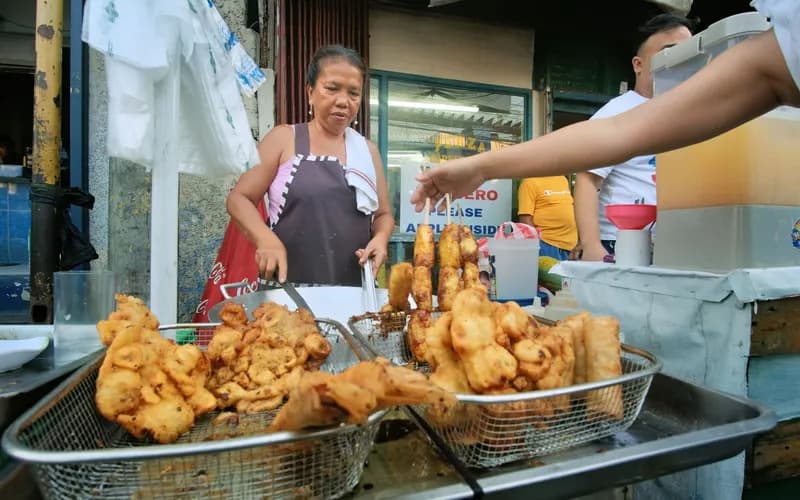
Food is central to Filipino hospitality. If you walk past people eating, you may well hear "kain tayo" or "kain po", meaning "let's eat". It is usually a polite gesture rather than a literal invitation, and a smile with "salamat, busog pa ako" or simply "salamat" is a fine response. If you are a guest in a home, however, expect to be fed generously, and try at least a little of everything offered.
Meals are typically eaten with a spoon and fork, the spoon in the right hand doing most of the work and the fork used to push food onto it; knives are rare because food is cut before cooking. Dishes are shared from the centre of the table, and rice comes with nearly everything. In more festive settings you may encounter a kamayan feast, where food is laid out on banana leaves and eaten by hand; wash your hands first and follow your hosts' lead.
Let the host or eldest person start, do not take the last piece without offering it around, and accept second helpings graciously if you can. If you have dietary restrictions, explain them simply and early; people will usually go out of their way to accommodate you.
Tipping, Haggling and Money Manners
Tipping in the Philippines is appreciated but not obligatory. Many restaurants add a 10 percent service charge to the bill; if it is there, an extra tip is not expected, though leaving small change is a kind gesture. Where no service charge appears, around 10 percent is generous. Rounding up a taxi or tricycle fare by a few pesos, giving a porter a small note, or tipping a boatman or guide at the end of a day out are all appreciated.
Haggling is normal in markets and with some tricycle drivers or boat operators, but not in malls, supermarkets or shops with fixed prices. Keep it light and friendly; aggressive bargaining over a few pesos with someone who earns very little looks mean and embarrasses both sides. Our guide to handling money in the Philippines covers the practical side of cash, cards and small change, which you will need for all of this.
Discretion matters too. Avoid flashing large amounts of cash, and do not make a show of what things cost at home. If someone does you a favour, a small gift or a return favour later is often more appropriate than trying to pay them on the spot.
Churches, Fiestas and Faith
The Philippines is predominantly Catholic, with a significant Muslim population concentrated in parts of Mindanao, and faith is woven into daily life. When visiting churches, dress modestly, with shoulders and knees covered, remove hats, speak quietly and avoid walking around during mass. Flash photography during services is inappropriate.
Town fiestas, honouring each community's patron saint, are among the best times to experience local hospitality, and visitors are often invited into homes to eat. Holy Week is a very different period, reflective in tone, with many businesses closed and transport crowded as families travel home. Our advice on planning around Philippine fiestas and Holy Week explains how to time a visit around both.
In Muslim communities, dress more conservatively, particularly women, avoid eating or drinking in public during daylight hours in Ramadan, and follow local guidance on visiting mosques.
Getting Around Politely
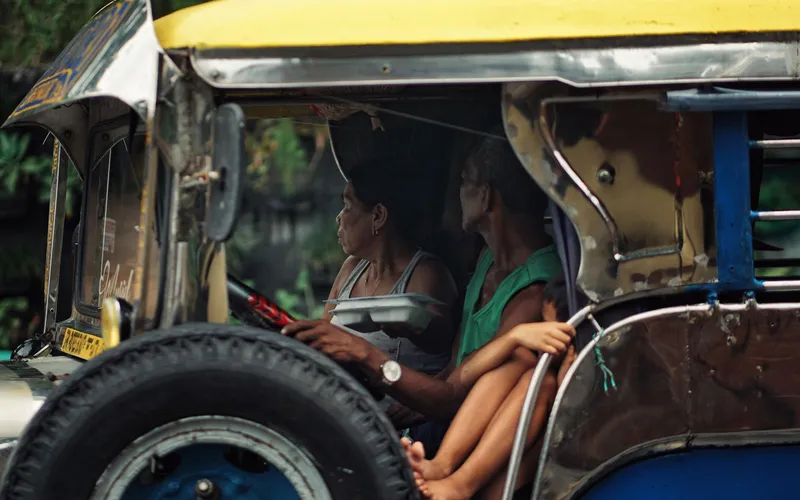
Public transport has its own small rituals. On a jeepney, passengers pass their fare forward hand to hand to the driver, saying "bayad po", and change is passed back the same way; do your share of passing. To get off, say "para po" clearly or tap a coin on the metal roof rail. On tricycles, agree the fare before you set off if there is no fixed rate.
Priority lanes and seats for senior citizens, pregnant women and persons with disabilities are taken seriously, and giving up your seat to an older person on a crowded vehicle is noticed and appreciated. For more on each mode of transport, see our guide to getting around the Philippines by jeepney, tricycle and boat.
Staying With Families and Living in a Community
Slow travellers often end up in homestays or long-term rentals, and this is where etiquette matters most. Remove your shoes when entering a home unless told otherwise. Bring a small gift, known as pasalubong, when visiting, whether fruit, sweets or something from your home country. Greet the elders of the household first. Offer to help after meals, though you may be firmly refused.
In a neighbourhood, a little effort builds goodwill quickly. Learn your neighbours' names, buy from the local sari-sari store, and say hello to the barangay officials if you are staying for weeks. Expect some noise, from karaoke to roosters to Sunday celebrations; complaining directly is rarely effective, and a quiet word through your landlord is usually better. Our guide to finding a long-stay rental in the Philippines covers the practical side of settling in.
Common Mistakes to Avoid
A few gaffes cause real offence. Losing your temper in public is the biggest: shouting at a waiter, driver or official causes deep embarrassment and almost never gets results. Stay calm, smile and escalate politely if needed.
Other mistakes include criticising the country or its politics loudly, photographing people, especially children and older people, without asking, wearing swimwear away from the beach, and public displays of affection beyond hand-holding in conservative areas. Be careful with jokes about religion, family or national pride. And remember that saying "yes" to an invitation and then not turning up is taken more seriously than declining gracefully in the first place.
What to Do Next
- Learn five phrases before you arrive: salamat po, opo, para po, bayad po and magandang umaga po, meaning good morning.
- Practise reading indirect answers, and ask open questions when you need a clear yes or no about transport or bookings.
- Pack a few small gifts from home to give as pasalubong if you are invited into someone's house.
- Check the fiesta calendar for the places you will stay, and plan around Holy Week if you want quieter travel.
- If you are staying longer, introduce yourself to neighbours and your landlord early, and keep a relaxed attitude to noise and timing.
Frequently Asked Questions
Do foreigners need to use po and opo?
No, but it is appreciated, particularly with older people in Tagalog-speaking areas. A simple "salamat po" is an easy way to show respect. In Cebuano-speaking regions, "sir" and "ma'am" are more common.
Should I do the mano gesture?
Only when it feels natural, typically if you are staying with a family and an elder offers their hand or younger relatives encourage you. It is not expected of visitors and should not be performed on strangers.
Is tipping expected in the Philippines?
It is appreciated but not required. Check restaurant bills for a 10 percent service charge; if none is included, around 10 percent is generous. Small tips for porters, guides and boat crews are welcome.
Why do people say yes when they mean no?
Group harmony and avoiding embarrassment matter greatly, so people often avoid a direct refusal. A hesitant yes, "maybe" or "I'll try" can mean no. Ask open questions and make it easy for people to tell you the truth.
What should I wear when visiting churches?
Cover your shoulders and knees, remove hats, and keep your voice down. Avoid walking around or taking flash photographs during mass.
Is it rude to call someone with "psst"?
No. It is a common and accepted way of getting attention in the Philippines. What can offend is beckoning with your palm up and a curled finger, which is associated with calling animals.