

There is a kind of restaurant in the Philippines that has no website, no English menu and often no sign worth reading. It has a row of steel trays, a woman with a ladle and a queue of office workers, tricycle drivers and schoolchildren. It is called a carinderia, and if you learn to use it, you will eat better, spend far less and understand the country more quickly than any number of sit-down restaurants can teach you.
The format can feel intimidating the first time. Everything is happening at once, nobody explains the rules, and the dishes have names you may not know. It is not complicated, though. This guide walks through exactly how a carinderia works, what to expect to pay, how to order without a shared language, how to stay well, and how to be a good guest. The approach applies from Manila to the smallest provincial town, with regional differences that we flag along the way.
What a carinderia actually is
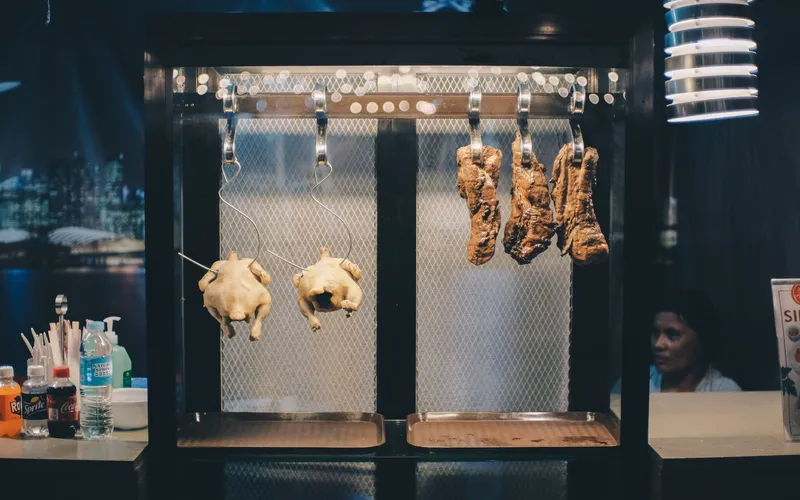
A carinderia is a small, informal eatery that sells home-style cooked food from trays or pots. The dishes, called viands or ulam, are cooked in volume, usually in the morning, and served with rice. A close cousin is the turo-turo, which means point-point in Filipino: you point at what you want. In practice, many people use the two words interchangeably, although a turo-turo is sometimes a counter inside a food court or market.
You will find carinderias near markets, bus terminals, universities, hospitals and office districts, anywhere people need a fast, filling and cheap lunch. They are the backbone of everyday eating, and many families depend on them for their livelihood. Eating in one is both the best value in the country and one of its more direct ways to support a local business.
One request. Up to five tailored proposals.
Skip contacting agencies one by one — share your trip once and let up to five trusted Philippines agencies come to you. Free, with no obligation.
Get my free quotesWhat you will pay
Prices vary by city, region and time, and you should always confirm on the spot. As a rough 2026 reference from Manila, a typical carinderia plate of rice with one viand is reported at around ₱50 to ₱70, with adobo plates in a well-known Quiapo food street around ₱60 to ₱80. Mall food-court turo-turo counters run a little higher, around ₱70 to ₱90 with rice, and university canteens can be lower still, around ₱40 to ₱60 for a full meal. Street snacks such as fish balls and kwek-kwek (battered quail eggs) are typically ₱10 to ₱20 per stick.
These numbers come from a Manila-focused 2026 price survey and the writers themselves advise checking current prices. Provincial towns can be cheaper, while tourist-heavy islands usually cost more. If you want to put these numbers into a trip budget, our guide to the cost of a Philippine trip is the right companion.
How ordering works, step by step
- Arrive at the right time. Carinderias cook in batches, so food is best early and runs out late. Aim for the late-morning window, roughly 11:00 to 13:00, when trays are full and busy. In some places, the best dishes are gone by early afternoon.
- Look before you commit. Walk along the trays. Most dishes are visible, and you can ask the server what something is. A simple "ano po ito?" (what is this, politely) works, and a smile does more.
- Point and say how many. Indicate one or two viands. A single viand with rice is a normal meal. Two is generous. Say "rice" and the server will add it. If you want less rice, say "konting kanin" (a little rice).
- Pay at the counter or after eating. Practice varies. At many small carinderias, you pay when you receive the plate, and the price on the board or the one the server states is what you pay. There is typically no service charge. At a sit-down restaurant, check the menu for "SC" or a 10 percent service charge.
- Take it away if you prefer. You can ask for "take-out" or "pabalot" (wrap it up). Food is often packed in a plastic bag or a foam box.
Get matched with up to 5 trusted Philippines agencies
- Free
- No obligation
- Up to 5 agencies
What to order
If you cannot decide, choose dishes that are cooked to hold. Braises and stews are the safest and often the most flavourful. Some examples:
- Adobo: meat, usually pork or chicken, simmered in vinegar, soy sauce, garlic and pepper. A reliable first choice.
- Sinigang: a sour soup, tamarind-based in many regions, with pork, fish or shrimp and vegetables.
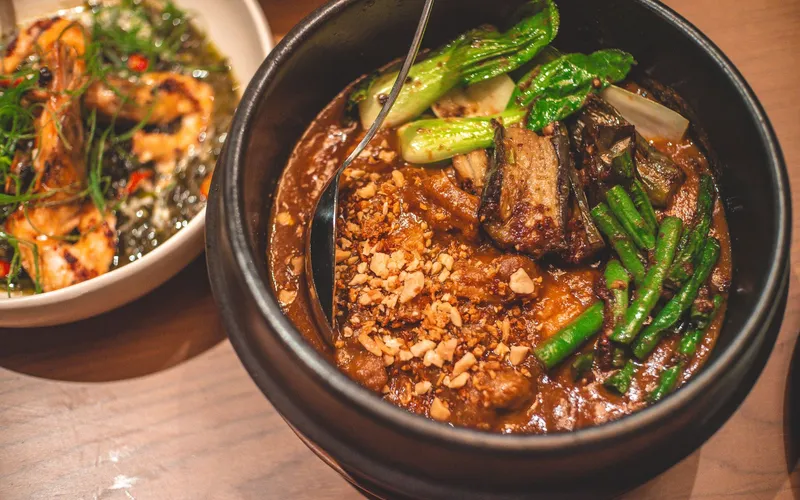
- Kare-kare: an oxtail or beef stew in peanut sauce, usually served with shrimp paste on the side.
- Pinakbet and other vegetable dishes: especially common in Ilocos and the north, with squash, okra, eggplant and bitter melon.
- Lechon kawali or fried fish: crisp and satisfying, and useful when you want something less saucy.
- Laing and ginataan: coconut-milk dishes, more common in Bicol and the south.
For a deeper tour of regional dishes, see our slow traveller's guide to Filipino food. Each region has its own carinderia staples, and part of the pleasure is noticing them change as you travel.
Staying well while eating cheaply
Eating at carinderias is generally safe when you apply ordinary common sense. These habits help:
- Choose busy places. A queue means high turnover, which means fresh food. Look for handwritten menu boards and locals in line.
- Prefer food that is hot. Dishes kept simmering are safer than dishes sitting at room temperature all afternoon.
- Mind the water and ice. Tap water is generally not considered safe to drink in the Philippines, and one survey advises avoiding ice from street vendors. Refill from a filter if your accommodation provides one, or buy bottled water, typically around ₱20 to ₱25 for a standard bottle in Manila in 2026.
- Go gently at first. If you are new to the food, start with a modest portion and avoid raw items on your first day or two.
- Wash your hands. Many carinderias have a basin or a bottle of water nearby. Carry hand sanitiser as a backup.
If you have a sensitive stomach, a serious allergy or medical conditions, speak to your doctor before travelling and carry any medication you need. Dengue and other health topics are covered in our dengue update for travellers.
Handling cash
Many carinderias are cash-only and do not accept cards or even mobile wallets. Carry small bills and coins, as a ₱1,000 note can be hard to change at a tiny stall in the morning. Keep small denominations ready, and if you must break a large bill, try a convenience store first. Our guide to money in the Philippines explains cash, cards and GCash.
Spotting the right place and avoiding the wrong one
You do not need a guidebook to pick a good carinderia. A few signs help:
- Locals, in numbers. Office workers, drivers, students in uniform.
- Handwritten prices. A board with prices in Filipino or a mix of languages is a good sign.
- Food turning over. Trays that are clean, with a mix of full and nearly empty, suggest rotation.
- No tout. One 2026 budget survey warns that restaurants with a tout outside, an English-only menu or both can cost two to three times local prices. That is one author's view, but the pattern is familiar in tourist areas.
Be wary of anyone who quotes a price only after you have eaten. Ask first. In tourist hot spots, prices may be higher than the figures above, and that is fair as long as you were told in advance.
A slow day of eating
Carinderias fit a slow rhythm naturally. Start with a market breakfast of rice porridge, fried eggs or a bread roll with coffee. Take a long, late-morning walk, and arrive at your chosen carinderia just as the trays fill. Eat unhurriedly, because nobody will rush you if you leave the seat free for the next person within a reasonable time. In the afternoon, a fruit shake or a skewer from a street vendor is enough to carry you to dinner, which can be a second carinderia, a seafood grill or a family-run restaurant.
Eating this way spreads your money across several small businesses instead of one large one. It also teaches you to notice what changes from region to region: the sourness of the soup, the sweetness of the sauce, the fish in the tray.
Etiquette at the counter
Good manners are simple. Greet the server, say "po" or "opo" to show respect, wait your turn, and do not photograph people without asking. Share a table if asked. Do not leave food behind on the plate. If the stall is small, eat and move on so others can sit. Our guide to Filipino etiquette covers po, mano and everyday courtesy in more depth.
Carinderias and the Michelin conversation
It is a small irony that in 2025 the Michelin Guide listed a turo-turo canteen serving Ilocano staples among its Manila Bib Gourmand selections. The attention is welcome, but it does not change what carinderias are for. If you want to understand how the guide fits with everyday eating, read our piece on the Michelin Guide's second year in the Philippines. Whether you eat in a starred room or a corner stall, the best meals tend to be the ones where you paid attention.
What to Do Next
- Find a carinderia near your accommodation, preferably one with a queue, and visit at lunchtime.
- Carry small bills and coins, and a bottle of water.
- Learn three phrases: "ano po ito?", "konting kanin" and "salamat po".
- Order one viand and rice on your first visit, then add a second dish.
- Compare prices over three visits, and note what you like.
- Build a day around a market, a carinderia lunch and a local snack in the afternoon.
- Use our journey planner to find regions whose food you want to try.
Frequently Asked Questions
What is the difference between a carinderia and a turo-turo?
They overlap. A carinderia is a small eatery selling home-style dishes, and turo-turo describes the point-and-choose method of ordering. Many people use the words interchangeably.
How much does a carinderia meal cost?
In Manila in 2026, a plate of rice with one viand is reported at roughly ₱50 to ₱70, with some well-known spots slightly higher. Prices differ by region and are higher in tourist areas.
Is it safe to eat at a carinderia?
Generally, yes, if you pick a busy place, choose hot dishes and avoid ice and tap water. Use the same common sense you would anywhere else.
Do carinderias accept cards?
Most do not. Carry cash in small denominations.
Is there a service charge?
Not usually at carinderias or counters. At sit-down restaurants, look for "SC" or a 10 percent service charge on the menu.
What if I do not speak Filipino?
You can point and smile. A few polite phrases and a patient attitude go a long way, and many servers understand basic English.
Can I take food away?
Yes. Ask for take-out, and expect it in a plastic bag or box. Bring your own container if you can to cut waste.