

For thirty years the Philippine tourism map has been drawn with a hole in the south. Luzon and the Visayas absorbed the flights, the marketing budgets and the guidebook pages; Mindanao, the country's second-largest island and the heart of its southern island group, was reduced in most travellers' minds to a single word, security. In 2026 that map is being quietly redrawn. Domestic travellers are already there in numbers, the national tourism department is actively working the region into its circuits, and a handful of islands on Mindanao's fringe have become some of the fastest-growing destinations in the country. This is what is actually happening, what the caveats really are, and why it matters to anyone who prefers to travel slowly.
The numbers behind the shift
Start with Davao City, the region's commercial capital. It recorded 525,342 arrivals between January and March 2026, a rise of about nineteen percent on the same quarter a year earlier, driven overwhelmingly by domestic travellers, business events and the city's festival calendar. In July 2026 the largest hotel in Mindanao, a 519-room property, opened in the city, a piece of supply that says more about investor confidence than any press release.
Off the coast, the story is sharper still. Camiguin, the small volcanic island north of Mindanao proper, received 397,818 visitors in 2025, up from 288,558 the year before, a jump of nearly thirty-eight percent. Of those, 376,322 were domestic and 21,496 foreign, a ratio that describes the whole southern phenomenon: Filipinos got here first. The province launched an Isle Visit Camiguin 2026 campaign to build on it. Nationally, the Department of Tourism has been targeting more than six million international arrivals for the year, and it has concluded, correctly, that it cannot reach that number by selling Boracay and El Nido harder.
One request. Up to five tailored proposals.
Skip contacting agencies one by one — share your trip once and let up to five trusted Philippines agencies come to you. Free, with no obligation.
Get my free quotesMindanao is not one place
The single most useful thing a traveller can understand is that Mindanao is not a destination in the way Bohol or Palawan is. The island alone covers roughly 97,000 square kilometres and holds more than twenty-six million people; the wider region takes in six administrative regions, an autonomous Muslim region in the west, dozens of indigenous groups, and terrain ranging from the country's highest peak to mangrove deltas. Conditions in Davao City bear no more relation to conditions in the Sulu archipelago than Lisbon does to eastern Ukraine.
That distinction matters commercially as well as practically. The places drawing visitors in 2026 are specific and identifiable: Davao and its surrounding highlands, Bukidnon, Camiguin, Siargao and the Dinagat islands, Lake Sebu in South Cotabato, and the coastal towns of Surigao and Misamis Oriental. They are not the places that appear in security bulletins. Treating the whole island group as a single risk category is exactly the analytical error that has kept it off the map, and it is the error the tourism department is now trying to correct.
Davao's quiet reinvention
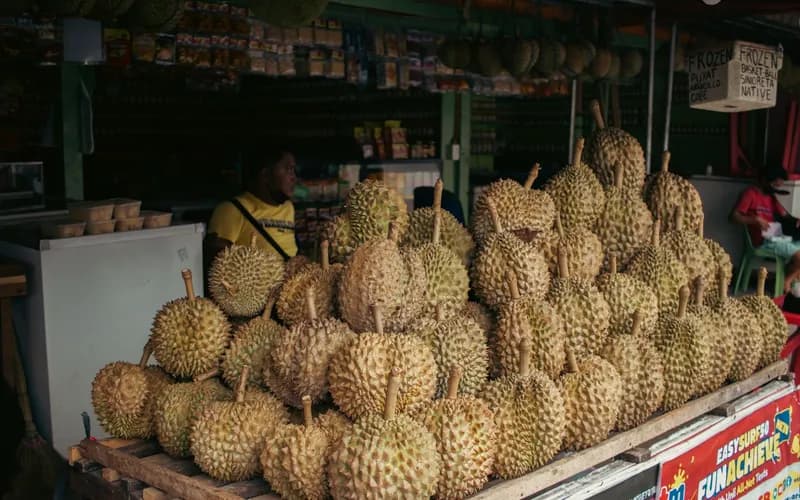
Davao has spent the past two years reframing itself from a business-travel stopover into a place with reasons to stay. In March 2026 the city launched four themed tourism circuits, built around harvest and farm visits, its Japanese heritage, a food crawl and the public markets. It is a modest, sensible piece of product development, and it reflects what visitors were already doing: eating durian on Roxas Avenue, riding out to the fruit farms in the hills, taking the boat to Samal island.
The city works well for slow travel precisely because it is not a resort. It is a real, functioning, sprawling southern city with good food, cool highland escapes an hour away, and the Kadayawan harvest festival filling the third week of August. The wider pattern here is the same one we traced in our analysis of the Philippines' turn away from Boracay towards spread-out travel: demand is dispersing, and secondary cities are the beneficiaries.
Get matched with up to 5 trusted Philippines agencies
- Free
- No obligation
- Up to 5 agencies
Highlands, lakes and the agri-tourism thread
Inland from Davao and Cagayan de Oro, the uplands of Bukidnon have become the most convincing agri-tourism corridor in the country. Pineapple plantations, coffee and cacao farms, crater lakes such as Lake Apo, and highland resorts at Dahilayan give the province a temperate counterpoint to the coast, and the local airport has been upgraded to handle larger aircraft, which will do more for access than any campaign.
South-west, in South Cotabato, Lake Sebu remains the region's most quietly rewarding cultural destination: a highland lake ringed by T'boli communities known for their tinalak weaving, brass casting and the enormous cascades of the Seven Falls. Homestays and community-run guiding are the norm rather than the exception here. This is the same current we described in our piece on the Philippines' farm-tourism boom and the rise of rural stays, and Mindanao is where it has gone furthest.
The island fringe: Camiguin, Siargao and Dinagat
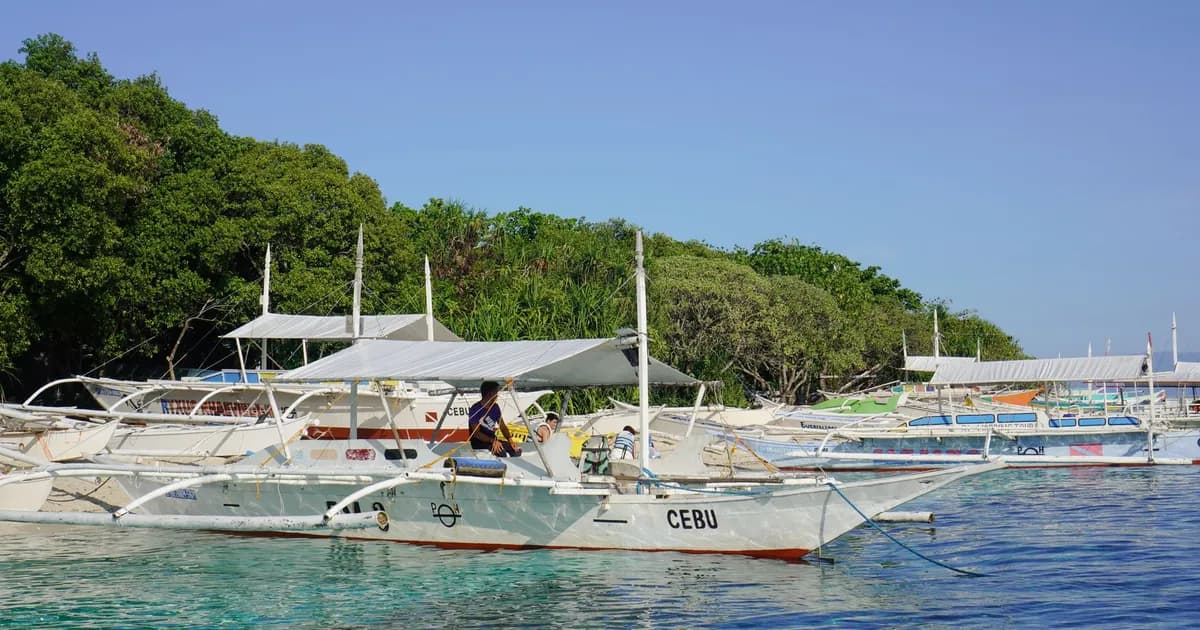
The clearest evidence that the south is being reassessed sits offshore. Siargao, in Surigao del Norte, is administratively part of Mindanao and has been on the international surf map for a decade; it has since become a general-purpose island destination, with all the pressures that implies. Camiguin, small enough to circle in a morning, has grown its arrivals by more than a third in a single year while staying almost entirely domestic in profile. The Dinagat Islands, north-east of Surigao, remain barely visited.
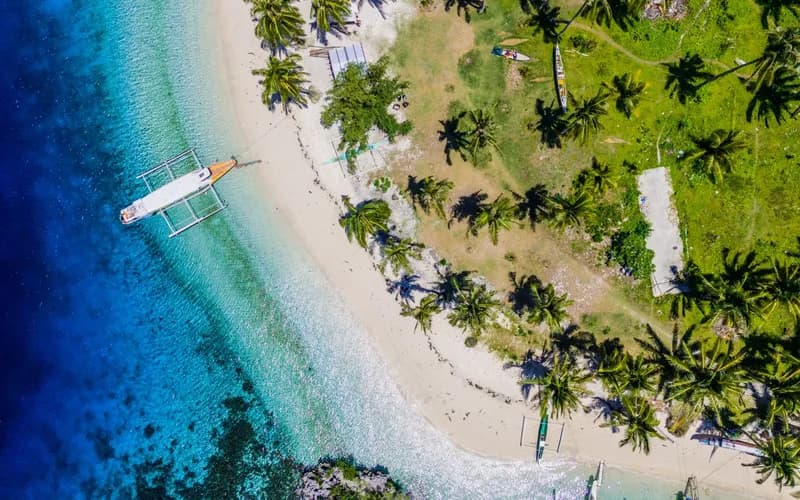
These islands are worth watching for a reason that has little to do with novelty. They are the test of whether Philippine destinations can absorb rapid growth without repeating the mistakes of the 2010s. Camiguin in particular has an arrivals figure approaching four hundred thousand on an island of fewer than a hundred thousand residents, and how it manages waste, water and the shoulder-season crunch will tell you a great deal. Our portrait of Camiguin, the island born of fire covers what a week there actually looks like.
What the advisories actually say
Here is the honest part, and it should not be skipped. Several governments still maintain elevated warnings for parts of the region. In May 2026 the Australian government advised its nationals to reconsider travel to eastern Mindanao while explicitly excluding Camiguin, Dinagat and Siargao, and to avoid other areas of the island altogether. The United States maintains a Level 3 advisory over parts of Mindanao and a Level 4 over the Sulu archipelago and Marawi City. Regional officials and the Mindanao Development Authority have publicly argued that these assessments lag current conditions, particularly for Davao and the northern coast, and they have a reasonable case. Both things can be true.
The practical consequences are what matter. Advisories can affect travel insurance validity, so read your policy wording rather than a summary before you book, and check the advisory issued by your own government rather than someone else's. Take local advice seriously, stay on established routes, and register any inland trekking with the local tourism office. In the destinations listed above, the realistic risks are the ordinary ones: scooter accidents, rip currents, and boats cancelled by weather.
Connectivity, and the links still missing
Access is the constraint that has held the south back, and it is easing rather than solved. Davao, Cagayan de Oro, Butuan, General Santos and Zamboanga all have regular jet service from Manila and Cebu; Camiguin is served by a short turboprop hop from Cebu; Siargao has multiple daily flights in season. The Bureau of Immigration is extending biometric e-gates to regional international airports including Davao from 2026, which will matter for anyone entering the country directly in the south rather than transiting Manila. The wider airport programme, and what it means for domestic connections, is covered in our rundown of the Philippines' new airports and domestic travel.
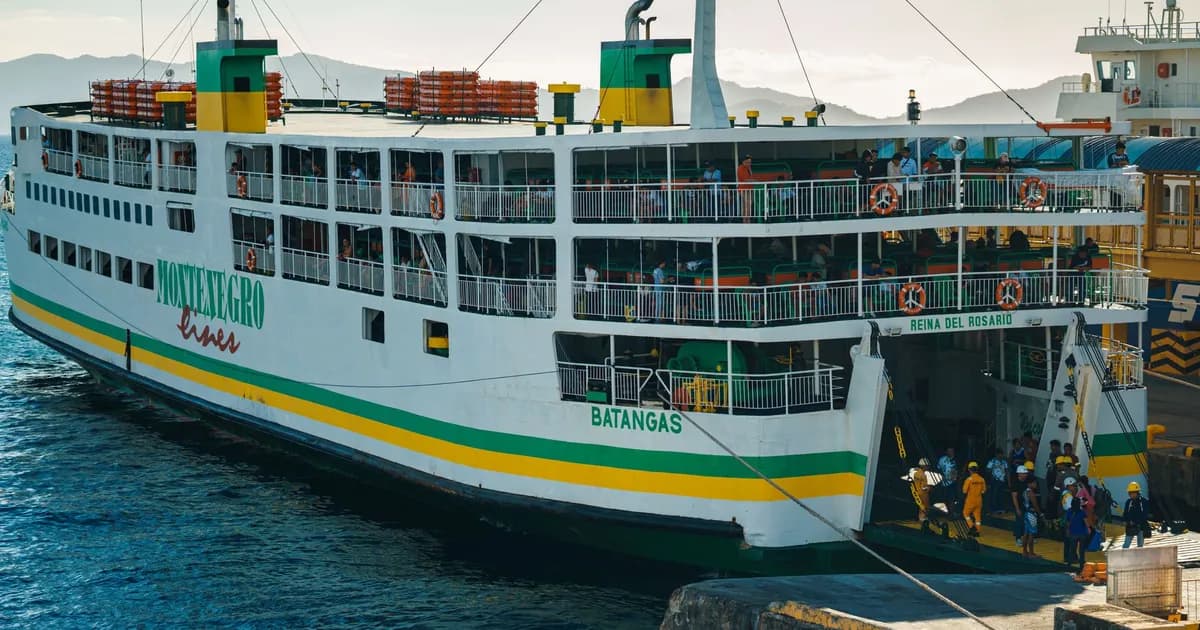
What is still missing is the sea. Inter-island ferries between Mindanao and the Visayas exist but run to thin, weather-dependent schedules, and the routes that would make a genuinely slow overland-and-sea journey easy, Bohol to Camiguin, Camiguin to Balingoan, Surigao to Leyte, still demand patience and buffer days.
What this means for a slow traveller
For anyone travelling on the UNRUSH model, the southern shift is good news for an unglamorous reason: the infrastructure is arriving before the crowds. Rooms are cheaper than the equivalent in Palawan or Siquijor, guiding is more often community-run, and a foreign visitor is still unusual enough to be greeted rather than processed. The cultural depth in Bukidnon and South Cotabato is genuine and largely uncommodified.
The trade is time. Distances are long, connections are sparse, and the region punishes tight itineraries. Two weeks spent between Camiguin, Bukidnon and Davao will give you far more than the same fortnight spread across the whole island group. If you would rather sample the wider country first, our guide to off-the-beaten-path corners of the Philippines is a useful starting point.
What to Do Next
- Read your own government's current advisory for the Philippines and note which provinces are named, not just the headline rating.
- Confirm with your insurer, in writing, that your policy remains valid for the specific provinces you intend to visit.
- Choose one corridor for a first trip. Camiguin plus Bukidnon plus Davao is the most straightforward and needs about two weeks.
- Book flights into Davao or Cagayan de Oro rather than routing everything through Manila, and allow a night either side of any onward ferry.
- Arrange guiding through community and provincial tourism offices where they exist, particularly at Lake Sebu and in Bukidnon.
- Set your expectations by reading our charter for slow travel, which explains how we weigh depth against distance.
Frequently Asked Questions
Is it safe to travel in Mindanao in 2026?
It depends entirely on where. Davao, Bukidnon, Camiguin, Siargao, Dinagat and the northern coast are visited routinely by hundreds of thousands of domestic travellers each year, and several foreign advisories explicitly carve some of them out of their warnings. Other areas, notably the Sulu archipelago and Marawi, carry the highest warning levels and should not be part of a leisure itinerary. Read the advisory issued by your own government, in full, before deciding.
Which parts of Mindanao are easiest for a first visit?
Camiguin, Davao City and the Bukidnon highlands form the most comfortable first circuit, with good flights, established accommodation and short transfers. Siargao is easy but no longer quiet. Lake Sebu rewards a little more effort and is best approached from General Santos.
Does a foreign travel advisory invalidate my insurance?
It can. Many policies exclude claims arising in areas where your government advises against travel, and the wording varies between insurers. Ask your insurer to confirm coverage for the named provinces in writing before you book flights, and keep the reply.
When is the best time to visit the southern Philippines?
Much of Mindanao lies south of the main typhoon belt and has a more even rainfall pattern than Luzon, which makes it a strong choice from June to October when other regions are wettest. December to February is generally pleasant. Camiguin and Siargao are busiest around the Christmas and Holy Week holidays.
How do you get from the Visayas to Mindanao without flying?
Roll-on roll-off ferries link Bohol to Camiguin, Camiguin to Balingoan on the mainland, and Leyte to Surigao, among other routes. Sailings run a few times a week rather than daily on some legs, schedules move with the weather, and buffer days are essential. Confirm at the port rather than relying on online timetables.
Is Mindanao cheaper than the rest of the Philippines?
Generally yes, outside Siargao. Accommodation, food and transport in Davao, Bukidnon and the smaller provincial towns run below equivalent standards in Palawan, Cebu or Boracay, and the difference is most pronounced in the mid-range, where family-run guesthouses still dominate.