Camiguin: The Philippines' Island Born of Fire, at Its Own Pace
Some islands announce themselves; Camiguin simply waits to be found. This tiny volcanic island off the northern coast of Mindanao packs an astonishing amount into a shoreline you can circle in a day: seven volcanoes, waterfalls tumbling through the jungle, hot and cold springs, a brilliant white sandbar, and a cemetery slipped beneath the sea. It is one of the smallest provinces in the Philippines and one of its most rewarding for the slow traveller, a place that made the New York Times list of places to go in 2026 yet still feels like a secret. Here the pace is unhurried, the crowds are thin, and the island rewards those who linger.
Camiguin is not a checklist destination. Its pleasures are quiet and its scale is small, and the best way to experience it is to slow down to its rhythm, renting a scooter, following the coast road, and letting the island reveal itself over a few gentle days.
Where Camiguin is, and why it stays quiet
Camiguin sits in the Bohol Sea off the northern coast of Mindanao, a compact island ringed by a coastal road only around sixty-four kilometres long. Its small size and its position, reached by ferry from the Mindanao mainland or by a short flight, keep it well off the main tourist trail that runs through Palawan, Cebu and Boracay. There are no mega-resorts and no crowds to speak of; the island has stayed small-scale and local.
That quietness is Camiguin's defining quality. It is the kind of place where you quickly recognise faces, where tricycle drivers become friends, and where the loudest sound is often the sea. For travellers seeking the Philippines beyond its famous names, it is a perfect fit, and it sits comfortably among the quiet islands our guide to off-the-beaten-path Philippines celebrates.
One request. Up to five tailored proposals.
Skip contacting agencies one by one — share your trip once and let up to five trusted Philippines agencies come to you. Free, with no obligation.
Get my free quotesThe island born of fire
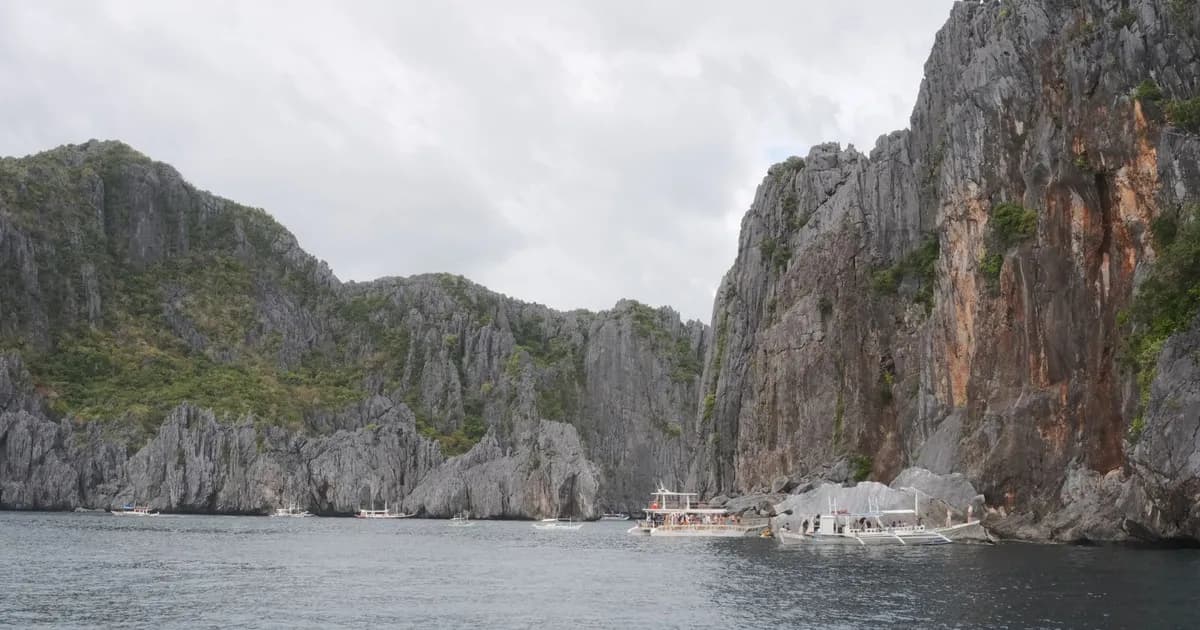
Camiguin is known as the island born of fire, and the name is earned. Seven volcanoes have shaped it, and their legacy is written all over the landscape, in the hot springs, the fertile volcanic soil, and the island's most poignant sight: the Sunken Cemetery. When Mount Vulcan erupted in the early 1870s, part of the old town, including its cemetery, slid beneath the waves. Today a large white cross rises from the water to mark the spot, and you can snorkel, dive or take a boat out over the graves, an eerie and beautiful reminder of the island's volcanic power.
For the more energetic, Mount Hibok-Hibok, the island's active volcano, can be climbed with a guide, rewarding the effort with views across the island and the sea beyond; the drier months are best for the trails. But you need not climb anything to feel the volcanic character of Camiguin. It is present in the steam of the springs, the black-sand and white-sand beaches, and the sheer green fertility that fire has left behind.
Waterfalls, springs and White Island
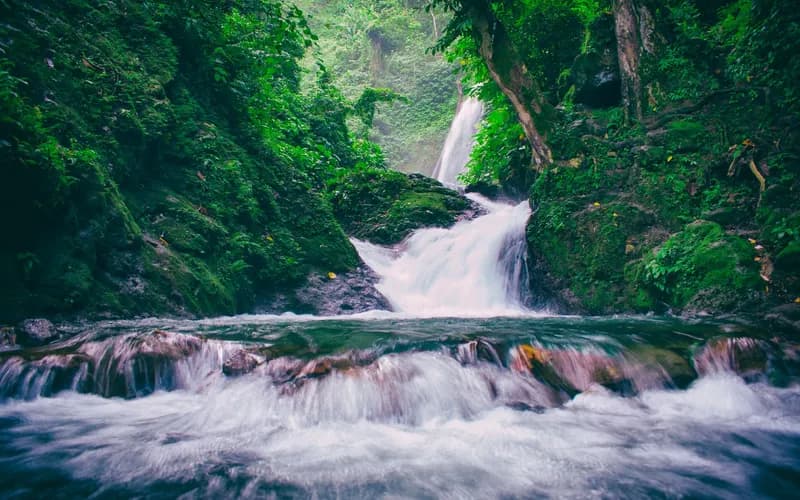
Beyond its volcanoes, Camiguin is an island of water in all its forms. Katibawasan Falls, one of the tallest waterfalls in the Philippines, plunges more than seventy metres in a single dramatic drop into a cool basin, reached by a short shaded walk, an easy and beautiful stop. Elsewhere, the island's springs offer the full range of temperatures: soothing hot springs warmed by the volcanoes, and cold springs where you can swim in startlingly clear water on a hot day.
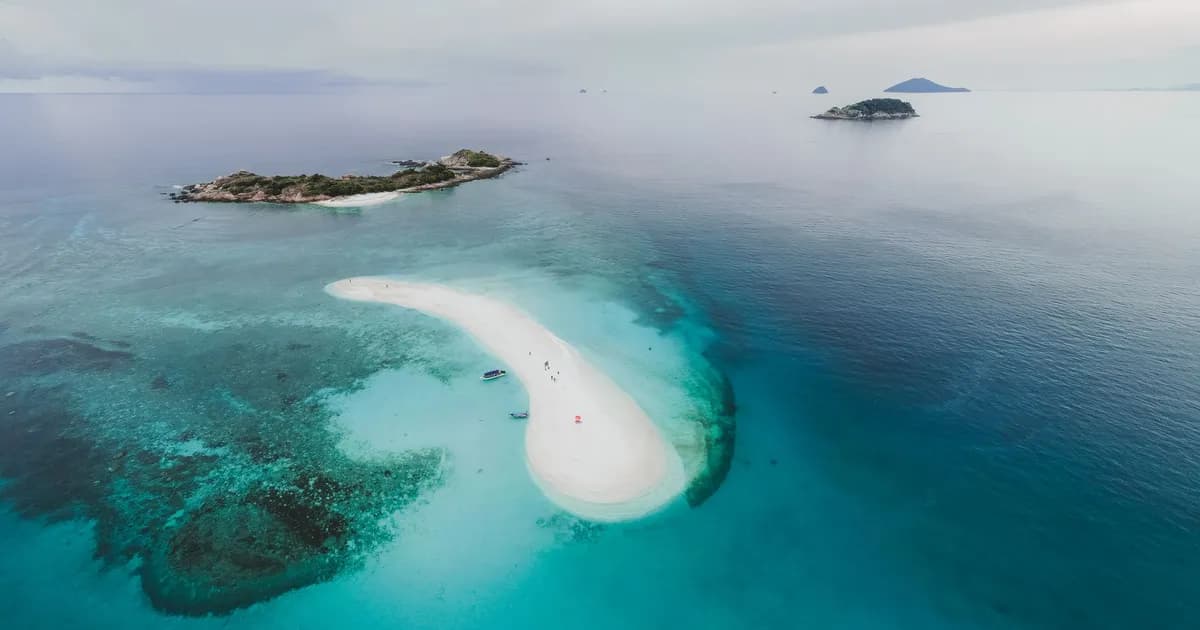
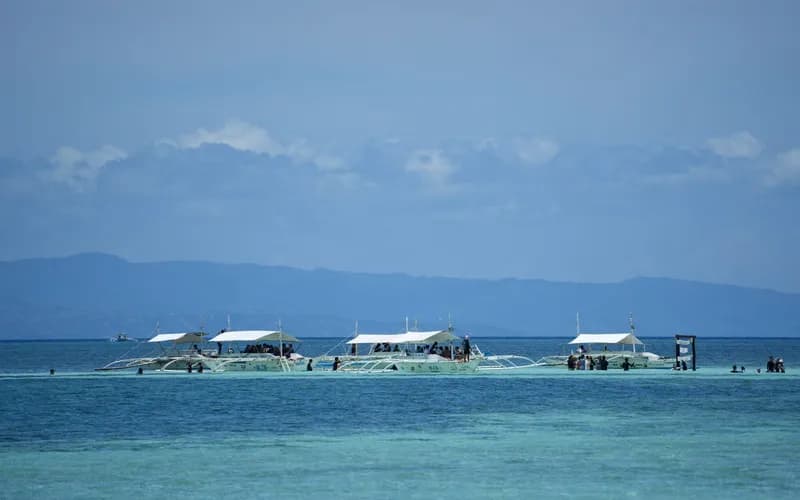
Offshore lies Camiguin's postcard image: White Island, a pure-silica sandbar with no trees or buildings, just a curve of brilliant white sand in a turquoise sea, reached by a short banca ride and best visited early before the sun climbs high. Around the coast, snorkelling and diving reveal healthy reefs and marine life. It is a remarkable concentration of natural pleasures for so small a place, and all of it accessible at a slow, easy pace.
Get matched with up to 5 trusted Philippines agencies
- Free
- No obligation
- Up to 5 agencies
Getting around: the joy of a small island
Part of Camiguin's charm is how simple it is to explore. With a coastal ring road of only sixty-odd kilometres, the whole island is within easy reach, and the pleasure lies in circling it slowly. Renting a scooter is the classic way to get around, giving you the freedom to stop at every waterfall, spring and viewpoint that catches your eye; for those who prefer not to drive, tricycles are cheap and plentiful, and drivers happily double as guides.
This is island travel at its most relaxed, no long transfers, no complicated logistics, just a small, beautiful place to loop at your leisure. It is the antithesis of the exhausting island-hopping that can dominate a Philippines trip, and a welcome chance to stay put and go deep rather than skimming many islands fast; our guide to island-hopping the Philippines slowly makes the case for exactly this kind of unhurried approach.
When to go
Camiguin has a clear best season. The drier months from around December to April bring the most reliable weather, the best conditions for hiking Hibok-Hibok, and clear seas for White Island and snorkelling. This is the ideal window for a visit, though the island is quiet enough that you will rarely feel crowded even at its busiest.
The months from roughly June to November fall within the typhoon season, when heavy rain and rough seas can disrupt travel and make the trails muddy and the crossings uncomfortable. It is not impossible to visit then, and the island is at its greenest, but it calls for flexibility and a tolerance for weather. For help timing a Philippines trip around the seasons, our slow travellers guide to the Philippines sets out when to go where.
Camiguin and the slow south
Camiguin rewards a stay of several days in its own right, but it also pairs beautifully with the wider slow south of the Philippines. Its position off northern Mindanao makes it a natural addition to a journey through the region, and it shares a gentle, unhurried spirit with other quiet islands such as Siquijor, the mystical island to the west; our guide to Siquijor describes a kindred slow-travel destination that combines well with Camiguin on a longer trip.
Rather than racing between the country's famous highlights, a journey built around islands like these, small, quiet and deeply rewarding, captures a side of the Philippines that the crowds never see. Camiguin is a perfect anchor for such a trip: compact enough to know, quiet enough to relax into, and rich enough to keep you happily occupied for as long as you choose to stay. To weave it into a wider slow itinerary, a specialist on our Philippines travel agencies page can help.
Food, fruit and the rhythm of island life
Camiguin has a flavour of its own, and part of slowing down here is tasting it. The island is famous across the Philippines for its lanzones, a small, sweet, translucent fruit that grows on the volcanic slopes and is celebrated each October in the Lanzones Festival, a lively few days of street dancing and costume that is the island's biggest annual event. Even outside the festival, the local markets and roadside stalls are worth lingering over, and fresh seafood, grilled and simple, is a staple of any Camiguin meal.
Where you stay shapes the experience too. Camiguin has kept its accommodation small and personal, low-key beach resorts, guesthouses and homestays rather than international chains, and choosing a locally run place puts you closer to island life and keeps your money in the community. Many are strung along the quieter stretches of coast, where the day ends with a swim and a plate of grilled fish as the light goes.
This is the real texture of Camiguin: unhurried days that blur pleasantly into one another, warm and easy encounters with the people who live here, and a sense that you have found a corner of the Philippines that time has treated gently. It is a place that rewards not doing very much at all, and for the slow traveller that is precisely the appeal. Give it a few days and it works a quiet magic that the busier islands, for all their fame, rarely manage.
What to Do Next
- Reach Camiguin by ferry from the Mindanao mainland or a short flight, and give yourself at least three or four days.
- Rent a scooter or hire a tricycle to circle the sixty-odd-kilometre coast road at your own pace.
- See the Sunken Cemetery, Katibawasan Falls, the hot and cold springs and White Island, going early to the sandbar.
- Consider climbing Hibok-Hibok with a guide in the dry season, and snorkel the reefs and the sunken graves.
- Visit between December and April for the best weather, and consider pairing Camiguin with Siquijor or the wider south.
Frequently Asked Questions
Where is Camiguin and how do I get there?
Camiguin is a small volcanic island in the Bohol Sea off the northern coast of Mindanao. It is reached by ferry from the Mindanao mainland or by a short flight to the island's small airport. Its out-of-the-way position keeps it quiet and off the main tourist trail.
What is there to do in Camiguin?
The highlights are the Sunken Cemetery, Katibawasan Falls, the island's hot and cold springs, and White Island, a brilliant white sandbar offshore. You can also climb the active volcano Hibok-Hibok with a guide and snorkel or dive the reefs. The pleasure lies in an unhurried loop of a small, beautiful island.
What is the Sunken Cemetery?
The Sunken Cemetery is an old graveyard that slid beneath the sea when Mount Vulcan erupted in the early 1870s, submerging part of the town. A large white cross now marks the spot, and visitors snorkel, dive or take a boat out over the graves. It is one of Camiguin's most haunting and memorable sights.
How many days should I spend in Camiguin?
Three or four days is ideal, enough to circle the island slowly, see the waterfalls, springs, Sunken Cemetery and White Island, and perhaps climb Hibok-Hibok, without rushing. The island is small but rewards an unhurried pace, and many travellers happily stay longer.
When is the best time to visit Camiguin?
The dry season from about December to April offers the most reliable weather, the best hiking conditions and clear seas for White Island. The June-to-November typhoon season brings heavy rain and rough seas, so it calls for flexibility, though the island is lush and green then.
How do I get around Camiguin?
The island has a coastal ring road of only around sixty-four kilometres, so getting around is easy. Renting a scooter gives you the freedom to explore at your own pace, while tricycles are cheap, plentiful and often double as informal guided tours.