

Most health advice about Thailand is either alarmist or useless. The alarmist version implies a country seething with tropical disease. The useless version tells you to drink bottled water and wear sunscreen. The reality sits between: Thailand has excellent hospitals and generally safe food, and the things that most often ruin a trip are mosquito-borne fever, heat, a motorbike, and an unpaid bill at a private hospital in that order of frequency. What follows is what actually goes wrong, roughly ranked by how likely it is to happen to you.
The risks that actually matter, in order
If you ranked traveller health incidents in Thailand by real-world frequency and severity, the list would run something like this. Road crashes come first by a very wide margin, and the World Health Organization puts Thailand's road death rate at around 32.7 per 100,000 people a year, among the highest in the world. Then come the ordinary things: stomach upsets, heat exhaustion, sunburn, minor cuts that get infected fast in humidity. Then mosquito-borne fevers, principally dengue and increasingly chikungunya. Then drowning, which kills a striking number of people in Thailand every year. Then animal bites, mainly dogs and monkeys, which matter mostly because of rabies exposure rather than the wound itself.
What is not on that list is the exotic material people worry about. Malaria is essentially absent from the places tourists go, confined to a few remote forested border strips. Japanese encephalitis is a rural, seasonal and very low-probability risk. You are far more likely to be hurt by a scooter than by anything with a Latin name.
One request. Up to five tailored proposals.
Skip contacting agencies one by one — share your trip once and let up to five trusted Thailand agencies come to you. Free, with no obligation.
Get my free quotesDengue and chikungunya: the mosquito problem
This is the genuine tropical disease risk and it is not trivial. Thailand reported around 21,620 dengue cases and 31 deaths in the first eight months of 2026. The 2025 total ran to roughly 51,795 cases with 46 deaths. Chikungunya, which had been quiet for years, has been climbing: 2025 closed with about 1,379 reported cases, roughly double the previous year, with the north and Chiang Mai province among the worst affected.
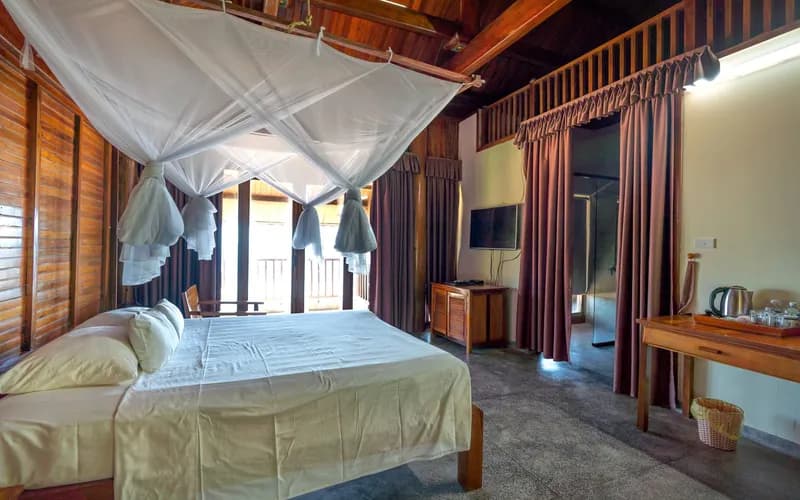
The critical operational fact is that the Aedes mosquitoes carrying both diseases bite during the day, with peaks around dawn and late afternoon. Everything most travellers do to prevent malaria, sleeping under a net and being careful at night, is aimed at the wrong mosquito. Daytime repellent is the intervention that works. Use a product with DEET at 20 to 50 per cent, or picaridin at 20 per cent, apply it to exposed skin in the morning and reapply after swimming or heavy sweating, and treat it as a daily habit rather than an evening ritual.
Risk rises sharply in the rainy season, roughly May to November, because Aedes breeds in small pools of standing water: plant saucers, tyres, buckets, the rubbish behind a guesthouse. If you are travelling in the wet months, our green season guide to Thailand covers the wider practicalities of that period. Dengue has no specific treatment and no widely available traveller vaccine, so prevention and early recognition are the whole strategy. If you develop a high fever with severe headache, pain behind the eyes and aching joints, do not self-medicate with ibuprofen or aspirin, which can worsen bleeding in dengue. Take paracetamol and get a blood test.
Heat, humidity and the April problem
Thailand's hot season, roughly March to May, is genuinely dangerous rather than merely uncomfortable. Bangkok and the central plains regularly run above 38 degrees with high humidity, which means sweat evaporates poorly and the body's cooling system underperforms. Heat exhaustion arrives quietly: headache, nausea, weakness, an odd irritability. Heatstroke, where the body stops sweating and core temperature climbs, is a medical emergency.
The countermeasures are dull and effective. Move in the early morning and after four in the afternoon, and treat the middle of the day as indoor time the way Thai people do. Drink more than you think you need and add electrolytes, which any pharmacy sells in sachets for a few baht. Wear loose long sleeves rather than less clothing. Give yourself three or four days of reduced ambition when you arrive, because acclimatisation is real and takes about a week.
The northern smoke season is a separate seasonal health issue that overlaps with the hot months. Agricultural burning across the north pushes fine particulate levels to genuinely harmful readings between roughly February and April, and anyone with asthma or a respiratory condition should read our piece on Thailand's northern smoke season before booking Chiang Mai or Chiang Rai in that window.
Get matched with up to 5 trusted Thailand agencies
- Free
- No obligation
- Up to 5 agencies
Food and water: less risky than you think, with rules
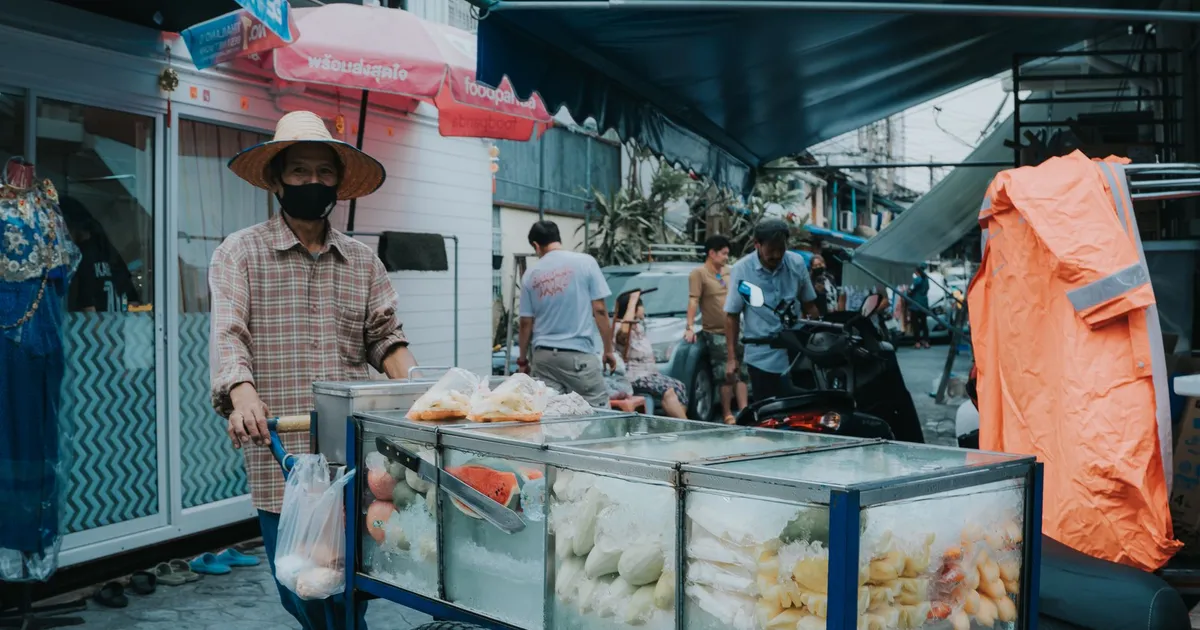
Thai street food is not a health hazard. It is often safer than restaurant food because turnover is fast, cooking is done in front of you at high heat, and a stall that poisons people goes out of business within a week. The sensible rules are about handling rather than hygiene theatre: eat where there is a queue of locals, prefer food cooked to order over food sitting warm in a tray, be more careful with raw seafood salads and pre-cut fruit in the heat of the afternoon, and use the alcohol gel that most stalls now provide.
Tap water is not drunk anywhere in Thailand, including by Thai people. Bottled water is universal and cheap, and refill stations charging one baht a litre exist in most towns, which is both cheaper and better for the plastic problem. Ice is made industrially and is generally safe. Bring oral rehydration salts, because the most common thing that will happen to you is two unpleasant days rather than anything serious, and rehydration is most of the treatment.
Dogs, monkeys and rabies
Rabies remains present in Thailand. Provincial authorities confirmed twenty animal rabies cases in the first five months of 2026, and there were two human deaths in Nakhon Ratchasima province in 2025. The animals that matter to travellers are stray dogs, which are everywhere and mostly indifferent, and macaques at temple and hilltop sites, which are habituated, bold and quick to grab.
The rule is absolute and worth internalising: any bite, scratch or lick on broken skin from a mammal in Thailand means washing the wound with soap and running water for a full fifteen minutes and then going to a hospital the same day for post-exposure prophylaxis. Rabies is essentially universally fatal once symptomatic and entirely preventable before that. Pre-exposure vaccination, a two-dose course taken before travel, does not remove the need for treatment but reduces the number of post-exposure shots and removes the need for rabies immunoglobulin, which can be hard to source outside major cities. For long trips, rural itineraries or travel with children, it is worth the money.
Practically: do not feed monkeys, do not carry visible food or drink at monkey sites, keep bags closed and hands empty, and do not pat street dogs, however friendly.
Water safety and the drowning number
Drowning is one of Thailand's quietest large health problems, with an average of around 3,748 deaths a year over the last decade, roughly ten a day. Most of those are Thai residents rather than tourists, but the underlying conditions apply to everyone: unpatrolled beaches, strong seasonal rip currents, alcohol, and a general absence of lifeguards.
Rip currents on the Andaman coast during the southwest monsoon, roughly May to October, are the specific hazard, and the red flags on Phuket and Krabi beaches are not decorative. Every year people drown at flagged beaches. If you are caught in a rip, do not swim against it: swim parallel to the shore until you are out of the pull, then come in. On boats, check that life jackets exist before you leave the pier, and be willing to decline a longtail crossing in poor weather even if the boatman is confident.
Roads: the risk nobody plans for
Road crashes are the leading cause of death and serious injury for foreign visitors to Thailand, and the overwhelming majority involve motorbikes. Even during a heavily policed holiday period, the Songkran figures for a single day in April 2026 recorded 192 crashes, 202 injuries and 30 deaths nationwide, and that was an improvement on the previous year.
If you rent a scooter, three things determine your outcome: a proper helmet that fastens, an international driving permit with the correct motorcycle category so your insurance is actually valid, and not riding at night or after drinking. Most travel insurance policies exclude motorbike claims entirely if you were riding without the correct licence, which is the single most common reason a large medical claim in Thailand gets refused. Our detailed guide to renting a motorbike in Thailand sets out the licence and insurance requirements in full. The slow-travel answer, of course, is that trains, buses and boats will get you almost everywhere and are dramatically safer.
The Thai healthcare system and what it costs
Thailand's medical care is genuinely good, which surprises people. Private hospitals in Bangkok, Chiang Mai and Phuket are internationally accredited, staffed by English-speaking doctors, and often faster than the equivalent at home. Public hospitals are competent and much cheaper but slower, with less English spoken.
The catch is payment. Private Thai hospitals require payment upfront or a direct guarantee from an insurer before treatment, and they will ask for a card or a deposit at admission. Foreign national health systems, including United States Medicare, are not accepted. A dengue admission of three or four nights at a private hospital can run into six figures in baht. A serious motorbike injury requiring surgery and repatriation runs into millions. This is why the insurance section below is the most important part of this article, and why our guide to money and connectivity in Thailand is worth reading for the practicalities of holding enough accessible funds to cover a deposit while an insurer processes a claim.
Pharmacies and what to bring
Thai pharmacies are excellent and are the right first stop for anything minor. They are on every commercial street, staffed by trained pharmacists, and stock most common medications without prescription and at a fraction of Western prices. Antibiotics are increasingly restricted, which is a good thing. Look for the green-cross chains in cities if you want reliable stock and clear labelling.
Bring with you: your regular prescription medication in original labelled packaging with a copy of the prescription, oral rehydration sachets, a good repellent, high-factor sunscreen because it is expensive in Thailand and often mixed with skin-whitening agents, antihistamine, plasters and antiseptic. Do not bother bringing a large first aid kit. Buy anything else locally.
One legal note: some common medications, including certain codeine-based painkillers and some ADHD stimulants, are controlled or prohibited in Thailand. Check the Thai Food and Drug Administration position on anything unusual before you fly, and carry documentation.
Insurance: the part people get wrong
Buy travel insurance with at least the equivalent of 50,000 US dollars in emergency medical cover and explicit medical evacuation and repatriation cover. Short-term traveller policies typically cost somewhere in the range of one to two dollars a day, which is less than a single consultation at a private hospital.
Then read the exclusions, which is where claims die. Check specifically for: motorbike and scooter cover and the licence conditions attached to it; adventure activity cover for diving, climbing, zip lines and kayaking; alcohol exclusions, which void a surprising number of claims; pre-existing condition declarations; and whether the insurer pays hospitals directly or expects you to pay and claim back. Direct settlement matters enormously in a country where the hospital wants payment before treatment. Save the insurer's twenty-four-hour assistance number somewhere reachable without your phone, and give it to whoever you are travelling with.
What to Do Next
- Book a travel health appointment about a month before departure to review routine vaccinations, hepatitis A, typhoid and whether pre-exposure rabies makes sense for your itinerary.
- Buy insurance with at least 50,000 US dollars of medical cover, evacuation, and explicit motorbike and activity cover if relevant, then read the exclusions rather than the summary.
- Pack a repellent with 20 to 50 per cent DEET or 20 per cent picaridin and commit to applying it in the morning, not the evening.
- Put your regular medication in original packaging with a copy of the prescription, and check that nothing you carry is controlled in Thailand.
- Save your insurer's emergency number, your policy number and the nearest accredited hospital for each stop offline on your phone.
- Decide in advance whether you will ride a motorbike, and if yes, get the correct international driving permit category before you leave home.
- Plan your route around the seasons rather than against them, using our slow traveller's guide to Thailand to avoid the worst of the heat, smoke and monsoon in the first place.
Frequently Asked Questions
Do I need malaria tablets for Thailand?
For almost all itineraries, no. Malaria risk in Thailand is confined to a few remote forested areas along the Myanmar and Cambodia borders, and the standard destinations, including Bangkok, Chiang Mai, the islands and the main national parks, are considered free of it. Discuss it with a travel clinic only if your route includes remote border districts.
What vaccinations should I have?
Make sure routine vaccinations are current, including tetanus, measles and diphtheria. Hepatitis A and typhoid are commonly recommended for Thailand. Hepatitis B, Japanese encephalitis and pre-exposure rabies are recommended depending on trip length, rural exposure and activities. A travel clinic should assess your specific itinerary rather than applying a generic list.
How do I know if a fever is dengue?
You do not, without a blood test, which is exactly the point. High fever with severe headache, pain behind the eyes, muscle and joint aches and sometimes a rash after a few days is the classic pattern. Go to a hospital or clinic for a test rather than waiting it out, avoid ibuprofen and aspirin, and take paracetamol only. Warning signs that need immediate care include severe abdominal pain, persistent vomiting and any bleeding.
Is street food safe?
Generally yes, and often safer than mid-range restaurant food because it is cooked to order at high heat in front of you. Choose busy stalls, prefer things cooked fresh over food held warm, be cautious with raw seafood and pre-cut fruit in the afternoon heat, and carry rehydration salts for the occasional bad day.
What should I do if a monkey scratches me?
Wash the wound with soap under running water for a full fifteen minutes, apply antiseptic, and go to a hospital the same day for rabies post-exposure treatment. Do not wait to see whether it looks infected and do not accept reassurance that the monkeys at a particular site are fine. This applies to bites, scratches and licks on broken skin from any mammal.
Are Thai hospitals expensive?
Private hospitals are far cheaper than equivalent care in the United States but substantially more expensive than most people expect, and they require payment upfront. Public hospitals are much cheaper but slower and less English-speaking. A short private admission for dengue can easily reach tens of thousands of baht, which is why insurance with direct settlement is the difference between an inconvenience and a financial crisis.
Can I drink the tap water?
No. Nobody in Thailand does. Bottled water is inexpensive and available everywhere, and refill stations that dispense filtered water for around one baht a litre are common in towns and cities, which is both cheaper and considerably better than buying a new plastic bottle several times a day. Ice from commercial producers is safe.