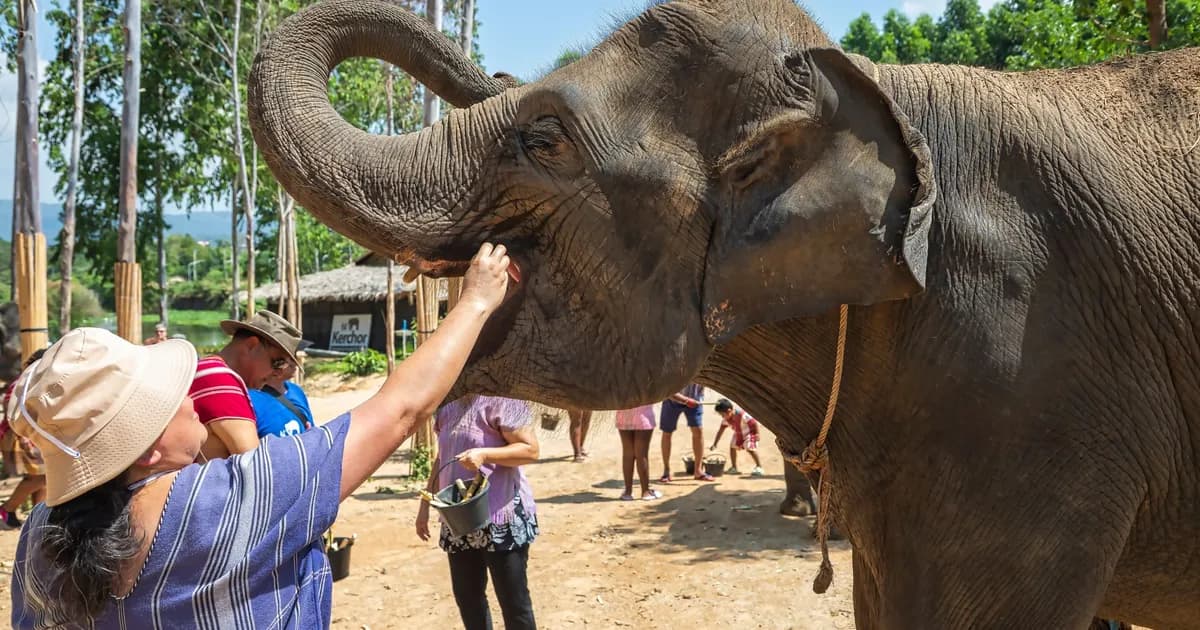

Search "elephant sanctuary Thailand" and you will get hundreds of results, nearly all of them using the same reassuring language: rescued, ethical, no chains, sanctuary. The uncomfortable truth is that "sanctuary" carries no legal weight in Thailand. Any operator can put the word on a sign, a website, or a tour listing regardless of how the elephants are actually treated. Some of the parks marketing themselves this way have genuinely stopped riding and shows and now exist to give elephants a better life. Others have simply swapped saddles for feeding baskets while keeping the same short chains, the same confined space, and the same underlying economics of an animal performing for paying visitors. Telling the two apart takes more than reading a homepage — it takes knowing exactly what to look for, and what to ask, before you hand over a deposit.
Why "sanctuary" alone means nothing
Thailand has no regulatory body that certifies elephant tourism venues as ethical, and no legal restriction on the use of words like sanctuary, rescue centre, or retreat. This matters because the shift in traveller demand away from riding and shows, driven largely by rising awareness over the past decade, has made "ethical" marketing extremely profitable — profitable enough that plenty of camps have rebranded without meaningfully changing their operations. A park can advertise "no riding" while still chaining elephants for most of the day, forcing repetitive bathing sessions for tourist photos, or keeping animals in enclosures too small for natural movement. None of this shows up in a name or a tagline. It only shows up in how the elephants actually spend their day, which is exactly what a booking page rarely tells you.
One request. Up to five tailored proposals.
Skip contacting agencies one by one — share your trip once and let up to five trusted Thailand agencies come to you. Free, with no obligation.
Get my free quotesThe real markers of an ethical operation
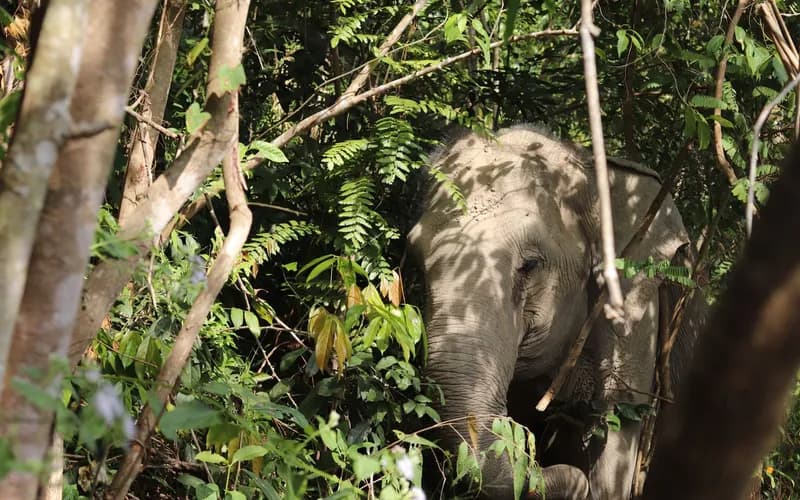
A handful of practical signs separate genuine sanctuaries from rebranded riding camps. First, no riding and no shows or tricks — elephants are not mounted, and they are not made to paint, play football, or perform for an audience under any circumstances. Second, observation rather than forced interaction: the best operations let elephants approach visitors on their own terms, rather than herding them toward guests for feeding or bathing on a schedule designed around tourist convenience. Third, freedom of movement — elephants should have significant space to roam during the day, without prolonged chaining; some venues do use overnight tethering for safety reasons, particularly to prevent elephants wandering into farmland or roads, and a genuinely transparent operator will explain this openly rather than deny it. Fourth, and perhaps most tellingly, a rescue-focused rather than breeding-focused model: ethical sanctuaries exist to care for elephants retired from logging, street begging, or tourism camps, not to breed new calves destined for a life in the same industry. A park with young calves being actively used in guest interactions is one of the clearest red flags in the entire industry.
Red flags to watch for
Certain signals should end the conversation immediately, regardless of how the rest of the marketing reads. Riding, even "bareback" riding marketed as gentler than a saddled ride, remains physically harmful to an elephant's spine and is never part of a genuinely ethical operation. Shows and performances — painting, football, circus-style tricks — indicate training methods that almost always involve some form of coercion, historically including the practice known as phajaan or "the crush," used to break a young elephant's will. Forced bathing sessions, where elephants are walked into a river on a fixed schedule specifically for tourist photos multiple times a day, are a subtler but real red flag, since genuine bathing should happen when the elephant wants it, not on a timetable built around tour bus arrivals. Confined space is another marker worth watching for directly, not just reading about — an enclosure that looks more like a paddock than a stretch of forest or open land tells you most of what you need to know before you even meet the mahouts.
Get matched with up to 5 trusted Thailand agencies
- Free
- No obligation
- Up to 5 agencies
How to research before you book
Photos and reviews are more reliable than marketing copy, because guests document what they actually saw rather than what a brochure promised. Search recent visitor photos specifically for riding equipment, chains, or performance elements that contradict the "ethical" branding on a venue's own site — a park can write anything it likes about itself, but a hundred independent photos are much harder to fake. Read reviews with an eye for specifics rather than general enthusiasm; a review that says "we got to walk with the elephants and feed them only when they approached us" tells you far more than one that simply says "amazing experience, highly recommend." It is also worth checking whether a venue is mentioned in reporting or assessments by international animal welfare organisations, several of which maintain lists or have investigated specific parks in the Chiang Mai and Kanchanaburi areas, both major hubs for this kind of tourism. Comparing options through vetted local operators, rather than booking the first listing that appears in a search, adds another layer of accountability — UNRUSH's directory of Thailand travel agencies is a reasonable starting point for finding partners who have already done some of this screening.
The questions worth asking directly
A short message or call to the venue before booking clears up more than any amount of website reading. Ask specifically how elephants came to the sanctuary — a credible answer names logging camps, street begging operations, or failed tourism ventures, with some specificity, rather than a vague reference to "rescue." Ask whether elephants are chained, for how long, and why; an operator being upfront about limited nighttime tethering for safety is a better sign than a flat denial that any restraint is ever used. Ask what a typical guest day actually involves, hour by hour, and listen for whether the schedule centres the elephants' routine or the tourists' itinerary. Ask whether the park breeds elephants, and if calves are present, how they came to be there. Operators genuinely committed to elephant welfare tend to answer these questions readily and in detail, because they are proud of the model; evasive or generic answers are themselves useful information.
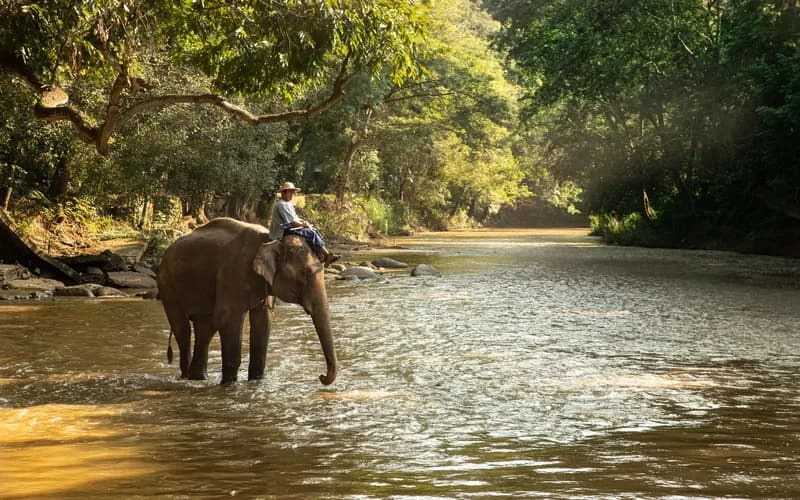
Where this fits into a wider Thailand itinerary
Elephant venues cluster around a handful of regions, and thinking about this alongside the rest of a trip helps avoid a rushed, single-purpose day. Chiang Mai's surrounding valleys host the largest concentration of parks, including some of the longest-running rescue-focused operations in the country, and pairing a visit with time in a quieter nearby valley — UNRUSH's guide to Chiang Dao's misty valley covers one such option — turns a single-stop excursion into a fuller regional stay. Kanchanaburi, along the River Kwai, is the other major hub, with several venues built around riverside land that allows genuinely large roaming space. Wherever you go, treat a sanctuary visit the way you would any wildlife encounter worth doing properly: as a half-day or full-day commitment rather than a stop squeezed between other activities, since a rushed visit is usually a sign the itinerary — and sometimes the operator — is treating the elephants as a photo opportunity rather than the point of the day.
What a good day actually looks like
A typical ethical visit runs to a rhythm set by the elephants rather than a bus timetable. Mornings usually begin with a briefing on the individual elephants at the site — most reputable sanctuaries name each animal and can tell you its specific history, which is itself a good sign, since an operation that cannot tell one elephant's story from another is rarely doing individualised care. Guests then walk the land alongside the herd at whatever distance the elephants themselves choose to keep, sometimes close, sometimes far, with feeding limited to fruit offered by hand only when an elephant approaches on its own. Lunch is typically a simple Thai meal, often vegetarian, eaten in view of the herd rather than away from it. Afternoons might include a walk to a mud wallow or river the elephants use on their own initiative, with guests invited to observe or wade nearby rather than scrub or bathe the animals directly. A full day, rather than a rushed two-hour stop, is also the best way to avoid the crowding that affects even reputable parks near Chiang Mai during peak season — arriving early or booking a smaller group visit through operators covered in UNRUSH's guide to Thailand off the beaten path tends to produce a noticeably calmer, less crowded encounter than a mid-morning slot booked through a mass-market platform. None of this is glamorous in the way riding photos once were, and that is precisely the point: a good day with elephants should look almost uneventful, because the animals are simply being elephants.
What to do next
- Cross-check any venue's own "ethical" claims against recent, independent visitor photos before booking — look specifically for riding gear, chains, or performance elements.
- Message the operator directly and ask how their elephants arrived, whether and when they are chained, and whether the venue breeds elephants.
- Prioritise parks with visible rescue histories for individual elephants over generic "sanctuary" branding with no specifics.
- Avoid any venue offering riding, bathing shows, or performances, regardless of how the rest of the marketing reads.
- Book through a vetted local operator where possible, and treat the visit as a half-day commitment rather than a quick add-on stop.
- If in doubt, choose observation-only elephant parks over anything promising direct physical interaction on a fixed schedule.
Frequently Asked Questions
Is the word "sanctuary" a legally protected term in Thailand?
No. There is no regulatory body certifying elephant tourism venues in Thailand, and any operator can use the word sanctuary, rescue centre, or similar language regardless of actual practices. The label alone tells you nothing reliable.
Is riding an elephant ever acceptable at an ethical venue?
No genuinely ethical operation offers riding, including bareback riding marketed as gentler. Riding causes physical strain on an elephant's spine over time and is inconsistent with a rescue-focused, welfare-first model.
Are all forms of chaining a red flag?
Not necessarily. Some reputable sanctuaries use limited overnight tethering for safety, to prevent elephants wandering into roads or farmland. The key distinction is transparency and duration — long daytime chaining or evasive answers about chaining are the actual red flags, not any restraint whatsoever.
How can I tell if a park breeds elephants for tourism?
Ask directly whether the venue breeds elephants and, if calves are present, how they came to be there. A credible rescue-focused sanctuary will explain clearly; young calves being used in guest interactions or photo sessions is one of the clearest warning signs in the industry.
Where are most ethical elephant sanctuaries located in Thailand?
Chiang Mai's surrounding valleys host the largest concentration, including some long-established rescue operations, followed by Kanchanaburi along the River Kwai, where several venues use riverside land offering large roaming areas.
Should I avoid all bathing activities with elephants?
Be cautious of scheduled bathing sessions run multiple times daily for tourist photos, which suggest the activity is built around guest turnover rather than the elephant's own behaviour. Bathing that happens when an elephant chooses to enter the water is a different, more acceptable dynamic.
Are reviews a reliable way to research a sanctuary?
They are more reliable than a venue's own marketing, particularly reviews that describe specific details — chains, riding equipment, forced interactions — rather than general enthusiasm. Recent visitor photos are especially useful, since they document what actually happened rather than what was promised.