
Where you sleep decides more about a trip to Thailand than almost any other choice you make. It sets who you talk to, what you eat for breakfast, how far you walk before the day begins, and how much of your money stays in the town you are visiting. And yet most people pick accommodation the way they pick a flight: filter by price, sort by rating, book the top result. Thailand offers a far wider range of places to stay than that process will ever surface, and the differences between them are not cosmetic.
Start with the shape of your trip, not the listings
Before you open a booking site, answer three questions honestly.
How long are you staying in one place? A two-night stop and a two-week base require completely different things. For two nights, location and ease matter most. For two weeks, you need a kettle, a decent mattress, somewhere to sit that is not the bed, and neighbours you will not resent by day ten.
How much friction can you absorb? A homestay in a farming village is a wonderful experience and a poor choice if you arrive exhausted, need reliable wifi for a morning call, or cannot sleep through a rooster. There is no virtue in choosing the more difficult option and then being miserable in it.
What is the trip actually for? Rest, walking, food, diving, temples and remote work all point to different kinds of accommodation, and trying to satisfy all of them in one booking usually satisfies none.
Answer those three, and most of the listings you were about to scroll through disqualify themselves.
One request. Up to five tailored proposals.
Skip contacting agencies one by one — share your trip once and let up to five trusted Thailand agencies come to you. Free, with no obligation.
Get my free quotesThe five kinds of place you will actually find
Thai accommodation falls into broad categories that behave very differently, whatever a booking platform calls them.
- Homestays are, in the formal sense, family homes in a village or community scheme where you stay under the same roof as the host and eat with them. Meals are usually included and set. This is cultural immersion, not hospitality.
- Guesthouses and hostels are small commercial properties, often family-owned, with private rooms and sometimes dorms. Breakfast may be simple or absent. Staff are frequently the owners.
- Boutique and shophouse hotels are restored buildings in old town districts with between five and thirty rooms, usually the best value in the country for design and character.
- Resorts are self-contained properties, mostly coastal, built around pools, restaurants and beach access. They insulate you from the destination by design, which is sometimes exactly what you want.
- Serviced apartments and condominiums are the long-stay option in cities, with kitchens, laundry and monthly rates.
The useful rule: the smaller the property, the more your experience depends on the individual people running it, and the more the reviews are actually telling you something.
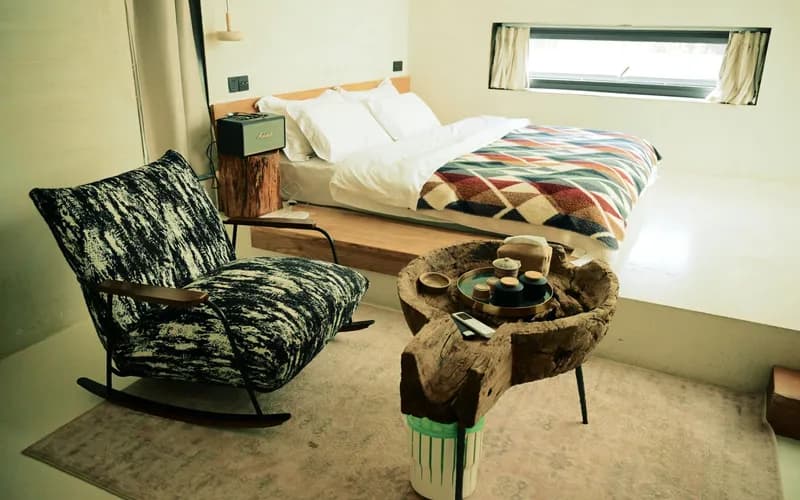
What a Thai homestay really is
The word "homestay" is used loosely on booking platforms, where it often just means a small guesthouse. In Thailand it also has a precise official meaning, and knowing the difference is genuinely useful.
The Department of Tourism operates a certification scheme called Homestay Standard Thailand. To qualify, accommodation must be run collectively by a village group, club or cooperative rather than as an individual business, with a minimum number of participating households. Each home may offer only a limited number of rooms, guests sleep under the same roof as the host family, and there are requirements on bathrooms per guest, food, safety and hospitality. Certified communities are assessed across ten areas, including natural resources and environment, local culture, creation of value for community products, management and public relations. Certification runs for a fixed period and communities display an official sign.
That scheme is not a guarantee of comfort. It is a guarantee of structure: the money is distributed across a community rather than going to one operator, and the village has agreed collectively to host visitors. If you care about where your money goes, this is one of the clearest signals available anywhere in Southeast Asia. Our piece on Thailand's shift towards community-based tourism explains how these schemes have developed and where they are strongest.
Practical expectations for a certified homestay: a mattress on the floor or a simple bed, a mosquito net, a shared or basic bathroom, meals cooked by the family, early nights, early mornings, and limited English. Two nights is usually the right dose. A week is rarely comfortable for either side.
Get matched with up to 5 trusted Thailand agencies
- Free
- No obligation
- Up to 5 agencies
How to judge a small property before you book
Small properties live or die on management, and management is visible if you look in the right places.
Read the middle reviews, not the best or the worst. Five-star reviews tell you the place is nice. One-star reviews are often about something unrelated. The three-star reviews tell you what consistently goes slightly wrong.
Check the dates on the reviews. A property with glowing 2023 reviews and thin recent ones has probably changed hands or lost its manager. In a market where many small operators are under pressure, recency matters more than volume.
Look at how the owner responds to criticism. Defensive, boilerplate or absent responses tell you what will happen when something goes wrong during your stay.
Zoom in on the map rather than trusting the neighbourhood name. Thai listings routinely stretch district names. A hotel described as being in an old town may sit on a six-lane road twenty minutes' walk from it.
Ask one specific question by message before booking. Something like: is the room on the street side or the courtyard side? The speed and quality of the answer predicts the stay better than the photographs.
Location beats amenities, almost every time
The single most common accommodation mistake in Thailand is choosing a better room in a worse place.
In cities, a plain room in the right neighbourhood will always beat a beautiful room twenty minutes away by taxi, because the twenty minutes will stop you going out in the evening. In Bangkok this usually means within walking distance of a BTS or MRT station. In Chiang Mai it means inside or immediately around the old city. In smaller provincial capitals it means the old quarter, where the coffee, the temples and the evening street food are.
On islands and coasts, the calculation reverses somewhat: a quiet bay reached by a slightly awkward road is often worth the friction, because the friction is what keeps it quiet. Just be honest about how many times a day you are willing to negotiate that road.
In provincial towns the choice is often between an old-town guesthouse and a modern hotel near the bus station. The old-town room is almost always the right answer for a slow trip. Our profile of Songkhla and its lagoon is a good illustration: sleeping in the restored quarter rather than in the nearby commercial city changes the trip completely, at similar cost.
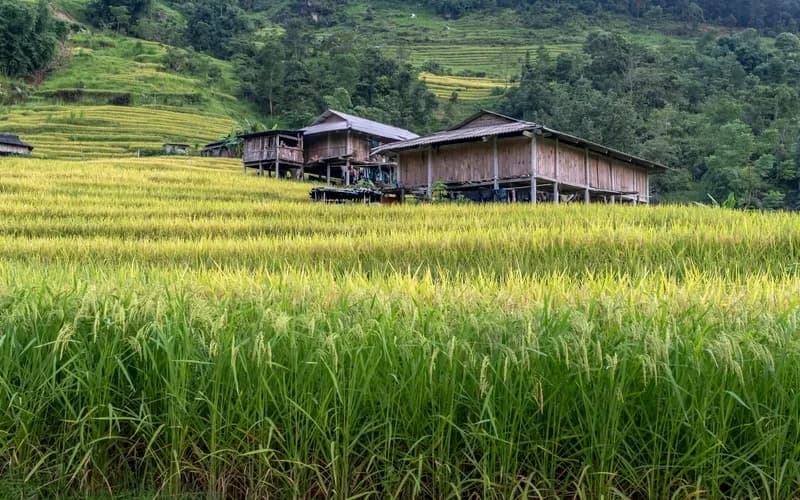
Price, timing and how to book
Thai accommodation pricing is seasonal, regional and, in 2026, unusually negotiable at the upper end.
High season on the Andaman coast runs roughly November to April; the Gulf coast and its islands run on a different calendar, with October to December the wettest. Inland, the cool months from November to February are peak everywhere. Thai public holidays and Chinese New Year fill small properties completely, often months ahead.
For anything under four nights, book online and move on. For longer stays, contact the property directly. Weekly and monthly rates exist almost everywhere and are almost never published; a short, polite message with exact dates will usually produce a figure twenty to thirty percent below the nightly rate. This has become notably easier during the current softening of the market, which we examine in our analysis of Thailand's 2026 room-rate correction.
Two cautions. First, do not book a month sight unseen in a place you do not know; book a week, then extend. Second, in small towns and villages, booking platforms often list only a fraction of what exists. Some of the best rooms in provincial Thailand are found by walking in and asking.
Licences, platforms and staying somewhere legal
This is dull and worth two minutes of your attention.
Thai accommodation is governed by the Hotel Act, which requires a licence for properties above a certain size, with fire safety inspection and a health certificate as part of the process. A recent amendment raised the threshold for non-hotel accommodation from four rooms and twenty guests to eight rooms and thirty guests, which brought a large number of legitimate small family operations into a clear legal position.
Short-term letting of condominium units is a different matter. Renting a condo for less than thirty days is generally not permitted under Thai law unless the building holds a hotel licence, regardless of what a listing says. Enforcement is uneven but real: in March 2026 authorities acted against an unlicensed 84-room operation in Phuket that had been listed as entirely legitimate on major booking platforms.
What this means in practice is simple. Prefer registered guesthouses, hotels and certified homestays. Treat a platform listing as marketing rather than proof. If a place cannot tell you its own registration status, stay somewhere that can. Staying legal is also staying insured, which matters if there is a fire, a flood or an accident. This sits at the heart of how we think about travel, set out in our slow travel charter.
What to Do Next
- Decide your length of stay in each place first, then choose the category of accommodation that fits it.
- For any base of a week or more, shortlist three properties and email all three directly asking for a weekly rate.
- Check each shortlisted property on a map at street level, not by neighbourhood name.
- Read only reviews from the last six months, and read the three-star ones carefully.
- If you want a homestay, look specifically for a community scheme certified under Homestay Standard Thailand rather than a listing that simply uses the word.
- Book two nights at a village homestay, not a week, and pack a torch, earplugs and small denominations of cash.
- Sketch the season and the route before you book anything, using our slow traveller's guide to where and when to go in Thailand.
Frequently Asked Questions
What is the difference between a homestay and a guesthouse in Thailand?
A guesthouse is a small commercial property with private rooms, usually family-owned, where you come and go independently. A certified Thai homestay is a family home within a village scheme where you sleep under the same roof as your hosts, eat with them and take part in community life. The first is accommodation; the second is closer to being a guest.
Is Airbnb legal in Thailand?
It depends on the property. Hotels, guesthouses and licensed properties listed on Airbnb are fine. Renting a condominium unit for less than thirty days is generally not permitted unless the building holds a hotel licence, and enforcement against unlicensed operators does happen. Check what type of property you are booking rather than relying on the platform.
How much should I budget per night in Thailand?
It varies enormously by region and season. Village homestays and simple guesthouses sit at the low end, provincial shophouse hotels in the middle, and island resorts far above. Rather than a single figure, budget separately for your city nights, your provincial nights and your beach nights, since they behave like three different countries.
Should I book everything in advance?
Book the first few nights, anything during Thai public holidays or Chinese New Year, and any small property you particularly want. Leave the rest open. Over-booking a route is the most common way travellers lose the ability to stay somewhere an extra day, which is usually where the best part of a trip happens.
Are homestays suitable for families with children?
Often very much so. Thai village households are used to children and the informality tends to work well. Be realistic about bathrooms, bedtimes and mosquitoes, tell the host the ages of your children in advance, and keep the stay short rather than open-ended.
What should I check before booking a cheap room on an island?
Ask whether there is hot water, whether the fan or air conditioning runs all night, how far the room is from the pier and from food, and whether the property operates during your dates. Small island places close for parts of the low season, and listings are not always updated to reflect it.
Is it rude to negotiate the price?
Not for long stays, where asking for a weekly or monthly rate is entirely normal and expected. For a single night at a listed price, it is not customary and will rarely help. Ask politely once, accept the answer, and never negotiate in front of other guests.