
Songkhla Old Town: Southern Thailand's Quiet Lagoon City
Most travellers pass through Songkhla without ever seeing it. They land at Hat Yai, eat at the night market, and move on towards Malaysia or back north. Songkhla city sits about forty-five kilometres east of that airport, on a sandy neck of land between the Gulf of Thailand and the largest lagoon in the country, and it has spent the past decade quietly restoring its shophouses while the rest of Thailand argued about overtourism. There is no ferry queue here, no scooter rental strip, no need to book anything three months ahead. For a certain kind of traveller, that is the entire point.
A provincial capital that never became a resort
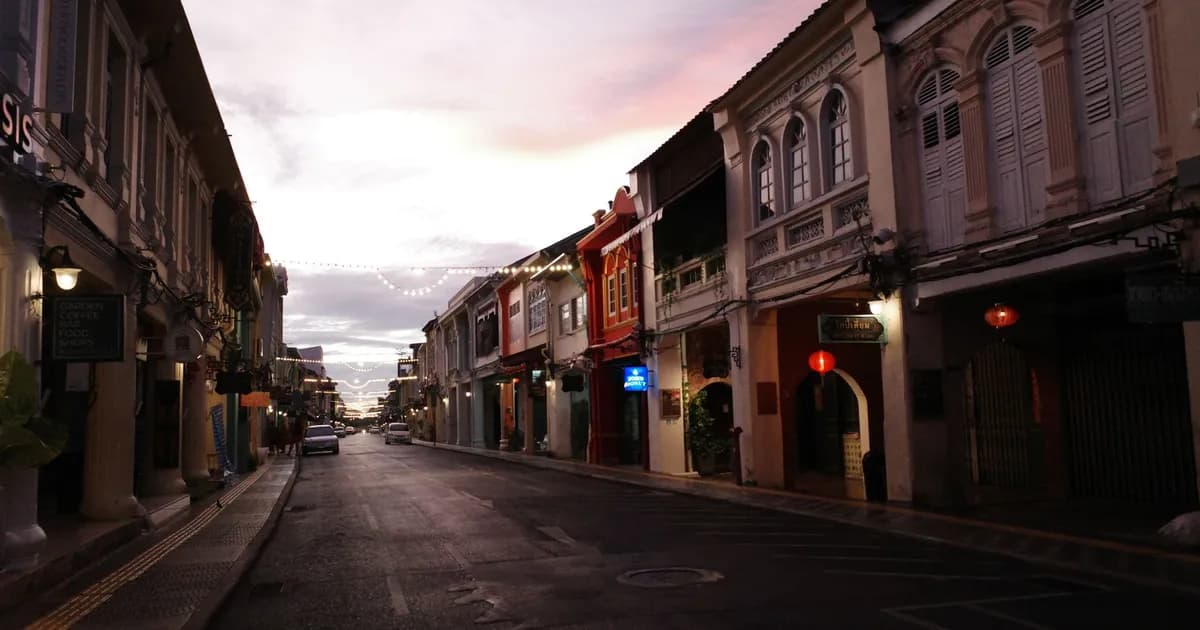
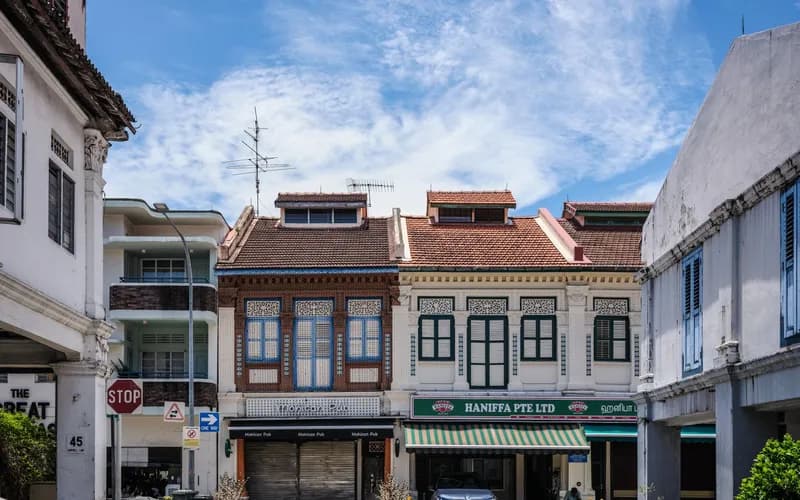
Songkhla is an old port, and it wears its history plainly. Hokkien Chinese traders, Malay Muslim fishing families and Thai Buddhist temple communities have shared this strip of land for generations, and the architecture records all three at once: Sino-Portuguese shophouses with louvred shutters and crumbling lime mortar, Chinese shrines hung with red lanterns, a four-hundred-year-old temple compound, and mosques whose call to prayer drifts across the water at dusk. Very little of this was built for visitors, which is why it still feels like a place rather than a set.
In July 2024, four clusters of the town and its surrounding lagoon settlements, spread across Mueang, Singhanakhon, Sathing Phra and Ranot districts, were added to UNESCO's Tentative List under the title "Songkhla and its Associated Lagoon Settlements". It is worth being precise about what that means, because travel marketing usually is not. A tentative listing is not World Heritage status. It signals only that Thailand may nominate the property for consideration at some future date. The practical effect so far has been more restoration money and more local pride, not more tour buses.
What keeps Songkhla honest is that tourism is not its economy. The fishing port still works before dawn. Prince of Songkla University fills the cafés with students. Provincial government offices empty out at five and the old town goes quiet. Visitors are welcome but not structurally necessary, and that changes the texture of almost every interaction you will have here. If you have been working through our guide to the parts of Thailand that never fill up, Songkhla belongs firmly in that category, with the unusual advantage of being a real working city rather than a village that empties in low season.
One request. Up to five tailored proposals.
Skip contacting agencies one by one — share your trip once and let up to five trusted Thailand agencies come to you. Free, with no obligation.
Get my free quotesReading the old town street by street
The historic quarter is small enough to cross on foot in twenty minutes and dense enough to keep you occupied for two full days. Three roughly parallel streets carry most of it: Nang Ngam Road, Nakhon Nai Road and Nakhon Nok Road.
Nang Ngam is the one people photograph. It was laid out in connection with the city pillar celebrations and was long known as the Kao Hong neighbourhood. Today it holds shophouses in every imaginable state of repair. Some have been restored immaculately into coffee roasteries, small galleries and design shops. Others are still occupied by the families who have run a hardware shop, a coffin workshop or a noodle kitchen from the same doorway for forty years. That mixture of restored and unrestored, commercial and domestic, standing side by side, is exactly what keeps the street from feeling staged.
Nakhon Nai and Nakhon Nok are quieter and, for most people, more rewarding on a second pass. Murals appear on gable ends and shutters without any of the heavy-handed signage that usually accompanies street art initiatives. Wat Matchimawat, the most significant temple in the province, is roughly four centuries old and keeps a small museum of southern religious art in its grounds. Behind the main streets, wooden houses lean over narrow lanes where laundry, motorbikes and sleeping dogs occupy most of the width.
A few practical notes for walking the quarter:
- Before nine in the morning and after five in the afternoon are the good hours. Midday heat here is genuinely punishing.
- Many of the best cafés close by four or five, not late. Plan coffee early.
- This is a residential neighbourhood. Keep your voice down in the lanes and ask before photographing someone's doorway.
The lagoon is the point
Songkhla Lake is the reason the town exists, and understanding it changes how you see everything else. It is not really a lake but a lagoon system, brackish where it opens to the Gulf at Songkhla city and progressively fresher towards its northern end. It is the largest body of inland water in Thailand, and it has shaped settlement, diet and language along its shores for well over a thousand years.
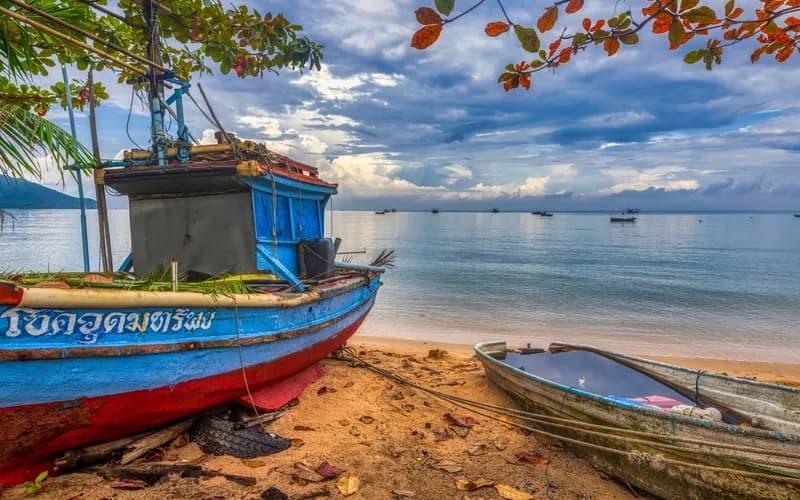
Spend an evening on the waterfront and the shape of the local economy becomes obvious. Wooden fishing boats work the channel. Bamboo stake traps stand in rows across the shallows. Men mend nets on the concrete apron while the light goes orange behind Ko Yo. The lagoon also supports a tiny, critically endangered population of Irrawaddy dolphins in its upper reaches, usually counted in the low tens. They are a genuine conservation emergency rather than an attraction, and any operator promising you a sighting is selling something they cannot deliver. Read about them, support the fishing communities working on gear changes, and do not go hunting for them by speedboat.
Get matched with up to 5 trusted Thailand agencies
- Free
- No obligation
- Up to 5 agencies
Around the shore: Singhanakhon, Ko Yo and the Sathing Phra peninsula
The best days here are spent circling the water rather than staying in town.
The short car ferry from the Songkhla side to Singhanakhon takes about five minutes and costs a few baht for a motorbike. On the far shore you will find the ruins of old defensive forts on the hillside, a lighthouse, a viewpoint over the lagoon mouth, and almost no other visitors. It is the single easiest half-day trip in the province.
Ko Yo is an island in the lagoon connected to both shores by bridges, so you can reach it by songthaew or motorbike without a boat. It is known for two things. The first is hand-woven cotton in the ratchawat pattern, still produced in small household workshops you can visit. The second is the Institute for Southern Thai Studies at Thaksin University, a hillside museum complex that explains southern shadow puppetry, boat building, fishing gear and Muslim-Buddhist coexistence far better than any guidebook will.
North from there, the Sathing Phra peninsula runs for more than seventy kilometres as a thin strip between lagoon and open sea. It is palm sugar country, with tall sugar palms, old Srivijaya-era temple sites and villages that make dried shrimp, salted mullet and the fermented fish sauce called budu. Khu Khut Waterbird Park, on the lagoon shore, holds tens of thousands of migratory waterbirds at peak season between roughly October and March, and small boats take visitors out at first light. If you enjoy this kind of low-key coastal Thailand, the quiet islands off Trang on the Andaman side make a natural companion trip once you cross the peninsula.
Eating your way through the far south
Southern Thai cooking is the hottest regional cuisine in the country, and Songkhla sits at the point where Chinese, Malay and Thai kitchens meet. This is the strongest single reason to stay longer than you planned.
Look for khao yam, the southern breakfast rice salad of herbs, toasted coconut, dried shrimp and budu dressing, which is bright, bitter and entirely unlike anything served in Bangkok. Kaeng tai pla, a fiercely pungent curry built on fermented fish innards, is the local benchmark dish and not a gentle introduction. Gaeng som, the sour orange curry, arrives sharper and hotter here than further north. On the Malay side of the ledger there is roti, nasi dagang and chicken rendang. On the Chinese side, Hat Yai keeps an unusual Hokkien dim sum breakfast tradition, with steamer baskets stacked from around six in the morning, alongside the fried chicken the city is famous for.
The lagoon itself shows up on every table, as salted mullet, dried shrimp and the budu bottles sold along the peninsula road. Ordering carefully matters: "not spicy" in Songkhla still means spicy, and it is reasonable to say so at the start rather than suffer politely.
Getting there, and when to come
Hat Yai International Airport is the practical gateway, roughly forty-five kilometres southwest of Songkhla city, with domestic flights from Bangkok and regional connections from Malaysia and Singapore. Taxis take about forty-five minutes; shared minivans cost a fraction of that and take longer. Songkhla city itself has no passenger rail station, so if you prefer to arrive overland the southern line runs to Hat Yai from Bangkok as a long overnight journey. Our guide to travelling Thailand by train covers how to book the sleeper berths and what the ride is actually like.
Timing matters more here than in most of Thailand, because Songkhla follows the Gulf coast pattern rather than the Andaman one. The reliable stretch runs roughly from February to September, with February to April the driest and calmest. The northeast monsoon arrives in October and peaks hard: November is the wettest month, by a very wide margin, and December is not far behind. Serious flooding in the far south is a recurring risk in those months, not a theoretical one. If you are choosing between a November trip to Songkhla and a November trip to the Andaman coast, take the Andaman.
Staying a week rather than a night
Songkhla rewards a base-and-radiate approach better than almost anywhere in the south. Four or five nights in the old town gives you two slow days on foot, a ferry day at Singhanakhon, a day on Ko Yo and the peninsula, and one day with nothing scheduled at all, which is usually the one people remember.
Accommodation is almost entirely small: restored shophouse guesthouses, family-run hotels near Samila Beach, and a handful of homestays around the lagoon. There are no international resort chains in the old town, and prices sit well below Phuket or Chiang Mai for comparable quality. If you are unsure how to pick between these smaller options, our practical piece on choosing where to stay in Thailand walks through what to check before you book.
Two honest caveats. English is less widely spoken here than in the main tourist centres, and a translation app plus twenty words of Thai will make a real difference. And while Songkhla province is generally unaffected by the security situation in Thailand's three southernmost provinces, four of its districts, Chana, Thepha, Saba Yoi and Na Thawi, do fall inside the area covered by most government travel advisories. Songkhla city, Hat Yai, Ko Yo and the Sathing Phra peninsula all sit outside that zone, but check your own government's current advice before you go rather than taking anyone's word for it.
What to Do Next
- Choose a window between February and September, and treat November and December as off-limits unless you have a specific reason to be there.
- Book a flight into Hat Yai, or a southern-line sleeper to Hat Yai if you want the overland approach.
- Reserve four nights in a shophouse guesthouse in the old town rather than in Hat Yai. The two towns feel completely different in the evening.
- Block out one full day for the lagoon: ferry to Singhanakhon in the morning, Ko Yo and the Institute for Southern Thai Studies in the afternoon.
- If you are travelling between October and March, add a dawn boat at Khu Khut Waterbird Park on the Sathing Phra peninsula.
- Check your government's current advisory for Chana, Thepha, Saba Yoi and Na Thawi districts, and plan your routing accordingly.
- Use our plan your journey page to sketch how Songkhla fits into a wider southern itinerary before you lock in flights.
Frequently Asked Questions
How many days do you need in Songkhla?
Two days covers the old town at a comfortable pace. Four or five lets you add the Singhanakhon ferry, Ko Yo, the Sathing Phra peninsula and a day with no plan. Anything less than two nights and you will spend most of your time in transit from Hat Yai.
Is Songkhla safe for travellers?
Songkhla city, Hat Yai, Ko Yo and the Sathing Phra peninsula are ordinary provincial Thailand and are not covered by the security advisories that apply to Pattani, Yala and Narathiwat. Four districts in the south of Songkhla province, Chana, Thepha, Saba Yoi and Na Thawi, do fall within the advisory area. Check your own government's current guidance, which is updated regularly.
What is the difference between Songkhla and Hat Yai?
Hat Yai is the commercial city: bigger, busier, the transport hub, the shopping and the dim sum. Songkhla, about half an hour away, is the provincial capital and the historic port, with the old town, the beaches and the lagoon. Most visitors sleep in Hat Yai and miss Songkhla entirely. Do the opposite.
Is Songkhla a UNESCO World Heritage Site?
Not yet, and possibly never. Four clusters of Songkhla and its lagoon settlements were placed on UNESCO's Tentative List in July 2024, which means Thailand may put forward a formal nomination in future. Tentative listing confers no World Heritage status and no protection of its own.
When is the worst time to visit Songkhla?
October to January, and November in particular. The northeast monsoon delivers the heaviest rainfall in the country to this coast during those months, and flooding in the far south is a genuine recurring risk rather than an inconvenience.
Can you swim at Samila Beach?
You can, and locals do, but Samila is a long city beach used more for walking, eating and sunset than for swimming. The water is usually calm in the dry months and rough during the monsoon. If beach time is your main objective, the Andaman coast or the Gulf islands will serve you better.
Is Songkhla good for travellers who do not speak Thai?
It is manageable but less forgiving than Phuket or Chiang Mai. Younger staff in old town cafés often speak some English; older vendors, ferry crews and drivers frequently do not. A translation app, a written destination in Thai script and a patient manner will get you everywhere you need to go.