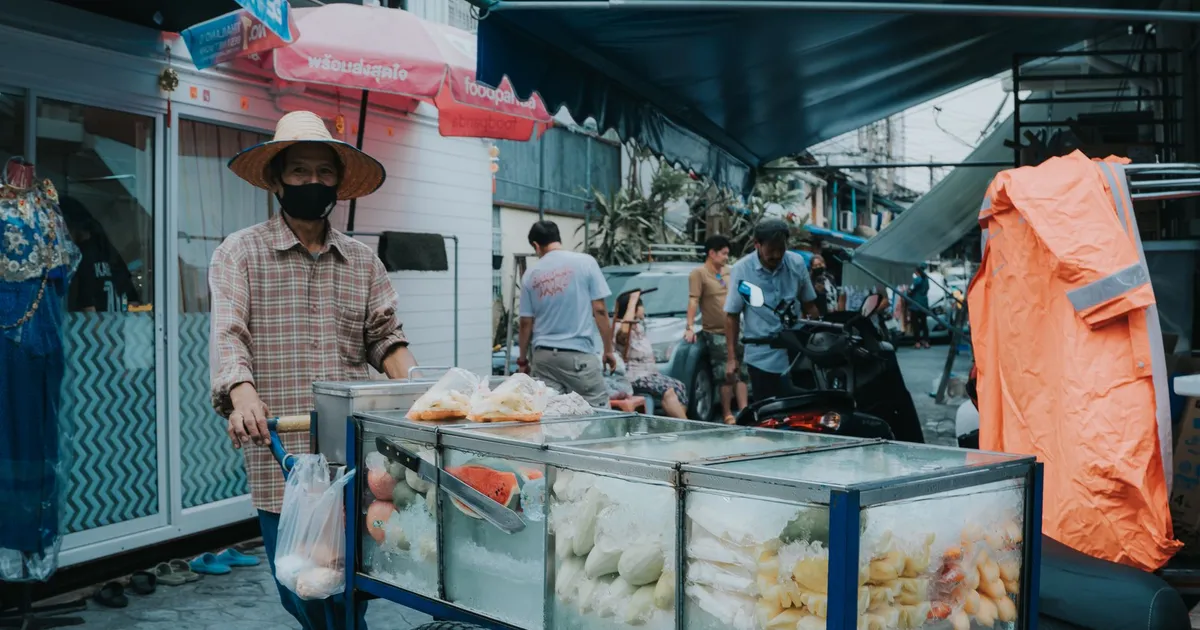

Most people plan a trip to Thailand by asking when it does not rain, then booking that window along with everyone else. It is a reasonable instinct and it produces a predictable outcome: the highest prices, the fullest boats, and beaches you share.
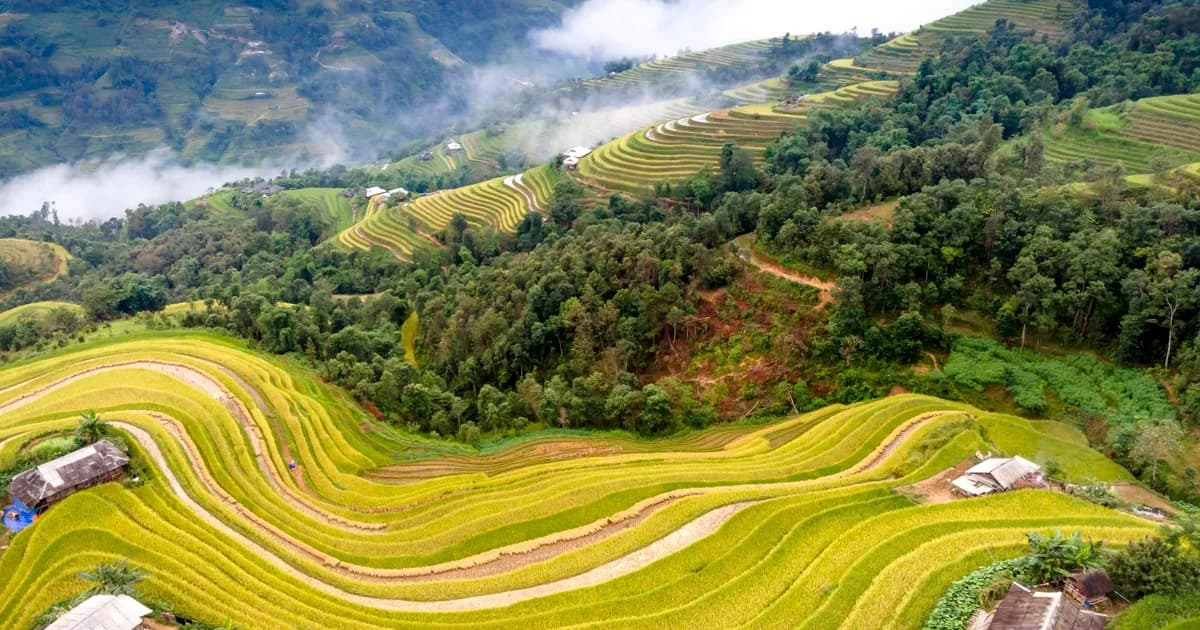
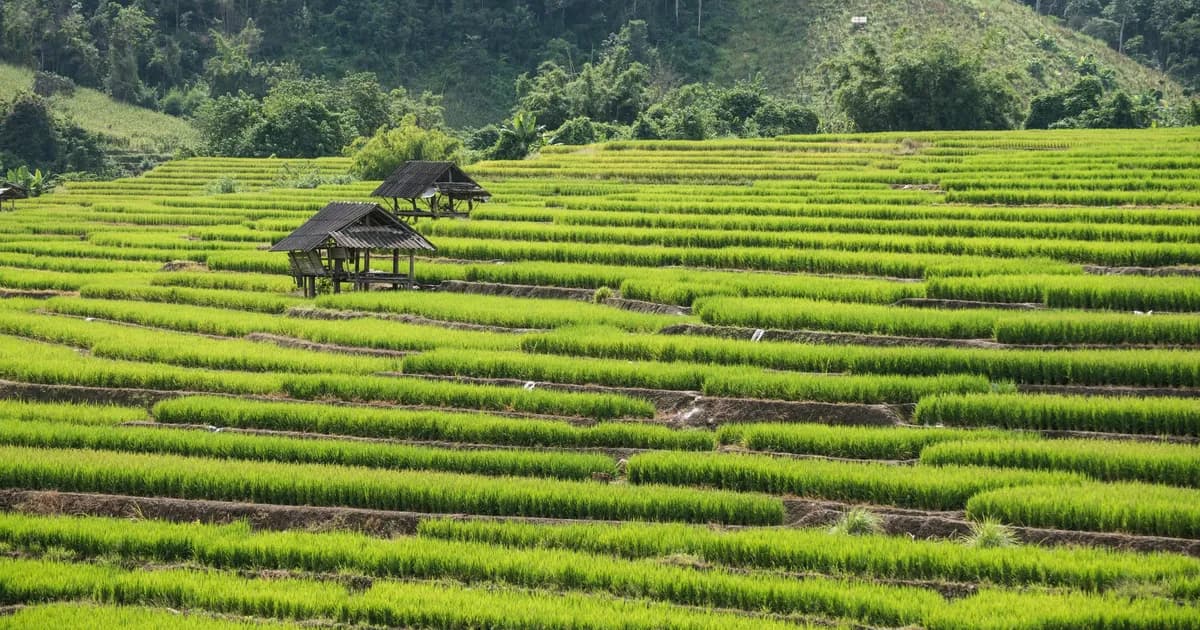
The alternative is to travel in the green season — the months when the monsoon is active somewhere in the country — and to plan around the water rather than against it. Done carelessly, this ruins a holiday. Done properly, it is the single best value proposition in Thai travel, and it delivers a version of the country that dry-season visitors never see: rice terraces at full green, waterfalls actually running, and towns going about their business rather than performing for arrivals.
This is how to do it properly.
What the green season actually means
Thailand's rainy season broadly runs from May to October, and the Thai Meteorological Department declared the 2026 season officially underway from 15 May. But the phrase "rainy season" misleads northern-hemisphere travellers who picture grey drizzle from breakfast to bed.
The reality in most of Thailand, most of the time, is short and violent. Rain arrives in bursts — often mid-afternoon, often for forty minutes to two hours — and then stops. Mornings are frequently clear. Skies between storms are dramatic rather than dull. Over a two-week trip in July you might lose parts of four or five afternoons, not fourteen days.
There are exceptions, and they matter. Peak monsoon weeks on the Andaman coast can deliver several consecutive days of genuine weather, with rain, wind and seas that stop boats. Flooding is a real possibility in low-lying areas and in the far south late in the year. The green season is not a hoax invented by hotels; it is simply far less continuous than the label suggests.
One request. Up to five tailored proposals.
Skip contacting agencies one by one — share your trip once and let up to five trusted Thailand agencies come to you. Free, with no obligation.
Get my free quotesThailand does not have one rainy season. It has three
This is the most useful thing on this page. Thailand's two coasts are on opposite weather schedules, and the mainland runs on a third.
- The Andaman coast (Phuket, Krabi, Koh Lanta, Koh Lipe, Khao Lak) takes the southwest monsoon from roughly May to October, with September usually the wettest and roughest month.
- The Gulf coast (Koh Samui, Koh Phangan, Koh Tao) stays comparatively dry through much of that period and has its own wet season from October to December, peaking in November.
- The mainland north and centre (Bangkok, Chiang Mai, Sukhothai, Isan) follows roughly mid-May through October, with September often heaviest.
The practical consequence is simple and frequently ignored: if you are travelling between May and October and you want islands, default to the Gulf. If you are travelling in November, the Andaman has usually cleared while the Gulf is at its worst. Choosing a coast by season rather than by photograph is the single decision that separates a good green-season trip from a disappointing one, and it is covered in more depth in our guide to matching the right Thai island to the right month.
What you actually gain
Price. This is the headline and it is real. Low-season room rates across the country fall substantially, and in the hardest-hit resort areas such as Phuket discounts of up to half the high-season rate are common. The same hotel that is unattainable in January becomes ordinary in September.
Space. Popular sites, beaches and temples are noticeably quieter. Sunrise at a major temple in the green season can mean twenty people instead of two hundred. Boat trips run with a handful of passengers rather than a full manifest.
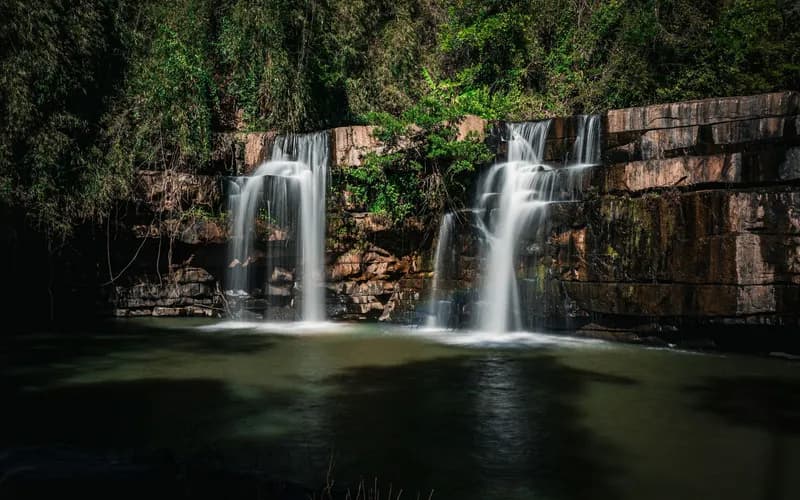
The landscape at its best. This is the part that rarely makes the brochure. Rice paddies are luminous rather than stubbled. Waterfalls in the north and in Khao Sok run at full volume instead of trickling over rock. Forest smells of forest. If you want to see the rainforest and lake country of Khao Sok as a rainforest rather than a dry hillside, this is the season for it.
Air quality in the north. An underrated benefit. Northern Thailand's burning season in February through April produces genuinely poor air. The rains wash it out completely.
Attention. Guesthouses, guides and drivers are not busy. You will be treated as a person rather than a booking reference.
Get matched with up to 5 trusted Thailand agencies
- Free
- No obligation
- Up to 5 agencies
What you actually lose
Honesty matters more than enthusiasm here.
Boat reliability on the Andaman side. Routes linking Phuket, Phi Phi, Koh Lanta and Koh Lipe are cancelled or delayed with real frequency in rough weather, especially June through September. If you are already on a small island when conditions deteriorate, you can be stuck for days. Koh Lipe, Koh Ngai and Koh Mook are the most exposed.
Snorkelling and diving visibility. Underwater conditions on the Andaman side deteriorate markedly in peak monsoon. Some liveaboard operations and marine national parks close entirely for part of the season.
Some businesses simply shut. Beach restaurants, small dive shops and seasonal bungalow operations on the west coast close for months. A place that was excellent in February may be boarded up in August.
Heat plus humidity. The green season is not cool. It is hot and very humid, and the humidity is what tires people out.
Mosquito-borne illness. Dengue risk rises with standing water. This is a genuine seasonal consideration, not a scare.
Building an itinerary that survives rain
The design principle is straightforward: prioritise things rain does not cancel, and never schedule anything critical for an afternoon.
Rain-proof activities in Thailand are plentiful. Cooking classes, museums, temples, markets, massage, train journeys, long lunches, textile workshops and city walking are all essentially weather-independent. Rain-vulnerable activities are boats, snorkelling, hiking, viewpoints, motorbike touring and anything involving unpaved roads.
A working structure looks like this:
- Front-load mornings. Do the boat trip, the viewpoint, the beach and the hike before one o'clock. This one habit removes most green-season frustration.
- Keep one flexible day per week, unbooked, as weather insurance.
- Build slower legs. Three nights minimum per stop. A one-night stay has no room to absorb a bad afternoon; a four-night stay barely notices one.
- Put the weather-dependent leg first. If your trip includes an Andaman island in July, do it at the start so a delay eats spare days rather than your flight home.
- Never connect an island to an international departure on the same day. Leave a full buffer day on the mainland.
That last rule is not optional. It is the difference between a cancelled ferry being an inconvenience and a cancelled ferry being a missed flight. Our seasonal overview of where to go and when in Thailand sets out which regions suit which months in more detail.
Boats, ferries and the one rule that matters
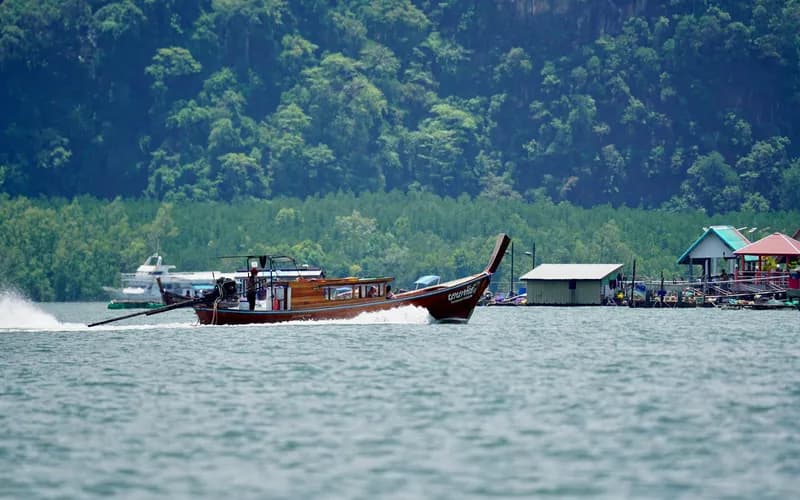
Morning sailings on the Andaman coast are far more reliable than afternoon ones. Afternoon departures during peak monsoon are cancelled at a materially higher rate, while first-departure morning services run in most conditions year-round. Book the earliest boat of the day, every time, even if it is inconvenient.
A few further practicalities:
- Buy ferry tickets with operators who reschedule or refund on weather cancellation, and keep the confirmation.
- Take travel insurance that covers transport interruption and missed connections. A weather cancellation should cost you time, not money.
- Prefer larger vessels over speedboats in rough conditions. Speedboats are faster in good weather and miserable in bad.
- Expect noise, sun on open decks, and aggressively cold air-conditioned cabins. Dress for both.
- On small islands, ask your guesthouse each evening what the boats are doing tomorrow. They will know before any website does.
Health, kit and connectivity
Mosquito protection deserves real attention in the green season. Use repellent containing DEET or picaridin, cover up at dawn and dusk, and choose accommodation with screens or nets. Dengue is present across Thailand and cases rise with the rains; there is no treatment beyond supportive care, so prevention is the whole strategy.
For kit, keep it minimal and functional:
- A light rain shell, not an umbrella-and-poncho collection. Umbrellas are useless in wind.
- Sandals or shoes that tolerate being soaked and dry overnight. Leather does not.
- Dry bags for electronics, one large and one small. Phone-sized pouches are enough for a boat, not for a downpour.
- Quick-dry fabrics throughout. Cotton stays wet in high humidity for a very long time.
- A power bank, because you will be using your phone for weather and boat updates constantly.
That last point is worth taking seriously. Green-season travel runs on live information — radar, ferry operator posts, messages from your next guesthouse — and that means a working data connection matters more than usual. Our guide to getting a Thai SIM or eSIM and handling money covers the options.
What to do next
- Choose your coast from the calendar, not the photos. Gulf islands from May to September; Andaman islands from November to April.
- Book the earliest boat of any day you must cross water, and keep the operator's cancellation policy in writing.
- Add a buffer day on the mainland before your international flight. Treat this as non-negotiable.
- Extend your minimum stay to three nights per stop, and cut a destination if that does not fit.
- Arrange insurance that covers weather-related transport interruption before you leave home.
- Pack repellent, a rain shell and two dry bags. Skip the umbrella.
- Confirm seasonal closures directly with any beach accommodation or dive operator you plan to use between June and October.
If you would rather have someone local watching the forecast on your behalf, our plan your journey page explains how to work with an agency that knows which boats actually run.
Frequently Asked Questions
Does it rain all day in Thailand's green season?
Rarely. Typical days bring heavy rain in bursts, often in the afternoon, lasting from under an hour to a couple of hours. Mornings are frequently clear. Multi-day continuous rain does happen, mainly at the peak of the Andaman monsoon in August and September and during late-year flooding in the far south.
Which months are the worst to visit Thailand?
There is no single answer, because the coasts differ. September is the wettest and roughest month on the Andaman side. November is the worst on the Gulf islands. If you want to avoid the highest risk of disruption anywhere, avoid September on the west coast and November on the east.
Is it safe to travel Thailand during the monsoon?
Yes, with normal precautions. The realistic risks are sea crossings in rough weather, slippery roads for motorbikes, flash flooding in low-lying areas and mosquito-borne illness. All are manageable by travelling in the morning, riding less, following local advice and using repellent.
How much money does the green season actually save?
Accommodation is where the saving concentrates, with low-season rates commonly well below high-season prices and discounts reaching around half in the most seasonal resort areas. Flights, park fees and food change far less. Budget a meaningful accommodation saving rather than a cheap trip overall.
Can I still go island hopping in the rainy season?
Yes, on the Gulf side. Samui, Phangan and Tao are a sound plan from May to September. Andaman island hopping between June and September is possible but genuinely unreliable, and small southern islands can strand you for days when the weather turns.
Should I book accommodation in advance during the green season?
For good small properties, yes, but you have far more flexibility than in high season. Booking two or three stops ahead rather than the whole trip lets you shift plans when a forecast changes, which is the main advantage of travelling in these months.
Is the north better than the south in the rainy season?
Often, yes. Northern Thailand in the green season offers clean air, full waterfalls, vivid rice terraces and no ferry dependency at all. Chiang Mai, Nan, Sukhothai and the northeast are excellent monsoon choices precisely because a wet afternoon costs you nothing but a change of plan.