
Thailand's Shifting Crowd: A New Visitor Mix in 2026 and Where It Still Feels Quiet
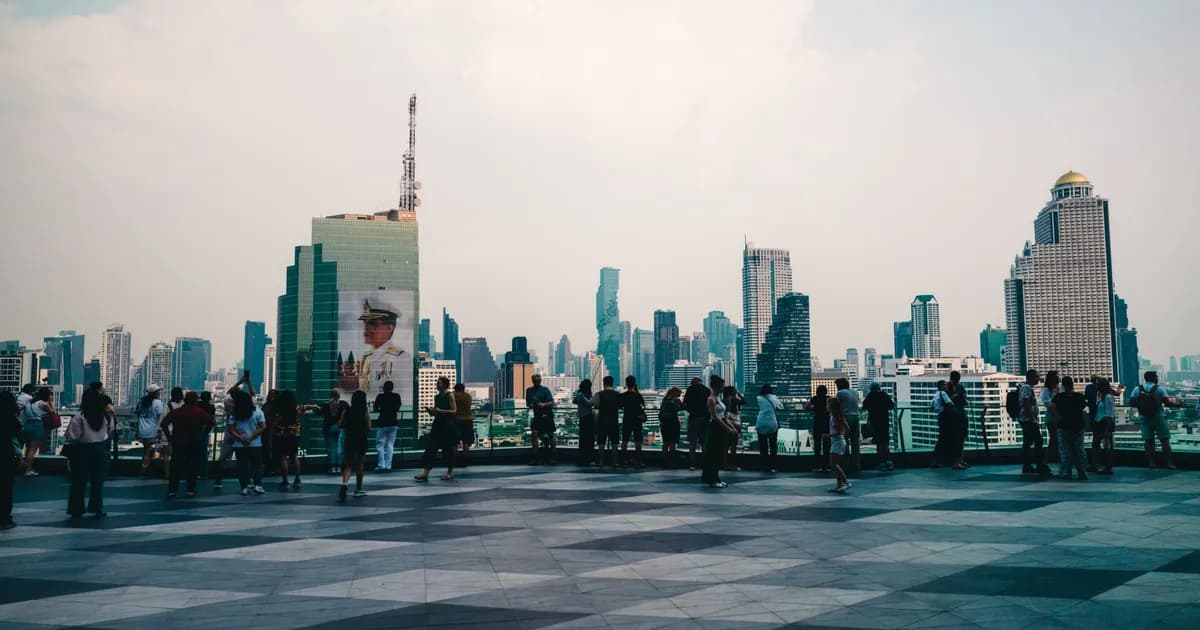
Thailand is not being overrun in 2026. For the first time in years, the story is the opposite: fewer foreign visitors overall, a scrambled market mix, and a government trying to talk up "quality" while the arrival numbers slide. Between early January and early July 2026, roughly 16.2 million foreign visitors arrived, down about 3 percent on the same period a year earlier. For travellers who value space and calm, this is not bad news at all. It pays, though, to understand what is actually happening, because the change is uneven: some places feel noticeably quieter, others are as busy as ever.
The headline: fewer visitors, and a different mix
The simple version is that Thailand's tourism engine lost a cylinder. The Chinese market, long the single largest source of foreign arrivals, has pulled back hard. Chinese visitor numbers fell from around 6.73 million in 2024 to roughly 4.47 million in 2025, a drop of about a third. Operators who once forecast nine million Chinese arrivals in 2026 quietly cut that to around seven million. China still tops the cumulative table for the first seven months of 2026, with about 2.65 million arrivals, but its dominance is shrinking.
That single shift ripples through everything, because Chinese group tourism was concentrated in specific places and specific businesses. When it thins, the effect is not spread evenly across the country. Some resort strips, shopping complexes and tour-bus circuits feel the drop sharply; quieter regions barely notice, because they were never on the group-tour map to begin with. Our read on the wider slowdown, and how it feels for independent travellers, is set out in the quiet year.
One request. Up to five tailored proposals.
Skip contacting agencies one by one — share your trip once and let up to five trusted Thailand agencies come to you. Free, with no obligation.
Get my free quotesWhy the Chinese market pulled back
Three forces are usually cited. The first is safety perception: high-profile stories about scam-centre networks along the Myanmar border rattled Chinese travellers early in the year, and fear travels faster than reassurance. The second is cost: Thailand is no longer the bargain it was for many Chinese visitors, and regional competitors have courted them aggressively. The third is simply the maturing of a market that boomed for a decade and was always going to normalise.
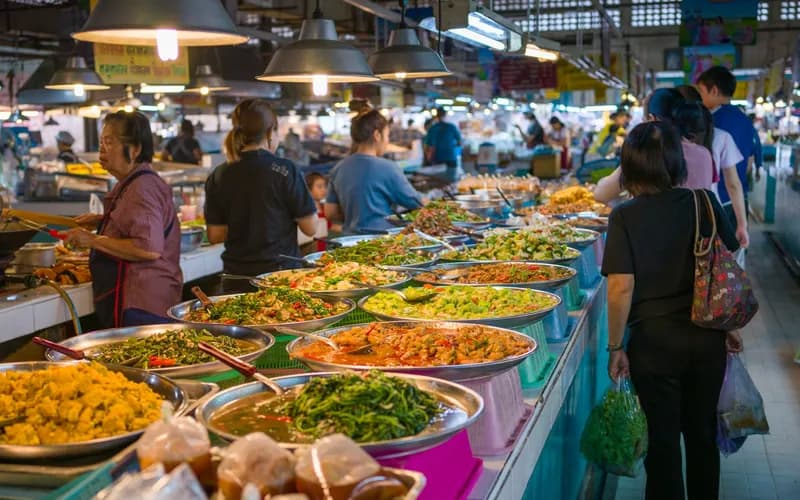
None of this is a crisis for the traveller. It matters for hotel owners and tour operators, and it explains the anxious tone of official tourism statements. But the practical result on the ground is more room, shorter queues at some famous sites, and a little more willingness among businesses to look after the guests who do turn up.
Who is arriving instead
The gap is being partly filled from elsewhere. Malaysia sits second in the 2026 cumulative rankings with about 2.1 million arrivals, a reminder of how much of Thailand's tourism is regional and overland rather than long-haul. India is the fast-rising story, with well over a million arrivals in the first seven months and a Q1 figure above 600,000; Indian travellers are spreading beyond the obvious beaches into cities, culture and shopping. European numbers are steadier, though they too have wobbled with wider geopolitics, and arrivals from parts of the Middle East dipped mid-year amid regional unrest.
For a slow traveller, the takeaway is not which flag is rising but the pattern underneath: the crowd is more diverse, less concentrated in a handful of group-tour nodes, and therefore easier to step away from.
Get matched with up to 5 trusted Thailand agencies
- Free
- No obligation
- Up to 5 agencies
What this actually means on the ground
Averages hide the real picture. The overall 3 percent dip does not mean everywhere is 3 percent quieter. It means a handful of Chinese-group strongholds are down sharply while much of the country is flat or even busier with regional and domestic visitors. Bangkok, Phuket's honeypots and the Pattaya circuit still move plenty of people. Meanwhile the government's push toward secondary provinces, which we cover in Thailand's secondary-cities push, is slowly nudging visitors toward towns that can absorb them.
If your instinct is to avoid the busy nodes entirely, the timing is good. The infrastructure for independent travel keeps improving, guesthouses in second-tier towns are keen for guests, and the sense of a country hustling for every visitor has eased.
The places absorbing the shift
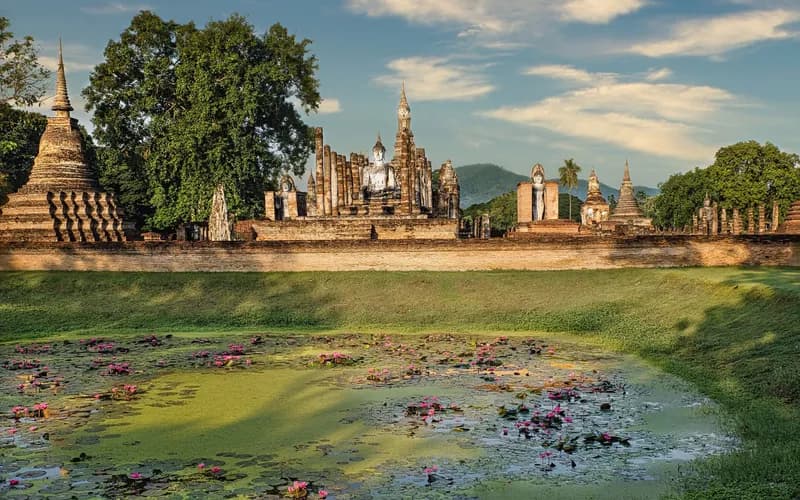
This is where the shift becomes an opportunity. The north and northeast, never dependent on Chinese group tours, are quietly excellent right now. The Mae Hong Son loop runs through mountain towns that feel entirely removed from the arrivals debate. Isan, the country's vast northeastern plateau, remains one of the least-touristed regions in mainland Southeast Asia. For a fuller list of where to go to sidestep the crowds, our off-the-beaten-path guide is the place to start.
Quality over volume: the official pivot
Behind the numbers is a deliberate policy story. Faced with a softer top line, Thai tourism authorities have leaned into "value over volume": chasing higher-spending, longer-staying visitors rather than sheer headcount. In practice this means promotion of wellness, culture, food and secondary destinations over the old model of packing beaches and shopping malls. It is a slow pivot, and the rhetoric runs ahead of the reality, but the direction aligns neatly with how a thoughtful traveller already wants to move. It is essentially the case we make in our charter for slow travel: depth, value and respect over churn.
How a slow traveller should read all this
The honest summary is that 2026 is a good year to travel Thailand deliberately. There is more space, businesses are attentive, and the country's own strategy is pointing away from mass tourism. The one caveat is that "quieter overall" does not mean "quiet everywhere": the marquee sights still draw crowds, and shoulder-season timing still matters. Choose second-tier bases, travel overland, stay longer in fewer places, and you will experience a Thailand that feels a world away from the arrivals headlines. A good local operator can help you build that itinerary; our travel agencies directory lists vetted specialists.
The domestic surge the arrivals figures miss
The foreign-arrivals headline leaves out the fastest-moving part of Thailand's tourism story: Thais themselves. Domestic travel has grown strongly, spread across long weekends, festivals and government campaigns to push spending into smaller provinces. For the international visitor this matters in two ways. First, some "quiet" secondary towns are busier than the foreign numbers suggest, especially on Thai public holidays, so it pays to check the domestic calendar before assuming a place will be empty. Second, it means the tourism economy in those towns is more resilient and more genuinely local: the guesthouse, the coffee shop and the noodle stall are serving Thai travellers first and you second, which is exactly the texture a slow traveller is looking for. Travelling alongside domestic tourists, rather than in a foreigner bubble, is one of the quiet pleasures of this moment, and it tends to keep prices honest and menus unadapted.
What the numbers do not capture
It is worth remembering how blunt arrival statistics are. They count border crossings, not experiences. A single Chinese tour group of forty and forty independent travellers arriving separately register identically in the data, yet their footprint on a place could not be more different. The retreat of high-volume group tourism, even as headline numbers dip, arguably improves the texture of travel in the affected places: fewer flag-following columns, more independent visitors moving at their own pace. So do not read the 3 percent dip as decline in any experiential sense. For the kind of traveller who wants to sit in a market for an hour, take the slow train, and stay a week where others stay a night, the current moment is close to ideal.
Reading the shift over the next year
Tourism boards will keep chasing the Chinese market back, and some of it will return; markets rarely move in straight lines. But the broader diversification looks structural, not temporary, and the policy tilt toward value and secondary destinations is unlikely to reverse. For planning purposes, assume the pattern of 2026 holds: honeypots still busy, much of the country calmer, and the smart move being to base yourself away from the famous nodes. That is not a hedge against a bad year; it is simply how Thailand rewards attention now, and it is likely to reward it the same way in 2027.
One practical implication follows from all of this: build your trip around places and rhythms rather than around headlines. The arrival figures will keep swinging from quarter to quarter, but the underlying advice for a slow traveller barely changes. Go where the group tours do not, move overland, and give each place the time it needs to reveal itself.
What to do next
- Decide whether you want the famous sights at all. If you do, visit them early in the day and treat them as a small part of a longer, slower trip.
- Anchor your itinerary in second-tier provinces and the north or northeast, where the visitor-mix shift barely registers.
- Travel in the shoulder months where you can; the crowd averages hide big seasonal swings at the honeypots.
- Support the businesses that need guests: family guesthouses, community stays and independent restaurants in quieter towns.
- Plan the route deliberately using our plan your journey page rather than defaulting to the standard Bangkok-Chiang Mai-Phuket triangle.
Frequently Asked Questions
Is Thailand less crowded in 2026?
Overall foreign arrivals are down about 3 percent year on year, driven mainly by a sharp fall in Chinese group tourism. But the drop is concentrated in specific resort and shopping circuits; famous sights in Bangkok, Phuket and Pattaya still draw crowds, while quieter regions feel much the same or a little emptier.
Why have Chinese tourist numbers fallen so much?
A mix of safety fears linked to scam-centre networks near the Myanmar border, rising costs that erode Thailand's old bargain reputation, and the natural maturing of a market that boomed for years. Chinese arrivals fell roughly a third between 2024 and 2025, and forecasts for 2026 were cut accordingly.
Which visitors are replacing them?
Regional and Indian travellers are the fastest-growing groups. Malaysia is now the second-largest source market for 2026, and India has climbed above a million arrivals in the first seven months, spreading well beyond the beaches into cities and cultural sites.
Does the slowdown make Thailand cheaper?
Not dramatically, but softer demand can mean better hotel availability, more willingness to negotiate off-season rates, and shorter waits at some attractions. Everyday costs such as food and transport are set more by domestic factors than by foreign arrival numbers.
Where should I go to avoid the crowds altogether?
The northern mountains around Mae Hong Son, Nan and Chiang Dao, and the northeastern Isan plateau, were never part of the Chinese group-tour map and remain genuinely quiet. Basing yourself there and travelling overland is the surest way to sidestep the busy nodes.
Keep reading
More from the ground · Thailand