
Europe Is Flying Back to the Andaman: What New Phuket and Krabi Routes Mean for Winter 2026-27
For years the cheapest way to reach Thailand's Andaman coast from Europe was to fly into Bangkok, then connect south. This winter that logic begins to shift. New seasonal nonstop services from London and Copenhagen are landing in Phuket and Krabi, and Thailand's tourism authority is openly courting longer-haul visitors who spend more per trip. For a country that has just lived through a quieter year, that is a deliberate bet on value over volume.
For slow travellers the news is useful but easy to misread. A direct flight does not make the Andaman a better place to travel; it makes it easier to arrive, and ease of arrival is exactly what tends to pull everyone to the same few beaches. This piece looks at what is actually changing, what remains unconfirmed, and how to use better access without repeating the old pattern.
What is actually new this winter
The details below come from airline announcements and the Tourism Authority of Thailand's (TAT) own high-season listing. Always confirm dates and frequencies with the airline before booking, because seasonal schedules move.
Virgin Atlantic begins flying London Heathrow to Phuket on 18 October 2026, three times a week on a Boeing 787-9, as a winter-season route. It is billed as the only direct link between Heathrow and Phuket. Scandinavian Airlines (SAS) plans Copenhagen to Krabi from 8 December 2026 (two weekly flights) and Copenhagen to Phuket from 9 December (two to three weekly), both on Airbus A350 aircraft and running to late March 2027.
TAT's list for the final months of 2026 also names Norse Atlantic Airways on London to Phuket in December, Loong Air on Xi'an to Krabi in December, and, earlier, Riyadh Air to Bangkok, LOT Polish Airlines from Warsaw, and Belavia from Minsk to Bangkok in October. The pattern is a broad spread of origins rather than a single market, which is a sensible hedge for the authority.
One request. Up to five tailored proposals.
Skip contacting agencies one by one — share your trip once and let up to five trusted Thailand agencies come to you. Free, with no obligation.
Get my free quotesWhy Thailand wants this traffic
The backdrop matters. TAT's 2026 target is around 33 million foreign arrivals and 2.7 trillion baht in tourism revenue, but arrivals were reported about 3 percent down year on year, at roughly 18 million, by late August. The government has also tightened some entry settings this year, including the return to a 30-day visa-free stay for many nationalities. In that climate, a long-haul passenger from London or Scandinavia is attractive: they tend to stay longer and spend more per night than a short-haul regional visitor.
TAT has said it is chasing growth driven by value, with wellness, medical and higher-spending segments in focus. New nonstop routes are the infrastructure for that strategy. If you have read our coverage of how Thailand's 2026 tourism pivot from volume to value is playing out, this is the aviation chapter of the same story.
What a direct flight does and does not change
The practical gain is time. Skipping a Bangkok connection can save several hours and one night of jet-lagged transit. For families, older travellers and anyone with limited leave, that is a real benefit, and it makes the Andaman side more realistic for a two- or three-week trip.
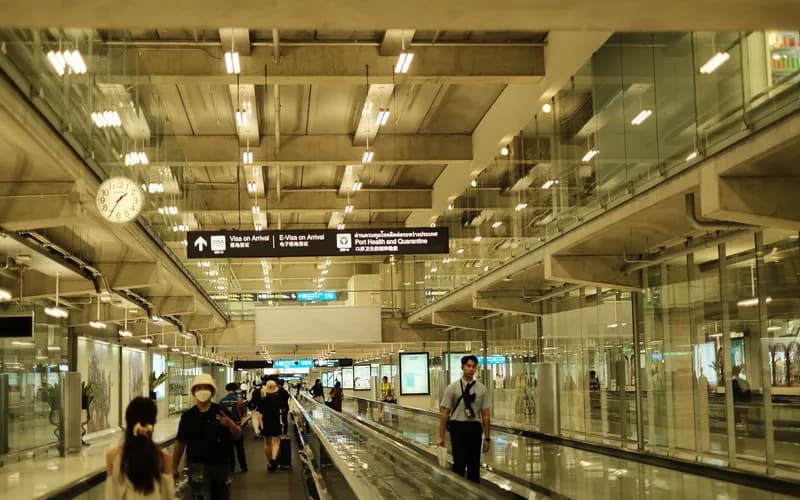
What it does not change is the character of the arrival airports. Phuket and Krabi are gateways, not destinations; the roads out of both lead quickly to dense resort areas. A direct flight with no plan simply moves you faster to the busiest places. For those who want depth, the opportunity is to treat the airport as a launchpad.
[ ]
]
Get matched with up to 5 trusted Thailand agencies
- Free
- No obligation
- Up to 5 agencies
Fares, capacity and honest uncertainty
At the time of writing we have not verified fare levels for these services, and we will not guess. Seasonal long-haul routes are often priced for peak weeks around Christmas and New Year and can be cheaper in January and February, but that is a general pattern rather than a promise. Seasonal routes are also the first to be trimmed if demand disappoints, as several airlines have shown over the years.
Two sensible habits follow. First, book flexible or refundable fares for any itinerary that depends on a single new nonstop. Second, keep a Bangkok-connection plan in your back pocket; if a route is cut, you can still reach the south by domestic flight, sleeper train or bus. For a sense of the ground options, see our guide to getting around Thailand slowly.
Using the arrival to go somewhere quieter
This is where the new routes become interesting for slower travel. Landing in Phuket or Krabi puts you within reach of the quieter parts of the Andaman coast without a domestic leg.
From Phuket, Phang Nga Bay and the small islands of Koh Yao are a short transfer and boat away, and they feel like another country compared with the beach strips. From Krabi, the Trang islands and the quieter coves are within a day's travel. Going further north, Ranong and Koh Phayam are a longer overland journey but repay the effort with a very different pace; our regional profile of Ranong and Koh Phayam explains how to reach them.
A useful structure is the open-jaw ticket: fly into Phuket or Krabi, travel overland and by boat, and fly out of Bangkok or another city. That avoids backtracking and spends your days in places rather than in transit.

The risk of funnelling
There is a trade-off worth naming. More direct flights to the same two airports concentrate arrivals. In a year when TAT is promoting festivals, events and new routes together, the busiest coastal strips may well fill up again over December and January, even as the national headline number stays soft.
That is why timing and choice of base matter more than the route you arrive on. If you must travel in peak weeks, anchor yourself outside the main resort belts and move less often. If your dates are flexible, the months either side of the Christmas and New Year peak are calmer and cheaper. Our notes on choosing your Thai island by coast and season go through the options.
Who benefits most, and who should wait
Some travellers gain a great deal from a nonstop flight. Families with young children avoid a second airport and a second set of check-in queues. Older travellers skip a tiring connection. People with only two weeks of leave can reach the beach on day one rather than day two. Anyone planning a wellness stay, a diving week or a long beach-based rest will find the Andaman coast far more accessible than before.
Other travellers should think twice. If you are planning a long trip that already starts in Bangkok, or one that heads north to Chiang Mai and Nan before drifting south, a nonstop to Phuket may add little. If your trip is built around temples, food and cities, the added convenience on the coast is irrelevant. And if you are travelling at the lowest possible cost, a flexible Bangkok connection on a low-cost carrier will often remain the more economical route, even if it takes longer.
The honest summary is that new routes widen choice rather than replacing the old ways of travelling. They are one more option to weigh against time, price and the kind of trip you want to take.
Reading an airline schedule like a slow traveller
A published schedule tells you more than departure times. Look at the first and last operating dates, because a route that starts in mid-December and ends in late March covers only a slice of the cool, dry season. Look at the days of operation too: a service that flies three days a week gives you only a few arrival dates, which may not match the days your accommodation or onward boat can be booked.
Check the arrival hour. A morning landing is helpful for reaching an island pier in daylight, while a late-night arrival may force you to sleep near the airport and lose a day. Finally, read the fare conditions. Seasonal routes are often sold with strict change fees, and a refundable ticket costs more but protects the rest of your plans if the airline adjusts timings.
Practical details to check before you book
Direct flights do not remove the usual entry and exit requirements. Check your visa-free stay, complete the digital arrival card before you fly, and note the airport departure charges that now apply; our explainer on Thailand's departure fee and airport changes covers what to expect when you leave.
Also remember the long-haul arrival time. The Virgin Atlantic schedule, for example, lands in the early morning, so check whether your first-night accommodation allows early check-in. Arriving tired and heading straight to the most crowded beach is the most common way to waste the first days of a trip.
What this means for the longer view
If these routes succeed, expect more airlines to test the Andaman market, and expect Phuket and Krabi to keep growing as long-haul gateways. If they underperform, expect them to vanish quietly after one season. Either way, the traveller's best defence is the same: choose a region, not an airport; stay longer in fewer places; and let the flight serve the trip rather than define it.
For anyone designing a longer Thailand itinerary around one of these arrivals, our slow traveller's guide to Thailand shows how to pace a trip by region and season.
What to Do Next
- Confirm the schedule directly with the airline for any new route you plan to use, and note the start and end dates.
- Book a flexible fare and keep a fallback route via Bangkok in mind.
- Consider an open-jaw itinerary: arrive in Phuket or Krabi, leave from Bangkok.
- Choose a quieter base within a day of the airport, rather than the nearest beach strip.
- Check entry rules, the digital arrival card and departure charges before you fly.
Frequently Asked Questions
Which new direct flights serve Phuket and Krabi this winter?
Virgin Atlantic starts London Heathrow to Phuket on 18 October 2026, three times weekly. SAS plans Copenhagen to Krabi from 8 December and to Phuket from 9 December, running to late March 2027. TAT also lists Norse Atlantic from London to Phuket and Loong Air from Xi'an to Krabi in December. Confirm details with each airline.
Are these flights permanent?
No. These are described as seasonal winter services. Seasonal routes can be adjusted or dropped, so book flexible fares and keep an alternative plan through Bangkok.
Will direct flights make Phuket and Krabi more crowded?
Probably in peak weeks, because they concentrate arrivals at two airports. Travelling outside the Christmas and New Year peak, or basing yourself away from the main resort strips, keeps the experience calmer.
Is it worth flying into Phuket and out of Bangkok?
For many itineraries, yes. An open-jaw ticket avoids backtracking and lets you travel one direction overland and by boat. Compare the total fare and check any change fees before booking.
Does a direct flight change visa or entry rules?
No. You still need to meet the visa or visa-free requirements for your nationality, complete any digital arrival card, and follow immigration procedures on arrival. Check current rules close to departure, as they have changed this year.
Where should slow travellers go after landing in Phuket or Krabi?
Consider Phang Nga Bay and Koh Yao Noi, the Trang islands, or further north to Ranong and Koh Phayam. All reward longer stays and spread visitors away from the main beaches.
Keep reading
More from the ground · Thailand