Hanoi's 2026 Petrol Motorbike Ban: What Travellers Need to Know
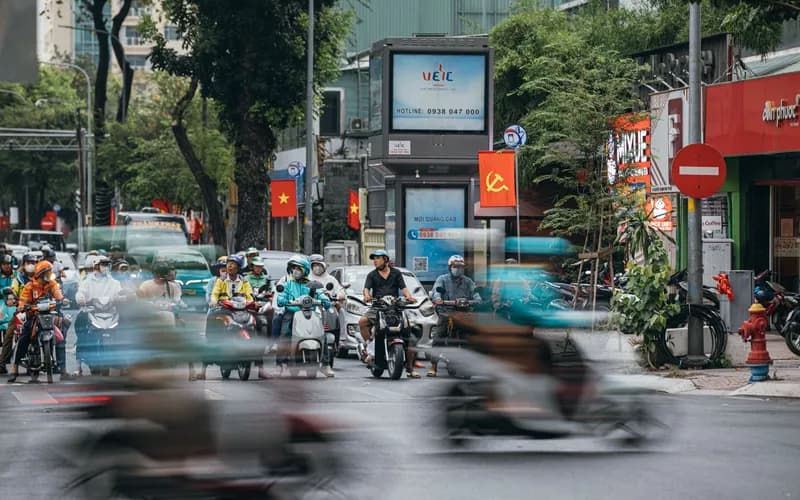
Hanoi runs on the motorbike. The image of the city, a river of scooters flowing around the lanes of the Old Quarter, is so fixed that it is hard to imagine anything else. Yet from July 2026 that picture begins to change, as the city starts to restrict petrol motorbikes in its historic core as part of a long-term plan to clean its air. For travellers, this is a genuine and timely development, and one worth understanding before you arrive, because it touches the very streets where most visitors stay and walk.
The change is phased and, for now, more modest than the headlines suggest, but it is the first step of something much larger. Here is what Hanoi has actually announced, what it means on the ground in 2026, and how to move around the city as the rules take hold.
What Hanoi has actually announced
The core policy is this: Hanoi will begin banning petrol-powered motorbikes within Ring Road 1, the innermost of the city's ring roads, from 1 July 2026. Ring Road 1 encircles the central districts, including the Old Quarter and the area around Hoan Kiem Lake, which is precisely the zone where most visitors spend their time. The aim is to cut the transport emissions that are a leading cause of the city's serious air-pollution problem.
It is important to read the timeline correctly, because the change arrives in stages rather than all at once. The 2026 measure is the opening phase, focused on the historic centre, and it will be followed by significantly wider restrictions later in the decade. What begins as a targeted pilot in the Old Quarter is intended to grow, over the following years, into a broad clean-air zone across the heart of the city. This fits a wider pattern of Vietnamese cities tightening their traffic rules; our guide to Vietnam's 2026 traffic fines under Decree 168 covers the parallel crackdown on road behaviour.
One request. Up to five tailored proposals.
Skip contacting agencies one by one — share your trip once and let up to five trusted Vietnam agencies come to you. Free, with no obligation.
Get my free quotesPhase one in the Old Quarter: the detail
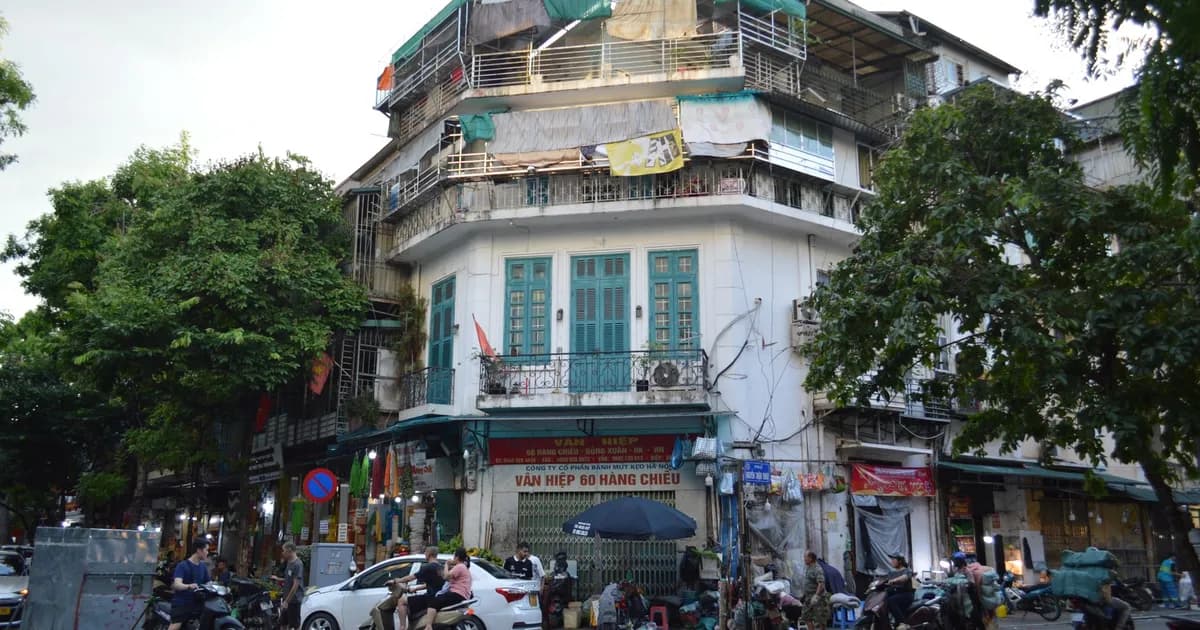
The first phase, running from 1 July to the end of December 2026, is a pilot centred on Hoan Kiem ward, with a core zone bounded by eleven streets in the Old Quarter. Within this pilot, the restrictions are time- and vehicle-specific rather than a blanket ban from day one. Petrol-powered motorbikes are restricted on those eleven Old Quarter streets during particular periods, notably weekends and Friday evenings, when the area is busiest with pedestrians.
There is one important distinction for visitors. Petrol-powered ride-hailing motorbikes, the GrabBike-style taxis that many travellers use, are banned outright on those eleven streets for the whole of the phase-one period, while privately owned petrol motorbikes face only the time-based limits. In practice this means that if your trip falls on weekdays outside Friday evenings, the Old Quarter streets remain broadly accessible to petrol motorbikes, but a petrol bike-taxi may no longer be able to drop you at your door within the core zone. Knowing that distinction saves confusion when you book a ride.
What it means if you are staying in the Old Quarter
Most visitors to Hanoi stay in or beside the Old Quarter, so this is not an abstract policy for the traveller; it affects your daily movements. The practical upshot in 2026 is manageable and, in some ways, welcome. The historic core is compact and eminently walkable, and the restrictions are designed to make it more pedestrian-friendly, especially at the weekends when the surrounding streets already become walking areas in the evenings.
The main adjustment is to how you arrive and depart. If you are checking in with luggage, or booking a bike-taxi, be aware that a petrol ride-hailing motorbike may not be permitted on the pilot streets, and plan for a short walk with your bags or an alternative vehicle. For getting around the centre itself, walking will often be the simplest and most pleasant option, which suits the slow traveller well. To weave the city into a broader trip at a human pace, a specialist on our Vietnam plan-your-journey page can help you base yourself sensibly.
Get matched with up to 5 trusted Vietnam agencies
- Free
- No obligation
- Up to 5 agencies
Getting around Hanoi without a petrol bike
The good news is that Hanoi now offers more petrol-free ways to move than ever. Electric ride-hailing vehicles have expanded rapidly, and electric bikes and cars are increasingly easy to hail through the usual apps; choosing the electric option not only sidesteps the restrictions but supports the very shift the policy is trying to achieve. For longer hops across the city, Hanoi's growing urban rail network offers a clean, quick alternative to the traffic; our guide to riding Vietnam's urban metros explains how the lines work.
If you had planned to rent a motorbike to explore the city yourself, reconsider the centre specifically: renting an electric scooter rather than a petrol one keeps you clear of the restrictions and the fines, and it is kinder to the air you are breathing. For riding beyond the city, where petrol bikes remain the norm, our guide to renting and riding a motorbike in Vietnam safely still applies. Within Ring Road 1, though, the direction of travel is unmistakably electric.
The bigger picture: 2028 and beyond
The 2026 pilot is deliberately the thin end of a much larger wedge. The city has signalled that from 2028 it intends to ban motorbikes and limit fossil-fuelled private cars across a far wider central area, within both Ring Road 1 and the larger Ring Road 2. In other words, what looks in 2026 like a modest weekend restriction on eleven streets is the first move in a plan to make much of central Hanoi a low-emission zone within a few years.
For the traveller, this matters mainly as context. A trip in 2026 will encounter only the early, limited phase, but anyone returning to Hanoi later in the decade should expect the centre to look and feel increasingly different: quieter, cleaner, more walkable, and far less dominated by the petrol engine. It is a significant long-term change to a city defined by its traffic, and it is worth watching as it unfolds.
Why Hanoi is doing this
The motivation is air quality, and it is not a minor concern. Hanoi regularly ranks among the most polluted major cities in the world, and vehicle emissions, from millions of petrol motorbikes above all, are among the largest contributors. The clean-air zone is the city's most serious attempt yet to tackle the problem at its source, by removing the dirtiest engines from the most crowded streets.
For a visitor, it is worth approaching the policy with understanding rather than frustration. The restrictions may occasionally complicate a journey across the centre, but they are aimed at a genuine public-health problem, and the cleaner, quieter Old Quarter they are meant to create is one that slow travellers, who tend to explore on foot, will appreciate more than most. A little planning around the rules is a small price for a city trying to breathe more easily.
Part of a national shift toward electric
Hanoi's clean-air zone is not an isolated experiment; it is the leading edge of a national move away from the petrol engine. Ho Chi Minh City has signalled that it is weighing comparable restrictions, and the country as a whole has been steadily encouraging a shift to electric two-wheelers, which are now a common sight on Vietnamese roads. For the traveller, this means the electric option you reach for in central Hanoi is part of a much broader transition, not a one-city quirk.
That has a couple of practical implications for a longer trip. First, the infrastructure for electric travel, charging, rentals and electric ride-hailing, is improving fastest in the big cities, so you will find it easiest to go petrol-free precisely where the restrictions bite hardest. Second, the rules are evolving quickly, and what applies on eleven Old Quarter streets in 2026 may look very different a year or two later. Checking the current position close to your travel dates, rather than relying on older guidance, is the sensible habit. The broad direction, though, is clear and unlikely to reverse: Vietnam's great cities are moving, deliberately and fairly rapidly, towards quieter, cleaner, less petrol-dependent centres, and the traveller who leans into that shift will find it easier, cheaper and more pleasant than resisting it.
What to Do Next
- Check whether your Hanoi dates fall on a weekend or Friday evening, when the Old Quarter petrol-bike restrictions are tightest in 2026.
- Expect that petrol ride-hailing motorbikes may not enter the eleven pilot streets, and plan a short walk or an electric vehicle for arrivals with luggage.
- Favour walking, electric ride-hailing and the metro for getting around the centre.
- If renting in the city, choose an electric scooter rather than a petrol one to stay clear of the restrictions.
- If you are returning later in the decade, expect the clean-air zone to expand well beyond the Old Quarter from 2028.
Frequently Asked Questions
When does Hanoi's petrol motorbike ban start?
The first phase begins on 1 July 2026, restricting petrol-powered motorbikes within Ring Road 1, starting with a pilot in the Old Quarter around Hoan Kiem. Wider restrictions across Ring Roads 1 and 2 are planned from 2028.
Does the ban affect tourists in the Old Quarter?
Yes, because most visitors stay there. In 2026 the effect is limited: petrol ride-hailing motorbikes are barred from eleven pilot streets, and privately owned petrol bikes face time-based limits on weekends and Friday evenings. Walking and electric vehicles are unaffected.
Can I still take a Grab motorbike in central Hanoi?
Petrol-powered ride-hailing motorbikes are banned on the eleven Old Quarter pilot streets throughout the phase-one period in 2026. Electric ride-hailing vehicles are not affected, so choosing the electric option, or a car, is the reliable way to get a ride into the core zone.
Can I still rent a motorbike in Hanoi?
Yes, but within the central clean-air zone an electric scooter is the sensible choice, as it avoids the petrol restrictions and fines. For riding outside the city, petrol bikes remain normal, and standard rental and safety advice still applies.
Why is Hanoi banning petrol motorbikes?
The policy targets air pollution. Hanoi is among the world's most polluted major cities, and emissions from its millions of petrol motorbikes are a leading cause. Removing them from the busiest central streets is the city's most serious effort yet to improve air quality.
How will this change Hanoi over the next few years?
Expect the centre to become progressively quieter, cleaner and more walkable. The 2026 pilot is the first step, with much wider restrictions planned from 2028 across Ring Roads 1 and 2, gradually transforming a city long defined by its motorbike traffic.