Vietnam's Tough New Traffic Rules and Fines in 2026: What Travellers Need to Know
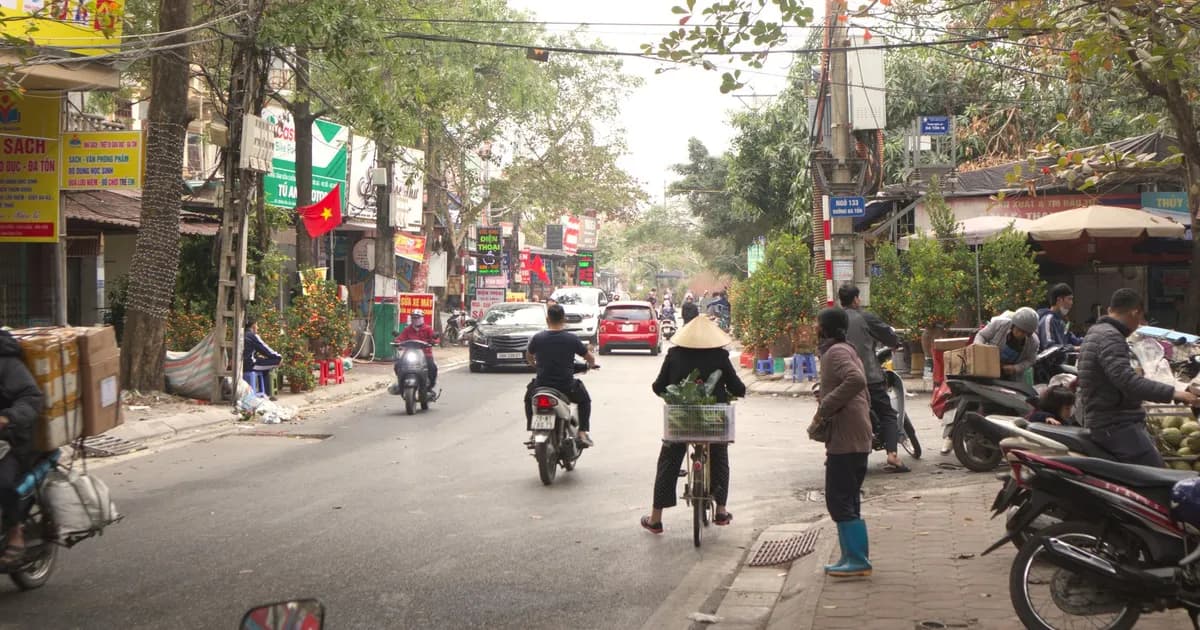
If you have visited Vietnam before, the traffic will be part of your memory: the tidal flow of motorbikes, the gentle chaos of a Hanoi junction, the way crossing the road becomes an act of faith. In 2026 that picture is changing, and fast, because of a single piece of legislation. Decree 168, which took effect at the start of 2025, dramatically raised traffic fines and introduced a licence-points system, and its effects are now visible on the streets. For any traveller who plans to ride a motorbike or drive, and even for those who only cross the road, it is worth understanding what has changed and why the mood on Vietnam's roads feels different.
Vietnam's roads just got much stricter
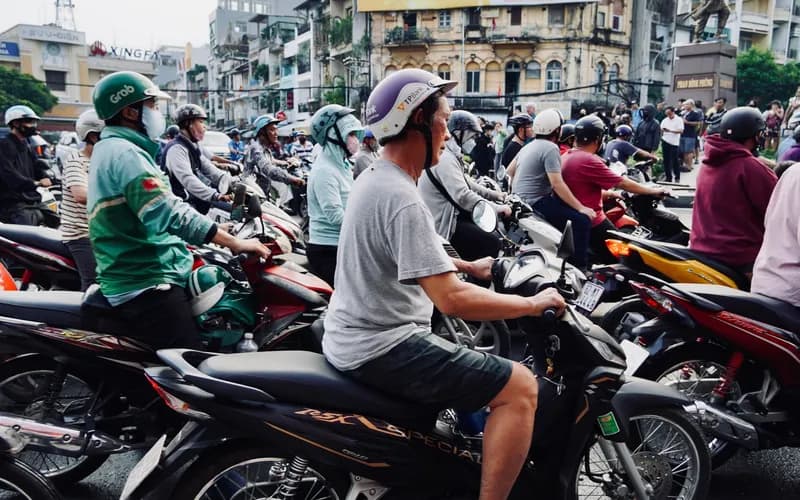
Decree 168 replaced the older Decree 100 and represents the biggest tightening of Vietnamese road rules in years. The government's aim was blunt: to force down a stubbornly high road-death toll and to impose order on traffic culture through penalties heavy enough to change behaviour. The early results have been striking. Locals noticed the change immediately, with far more riders stopping at red lights and waiting rather than flowing through on instinct. Whether you find the new discipline reassuring or the old flow charming, it is now the reality, and it applies to you the moment you take control of a vehicle. This is one of the more consequential shifts we flag in our overview of what has changed for travellers in Vietnam.
One request. Up to five tailored proposals.
Skip contacting agencies one by one — share your trip once and let up to five trusted Vietnam agencies come to you. Free, with no obligation.
Get my free quotesWhat Decree 168 changed
Two changes sit at the heart of the decree. The first is the sheer scale of the fine increases: penalties for a long list of offences were raised many times over, turning what were once trivial, shrug-off amounts into sums that genuinely sting. The second is a new points system attached to driving licences, under which serious or repeated violations deduct points, and a licence that loses all its points must be re-earned. Together these shift the calculus for every road user from "the fine is cheap enough to ignore" to "this could cost me real money and my licence." That is precisely the behavioural change the decree was designed to produce.
The fines that matter to riders
The numbers are what get attention. Running a red light on a motorbike, once penalised at a few hundred thousand dong, now draws a fine in the region of 4 to 6 million dong, roughly 160 to 240 US dollars, a tenfold jump. Offences at the severe end, such as reckless driving or illegal racing, can reach 40 to 50 million dong, well over a thousand US dollars. For a traveller renting a scooter for a few dollars a day, a single red-light fine can dwarf the entire cost of the rental and then some. The message is simple: the small infractions that were once part of the flow are now expensive.
Get matched with up to 5 trusted Vietnam agencies
- Free
- No obligation
- Up to 5 agencies
The licence-points system
Alongside the fines, the points system adds a second layer of consequence that is easy to overlook. Each driving licence carries a set number of points, and specified violations deduct them; lose them all and the licence is suspended until the holder requalifies. For Vietnamese riders this is a significant deterrent. For foreign visitors the mechanics are murkier, but the underlying point stands: the authorities are treating traffic offences as a serious matter of record, not a casual roadside transaction, and the whole enforcement culture has hardened accordingly.
Camera enforcement and the delayed fine
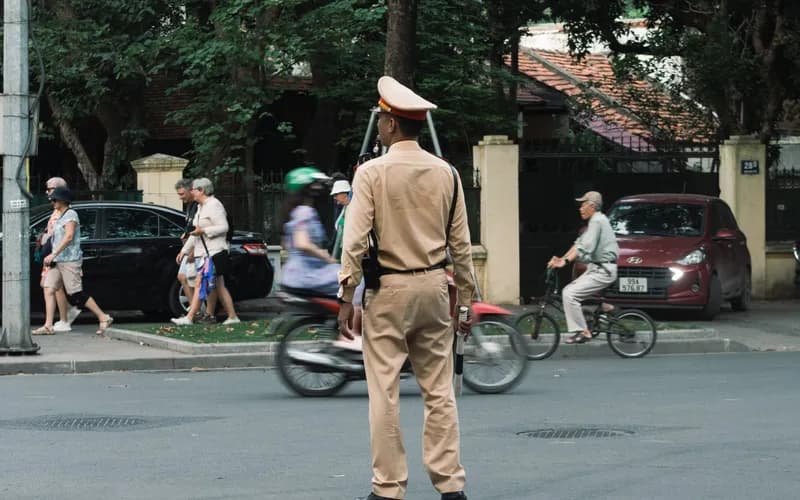
One of the most important practical shifts is how violations are caught. Enforcement increasingly relies on traffic-monitoring systems and roadside cameras rather than only on officers flagging you down. Vietnam calls this "cold" or camera-detected fining, and it has a peculiar implication for short-term visitors: a violation captured by a camera may be processed days or weeks later, potentially after you have returned the bike or even left the country. That delay does not make the fine disappear; it can surface as a demand against the rental shop, which then pursues you via the deposit or card on file. Assuming you got away with something because no officer stopped you is now a mistake.
Zero tolerance on alcohol
Vietnam maintains one of the strictest drink-driving regimes in the region: effectively a zero blood-alcohol limit for anyone operating a vehicle, motorbikes included. Under the tougher penalty regime, being caught with any measurable alcohol while riding brings heavy fines and, for locals, licence-points consequences. For travellers this deserves emphasis because the culture of a casual beer before riding home is exactly what the law now targets hardest. The safe and legal position is simple and absolute: if you have had anything to drink, do not ride. Use a ride-hailing app or a taxi instead.
Helmets, phones and the everyday rules
Beyond the headline offences, the decree raised penalties across a spread of everyday behaviours that catch tourists most often. Riding or being carried without a properly fastened helmet, using a phone while riding, carrying too many passengers, riding on pavements, and going the wrong way down a street are all now more expensive. None of this is exotic; it is the ordinary stuff of a careless moment. Wearing a good helmet, keeping your phone away while moving, and riding predictably will keep you clear of the great majority of fines, and, far more importantly, safer on genuinely demanding roads.
Do these rules apply to foreign tourists?
Yes. There is no tourist exemption. The fines and rules apply to anyone operating a vehicle on Vietnamese roads, and enforcement does not distinguish by nationality. If anything, a visitor on an unfamiliar rented bike, navigating unfamiliar junctions, is more likely to slip up than a local who rides them daily. Treat the rules as fully binding on you, because they are, and because the alternative, an accident on a foreign road, is the outcome the whole regime exists to prevent.
The licence question
The fines sit on top of an older issue that many riders ignore: the licence to ride legally in the first place. Vietnam recognises the 1968 Vienna Convention International Driving Permit, which must be carried with your home motorcycle licence; the older 1949-style permit is not recognised here. A great many travellers ride without valid documentation, and while that has long been common, the harder enforcement climate raises the stakes of doing so, particularly because riding unlicensed can void your travel insurance in an accident. If you intend to ride, sort the paperwork before you arrive. If the famous northern routes are your goal, our guide to the Ha Giang loop is honest about the risks and the alternatives.
What this means for slow travellers
None of this should frighten anyone off Vietnam, and it is arguably good news: safer roads and calmer traffic make the country more pleasant, not less. But it does change the arithmetic of renting a bike casually. For many slow travellers the sensible conclusion is to lean on the excellent and cheap alternatives, sleeper trains, buses, ride-hailing and hired cars with drivers, and to ride only if you are properly licensed, insured and confident. Our guide on how to move through Vietnam lays out those options, and the unhurried, considered approach they represent is exactly what our slow travel charter is about.
Crossing the road as a pedestrian
It is not only riders the new order touches. Even as a pedestrian, the changing behaviour of Vietnamese traffic is worth understanding. For decades the technique for crossing a Hanoi or Saigon street was counterintuitive but reliable: step off the kerb steadily, keep a slow and predictable pace, and let the flow of motorbikes part around you like water. With more riders now stopping at lights, crossings at junctions are becoming a little more orderly, but away from signals the old method still applies. Never stop suddenly or dart, since unpredictability is what causes collisions, and use marked crossings and pedestrian signals where they exist. Understanding the rhythm of the traffic, rather than fighting it, remains one of the small skills that makes a Vietnamese city feel navigable rather than frightening. It is a skill that comes within a day or two, and locals are generally patient with visitors still learning it.
What to do next
- Decide honestly whether you will ride at all; the cheap, comfortable alternatives now often make more sense than a rented scooter.
- If you will ride, arrange a 1968 Convention IDP plus your home motorcycle licence before arriving, and confirm your insurance covers riding.
- Learn the expensive offences, red lights, no helmet, phone use and any alcohol, and simply never commit them.
- Assume cameras are watching; a delayed fine can follow you to the rental deposit even after you leave.
- Plan a route that leans on trains, buses and drivers where it can, using our plan your journey page.
Frequently Asked Questions
What is Decree 168 in Vietnam?
Decree 168 is the traffic law that took effect at the start of 2025, replacing Decree 100. It sharply increased fines for a wide range of offences and introduced a licence-points system. Its aim is to reduce road deaths and impose order on traffic, and it has visibly changed rider behaviour across the country.
How much is the fine for running a red light on a motorbike?
Under Decree 168, running a red light on a motorbike draws a fine of roughly 4 to 6 million dong, about 160 to 240 US dollars, up around tenfold from the previous penalty. For a traveller paying only a few dollars a day for a scooter, a single such fine can far exceed the entire rental cost.
Do the new traffic fines apply to foreign tourists?
Yes. There is no exemption for tourists; the rules and fines apply to anyone operating a vehicle on Vietnamese roads regardless of nationality. Camera-based enforcement means a violation can be processed after you have returned the bike, surfacing as a charge pursued through the rental shop's deposit.
Can I drink and ride in Vietnam?
No. Vietnam applies an effectively zero blood-alcohol limit to anyone operating a vehicle, motorbikes included, and penalties under the current regime are heavy. If you have had any alcohol, do not ride; take a taxi or a ride-hailing car instead. This is one of the most strictly enforced rules on the roads.
What licence do I need to ride a motorbike in Vietnam?
You need a valid motorcycle licence from home together with a 1968 Vienna Convention International Driving Permit, which Vietnam recognises; the older 1949 permit is not accepted. Riding without valid documentation is common but risky, as it can void your travel insurance in the event of an accident.
Keep reading
More from the ground · Vietnam