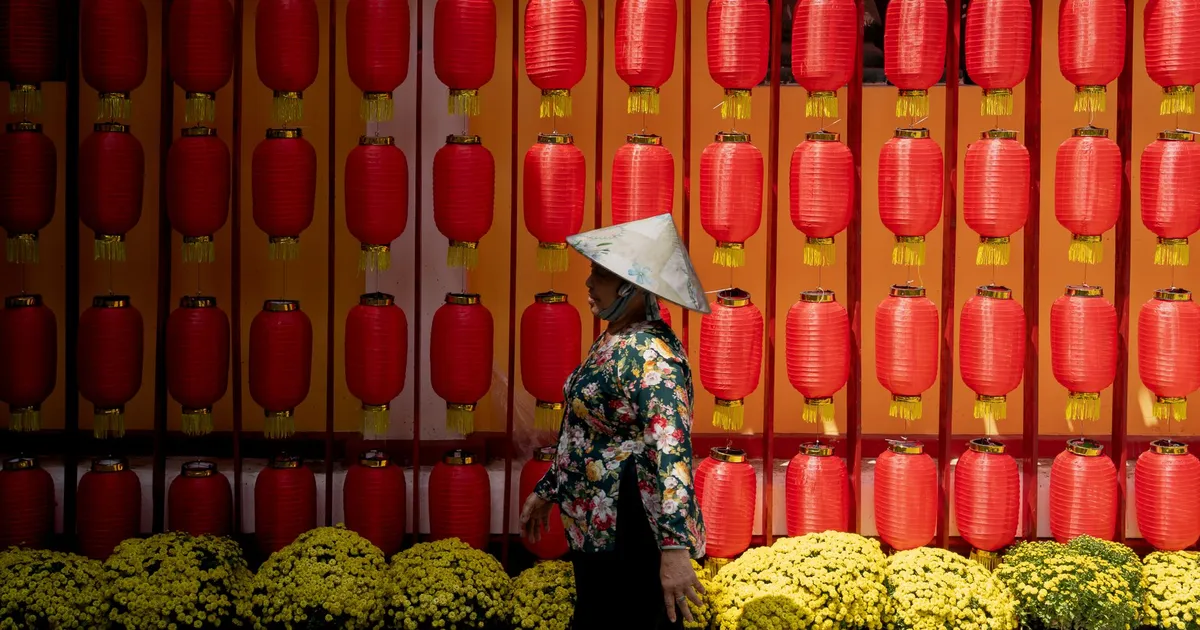

Tết, the Lunar New Year, falls on Saturday 6 February 2027. For roughly a week on either side of that date, Vietnam reorganises itself around family. Millions of people travel home to their provinces, the big cities empty out, prices climb, and a surprising share of the country simply closes its doors for a few days. For a traveller this can feel like the worst possible timing or the most memorable week of the whole trip, and the difference is almost entirely in the planning.
This is our dated hub for Tết 2027: the official schedule and where it comes from, what actually closes and for how long, when the transport crunch hits, and how to stay put somewhere good while the country celebrates. The general logic of planning around every Vietnamese public holiday lives in a separate guide, which we link to rather than repeat here.
The official 2027 dates
Vietnam's government settled the 2027 schedule in early October 2026. The Ministry of Home Affairs had put two options on the table over the summer: a seven-day break, which it recommended, and a ten-day version running from 5 to 14 February that would have required swapping a working day. The government approved the shorter option, and the ministry then set out the details in Notice No. 11483/TB-BNV. For comparison, Tết 2026 brought a nine-day break, so 2027 is a slightly tighter holiday than the one many Vietnamese families have just lived through.
The seven days combine the five statutory Tết holidays with two compensatory days for the weekend that falls inside the period. In lunar terms, the break runs from the 28th day of the last month of the Year of the Horse to the fifth day of the first month of the Year of the Goat, known as Đinh Mùi.
Tết 2027 at a glance
- Tết eve (Giao thừa)
- Friday 5 February 2027
- Tết day (Mùng 1)
- Saturday 6 February 2027
- Public-sector break
- Thursday 4 to Wednesday 10 February
- Offices reopen
- Thursday 11 February
- New lunar year
- Đinh Mùi, the Year of the Goat
That schedule binds civil servants and public employees. Private employers have more room. The ministry gives them three arrangements to choose from, each worth five paid days: one day before Tết and four after (5 to 11 February), two before and three after (4 to 10 February), or three before and two after (3 to 9 February). Employers must tell staff which option they have picked at least 30 days in advance, and the ministry encourages them to simply copy the public-sector calendar.
For travellers, the practical consequence is that Vietnam does not switch off on a single morning. A factory in Bình Dương may stop on the 3rd, the bank on the 4th and the family noodle shop on your street whenever its owners decide. The whole first week of February 2027 is best treated as one long, uneven slowdown.
One request. Up to five tailored proposals.
Skip contacting agencies one by one — share your trip once and let up to five trusted Vietnam agencies come to you. Free, with no obligation.
Get my free quotesWhat closes, and for how long
The honest answer is that it depends on who runs the place. Anything tied to the state, such as ministries, local People's Committees, immigration offices, most bank branches and post offices handling paperwork, follows the public-sector break and is closed from Thursday 4 to Wednesday 10 February. Schools close too, which matters because it frees whole families to travel.
Family businesses are where most visitors feel Tết. Street-food stalls, small cafés, market traders, tailors and repair shops often close from Tết eve until the third, fourth or fifth day of the new year, and in villages some stay shut for a week or more. The day before Tết is usually frantic, with markets selling out of flowers, fruit and the ingredients for bánh chưng and bánh tét. Tết eve itself, Friday 5 February, empties quickly in the afternoon as people head home for the evening meal and midnight.
What keeps running is usually the bigger and more tourist-facing layer of the economy. Hotels stay open, though some smaller guesthouses close or switch to hosting relatives. Large supermarkets and convenience-store chains generally trade on reduced hours. Many big attractions, pagodas and parks open and become very busy from the second or third day, when Vietnamese families go out visiting and sightseeing. Hospitals keep emergency services running throughout.
We have written separately about how to plan around Vietnam's holiday blackouts through the whole year, including the shorter breaks in April, May and September. For Tết specifically, the rule of thumb is simple: assume the first three days of the lunar year are closed unless you have confirmed otherwise, and treat the days just before and after as half-open.
The transport rush before Tết
The biggest practical problem of Tết is not closures but movement. In the two or three weeks before the holiday, a large share of the country tries to travel in the same direction at the same time, mostly from Hà Nội, Hồ Chí Minh City and the industrial zones back to home provinces. After Tết the flow reverses. Seats on popular routes sell out early and prices rise across trains, buses, flights and private cars.
- Late Aug 2026Airlines open Tết sales for the 22 January to 20 February 2027 peak
- 5 Sep 2026Vietnam Railways opens sales for about 300,000 Tết train tickets
- 23 Jan 2027Official Tết rail peak begins
- 30 Jan 2027Kitchen Gods day, the traditional start of the countdown
- 3 to 5 Feb 2027Last working days for many; the homeward rush peaks
- 6 Feb 2027Tết day; roads and stations at their quietest
- 10 to 14 Feb 2027Return rush towards the big cities
- 25 Feb 2027Official Tết rail peak ends
The railway opened its Tết 2027 sales on 5 September 2026, months ahead, with roughly 300,000 long-distance tickets for the period from 23 January to 25 February. Local press reported people queuing before dawn at Sài Gòn station on the first day. Vietjet put about 3.1 million seats on sale for the 22 January to 20 February window, and Vietnam Airlines opened its own Tết sales at around the same time, both saying they would add flights where demand justified it.
What this means on the ground: if you need to cross the country in the week before Tết, book now, through official channels only, and expect to pay more than you would in a quiet month. Sleeper buses and limousine vans commonly raise fares over the holiday, and many add an explicit Tết surcharge. Ride-hailing still works in the cities, but with fewer drivers on the road and higher prices on the first days of the year. Our guide to choosing between trains, flights and sleeper buses covers the trade-offs in normal times; around Tết, the main difference is that you lose flexibility on all of them at once.
There is one quiet advantage. Journeys that run against the flow, such as heading into the big cities before Tết or out to the provinces just after, are often easier to book than the headline routes. If your plans allow it, travelling against the current is the easiest win of the season.
Get matched with up to 5 trusted Vietnam agencies
- Free
- No obligation
- Up to 5 agencies
Where to sit still through Tết
The slow-travel answer to Tết is not to fight it. Pick one base, arrive by around 2 or 3 February, and plan to stay until at least 10 or 11 February. A week in one place turns the holiday from a logistical obstacle into the reason you came.
Where that base should be depends on what you want from the week. The big cities offer a rare version of themselves. Hà Nội's Old Quarter is half-shuttered for the first days, but the lakes are calm, the streets are decorated, and the city usually stages official fireworks at midnight on Tết eve. Hồ Chí Minh City is unusually empty once people leave for the provinces, and the decorated central streets are at their best in the days just before Tết. Hội An, which lives from visitors, tends to stay livelier than most towns and keeps its lantern-lit old quarter going.
The countryside is a different experience. A family homestay in the northern mountains, the Mekong Delta or the central coast can mean being invited into the rituals rather than watching them: the cleaning and decorating of the house, the ancestor altar, the shared meals of the first days. This is also where planning matters most. Many family-run stays close over Tết or fill with relatives, so ask your host directly, weeks ahead, whether they welcome guests during the holiday and what they expect. Our guide to staying in a Vietnamese homestay explains how to book and what good hosting looks like.
Beach and resort towns are the third option, and the least slow. From the second day of the new year they fill with Vietnamese families on holiday, and room rates usually reach their annual peak. They work if you have booked early and want lively rather than quiet. Whatever you choose, stock up on cash, snacks and water before Tết eve, and confirm that at least one place to eat near your base will be open on the first three days.
Flower markets and the Sa Đéc villages
Some of the best moments of Tết happen before it begins. In the last weeks of the lunar year, every Vietnamese city sprouts flower markets selling peach blossom in the north, yellow apricot blossom in the south, kumquat trees and potted chrysanthemums. In Hà Nội, the Quảng Bá flower market near West Lake is busy through the night in the days leading up to the holiday. In Hồ Chí Minh City, flowers arrive by boat from the Mekong Delta and are sold along the canal at Bình Đông, and the city usually opens its decorated flower street on Nguyễn Huệ a few days before Tết.
The source of many of those flowers is worth the trip on its own. The flower villages of Sa Đéc, in Đồng Tháp province, have grown ornamental plants for generations, and the weeks before Tết are their busiest time of year. Growers, visitors and photographers crowd the narrow paths between the beds, and boats leave loaded for the city markets. Reports differ on the exact peak, but the most intense period is generally the last two to three weeks before Tết, which for 2027 means roughly mid to late January.
Go slowly here too. Sleep in Sa Đéc or nearby rather than coming on a day trip from Hồ Chí Minh City, walk the gardens early in the morning before the light hardens and the crowds arrive, and ask before photographing people at work. By the last days before Tết most of the plants have left for the cities, so earlier is better than later.
Visas, banks and admin over the break
Tết is a bad week to need anything from an office. Immigration departments, public services and most bank counters follow the public-sector break, so they are closed from 4 to 10 February 2027, and the days around it are busy with backlogs. Electronic visa processing is counted in working days, so applications filed just before or during the holiday can take noticeably longer than usual.
Watch out
If your visa or visa-free stay ends between early and mid-February 2027, arrange the extension or your exit before the break begins. Immigration offices are closed for the public holiday, and an overstay during Tết is still an overstay.
Our up-to-date guide to Vietnam's e-visa and visa exemption rules explains how long you can stay and how to apply. For the holiday itself, a few habits help. Draw enough cash before Tết eve, because ATMs in smaller towns can run low and the branch behind them will be shut. QR and card payments keep working where businesses are open, but many of the small places that do open over Tết prefer cash. If you are waiting for a parcel, a document or a bank transfer, assume nothing moves until 11 February.
Tết etiquette for visitors
You do not need to know every custom to be a good guest at Tết, but a few matter. The first visitor to cross a house's threshold on New Year's morning, the practice called xông đất or first-footing, is believed to set the household's luck for the year. Families often arrange for a chosen person to come first, so do not drop in unannounced on the morning of 6 February. Visit when you are invited, and from the second day onwards.
Lì xì, the red envelopes of lucky money, are given mainly to children and older relatives. If you are staying with a family, it is a kind gesture to bring a few envelopes with small, new banknotes for the children of the house. Small gifts for the hosts, such as fruit, tea, sweets or a bottle of something good, are welcome; wrap them neatly, ideally in red or gold.
In the first days of the year many families avoid sweeping the house, lending money, arguing or talking about misfortune, all of which are believed to carry bad luck into the new year. Dress tidily when visiting homes and pagodas, which are crowded with worshippers on the first mornings. Our broader guide to cultural etiquette in Vietnam covers temples and village visits in more detail.
What to Do Next
- Decide now whether Tết is the heart of your trip or something to work around, because that choice drives every booking that follows.
- If you will be in Vietnam between 3 and 11 February 2027, choose one base and book it for at least five nights, confirming that it stays open and serves food over the holiday.
- Book any train, flight or bus between 23 January and 25 February through official channels as early as you can, and favour routes that run against the holiday flow.
- Plan a visit to the Sa Đéc flower villages or a city flower market in the second half of January.
- Finish visa extensions, bank tasks and anything that needs an office by the end of January.
- Pack a few red envelopes and small gifts in case a family invites you in.
Frequently Asked Questions
When is Tết 2027 in Vietnam?
Tết day falls on Saturday 6 February 2027, with Tết eve on Friday 5 February. Civil servants and public employees have seven days off, from Thursday 4 to Wednesday 10 February, and return on 11 February. Private companies choose one of three five-day windows between 3 and 11 February.
Is it a bad idea to visit Vietnam during Tết?
Not if you plan for it. Transport is crowded and more expensive, and many small businesses close for several days. In return you see the country at its most festive and family-centred. Staying in one place for the week is the most rewarding way to experience it.
What is open in Vietnam during Tết 2027?
Hotels, larger supermarkets, convenience stores, many major attractions and hospital emergency services stay open, often with reduced hours. Government offices, immigration, most bank branches and many family-run shops and restaurants close, usually for at least the first three days of the lunar year.
Can I travel by train or bus around Tết?
Yes, but book early. Tết 2027 train tickets went on sale in September 2026, and the official rail peak runs from 23 January to 25 February. Buses and vans often add a holiday surcharge. Routes running against the main flow are usually easier to book.
Should I give lì xì as a visitor?
It is not expected, but it is appreciated if you are a guest in a family home. Give small amounts in new banknotes, in red envelopes, mainly to children. A modest gift for your hosts, such as fruit or tea, is also a good gesture.