
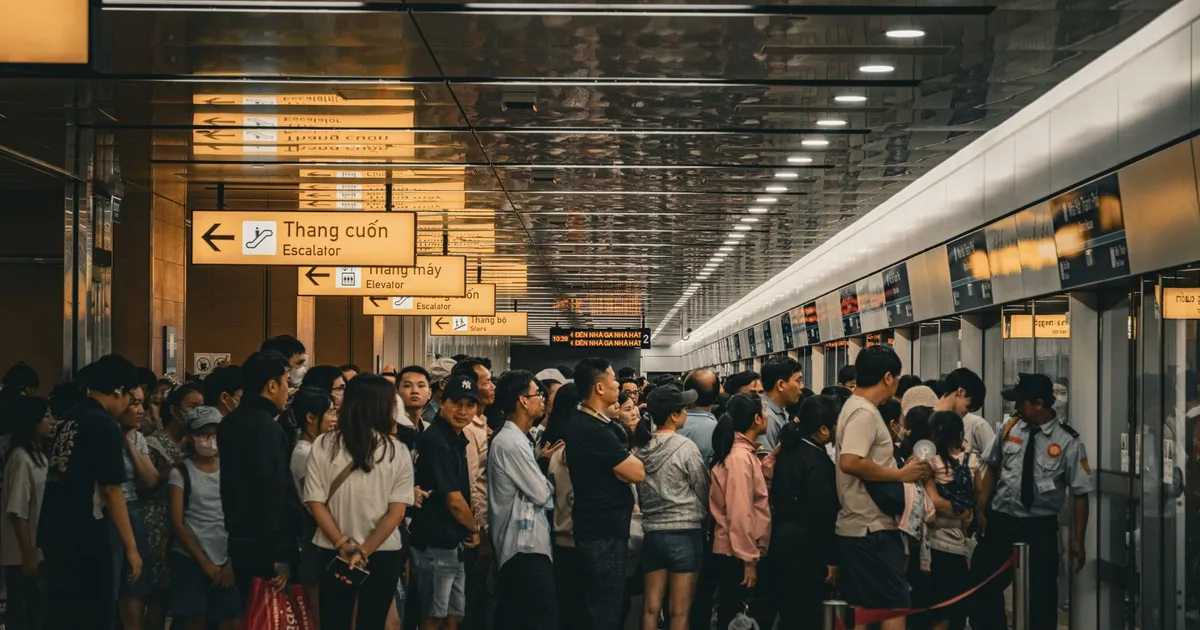

For the first time, two of Vietnam's biggest cities let you skip the motorbike swarm and simply ride a train. Ho Chi Minh City's Metro Line 1 opened in December 2024 and has already carried more than twenty million passengers. Hanoi now runs two working lines. None of this replaces the tangle of buses, taxis and Grab bikes that still define daily movement here, but it changes the calculus for a slow traveler who would rather watch a city glide past a window than negotiate traffic. This is a practical, current guide to what is actually open in 2026, what it costs in dong, how to buy a ticket without stress, and where the rail genuinely helps you slow down.
We will be honest throughout about what these systems do and do not yet do. Neither city's metro reaches its airport. Coverage is still thin. But for the routes they cover, the trains are clean, air-conditioned, punctual and astonishingly cheap, and they are a quietly transformative addition to how you move through urban Vietnam.
Ho Chi Minh City Metro Line 1: What Opened and Where It Goes
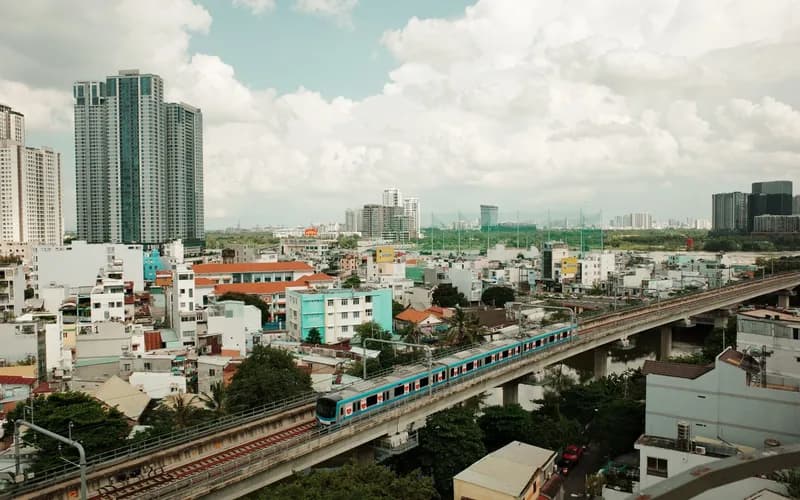
Line 1, officially the Ben Thanh–Suoi Tien line, began commercial service on 22 December 2024. It runs roughly 19.7 kilometres from the heart of District 1 out to the northeastern edge of the city, with fourteen stations in total. Three are underground, all in the central core: Ben Thanh, Opera House (Nha Hat Thanh Pho) and Ba Son. The remaining eleven are elevated, riding above the East–West Highway toward Thu Duc.
For a visitor, the useful stretch is the central one. Ben Thanh station sits beside the landmark market of the same name and is the natural anchor for exploring District 1 on foot. Opera House station puts you steps from the colonial-era theatre, Nguyen Hue walking street and Dong Khoi's boutiques. Ba Son opens onto the riverside redevelopment near the old shipyard. From there the line climbs onto its viaduct and heads out past An Phu, Thao Dien in expat-heavy District 2, and eventually to the Suoi Tien theme park and the vast new Eastern bus terminal.
The trains run from around 5:00 in the morning to 10:00 at night, with departures every five minutes at peak times and every ten to fifteen minutes off-peak. They are quiet, cool and rarely crowded outside rush hour. In its first full year the line carried more than 20.5 million passengers, comfortably beyond its target, which tells you locals have taken to it.
One request. Up to five tailored proposals.
Skip contacting agencies one by one — share your trip once and let up to five trusted Vietnam agencies come to you. Free, with no obligation.
Get my free quotesWhat a Ride Actually Costs
Fares are distance-based and genuinely cheap. A single journey costs between 7,000 and 20,000 dong if you pay cash, and slightly less, 6,000 to 19,000 dong, if you pay by card or app. In practice most central trips a traveler makes land at the lower end, well under a dollar.
If you plan to ride more than a couple of times in a day, the passes make sense:
- Day pass: 40,000 dong for unlimited travel until closing
- Three-day pass: 90,000 dong
- Monthly pass: 300,000 dong (150,000 for students)
To put that in perspective, a single day pass costs less than a short Grab ride across District 1. For the deeper picture on how transport, food and lodging add up, our Vietnam trip cost and budget guide breaks the numbers down region by region.
How to Buy a Ticket Without Stress
This is where first-timers hesitate, so here is the plain version. You have three routes to a fare.
The simplest is the touchscreen ticket vending machines at every station. They switch between Vietnamese and English, and they walk you through picking a destination and paying. The catch is that these machines currently take cash only, so keep small notes on you.
Second, you can buy at the staffed ticket counter, where an attendant sorts you out and Visa cards are accepted.
Third, and increasingly the local default, is the official HCMC Metro HURC app, which lets you generate a QR code and tap through the gate straight from your phone. Since 1 July 2025 the system also supports reloadable smart IC cards used at every station, and contactless bank cards work at the gates too. If you are staying a week or more and expect to ride often, the app or an IC card removes all friction. For a short visit, the cash vending machine is perfectly fine.
One honest caveat: promotions come and go. Through parts of 2025 and 2026 there have been cashback and discount campaigns tied to specific wallets and banks, and free-fare days around New Year and Tet. Do not plan around them, but do not be surprised if a ride is unexpectedly free on a holiday.
Get matched with up to 5 trusted Vietnam agencies
- Free
- No obligation
- Up to 5 agencies
Hanoi's Two Lines: Cat Linh–Ha Dong and Nhon–Cau Giay
Hanoi got there first and now runs two lines, though neither is as central to a tourist's day as Line 1 is in Saigon.
Line 2A, the Cat Linh–Ha Dong line, has been running since 2021. It is fully elevated, with twelve stations from Cat Linh in Dong Da district out southwest to Yen Nghia in Ha Dong. It operates from 5:30 in the morning to 10:00 at night, with trains every six minutes at peak and ten minutes off-peak. Fares run from 9,000 to 19,000 dong depending on distance, with a 40,000-dong day pass. For most visitors this line is more a novelty ride than a workhorse, since it skirts the tourist core rather than serving it, but the Cat Linh terminus is walkable to the Temple of Literature area.
Line 3, the Nhon–Cau Giay line, is the newer and more useful one. Its elevated section of eight stations opened on 9 November 2024, running from Nhon in the western suburbs toward Cau Giay. Single fares sit between 9,000 and 15,000 dong, with the familiar 40,000-dong day pass. This line matters most for what is coming: an underground extension is being pushed to carry the line from its current terminus into the city toward Hanoi Station. Work on the four underground stations is targeted for completion around late 2026 into 2027, with full commercial operation of the extension expected around December 2027. Once that opens, Line 3 will finally reach deep into central Hanoi, and that is the moment the network becomes genuinely useful for visitors staying in the Old Quarter.
Since early 2026 both Hanoi lines accept cashless payment at the gates through QR codes and e-wallets via the official Ha Noi Metro app, alongside single-journey and day tickets bought at counters and machines. As in Saigon, English-language ticketing is available and staff are used to helping visitors.
What the Metro Does Not Do Yet
It is worth being clear-eyed. These are young systems, and their limits shape how you should plan.
Neither city's metro connects to its international airport. In Ho Chi Minh City, the airport link is a future Line 2 project, still under construction, so arriving travelers will still take a taxi, airport bus or Grab from Tan Son Nhat. In Hanoi, the airport remains a road journey. Coverage is also thin: a single line in Saigon and two partial lines in Hanoi cannot substitute for the dense bus and ride-hail network you will still lean on daily. And the elevated stations, while modern, can involve a fair climb of stairs or a wait for lifts.
For deciding when rail beats road across the whole country, not just in cities, our guide to choosing between trains, flights and sleeper buses is the companion piece to this one, and it covers the long-distance picture the metro does not touch.
How This Changes Slow Travel in the Cities
For the way we travel, the metro is a small gift. Slow travel is partly about lowering the daily friction of getting around so you have more attention left for the place itself. A cool, unhurried train ride from your hotel near Ben Thanh out to Thao Dien for a long lunch, or back from the riverside at dusk, is exactly the kind of low-stress movement that lets a city reveal itself.
It also nudges you toward staying put in a single neighbourhood and radiating out, rather than criss-crossing the city in taxis. Base yourself within walking distance of a central metro station and you can leave the motorbike anxiety behind for whole afternoons. The elevated sections, in particular, offer a slow, elevated view of ordinary Saigon life that you simply cannot get from the back of a Grab bike.
None of this is a reason to rush your itinerary because transport got faster. If anything, treat the saved time as permission to linger longer in one district. For the broader philosophy and the practical groundwork of a well-paced trip, our ultimate slow-travel guide to Vietnam sets the frame, and the money, cards and connectivity guide will help you get an e-wallet and contactless payment sorted before you need to tap through a gate.
What to Do Next
- Decide whether you need the app at all. For a short stay, plan to use the cash vending machines and carry small dong notes. For a week or more, download the HCMC Metro HURC app (Saigon) or Ha Noi Metro app before you arrive and link a card.
- Base your accommodation near a central station. In Saigon, Ben Thanh or Opera House puts the useful part of Line 1 on your doorstep. In Hanoi, the metro is a bonus rather than a base-planning factor for now.
- Buy a day pass on days you will ride more than twice. At 40,000 dong in both cities, it pays for itself quickly and removes per-trip fumbling.
- Do not rely on the metro from the airport. Budget for a taxi, airport bus or Grab on arrival in either city, and treat the metro as intra-city transport only.
- Check for a free-fare day. Around New Year and Tet, rides are sometimes free. It is a pleasant surprise, not something to plan around.
- Keep an eye on Hanoi's Line 3 extension. If you are planning a trip for late 2027 or beyond, the underground section into central Hanoi will change how useful the network is for Old Quarter visitors.
Frequently Asked Questions
Is the Ho Chi Minh City metro useful for tourists?
Yes, for the central stretch. Ben Thanh, Opera House and Ba Son stations sit right in the heart of District 1's sights, and the elevated line is a cheap, cool way to reach Thao Dien in District 2. It will not cover your whole itinerary, but for the routes it serves it is faster and calmer than a taxi in traffic.
How much does a metro ride cost in Vietnam?
Single journeys cost between 7,000 and 20,000 dong in Ho Chi Minh City and between 9,000 and 19,000 dong in Hanoi, so under a US dollar for most trips. A day pass is 40,000 dong in both cities, which is worth buying if you plan to ride more than twice.
Can I use my foreign bank card or phone to pay?
Increasingly, yes. Ho Chi Minh City's Line 1 accepts contactless bank cards and Visa at gates and counters, plus QR codes through the HCMC Metro HURC app. Hanoi's lines accept QR and e-wallet payment via the Ha Noi Metro app. If in doubt, the cash vending machines always work.
Does the metro go to the airport in either city?
Not yet. Neither Ho Chi Minh City's Tan Son Nhat nor Hanoi's Noi Bai airport is on the current metro network. A future Line 2 in Saigon is planned to serve the airport but remains under construction. Plan for a taxi, airport bus or Grab on arrival.
What are the metro operating hours?
Ho Chi Minh City Line 1 runs from about 5:00 in the morning to 10:00 at night. Hanoi's Cat Linh–Ha Dong line runs from 5:30 to 10:00. Trains come every five to fifteen minutes depending on the time of day, so you rarely wait long.
Which Hanoi metro line should I use?
For now, both lines skirt rather than serve the tourist core, so neither is essential. Line 2A reaches near the Temple of Literature; Line 3's elevated section runs to Cau Giay. The bigger change comes when Line 3's underground extension into central Hanoi opens, currently expected around 2027.
Do I need to buy tickets in advance?
No. Tickets are bought on the spot at station vending machines or counters, or generated instantly through the metro apps. There is no need to reserve, and the machines offer an English-language option to guide you through each purchase.