
The road into Pu Luong Nature Reserve arrives without ceremony. One moment you are on a provincial highway threading through Thanh Hoa's lowland heat; the next, the tarmac narrows, the air cools, and limestone ridges close in on either side. By the time the first rice terraces appear — flooded silver in the early morning light, stepped down toward a valley floor you cannot yet see — the four hours from Hanoi feel less like a journey and more like a condition of entry.
Pu Luong covers 17,662 hectares of protected forest, farmland, and karst hills in Ba Thuoc and Quan Hoa districts. It was established in 1999, and it has spent the years since developing at a pace that feels, by northern Vietnam standards, almost deliberate. There is no cable car. There is no souvenir strip. What there is: a dispersed network of eco-lodges and stilt-house homestays embedded in working agricultural land, a rice calendar that structures the seasons, and a degree of inaccessibility that has so far done the work that planning regulations rarely manage. For travelers who have watched Sapa transform into something they no longer recognize, Pu Luong offers a different proposition — not a frozen past, but a present that still has room to breathe.
The Landscape and What Structures It
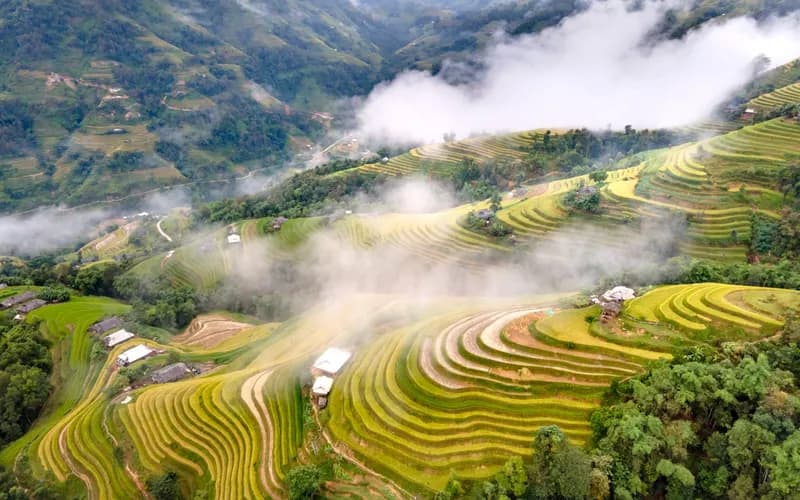
The reserve's signature views gather around Don village, the Kho Muong valley, and the area near Hieu waterfall. Elevations at key viewpoints and lodges sit around 500 metres, which keeps average temperatures between 22 and 25°C — a meaningful relief from Hanoi's summer humidity. The landscape is a working one: rice paddies irrigated by bamboo waterwheels that lift water from streams to higher terraces, upland fields planted with cassava and maize, bamboo groves that mark the edges of village land.
The waterwheels are worth pausing over. They are not decorative. They are functional infrastructure, turning slowly in the current of the Cham River and its tributaries, and they appear in almost every account of Pu Luong because they concentrate something essential about the place: old technology, still working, in a landscape that has not yet decided it needs replacing. Walking past one at dusk, when the light catches the wet bamboo and the sound of water fills the valley, is the kind of moment that resists being photographed well but stays with you regardless.
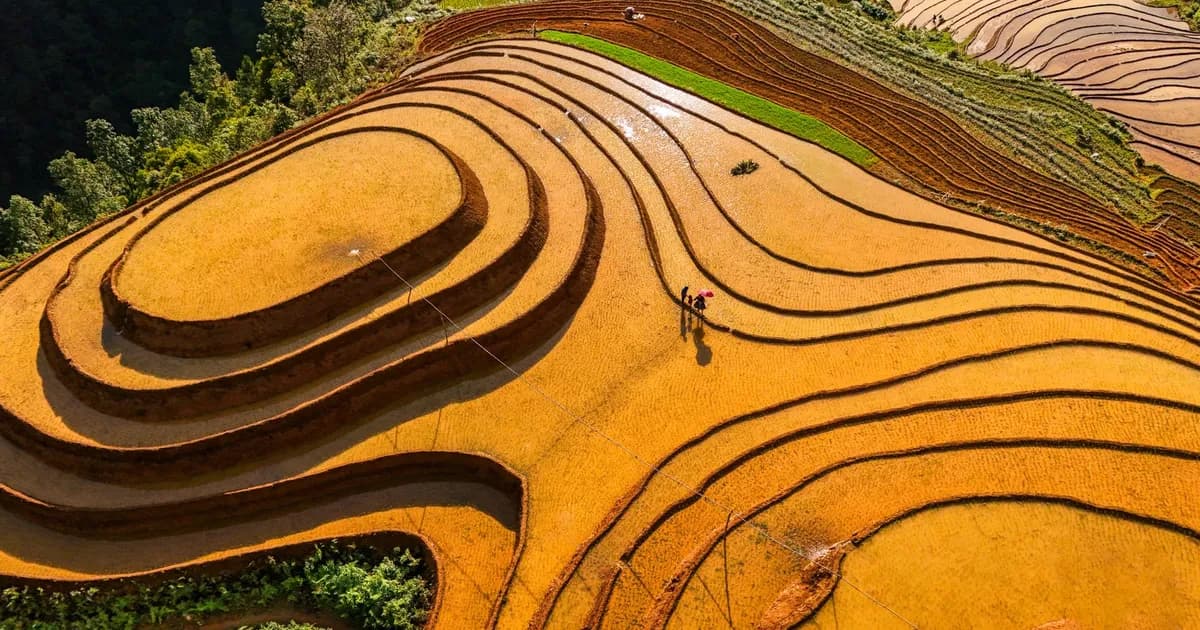
The rice calendar divides the year into distinct visual registers. Late May through June brings the green of newly transplanted paddies, vivid and almost uniform. Late September through October turns the terraces gold as harvest approaches — the period most sought by photographers and the one most likely to fill homestays on weekends. Winter months from December through February are cooler and often misty, with bare fields and a quieter palette. Each season offers something; none is wrong. But arriving without knowing which one you are entering is a missed opportunity.
One request. Up to five tailored proposals.
Skip contacting agencies one by one — share your trip once and let up to five trusted Vietnam agencies come to you. Free, with no obligation.
Get my free quotesWhere to Stay, and Why the Choice Matters
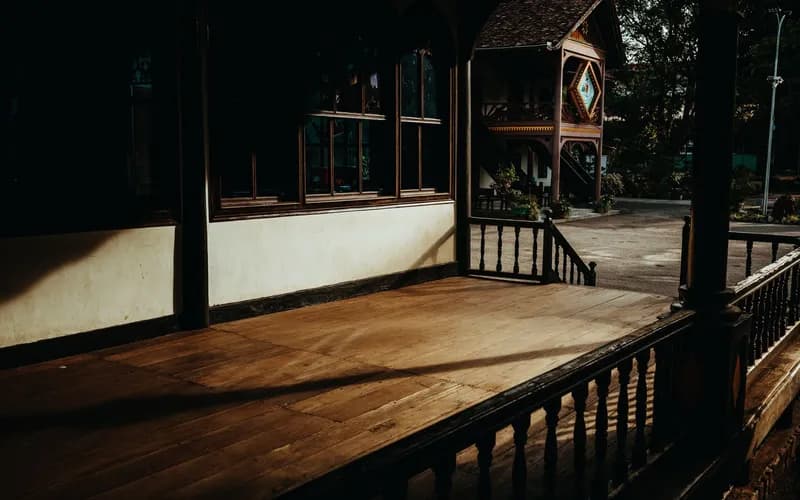
Pu Luong has no town center. Accommodation is scattered across ridge-top hamlets and valley villages, and where you sleep determines what you see and how you move. This is not a minor logistical detail — it is the architecture of the experience.
At the more polished end, properties like Pu Luong Retreat sit on ridges with panoramic terrace views, open-air dining, and rooms that borrow the aesthetic of Thai stilt houses while adding en suite bathrooms and infinity pools. Rates at boutique eco-lodges generally run from US$70 to US$120 per night. Pu Luong Ecolodge in Don village — one of the most established mid-range options — lists rooms from around US$46 to US$101. Independent travel writers also cite Pu Luong Treehouse, Pu Luong Natura, Hanasa Resort, and Les Bains de Hieu as properties that blend considered design with genuine landscape immersion.
It is worth knowing that many of these eco-lodges are owned and operated by entrepreneurs from Hanoi rather than local Thai or Muong families. Vietnam Coracle, the long-running independent guide by a British writer based in Vietnam, notes this directly — and suggests that travelers who want their spending to support local households should choose accommodation consciously. The family-run stilt-house homestays in villages like Don, Kho Muong, Hieu, and Ban Nua offer a different register entirely: shared wooden lofts or simple private rooms, home-cooked meals, and the sounds of a working household rather than a curated retreat. Prices run from roughly US$10 to US$30 per person per night, usually including meals. Comfort is basic — thin mattresses, shared bathrooms, cold water in some cases — but the proximity to daily life is the point.
The practical advice that recurs across every serious guide to Pu Luong: verify the exact location of your accommodation before booking. A lodge described as being "in Pu Luong" may still require 20 to 30 minutes of driving to reach the main trekking routes or viewpoints. Some properties involve a steep uphill walk from where vehicles can park. None of this is a problem if you know it in advance.
Moving Through the Reserve
The activities that work best in Pu Luong are the ones that move at the pace of the place. Walking between villages — from Don to Kho Muong, or up through the hamlets above Hieu — takes half a day and costs almost nothing beyond a guide fee. Guided half-day treks run from around US$15 to US$25 per person; full-day treks from US$25 to US$40, depending on group size and whether lunch is included. Bamboo rafting or kayaking on the Cham River is frequently packaged with trekking into combined day tours, typically quoted from US$40 to US$60 per person including transport and lunch.
The better eco-lodges and homestays build their itineraries around the village day rather than a tourist schedule. Morning treks follow farmers into the fields. Midday meals are eaten at family tables, with dishes drawn from whatever the kitchen garden and the market produced that week. Afternoons are slow — a balcony, a book, the light moving across the terraces. Some homestays offer cooking classes in the evening; a few arrange traditional music. The rhythm is not manufactured. It is borrowed from the people who live there.
For travelers arriving from Hanoi, the most practical approach is a private transfer or a packaged arrangement through an eco-lodge. Public buses run from Hanoi to Ba Thuoc or via Mai Chau, but the final stretch into core villages involves narrow, winding roads that can be slow in rain and are difficult to navigate without local knowledge. The inaccessibility is real — and it is, in a meaningful sense, the destination's best feature.
Get matched with up to 5 trusted Vietnam agencies
- Free
- No obligation
- Up to 5 agencies
Pu Luong as a Model, and Its Limits
The case for Pu Luong as a model slow-travel destination rests on a specific set of conditions: no single urban hub, dispersed accommodation, a working agricultural landscape, and a road that filters out the kind of visitor who needs things to be easy. These conditions are not permanent. The number of boutique retreats and wellness properties has grown steadily, and the rice-season weekends that once felt quiet now fill with domestic travelers from Hanoi seeking the same escape that international visitors discovered a few years earlier.
Vietnam's eco-tourism operators position Pu Luong as a destination committed to sustainable tourism and cultural preservation. That framing is accurate as a description of intent. Whether it holds as development accelerates depends on choices that are still being made — about zoning, about who owns the next lodge, about whether the community-based homestay sector receives the support it needs to remain viable alongside more polished competitors.
What Pu Luong offers now, in this particular moment, is a northern Vietnam rice-terrace landscape that has not yet resolved into a product. The waterwheels still turn for the fields, not for the photographs. The villages still wake before the guests. That is not a small thing.
Frequently Asked Questions
When is the best time to visit Pu Luong?
The two most sought-after windows are late May through June, when newly transplanted paddies are a deep, saturated green, and late September through October, when the terraces turn gold ahead of harvest. Both periods can see weekends fully booked, particularly at family homestays popular with domestic travelers. Winter months — December through February — are cooler and often misty, with bare fields and fewer visitors. Trekking is still possible, and the quieter atmosphere suits travelers who prioritize solitude over landscape color.
How do I get to Pu Luong from Hanoi?
Pu Luong sits approximately 150 to 160 kilometres southwest of Hanoi, but the mountain roads make the journey four to five hours by car or minibus. Most visitors arrange a private transfer through their eco-lodge or book a packaged tour that includes transport. Public buses run from Hanoi to Ba Thuoc or via Mai Chau, but the final approach to core villages requires a local taxi or motorbike connection. Independent travelers comfortable with some logistical uncertainty can piece together the journey; those on tighter schedules are better served by pre-arranged transfers.
What does accommodation cost, and what should I expect?
Boutique eco-lodges and ridge-top retreats generally run from US$70 to US$120 per night for a standard room. Mid-range eco-lodges in village settings — such as Pu Luong Ecolodge in Don village — list rooms from around US$46 to US$101. Family-run stilt-house homestays are considerably more modest, typically US$10 to US$30 per person per night including meals, with shared bathrooms and simple furnishings. The gap between a polished retreat and a family homestay is significant in terms of comfort and atmosphere; knowing which you want before booking avoids disappointment.
Is there an entrance fee for the nature reserve?
There is no standardized, widely advertised entrance ticket for Pu Luong Nature Reserve as a whole. Trekking routes cross village land and farmland rather than a single gated park. Small local fees may apply for cave access or specific village paths, typically collected by guides or homestay hosts. Policies can change, and travelers are advised to confirm current arrangements with their accommodation or guide on arrival.
What are the most common mistakes travelers make?
The most frequent issues are location confusion — booking accommodation described as "in Pu Luong" without verifying its distance from key trekking routes or viewpoints — and mismatched expectations between eco-lodge comfort and homestay simplicity. Arriving during rice-season weekends without advance bookings is another common frustration, as popular homestays fill quickly. Travelers who build in at least two nights, choose accommodation based on verified location rather than photographs alone, and accept that evenings will be quiet and connectivity unreliable tend to leave with the experience the destination actually offers.