Phong Nha-Ke Bang: Vietnam's Cave Country, Taken at Walking Pace
Most visitors treat Phong Nha-Ke Bang as a checklist of holes in the ground: one cave in the morning, another after lunch, a night bus out. That is a fair way to spend a day and a poor way to spend a place. The national park, a UNESCO World Heritage Site that contains well over 300 caves, sits in a green fold of limestone in central Vietnam, and its real character shows up only when you stop collecting caves and start noticing the valley around them: the river, the farms, the slow evenings in a small town that still feels like a village.
This guide is for travellers who want to do Phong Nha properly. It covers where the park sits after Vietnam's recent provincial mergers, which caves you can visit on your own and which need a guide, what things cost in 2026, how the seasons change the experience, and how to build a three-to-four-night stay that does not feel rushed.
Where Phong Nha sits, and how to get there
The park lies about 45 km west of Dong Hoi, in the area long known as Quang Binh province. Since the 2025 provincial mergers, that territory belongs to the enlarged Quang Tri province, which is worth knowing because older maps, booking sites and bus timetables still use the old name. If you want the wider picture of what the new administrative map changes for planning, our piece on Vietnam's new 34-province map explains it clearly.
Dong Hoi is the gateway: it has an airport and a railway station on the north-south line. From there, a taxi, a pre-booked transfer or a local bus covers the 45 km to Phong Nha town in roughly an hour. Phong Nha town itself is the base for almost everyone. It is small, walkable, and organised around a single main road with guesthouses, cafes, motorbike rental shops and the tour offices that book the guided caves. Do not expect nightlife; do expect to eat well, sleep deeply and meet other travellers over coffee.
If you are linking Phong Nha with Hue to the north or Hoi An to the south, the train to Dong Hoi is the gentlest option, and our guide to choosing between trains, flights and sleeper buses will help you decide how to stitch the legs together without losing days in transit.
One request. Up to five tailored proposals.
Skip contacting agencies one by one — share your trip once and let up to five trusted Vietnam agencies come to you. Free, with no obligation.
Get my free quotesThe caves you can visit independently
One of the quiet advantages of Phong Nha is that several of its best-known caves do not require a tour operator. You buy a ticket at the entrance and go.
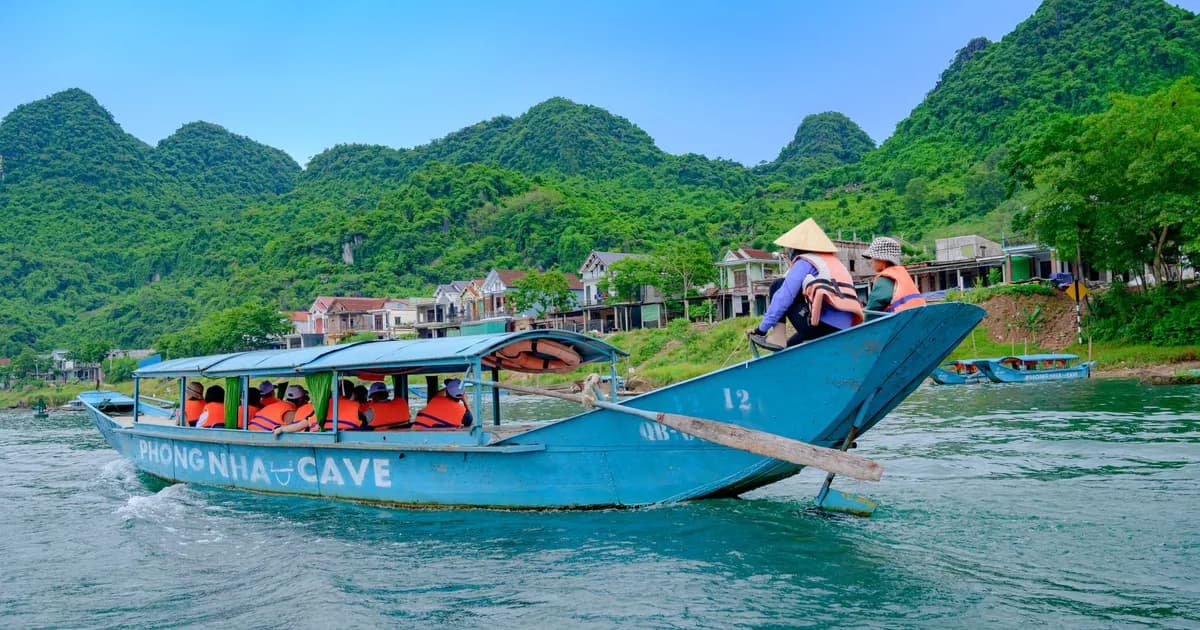
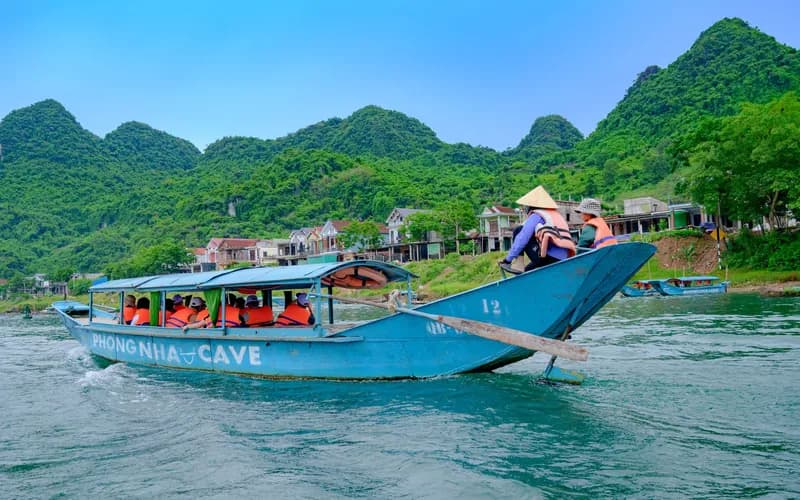
- Phong Nha Cave: 150,000 VND for entry, plus 55,000 VND for the boat seat (boats carry up to 12 people). You travel by boat on the Son River into a large cave of still water and pale formations. The total is about 205,000 VND.
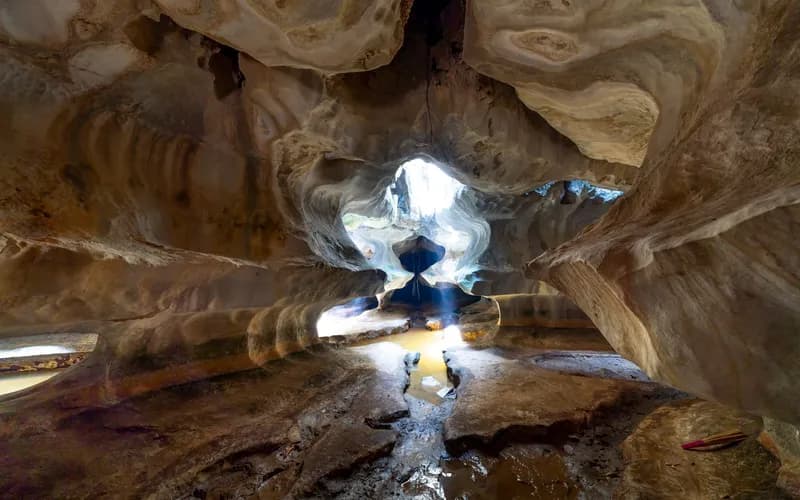
- Paradise Cave: 250,000 VND, with an optional electric buggy at 60,000 VND round trip. Discovered in 2005, the cave runs for around 31 km, but only the first kilometre is open to the public, along a wooden walkway through enormous chambers of stalactites. It is the most visually dramatic of the independent options.
- Nuoc Mooc Eco-Trail and Springs: 100,000 VND, with kayak rental at 50,000 VND per hour. A good half-day when the heat builds, with cool water, a short forest trail and an easy swim.
These prices come from 2026 listings and are worth confirming at the ticket board at each entrance, because park fees can change and tour sites sometimes quote slightly different figures. Payment is cash, and the nearest dependable ATMs are in Dong Hoi, so bring enough dong from town. Motorbike parking is usually 5,000 to 10,000 VND, car parking more, and professional cameras or tripods may attract an additional small fee.
Caves that need a guide
The more adventurous caves are controlled for safety, and they are booked through licensed operators in Phong Nha town.
- Dark Cave: around 350,000 VND, which typically bundles a zipline, kayaking, a flashlight walk and a mud bath. It is playful, a little touristy, and a good choice for families or anyone who wants to get dirty.
- Tu Lan system: around 1,800,000 VND for a one-day guided trek that combines wading, swimming and jungle walking. It is a different, quieter world from the main park; our dedicated piece on Tan Hoa and the Tu Lan caves covers the slower, village-based way to do it.
- Hang En: around 3,200,000 VND for a two-day trek with a night camping inside the cave's vast entrance.
- Son Doong: about 72,000,000 VND (roughly 2,880 USD) for a four-day expedition with all gear and guides. It is the world's largest known cave passage, and it is genuinely a serious undertaking for fit, committed travellers who book months ahead. Permits are limited, so it is not a spontaneous add-on.
A frank word: for most slow travellers, Phong Nha Cave plus Paradise Cave plus either Dark Cave or a single Tu Lan day is a rich, complete experience. Son Doong is extraordinary, but it is a mountaineering-style expedition priced accordingly, and nobody leaves Phong Nha worse for skipping it.
Get matched with up to 5 trusted Vietnam agencies
- Free
- No obligation
- Up to 5 agencies
Beyond the caves: the valley at ground level
What turns Phong Nha from a cave stop into a destination is the landscape between the caves. The Chay River winds through rice fields and water-buffalo pastures, and the road that links the park, the town and the villages is one of the most pleasant rides in central Vietnam. A day on a rented scooter or a bicycle, with no agenda, is one of the best things you can do here.
Practical suggestions for a slow valley day:
- Rent a bicycle or a scooter in town and ride out early, before the tour buses.
- Stop at a roadside stall for coffee and a plate of whatever the family is eating.
- Visit the Botanical Garden, which sells independent tickets and gives you a quiet, shaded walk.
- Take an afternoon off. A hammock and a book is a legitimate itinerary item.
If you do rent a motorbike, read our guide on renting and riding a motorbike in Vietnam safely first. Rural roads here are quiet but not empty, and rain makes them slick.
When to go, and the typhoon question
The season matters more in Phong Nha than almost anywhere else in Vietnam, because rivers and caves respond directly to rain.
- March to August is the dry season. Roads are reliable and caves are accessible, but it is also the busiest and hottest stretch. Book guided caves ahead in July and August.
- September to February is wetter. There are fewer visitors, the valley is green and moody, and some caves may close, with flooding possible on the Paradise Cave road.
- October and November carry the highest typhoon risk. The park can close for one to three days at a time, and permits for expedition caves can be postponed or cancelled.
If you are travelling in autumn, as many readers are right now, build slack into the itinerary and keep your onward bookings flexible. Our explanation of how storm-season closures work and how to plan around them is worth a read, and the region-by-region weather guide gives month-by-month context for the central coast.
A sensible three-to-four-night shape
Here is a rhythm that respects the place without being precious about it.
Night one, arrival. Arrive by afternoon, settle in, walk the town, eat early. Do nothing else. A day lost to a delayed train is not a problem when you have planned an easy first evening. If you reach Dong Hoi by air, carry the right papers: our note on identity documents for domestic flights explains what to show at the counter.
Day two, the independent caves. Start at Phong Nha Cave by boat in the cooler hours, then continue to Paradise Cave after lunch when the tour groups thin. Finish at Nuoc Mooc for a swim if energy allows.
Day three, valley day or an adventure cave. Choose one. Either ride the valley slowly on two wheels, or commit to a guided day in Dark Cave or Tu Lan. Do not stack both.
Day four, margin. Keep this free for weather, tired legs or a favourite place worth returning to. It is also the day that rescues the trip if rain closes a cave on day two.
If you prefer someone else to handle logistics, particularly for Hang En, Tu Lan or Son Doong, a good local operator is worth the money. Our directory of travel agencies in Vietnam can help you start a conversation with people who run small groups and pay guides and porters fairly.
What it costs, honestly
A comfortable daily budget in Phong Nha runs roughly 500,000 to 1,000,000 VND per person (around 20 to 40 USD), including a simple guesthouse room, meals, a scooter rental and an independent cave or two. Guided caves sit on top of that. A realistic three-night stay with Phong Nha Cave, Paradise Cave and a Dark Cave day lands well below what the same time would cost in Hoi An or Ha Long, which is one more reason the area suits slow travellers.
Cash matters. Many small businesses do not take cards, and ATMs are 45 km away in Dong Hoi, so withdraw before you come. For context on paying across the country, see our money, cards and connectivity guide.
What to Do Next
- Decide your dates against the season: March to August for reliability, autumn and winter for solitude with weather risk.
- Book accommodation in Phong Nha town for three or four nights rather than one or two.
- Choose your guided cave early, and book it through a licensed operator at least a week ahead in busy months.
- Withdraw cash in Dong Hoi before heading to the park, and check ticket prices on the board at each entrance.
- Keep your onward transport flexible by a day if you travel in October or November.
- Read our guide to planning a slow journey in Vietnam to place Phong Nha in a wider route.
Frequently Asked Questions
How many days do I need in Phong Nha-Ke Bang?
Three nights is the sweet spot: one easy arrival evening, one day for the independent caves and one day for either the valley or a guided cave. Add a fourth night if you want a buffer for weather or plan a two-day trek such as Hang En.
Can I visit Phong Nha caves without a tour?
Yes, for Phong Nha Cave, Paradise Cave, Nuoc Mooc and the Botanical Garden you can buy tickets at the entrance. Dark Cave, Tu Lan, Hang En and Son Doong require a licensed operator for safety and access reasons.
How much does Son Doong cost?
The four-day expedition is priced at roughly 72,000,000 VND, about 2,880 USD, including guides, gear and meals. It sells out far in advance, and typhoon-season departures can be disrupted, so treat it as a planned trip rather than an add-on.
Is Phong Nha open during typhoon season?
The park usually remains open, but October and November bring the highest risk of one-to-three-day closures and flooding on some roads. Keep your schedule flexible and confirm conditions with your guesthouse or operator the evening before.
What is the best way to reach Phong Nha?
Fly or take the train to Dong Hoi, then continue 45 km by taxi, pre-booked transfer or local bus. Sleeper buses also serve the area from Hanoi and Hue, although the train is a more comfortable choice on a slow itinerary.
Do I need cash?
Yes. Cave tickets, parking and many small restaurants are cash-based, and the nearest reliable ATMs are in Dong Hoi. Withdraw more than you think you need before travelling out to the park.
Which month is best for a first visit?
For the most predictable access, choose March to May, before the peak summer heat and crowds. If you prefer fewer people and are comfortable with weather uncertainty, February or early autumn can be rewarding.