
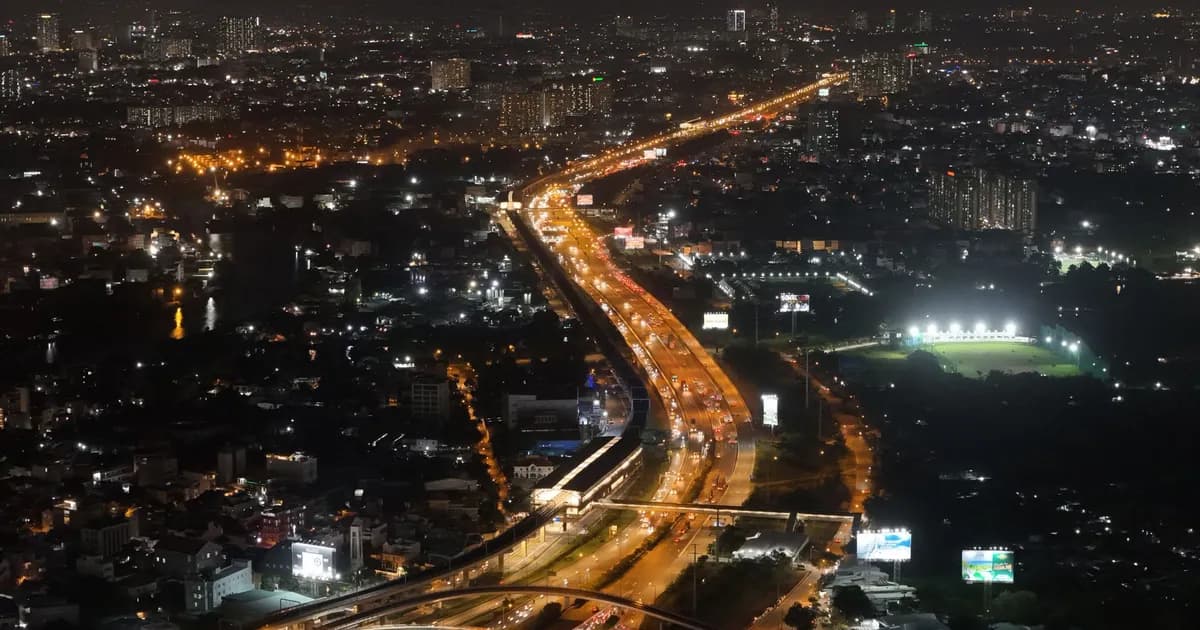

Vietnam finally has a continuous expressway from the Chinese border to the tip of the Mekong Delta. For most of 2026, that has meant something different every month: a new stretch opens, a toll gate switches on, a detour disappears. If your itinerary involves any overland leg between Hanoi, Hue, Danang, Nha Trang, or Ho Chi Minh City this year, the road under your wheels is not the same road it was in 2024. Here is what has actually changed, what it costs, and where the new expressway is worth using — and where the old road still wins.
A Highway Twenty Years in the Making
The North-South Expressway (cao tốc Bắc - Nam phía Đông, sometimes shortened to the "Eastern route") is Vietnam's answer to a problem every overland traveler has felt firsthand: National Highway 1A is a single, often two-lane road carrying trucks, buses, motorbikes, and tour vans through every town between Lang Son and Ca Mau. On 19 December 2025, the government marked the symbolic connection of the expressway network in a continuous line from the Huu Nghi border gate near the Chinese frontier down to Ca Mau at the southern tip of the country. It was a milestone worth noting, but not, in practical terms, a finish line. Only a handful of the newest sections had reached what Vietnamese planners call "thông xe kỹ thuật" — technical opening, meaning the road surface exists and vehicles can pass, but the tollbooths, lighting, signage, and emergency infrastructure are not yet fully commissioned.
That distinction matters if you are planning a self-drive trip or booking a private driver this year. A road being "open" on a map does not always mean it is open for full commercial traffic with services, rest stops, and toll collection running normally.
One request. Up to five tailored proposals.
Skip contacting agencies one by one — share your trip once and let up to five trusted Vietnam agencies come to you. Free, with no obligation.
Get my free quotesThe Timeline: What Opened When
The rollout has happened in stages, and it is still happening as this is written. The two southernmost sections came online at the end of 2025: Can Tho–Hau Giang opened on 22 December 2025, and Hau Giang–Ca Mau followed on 31 December 2025, finally linking the Mekong Delta to the rest of the network. In central Vietnam, the Quang Ngai–Hoai Nhon section reached technical opening in January 2026, with full commercial operation targeted for mid-April 2026. Further south along the coast, the Chi Thanh–Van Phong section aimed for a technical opening in April 2026 and a full opening in June 2026.
The government's stated goal was to have all twelve component projects of the North-South Expressway running in full, synchronized operation by the end of April 2026, timed deliberately to handle the heavy domestic travel around the 30 April–1 May holiday. By the first half of 2026, roughly 400 additional kilometers of expressway had opened nationwide, pushing Vietnam's total expressway network to about 3,345 kilometers. As of this month, a further batch of central sections — Bai Vot–Ham Nghi, Ham Nghi–Vung Ang, Vung Ang–Bung, Bung–Van Ninh, and Van Ninh–Cam Lo, all through Ha Tinh and Quang Tri provinces — is scheduled to begin toll collection on 15 July 2026, with the transport ministry pushing operators to finish smart-traffic systems and non-stop electronic tolling before that date. In short: if you are driving the Hanoi–Hue corridor this month, you are likely to hit toll gates that did not exist a few weeks ago.
Sixteen sections of the North-South Expressway currently run on an interim four-lane profile without a continuous emergency stopping lane. A 2026 works plan calls for widening fifteen of these sections to a full six-lane standard, which means intermittent lane closures and construction traffic should be expected on some stretches for the rest of the year even as they carry ordinary traffic.
What the Tolls Actually Cost
Vietnam's older expressways (around Hanoi and Ho Chi Minh City) already charged tolls, but large parts of the new North-South corridor were free to use during their first months of operation. That changed on 2 March 2026, when toll collection began on five sections: Mai Son–National Highway 45, National Highway 45–Nghi Son, Nghi Son–Dien Chau, Vinh Hao–Phan Thiet, and Phan Thiet–Dau Giay.
Pricing is split into two tiers depending on the section's build standard:
- Level 1 (Phan Thiet–Dau Giay, which has a complete emergency lane): 1,300 VND per kilometer for the smallest vehicle class, rising through 1,950, 2,600, 3,250, and up to 5,200 VND/km for the largest trucks and buses.
- Level 2 (the other four sections, still missing a continuous emergency lane): 900 VND per kilometer for cars, rising through 1,350, 1,800, 2,250, and up to 3,600 VND/km for heavier vehicles.
To put that in perspective: a small rental car covering roughly 200 km of Level 2 expressway would pay in the neighborhood of 180,000 VND (about 7 USD) in tolls — modest, but a genuinely new line item that did not exist on this route before 2026. On longer transits, such as Hanoi to Hue via the corridor now switching on toll collection this month, budget for several toll segments rather than one flat fee, since each component project bills separately.
Get matched with up to 5 trusted Vietnam agencies
- Free
- No obligation
- Up to 5 agencies
Self-Driving and Rental Cars: The ETC Tag Is Not Optional
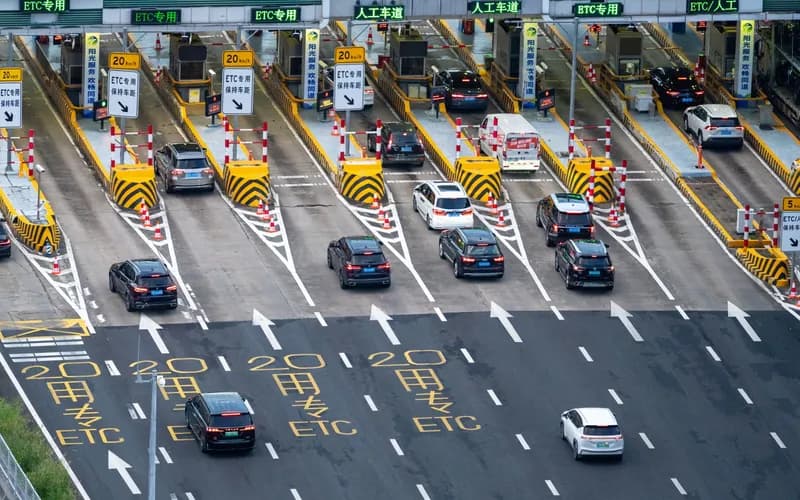
Vietnam has moved to mandatory non-stop electronic toll collection (ETC) on its expressways, meaning cash payment at the barrier is being phased out. Every vehicle needs a prepaid ETC tag — issued by providers such as VETC or ePass — affixed to the windshield and linked to a topped-up account or bank card. Without one, a barrier simply will not lift.
If you are renting a self-drive car, confirm with the rental company that the vehicle already carries an active, funded ETC tag; most reputable agencies now handle this automatically, but it is worth asking explicitly rather than assuming. If you are hiring a private driver through a local travel agency, this is one less thing to worry about, since the driver and vehicle are already set up for the toll network. It is also worth building a small cash-and-card buffer into your trip budget for the months ahead, since which sections charge tolls — and how much — is still shifting month to month as new stretches switch on.
How the Expressway Changes Overland Options
For decades, the practical choice for long overland legs in Vietnam has been the overnight train or the sleeper bus, both of which cover the roughly 1,700 km between Hanoi and Ho Chi Minh City in something like 30 to 35 hours. The new expressway does not eliminate that gap, but it does start to compress individual legs of a multi-stop itinerary — Hanoi to Ninh Binh, Hue to Danang, Nha Trang toward the central highlands gateway towns — where a continuous four- or six-lane road now replaces sections of two-lane National Highway 1A that used to crawl through market towns and level crossings.
Do not expect sleeper buses to suddenly become dramatically faster, though. Bus operators tend to run at 80–90 km/h on stretches signed for up to 120 km/h, out of caution and because of mandatory rest stops and multiple passenger pickups along the way, so a scheduled sleeper bus can still take 30 to 60 percent longer than a private car covering the same distance. If a shorter overland transfer matters to your itinerary, a private driver or limousine van booked through a trusted operator is currently the more reliable way to benefit from the new road, rather than the standard public sleeper bus.
The Reunification Express train, meanwhile, is not directly affected by any of this — it runs on its own rail corridor — but it remains a genuinely pleasant, scenery-forward way to cover a long north-south leg without touching a toll gate at all, and for slow travelers it is worth weighing against a fast road transfer even where the expressway now makes driving quicker.
The Slow Travel Case for Staying Off the Expressway
Here is the part worth saying plainly: faster is not always better. The entire reason National Highway 1A took so long to drive was that it wound through the towns, roadside pho stalls, rice terraces, and fishing villages that make overland travel in Vietnam worth doing at all. The new expressway bypasses almost all of that by design — it is built for trucks and long-haul buses, not for travelers who want to stop.
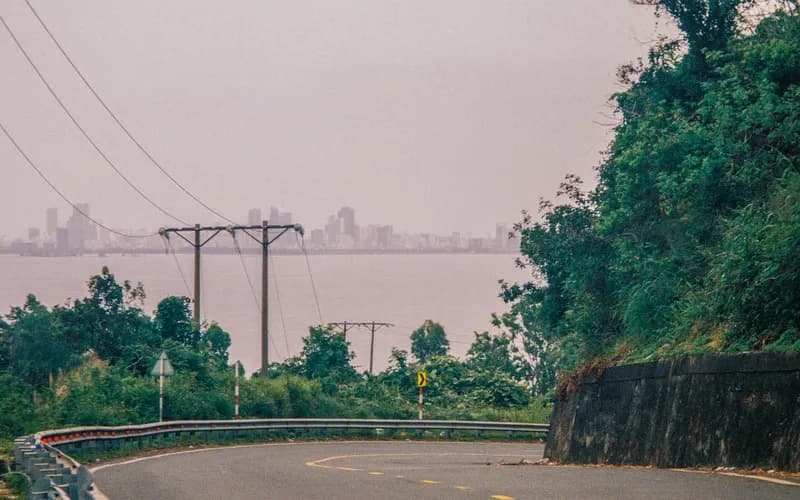
The Hai Van Pass between Hue and Danang is the clearest example. A tunnel now lets through traffic skip the mountain entirely, and most buses and cars take it. But the pass itself, with its old French-era bunkers and views down over Danang bay, remains open to anyone willing to take the slower coastal road — and for a slow traveler, that detour is still one of the best short drives in the country. The same logic applies to smaller provincial roads that run parallel to new expressway sections through Ha Tinh, Quang Tri, and Binh Dinh: they take longer, but they are also where the roadside life of the country is still visible from the window. Readers planning a longer loop through the north might also want to look at our Ha Giang loop guide, which covers a route that has nothing to do with the North-South Expressway and everything to do with why slower roads are often the better ones.
Our broader view on this — that infrastructure built for speed and infrastructure built for travel are not the same thing — runs through our guide to off-the-beaten-path Vietnam, which is worth reading before you decide which roads to take on your own trip.
Route-by-Route Notes for 2026
A few practical notes for the corridors most travelers actually use:
- Hanoi to Hue/Ninh Binh: Expect new toll gates in Ha Tinh and Quang Tri provinces from mid-July 2026 onward. Budget modestly more for this leg than you would have a year ago, and confirm your driver's ETC tag is funded before departure.
- Hue to Danang: The expressway and tunnel route is faster; the coastal Hai Van Pass road is slower and far more scenic. Choose deliberately rather than defaulting to whichever route a driver suggests.
- Danang to Nha Trang: Sections here (including Quang Ngai–Hoai Nhon and Chi Thanh–Van Phong) are still transitioning from technical to full commercial opening through mid-2026, so expect some construction traffic and check current status before a self-drive trip.
- Nha Trang to Ho Chi Minh City: This stretch, including Phan Thiet–Dau Giay, has been tolled since March 2026 and is fully operational, making it currently the most predictable long expressway leg in the country.
- Ho Chi Minh City to the Mekong Delta: The Can Tho–Hau Giang and Hau Giang–Ca Mau sections opened at the very end of 2025 and have meaningfully shortened what used to be a slow, congested drive south.
What to Do Next
- Before booking a self-drive rental, confirm the vehicle has an active, funded ETC tag — do not assume cash payment is still possible at the barrier.
- If a private driver is arranging your overland legs, ask which route they plan to take on scenic stretches like Hai Van Pass, and request the coastal road if you want the view rather than the tunnel.
- Build a modest toll budget (a few hundred thousand VND for a multi-city trip) into your overall costs, since several sections that were free in 2025 now charge separately.
- Check the status of your specific route shortly before departure if you are traveling through central provinces this year, since sections are still transitioning from technical to full operation.
- For legs where speed does not matter, weigh the Reunification Express or a slower coastal road against the expressway — the fastest route is rarely the most memorable one.
- Read our ultimate slow travel guide to Vietnam before finalizing your route, and start shaping your own trip on our plan your journey page.
Frequently Asked Questions
Is the Vietnam North-South Expressway finished?
Not entirely. The route connected end to end in December 2025, but several sections are still moving from technical opening to full commercial operation through 2026, and roughly sixteen sections remain on an interim four-lane profile pending widening to six lanes.
Do I need an ETC tag if I only take taxis or Grab cars?
No. Taxi and ride-hailing drivers carry their own ETC tags and the toll is built into your fare. The ETC requirement matters mainly if you are self-driving a rental car or overseeing your own vehicle logistics.
Will the new expressway make my sleeper bus trip faster?
Only modestly. Bus operators drive well under the posted speed limit and still make scheduled rest stops and passenger pickups, so scheduled travel times have not dropped as much as the road speed limits might suggest.
Should I drive the Hai Van Pass or take the tunnel?
If your goal is efficiency, take the tunnel. If your goal is the view — and for a slow traveler, it usually should be — take the pass road itself, ideally by car, van, or motorbike with a driver who knows it well.
How much should I budget for tolls on a multi-city road trip?
For a private car covering several hundred kilometers of tolled expressway, expect a total in the range of a few hundred thousand VND (roughly 10-20 USD) across a multi-day itinerary, split across several separate toll sections rather than one payment.
Are there still road closures or construction to watch for?
Yes. With fifteen sections being widened to six lanes and several others still finishing technical commissioning, expect intermittent lane restrictions, especially in central provinces, through the rest of 2026.
Does this affect train travel between cities?
Not directly. The Reunification Express runs on separate rail infrastructure and remains a slower but scenic alternative to road transfers, particularly on longer legs where the expressway now makes driving faster but not necessarily more enjoyable.