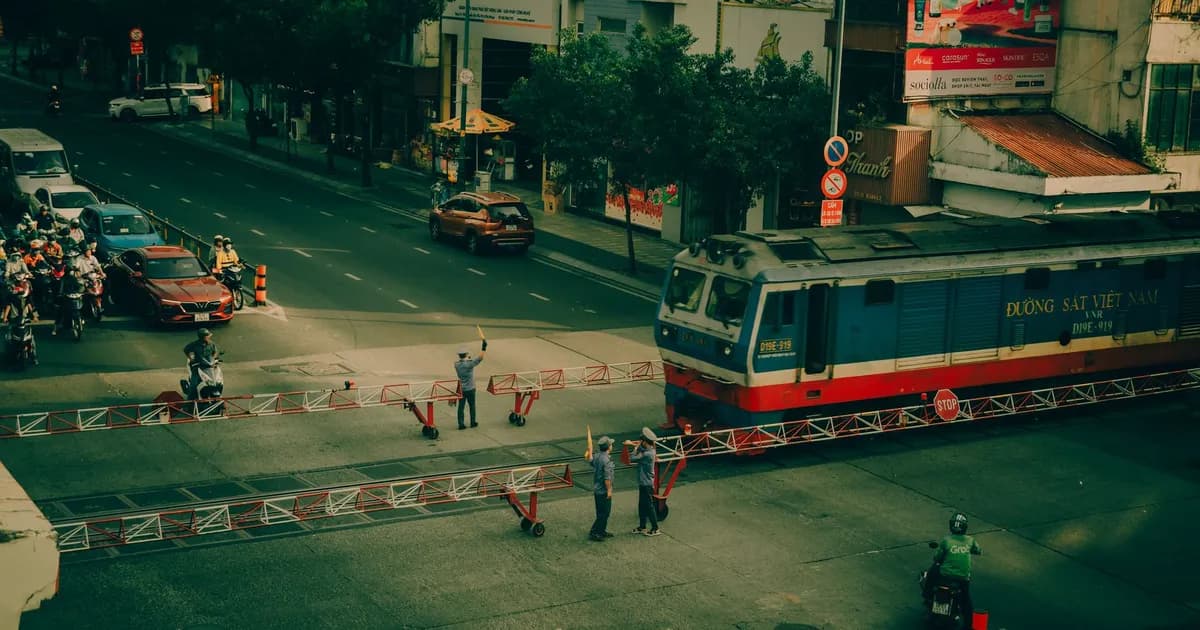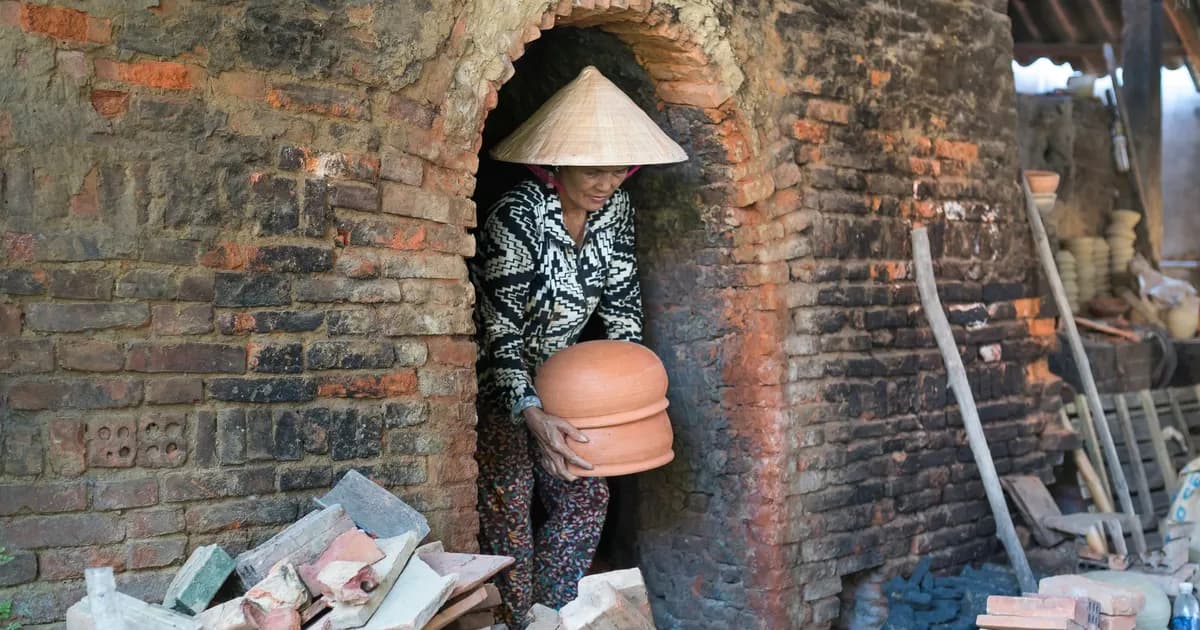
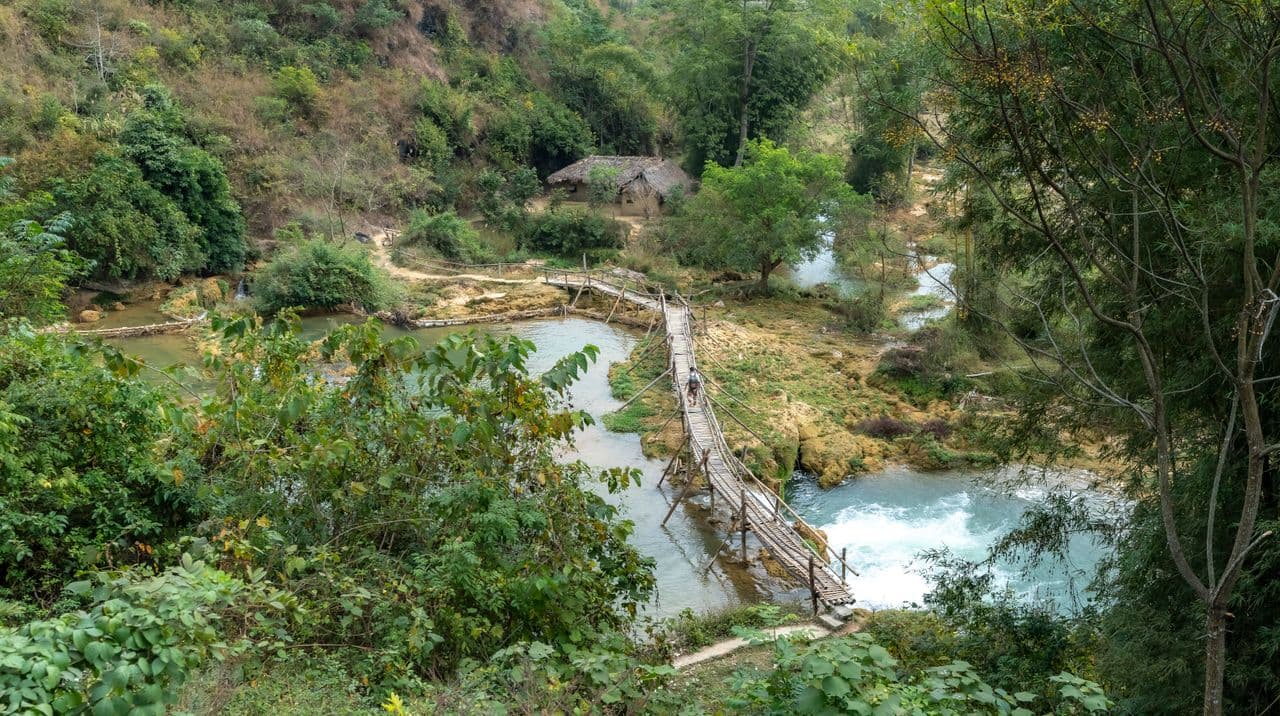

Vietnam is one of Southeast Asia's most-visited countries — yet the crowds cluster in a handful of famous places, and just beyond them lies a Vietnam most travelers never see. This is a country of remote mountain passes and terraced valleys, cave systems among the largest on earth, islands with a haunting history, and river backwaters where life still moves at the speed of the current. For the slow traveler willing to trade convenience for wonder, these places are the whole point. Here are the hidden corners of Vietnam worth the extra effort, region by region, and why each one repays the journey many times over.
Why Go Off the Beaten Path in Vietnam
Most visitors follow a well-worn line down the country: Hanoi, Halong Bay, Hoi An, Ho Chi Minh City, perhaps a night in the Mekong Delta. It is a beautiful introduction — but it is only the surface, and increasingly a crowded one. Vietnam's real magic lives in the places the standard itineraries skip: where the road turns to a ribbon of switchbacks above a river gorge, where a homestay has no menu and no Wi-Fi, and where you may be the only foreigner in the village.
Going off the beaten path here is not about ticking off obscure sights. It is about arriving somewhere slow enough, and remote enough, that the country can finally slow you down. The rewards are real: authentic encounters with Vietnam's many ethnic-minority cultures, dramatic and untouched landscapes, prices well below the tourist-trail norm, and the deep satisfaction of travel that feels earned. The trade-offs are equally real — long journeys on winding roads, basic facilities, patchy connectivity, and the need for patience and flexibility. It also helps to reframe what "off the beaten path" means in a country Vietnam's size. Vietnam is long and narrow, and its tourism is concentrated along a well-defined spine, which means going further here is less about reaching truly untouched wilderness and more about stepping sideways off that spine — into the mountains that fringe it, the islands off its coast, and the river country at its ends. The distances are rarely enormous, but the shift in atmosphere is: a single day's travel can take you from a coach-packed old town to a valley where you're the first foreigner a child has seen that week. That contrast is exactly what makes slow, curious travel here so rewarding. This is travel for the curious and the unhurried. For the practical side of costs, pair this with our Vietnam budget guide, and for the wider philosophy, our ultimate slow travel guide to Vietnam.
One request. Up to five tailored proposals.
Skip contacting agencies one by one — share your trip once and let up to five trusted Vietnam agencies come to you. Free, with no obligation.
Get my free quotesThe Far North: Vietnam's Wild Frontier
The mountainous north, pressed against the Chinese border, is where off-the-beaten-path Vietnam comes most gloriously into its own — a landscape of limestone peaks, terraced rice, and ethnic-minority villages that feels a world away from the coastal cities.
The Ha Giang Loop
The Ha Giang Loop has become the crown jewel of northern Vietnam: a three-to-four-day motorbike circuit through Quan Ba, Yen Minh, Dong Van and Meo Vac, past jaw-dropping mountain passes, the Nho Que river gorge, and Hmong, Tay and Dao villages. It is still far less developed than Sapa and infinitely more rewarding for it. A practical note for 2026: because the loop runs through sensitive border districts, foreign travelers are now expected to carry a border travel permit (around 200,000–250,000 VND, roughly US$10 per person), and checks have tightened. Most riders arrange it through their hostel, homestay or tour operator — confirm in writing that it is included. If you lack motorbike experience or a valid licence, hire an "easy rider" driver and ride pillion; it is safer, legal, and lets you actually look at the scenery.
Cao Bang and Ban Gioc Waterfall
East of Ha Giang, Cao Bang province is quieter still, and home to the magnificent Ban Gioc Waterfall — a broad, tiered cascade straddling the Vietnam–China border, one of the most beautiful in Asia and far less visited than it deserves. The surrounding karst country hides caves (Nguom Ngao), quiet river valleys, and the peaceful Tay villages around Phong Nam, where homestays let you slow right down.
Ba Be Lake
Vietnam's largest natural freshwater lake, Ba Be, sits within a national park of dense forest, limestone cliffs and waterfalls. It is a serene antidote to Halong's crowds: boat trips on emerald water, treks through the jungle, and homestays in Tay villages, with over 350 bird species for the wildlife-minded. Best visited October to April for cool, clear trekking weather. A night or two in a lakeside stilt house, paddling out at dawn as the mist lifts off the water, is one of the quietest and most restorative experiences in the whole north — the antithesis of a packed Halong cruise, and far cheaper too.
Bac Ha and the northern markets
Skip the Sapa crowds for Bac Ha, famous for its vast Sunday market where flower Hmong communities gather in a blaze of colour, and the surrounding hills offer walks between villages with barely another tourist in sight — a vivid, authentic alternative to the well-trodden trails around Sapa.
Pu Luong and the Northern Nature Reserves
South-west of Hanoi, on the way toward Mai Chau, the Pu Luong Nature Reserve in Thanh Hoa province is one of the north's loveliest and least-crowded escapes: terraced rice fields, water wheels, stilt-house homestays and gentle treks between Thai and Muong villages. It rivals the famous rice terraces of the far north but sees a fraction of the visitors. Time it well — the terraces are emerald in the growing season and gold near harvest (roughly late May–June and again September–October). Nearby, the reserve's biodiversity (over 1,500 plant species) and its eco-lodges make it a model of low-impact, slow travel within easy reach of the capital — a perfect first step off the beaten path for those short on time.
Get matched with up to 5 trusted Vietnam agencies
- Free
- No obligation
- Up to 5 agencies
Central Vietnam's Quiet Side
Central Vietnam is known for Hoi An and Hue, but venture a little further and the crowds vanish.
Phong Nha and the world's greatest caves
Phong Nha-Ke Bang National Park holds some of the largest and most spectacular caves on the planet, including Son Doong, the world's biggest cave (accessible only on a limited, expensive multi-day expedition booked far ahead). But you don't need Son Doong to be awed: Tu Lan, Hang En, Paradise Cave and the Phong Nha river cave offer extraordinary caving and kayaking for a range of budgets, set in a green, laid-back rural valley that has quietly become one of Vietnam's best adventure bases — and still feels off the map compared to the coast. What makes Phong Nha special for slow travelers is that it rewards a stay rather than a stop: spend three or four nights and you can mix a serious caving day with lazy afternoons cycling through rice paddies, swimming in the Chay river, and eating home-cooked meals at family-run guesthouses that have grown up around the park. The valley's tourism has developed thoughtfully, with a strong emphasis on local employment and conservation, making it one of the country's clearest examples of how going a little further can be both more rewarding and more responsible.
The Central Highlands
Inland from the coast, the Central Highlands around Kon Tum, Pleiku and Buon Ma Thuot are Vietnam's coffee heartland and home to numerous ethnic-minority communities, rong communal houses, waterfalls and crater lakes. Almost entirely skipped by international visitors, this is a region for travelers who want coffee culture and hill-tribe life without the trekking-tourism machine.
Quy Nhon and the forgotten coast
Between the big-name beaches, Quy Nhon is a relaxed coastal city with Cham towers, empty beaches, and fishing-village charm — a glimpse of the seaside Vietnam that Nha Trang and Da Nang used to be.
Islands and Coast Few Travelers Reach
Vietnam's long coastline hides islands that most itineraries never touch.
Con Dao
The Con Dao archipelago — sixteen islands, only one inhabited — is a place of secluded beaches, coral reefs, sea-turtle nesting beaches and forested hills, protected as a national park. It also carries a sombre history: under the French and later regimes, Con Son island held one of Indochina's most notorious prison colonies, and its memorials give the paradise a quiet gravity. Reached by a short flight or a longer ferry, it remains blissfully uncrowded — one of Vietnam's most rewarding slow-travel islands.
Ly Son
Off the central coast, volcanic Ly Son Island is famed for its garlic fields, black-and-white beaches, sea cliffs and clear water. Still largely a domestic-tourism spot, it offers a very local island experience for those who make the ferry crossing — the kind of place where you eat seafood with Vietnamese families rather than in traveler cafes, and where the pace slows to match the tides.
The Mekong Delta Beyond the Day Trips
Most travelers "do" the Mekong Delta as a rushed day trip from Ho Chi Minh City, seeing little more than a tourist boat and a coconut-candy workshop. The real delta reveals itself only to those who stay overnight and go deeper. Base yourself in Ben Tre, Can Tho (for the Cai Rang floating market at dawn, before the tour boats arrive), Vinh Long or the tranquil island homestays, and cycle the dyke paths past orchards, drift the narrow canals by sampan, and wake to river life. Further out, Tra Vinh with its Khmer temples and Chau Doc near the Cambodian border offer a delta almost untouched by tourism. This is slow travel at its most immersive — and a world away from the day-tripper's delta.
The Northwest: Rice Terraces Without the Crowds
While the far north around Ha Giang draws the adventure riders, the northwest hides some of Vietnam's most photographed landscapes with a fraction of Sapa's crowds. Mu Cang Chai, in Yen Bai province, is home to sweeping amphitheatres of terraced rice that turn brilliant green in early summer and molten gold around September and October — a UNESCO-recognised landscape that still feels genuinely rural. Further out, remote Y Ty, near the Chinese border, sits wrapped in cloud and terraces, with Ha Nhi villages and almost no foreign tourists. And Mai Chau, closer to Hanoi, offers gentle valley cycling and White Thai stilt-house homestays — an easy, authentic introduction to the northern mountains for those who want the terraces without a punishing journey. Together these places prove that you don't have to choose between iconic scenery and escaping the crowds; you just have to look slightly beyond the obvious base of Sapa.
The Central Coast's Hidden History
Between the headline sights of Hue and Hoi An lies a stretch of country heavy with 20th-century history and almost devoid of foreign visitors. The former Demilitarised Zone (DMZ) near Dong Ha — with the Vinh Moc tunnels, where an entire village survived years of bombing underground, and the sombre landscapes of the old frontier — is one of the most moving and least-visited historical areas in the country. Inland, the Ho Chi Minh Road threads through spectacular, empty mountain scenery, a dream for slow drivers and riders. These are places that reward travelers curious about Vietnam's past and willing to venture where the tour buses don't, adding real depth to a journey through the centre.
Quiet Corners Near the Famous Spots
You don't always have to travel far to leave the crowds behind; even beside the big-name destinations, quieter alternatives hide in plain sight. Instead of the packed day-boats of Halong Bay, slip east to neighbouring Bai Tu Long Bay or base yourself on Cat Ba Island and explore Lan Ha Bay, which offers the same drowned-karst seascape with a fraction of the traffic. Near Ninh Binh, skip the busiest boat piers for the quieter waterways and the back roads between the karst, or stay in a rural homestay among the rice fields rather than in town. And around Hoi An, cycle out to the quiet beaches, herb villages and the Cham islands rather than lingering only in the lantern-lit old town. These small detours cost little and prove a reassuring point: in Vietnam, solitude is often just a short ride from the crowds.
Sapa Done Differently
Sapa itself has become a byword for over-tourism, its town centre now dense with hotels and construction. But the wider region still holds real beauty for those who sidestep the centre: base yourself in an outlying village like Ta Van or Ta Phin, walk between hamlets with a local Hmong or Dao guide rather than joining a big group, and you'll find the terraced valleys and homestay warmth that made Sapa famous in the first place. It's a useful lesson for off-the-beaten-path travel everywhere in Vietnam — often the magic hasn't disappeared, it has just moved a valley or two away from where the crowds gather.
Sample Off-the-Beaten-Path Routes
To weave these hidden corners into a real trip, a little structure helps.
A far-north loop might run Hanoi → Ha Giang (the loop, 3–4 days) → Cao Bang and Ban Gioc → Ba Be Lake → back to Hanoi: one to two weeks of deep-north immersion, the single best off-beat region in the country. A northern short escape pairs Hanoi with Pu Luong (2–3 nights of terraces and homestays) — ideal when time is tight. A central adventure route links Hue or Hoi An with Phong Nha (caves and kayaking, 2–3 nights) and, for the intrepid, the Central Highlands. And a southern slow route flows from Ho Chi Minh City into the deep Mekong Delta (Ben Tre, Can Tho, Tra Vinh) and out to Con Dao to finish on a quiet island. Each can be lengthened or combined; for help turning any of these into a bookable trip, our plan-your-journey page and our network of certified local agencies are the place to start — local partners are especially valuable in remote Vietnam, where the best homestays and routes are hard to arrange from abroad.
Travelling These Places Responsibly
The very remoteness that makes these places special also makes them fragile, and the way you travel matters more here than almost anywhere. In ethnic-minority villages and homestays, your presence has real impact: bring patience and humility, dress modestly, ask before photographing people, learn a few words of Vietnamese, and follow your host's lead on customs. Choose community-based homestays and locally guided treks that channel income directly to villages rather than distant operators. Ride carefully and legally on the mountain loops, carry the correct border permits, and respect the sensitivity of frontier areas. And spend your money locally — with village guesthouses, local guides and small family kitchens — so that tourism becomes a reason to protect these places rather than change them. This is the heart of the slow travel philosophy: travel that leaves a place better than it found it. Part of that, too, is eating where locals eat — our Vietnamese food guide is a good companion for the regional specialities you'll meet along the way.
Making It Happen: Logistics and Local Help
Off-the-beaten-path Vietnam demands more planning and patience than the standard circuit. Journeys are long and roads are winding; transport is by sleeper bus, local bus, rented or "easy rider" motorbike, and boat, and schedules are loose. Connectivity is patchy, so download offline maps and carry enough cash, as ATMs thin out once you leave the towns. Build in generous buffer time, travel in the drier months where you can (broadly October–April in the north for trekking; check regional timing, as Vietnam's seasons vary sharply from north to south), and keep your itinerary flexible.
This is also where a good local partner earns its keep. The best remote homestays, the Ha Giang permits, the caving expeditions and the deep-delta routes are run by small local operators whose services are hard to find and book from abroad, and a knowledgeable agency can arrange the logistics, secure the right guides, and open doors that independent travelers struggle to find. The agencies in our certified network are chosen for exactly this: deep local relationships and slow-travel values.
The Reward of Going Further
Every one of these places asks something of you — a long bus ride, a night without hot water, a leap of faith into a village where no one speaks your language. And every one gives back something the famous sights cannot: the feeling of genuine discovery, of a country meeting you halfway, of travel as it used to be. In a country where so much of the main trail has been smoothed and packaged, Vietnam still offers the real thing, if you are willing to go a little further and stay a little longer. That willingness is the whole spirit of slow travel — and nowhere repays it more generously than the hidden corners of Vietnam.
Frequently Asked Questions
Where are the best off-the-beaten-path places in Vietnam?
Standouts include the far north — the Ha Giang Loop, Cao Bang and Ban Gioc Waterfall, Ba Be Lake, and Bac Ha; Pu Luong Nature Reserve south-west of Hanoi; Phong Nha's caves and the Central Highlands in the centre; and Con Dao and Ly Son islands plus the deep Mekong Delta (Ben Tre, Can Tho, Tra Vinh) in the south. These reward slow, unhurried travel far more than the crowded main sights.
Do I need a permit for the Ha Giang Loop?
As of 2026, foreign travelers riding the loop are expected to carry a border travel permit (around 200,000–250,000 VND, roughly US$10 per person), because the route passes through sensitive border districts, and checks have tightened. It's usually arranged through your hostel, homestay or tour operator — confirm in writing that it's included, and carry your passport and a valid licence.
Is it safe to ride the Ha Giang Loop myself?
The roads are stunning but genuinely challenging — steep, winding mountain passes with variable surfaces and weather. Only self-ride if you're an experienced motorbike rider with a valid licence; otherwise hire an "easy rider" driver and ride as a passenger. It's safer, fully legal, and lets you enjoy the scenery rather than concentrate on the road.
When is the best time for off-the-beaten-path travel in Vietnam?
It varies by region because Vietnam's climate differs sharply north to south. For the northern mountains (Ha Giang, Cao Bang, Ba Be, Pu Luong), roughly October to April gives cool, clear trekking weather, while the rice terraces are greenest and most golden around May–June and September–October. Always check the specific region's timing before you go.
How do I visit the Mekong Delta beyond the day trips?
Stay at least one or two nights rather than doing a rushed day trip from Ho Chi Minh City. Base yourself in Ben Tre, Can Tho (for the Cai Rang floating market at dawn), Vinh Long or an island homestay, and explore by bicycle and sampan. Further out, Tra Vinh and Chau Doc see very few tourists and reveal the delta's authentic river life.
Is Con Dao worth the trip?
Yes, for travelers who value quiet. Con Dao is a protected archipelago of secluded beaches, coral reefs and turtle-nesting sites, with a sombre and moving history as a former prison colony. Reached by a short flight or a longer ferry, it stays blissfully uncrowded and is one of Vietnam's most rewarding slow islands.
Do I need a guide or tour for remote Vietnam?
For homestay treks in the north, caving in Phong Nha, and deep-delta routes, a local guide or operator is very valuable — for safety, access, and because community-based experiences are designed to run through local hosts. For places like Pu Luong, Ba Be, and the delta towns, independent travel is very doable, though a good local agency smooths the logistics and unlocks the best experiences.
How much time do I need for off-the-beaten-path Vietnam?
More than you think, because remote journeys are slow. Allow at least two weeks to combine hidden corners with a few classic highlights, or dedicate a focused week to one region — the far north around Ha Giang, or the central caves and coast. The golden rule is to build in buffer days and resist over-packing the itinerary; the whole reward of remote Vietnam comes from lingering, not rushing.
Is off-the-beaten-path Vietnam suitable for first-time visitors?
It can be, if you're comfortable with basic facilities, long journeys and a flexible mindset. Accessible spots like Pu Luong, Ba Be, Ninh Binh's quiet corners and the deeper Mekong Delta work well even on a first trip. The truly remote areas — Ha Giang self-riding, Y Ty, the Central Highlands — suit more experienced or adventurous travelers, or those with a good local partner to smooth the way.
Ready to venture further? Explore all our Vietnam travel guides, and start planning with our network of certified local agencies on the plan-your-journey page.