Flying a Drone in Vietnam in 2026: Permits, Zones and Fines
If you packed a drone for Vietnam on the assumption that nobody would notice, the last eighteen months have quietly closed that door. A new legal framework came into force through 2025 and 2026, penalties were sharply increased, a national map of prohibited zones was published, and from the middle of 2026 unauthorised drone use around airports became an explicitly prohibited aviation act. None of this makes flying impossible. It does make the casual approach expensive. What follows is what the rules now say, what the process realistically involves for a visitor, and the honest conclusion most slow travellers will reach.
What Changed, and When
Vietnam's drone regime used to live in an old decree and a lot of discretion. It now sits in a stack of newer instruments.
The foundation is the 2024 Law on People's Air Defence, which took effect on 1 July 2025 and brought unmanned aircraft and ultralight vehicles into a single framework. Beneath it sit implementing decrees and circulars: a government decree on the management of drones and ultralight aircraft, a Ministry of National Defence circular covering pilot training, and a Ministry of Public Security circular on registration and identification codes that takes effect in July 2026.
Separately, and this is the part that concerns travellers most directly, Decree 282/2025 on administrative penalties came into force on 15 December 2025 and raised the fines considerably.
Finally, from 1 July 2026, amended civil aviation legislation explicitly lists illegal drone operation at airports and in adjacent areas as a prohibited act, closing an enforcement gap that previously required officials to reach for more general provisions.
The practical summary: the rules are now clear, published, and enforced by people who have a specific article to cite.
One request. Up to five tailored proposals.
Skip contacting agencies one by one — share your trip once and let up to five trusted Vietnam agencies come to you. Free, with no obligation.
Get my free quotesThe Under-250-Gram Question
This is the first thing every traveller wants to know, and the answer is more nuanced than the internet suggests.
Drones below 250 grams, the class that includes the smallest consumer models, are treated more leniently. The law provides that a flight permit is not required for aircraft under that weight, and the practical reading is that recreational flying with a sub-250-gram drone, outside prohibited and restricted zones, does not require the full permit process.
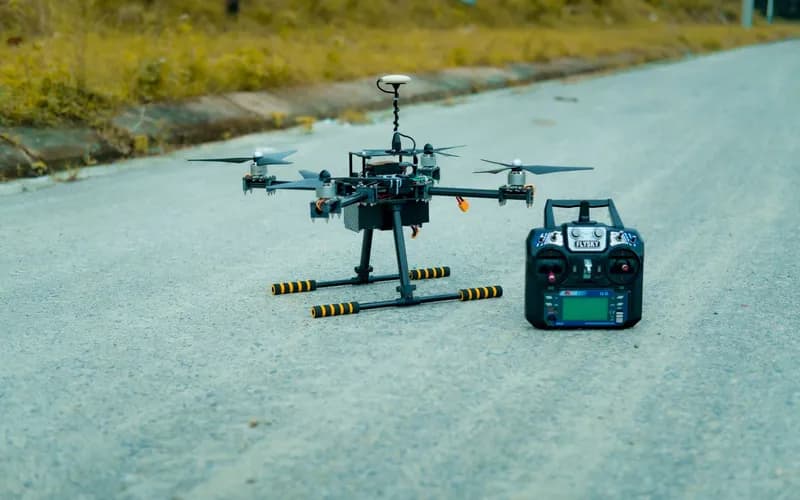
Drones of 250 grams and above require a flight permit. There is no tourist exemption, no short-stay allowance and no weekend concession.
Two caveats matter. First, the weight exemption applies to the permit, not to the zones: flying a 249-gram drone over a military installation, an airport approach or a restricted heritage site is still an offence. Second, the exemption does not obviously cover commercial or professional filming, which is treated separately and requires permission regardless of weight. If you are producing content for anything other than personal use, assume you need authorisation.
Registration and the New Identification Codes
From 20 July 2026, a Ministry of Public Security circular introduces a registration and identification system. Each registered aircraft receives an identification code made up of a symbol for the vehicle group, a four-digit number from 0001 to 9999, and a suffix indicating ownership: TN for domestic aircraft and NN for those owned by foreign organisations and individuals.
Registration also requires that an electronic stamp, or an integrated electronic device carrying the registration number, is fitted to the aircraft. This is a mandatory step of registration rather than an optional extra.
For a visitor bringing a drone for a two-week trip, this is where the process stops being a formality and starts being a project. Registration is designed around residents and organisations, and there is no streamlined tourist channel. In practice, foreign visitors are expected to work through a Vietnamese company or a local representative who handles the paperwork.
Get matched with up to 5 trusted Vietnam agencies
- Free
- No obligation
- Up to 5 agencies
How the Permit Process Actually Works
Assume you are determined, and your drone is over 250 grams. The process looks roughly like this.
Applications go to the Ministry of National Defence, and they are mission-specific. A permit is not a licence to fly in Vietnam; it authorises particular coordinates, an altitude ceiling, specific dates and a stated purpose. Change the location and you need a new permit.
The documentation required includes a copy of your passport, the technical specifications of the aircraft, a statement of purpose, the proposed flight areas, and a formal letter of request. All of it must be submitted in Vietnamese, which is the practical reason foreign applicants go through an agency.
Timing is the hard constraint. Guidance points to submitting at least seven working days before the intended flight, with roughly twelve working days if the operation requires an aviation notice, and some advisers recommend allowing fourteen days or more. For a trip that is itself two weeks long, the arithmetic is unforgiving unless you start before you leave home.
Costs vary by the agency handling it and are not trivial. Budget for the service fee to exceed the value of the footage for most holiday purposes.
Where You Cannot Fly
The Ministry of National Defence has published a digital map of prohibited and restricted areas, which is a genuine improvement over the previous situation of guessing.
Broadly, prohibited and restricted airspace covers military installations and their surroundings, airports and their approach paths, government and political sites, border areas, and certain protected or sensitive locations. Some restrictions are permanent; others are temporary and tied to events.
Two categories of place catch travellers out repeatedly. The first is popular scenery that happens to sit near a border or a military zone, which describes a fair amount of the northern mountains. The second is protected areas and heritage sites, where site management may impose its own restrictions independently of national airspace rules. National parks and UNESCO-listed landscapes increasingly say no, and the direction of travel is towards more restriction rather than less, consistent with the wider shift we describe in our piece on Vietnam's green tourism turn.
There is also an operating rule that catches experienced pilots. Vietnam requires visual line of sight at all times. First-person-view flying is not permitted unless a visual observer is present alongside you, which rules out the solo FPV footage a lot of people come for.
The Penalties, in Detail
Decree 282/2025 sets out the administrative penalties, and the range is wide.
- Failing to register the aircraft, failing to obtain a flight permit, or not complying with approved flight areas and schedules: fines of roughly 2 to 3 million dong.
- Taking aerial photographs or video without permission from the competent authority: roughly 8 to 9 million dong.
- Organising unauthorised flights: roughly 20 to 30 million dong.
- Operating in a way that interferes with aviation activity or threatens the safety of other aircraft: roughly 30 to 40 million dong, the top of the scale at around 1,500 US dollars.
Beyond the money, two additional sanctions apply. Aircraft may be confiscated, and flight permits may be suspended for three to six months. Confiscation is the one that hurts, because it is not a fine you can pay and walk away from with your equipment.
It is worth noting how the second category works. The photography offence is separate from the flying offence, which means an unpermitted flight that produces footage can attract both. This mirrors the approach Vietnam has taken elsewhere in its recent enforcement drive, including the road traffic penalties we cover in our explainer on Vietnam's tougher traffic fines.
Bringing the Drone Into the Country
Customs treatment is separate from flight regulation and frequently misunderstood.
Personal drones are not prohibited imports, and travellers routinely bring them in as carry-on equipment. Lithium batteries follow standard airline rules and must travel in the cabin. That said, customs officers have discretion, and drones are occasionally held at the point of entry, particularly if you are carrying professional equipment, multiple aircraft, or gear that looks like a production kit rather than a holiday accessory.
If your drone is held, it is normally returned on departure rather than confiscated, but the process is administrative and slow. Carry the original purchase documentation, declare it if asked, and do not argue the legal position at the counter.
The Honest Advice for Most Travellers
Here is the conclusion that a lot of guides will not state plainly.
For a standard two-to-three-week trip, with a consumer drone above 250 grams, the permit process is disproportionate to the benefit. It requires lead time you probably do not have, Vietnamese-language paperwork you cannot produce, an agency you have to pay, and a permit that is tied to specific coordinates and dates you may not yet have fixed. Flying without it risks fines and confiscation.
If aerial footage genuinely matters to your trip, there are three workable paths. Travel with a sub-250-gram aircraft and fly only in unambiguously permitted areas, checking the official map each time. Engage a Vietnamese production company or licensed operator to obtain permission and, where relevant, to fly for you. Or accept that you will not fly on this trip and budget for it properly on the next one.
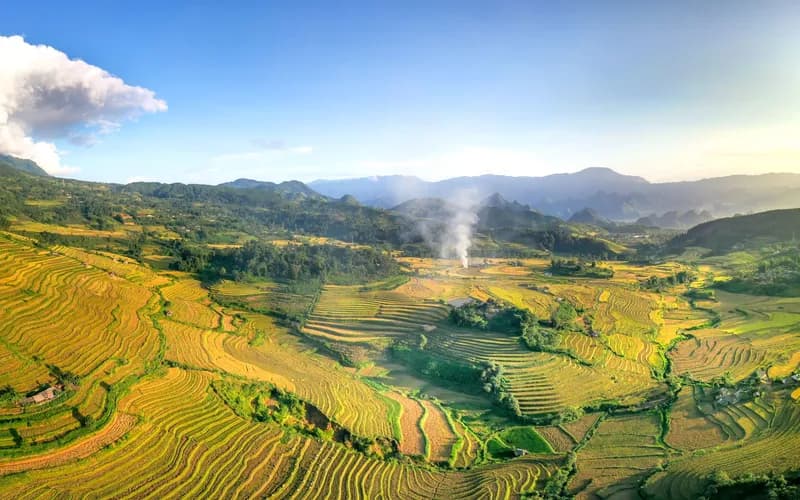
There is a fourth path, which is worth naming because it is the one we would actually recommend. Leave the drone at home. The places most travellers want to photograph from the air, the terraces, the karst bays, the passes, are also the places most likely to be restricted, most heavily visited, and most changed by the noise of a rotor overhead. The northern loops are a good example: spectacular from the ground, and covered in our guide to the Ha Giang loop, where the viewpoints do most of the work a drone would.
That is a matter of taste rather than law, and it sits close to the principle behind our slow travel charter: the best record of a place is usually the time you spent in it.
What to Do Next
- Weigh your drone. Under 250 grams changes your obligations substantially; 250 grams and above means a permit, with no tourist shortcut.
- Check the official Ministry of National Defence map of prohibited and restricted zones for every location you intend to fly, not once for the country.
- If you need a permit, start at least three to four weeks before departure and engage a Vietnamese agency or licensed operator to file it.
- Prepare the documents early: passport copy, aircraft specifications, purpose, proposed coordinates and a formal request letter, all in Vietnamese.
- Confirm site-level rules separately. National parks, heritage sites and private properties can prohibit flying even in otherwise open airspace.
- Plan for visual line of sight only, and bring a second person if you intend to fly first-person view.
- Carry batteries in your cabin baggage and keep purchase documentation with the aircraft in case of questions at customs.
- If none of the above is realistic for your trip, do not fly. The penalties include confiscation, and an appeal from abroad is not a practical option. Our plan your journey page covers the rest of the pre-departure checklist.
Frequently Asked Questions
Can tourists legally fly a drone in Vietnam?
Yes, but with conditions. Drones of 250 grams and above require a flight permit from the Ministry of National Defence, applied for in Vietnamese and usually through a local agency or representative. Aircraft under 250 grams are treated more leniently for recreational use, but zone restrictions still apply in full.
Do I really need a permit for a small drone?
For recreational flying with an aircraft under 250 grams, outside prohibited and restricted zones, a flight permit is not required. Above that weight, one is. The weight exemption does not cover commercial or professional filming, which needs permission regardless of the aircraft's size.
What are the fines for flying without permission?
Under the penalty decree in force since December 2025, failing to register or to hold a permit attracts roughly 2 to 3 million dong, unauthorised aerial photography roughly 8 to 9 million, organising unauthorised flights 20 to 30 million, and interfering with aviation safety 30 to 40 million. Confiscation of the aircraft and suspension of permits for three to six months are also possible.
How long does the permit process take?
Plan on weeks, not days. Guidance points to filing at least seven working days ahead, more if an aviation notice is required, and practitioners commonly advise fourteen days or more. Since applications must be in Vietnamese and are tied to specific dates and coordinates, most visitors start three to four weeks before arrival.
Where can I check whether a location is restricted?
The Ministry of National Defence publishes a digital map of prohibited and restricted zones for unmanned aircraft. Check it for each intended site. Separately, confirm local rules with the site itself, because national parks, heritage sites and private landowners can impose their own prohibitions.
Can I bring a drone through customs?
Generally yes. Personal drones are not banned imports and are routinely carried as cabin baggage, with lithium batteries in the cabin as airlines require. Officers retain discretion, and equipment that looks professional is more likely to be examined or held until departure. Keep purchase documents with the aircraft.
What about flying near airports?
Do not. Since 1 July 2026, unauthorised drone operation at airports and in adjacent areas is an explicitly prohibited aviation act, in addition to the general permit requirement. This is the category where penalties reach the top of the scale and where confiscation is most likely.
Is first-person-view flying allowed?
Only with a visual observer. Vietnam requires the operator to maintain direct visual contact with the aircraft at all times, so FPV flying alone is not permitted. If you intend to fly FPV, you need a second person acting as spotter, in addition to any permit your aircraft requires.
Keep reading
More from the ground · Vietnam