
From 15 September 2026, Vietnam applies a new decree governing how information about foreign nationals is shared between government agencies and how your stay is reported to local police. Decree 286/2026/ND-CP is not a new form for travellers to fill in, and it is not a visa change. It is a back-office reform. But it tightens the machinery around something that already applied to every visitor, the temporary residence declaration, and it will be felt most by people who stay in the kinds of places slow travellers prefer: family homestays, long-term rentals, and the spare room of a friend. Here is what actually changes, what does not, and what to do differently.
What Decree 286 actually is
The decree establishes a formal coordination mechanism between ministries, ministerial-level agencies, provincial People's Committees and the immigration authorities. In practice, it obliges those bodies to exchange information about foreign nationals in something much closer to real time than before, replacing a coordination framework that dated from 2015.
The data in scope includes visa issuance, temporary residence card records, entry and exit history, residence status and security-related information. It applies to all foreign nationals entering, leaving, transiting or residing in Vietnam, which explicitly includes tourists on e-visas and visitors arriving under visa exemption, as well as expatriates, remote workers and long-stay residents.
It also requires the organisations that sponsor or invite foreign nationals to coordinate with accommodation establishments on temporary residence declarations. That clause is the one that reaches ordinary travellers.
One request. Up to five tailored proposals.
Skip contacting agencies one by one — share your trip once and let up to five trusted Vietnam agencies come to you. Free, with no obligation.
Get my free quotesWhat changes for you on 15 September
Honestly: for most visitors, very little on the surface. You are not asked to submit anything new at the border, there is no fee, and the digital arrival card and health declaration processes are unaffected. Existing visa and residence card holders do not need to resubmit their records before the decree takes effect.
What changes is enforcement and visibility. Your accommodation's declaration of your stay now feeds a system that is linked to your visa record, your entry stamp and your onward movements. Gaps that used to go unnoticed, a week in an unregistered apartment, a friend's house that never reported you, are now far more likely to surface, and to surface at the moment you renew a visa, extend a stay or leave the country.
If your itinerary is booked and you are staying in registered accommodation throughout, you can stop reading here and simply keep your passport handy at check-in. If any part of your trip involves informal lodging, read on.
Who declares you, and within what deadline
The responsibility does not sit with you. Under Vietnamese residence rules, the person managing or operating the accommodation makes the declaration, and submits it to the commune-level police or the police station covering the area where the property sits.
The deadlines are tight. The declaration must be made within 12 hours of the foreign national beginning their stay, extended to 24 hours in remote and mountainous areas. Accommodation in this context is broad: hotels and guesthouses, homestays, rented houses and apartments, and the private residence of a friend or relative.
The practical translation is simple. Wherever you sleep, somebody is legally required to tell the local police that you are there, on the day you arrive. In a hotel this is automatic and invisible. Everywhere else, it depends on whether your host knows the rule and follows it.
Get matched with up to 5 trusted Vietnam agencies
- Free
- No obligation
- Up to 5 agencies
At a hotel or licensed guesthouse: probably nothing
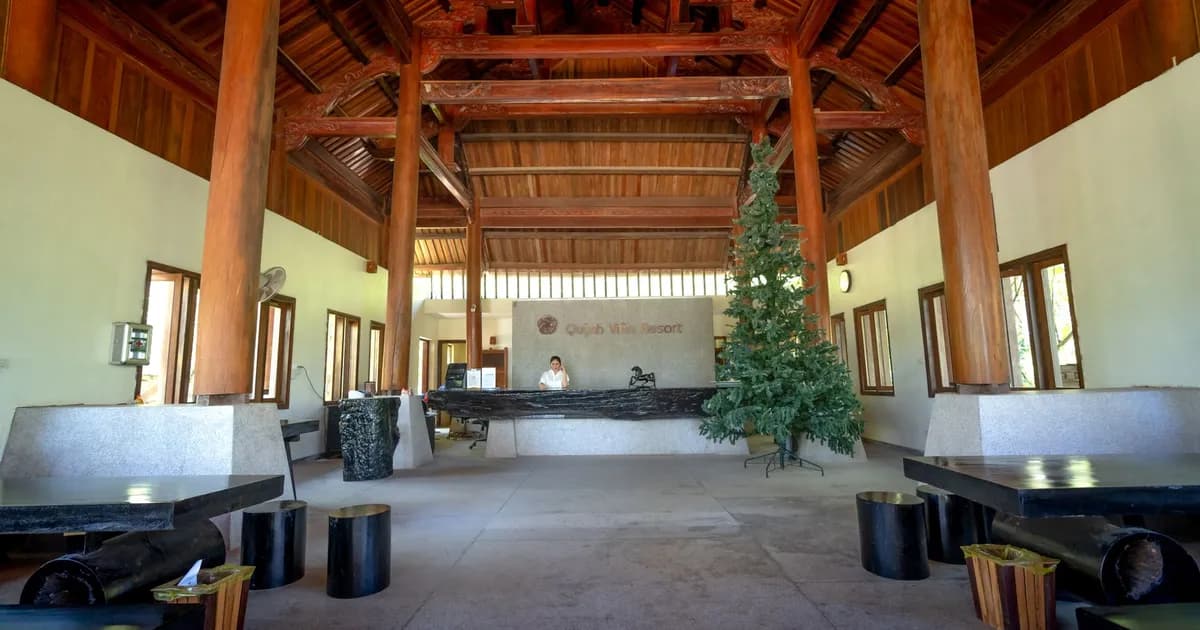
Reception will ask for your passport, either scanning it or keeping it for an hour. That is the declaration being made, and it has been standard practice for years. You are entitled to ask for your passport back once it has been copied, and most places return it immediately.
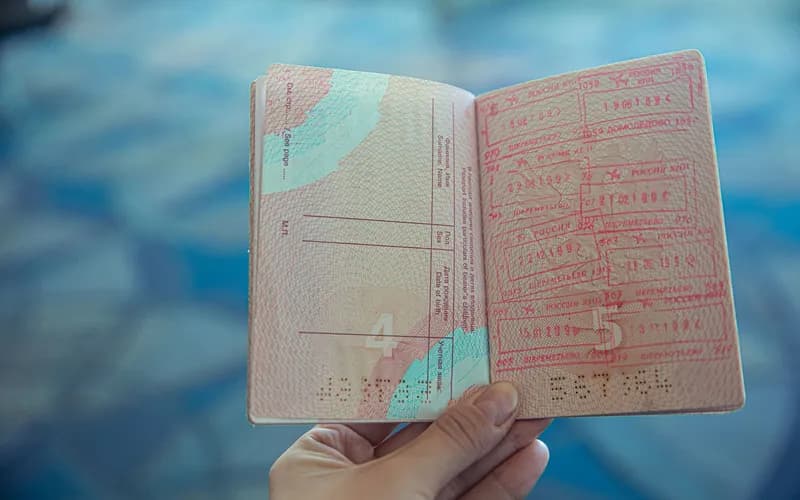
Two small habits help. Carry a colour photocopy of your passport photo page and your visa or entry stamp, which speeds up check-in and lets you keep the original with you. And check that the name on your booking matches your passport exactly, because a mismatch between a booking platform's version of your name and your passport creates exactly the kind of discrepancy an integrated system flags. Our overview of the current Vietnamese visa and immigration rules explains how the entry record is put together in the first place.
Where it genuinely matters: homestays, rentals and friends
This is the section that affects slow travel, because the accommodation we recommend is often the accommodation most likely to fall outside routine administration.
- Village homestays. Licensed homestays declare guests as a matter of course. Informal ones, particularly in the northern mountains and the delta, sometimes do not, and the fine falls on the host rather than on you.
- Short-term apartment rentals. Booking a flat for a month through an online platform does not mean anyone has told the police you are living there. Ask the owner directly and in writing.
- Staying with friends or family. Your host must register you at the local police station, usually within 12 hours. Many Vietnamese residents have never done this for a foreign guest and are simply unaware.
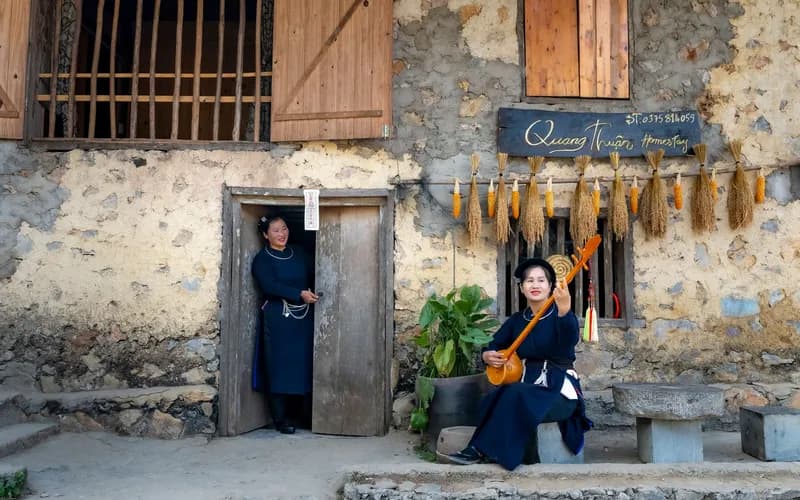
The awkward reality is that you may need to raise it yourself, politely, with someone offering you hospitality. Framing it as paperwork that protects them rather than you usually lands well. If you are booking village stays and want the administration handled properly without losing the character of the place, our guide to choosing and booking a Vietnamese homestay covers how to tell a well-run host from an improvised one.
What to carry, and what to hand over
Carry your passport with you in Vietnam, or at minimum a clear copy plus a photograph of the photo page and entry stamp on your phone. Police checks of foreign visitors are not common in tourist areas, but they happen, and an unregistered stay combined with no documentation is a genuinely uncomfortable conversation.
Hand over your passport at check-in when asked, but do not leave it overnight unless there is no alternative; ask for it back after the copy is taken. If a host asks to keep it as security against payment, decline and offer a deposit instead. That practice has always been improper and the new system gives you a straightforward reason to say no.
Keep your own record as well. A simple note of where you slept each night, with dates, resolves almost any later question about your movements, and takes a minute a day. Keep your insurance details and clinic contacts in the same folder; our guide to staying healthy on the road in Vietnam explains which numbers are worth having offline.
The privacy question, honestly
A system that links visa issuance, entry and exit records, residence status and security data across ministries is, unambiguously, an expansion of state visibility over foreign nationals. Vietnam is not unusual in this; guest registration with police is standard across much of Asia and continental Europe. But it is worth being clear-eyed rather than pretending it is purely administrative.
The practical guidance follows from that. Assume your movements within the country are recorded. Do not rely on informal arrangements to shorten a stay on paper or to obscure where you have been, and do not overstay on the assumption that nobody is counting, because the whole point of this decree is that somebody now is.
What this does not change
It is worth listing the things that have not moved, because the online chatter has confused several of them.
Visa categories, durations and eligibility are not altered by this decree. The digital arrival card process is separate and still applies in its own right; we cover it in our guide to Vietnam's digital arrival card requirements. The health declaration introduced in July 2026 is a separate requirement with its own timing. There is no new fee attached to the residence declaration, and there is no traveller-facing app you are expected to download.
If you hold a valid visa or residence card issued before 15 September 2026, it remains valid and you do not need to file anything retrospectively.
What to Do Next
- Check your accommodation type for every night of your trip and mark the ones that are not hotels or licensed guesthouses. Those are the nights that need a question asked.
- Message informal hosts before arrival with a single line: please confirm you will register my stay with the local police. Keep the reply.
- Carry a colour copy of your passport photo page, visa and entry stamp, and keep photographs of all three on your phone and in your email.
- Make sure the name on every booking matches your passport exactly, including middle names and the order of names.
- Keep a dated list of where you sleep. It takes seconds and settles any question at a visa extension or on departure.
- If your route includes remote provinces where registration is patchy, consider having a vetted local agency arrange those nights rather than improvising them on arrival.
Frequently Asked Questions
Do I have to fill in a form myself under Decree 286?
No. The temporary residence declaration is the legal responsibility of whoever manages the accommodation where you are staying, not yours. Your part is to provide your passport at check-in and, in informal accommodation, to confirm that your host is actually making the declaration.
When exactly does the decree take effect?
15 September 2026. It replaces the coordination framework that had been in place since 2015, and introduces near real-time information sharing between immigration authorities, ministries and provincial administrations covering visas, entry and exit records and residence status.
What is the deadline for my host to declare my stay?
Within 12 hours of your stay beginning, extended to 24 hours in remote and mountainous areas. Hotels handle this automatically when they take your passport at check-in. Private hosts must go to, or file with, the commune-level police covering their address.
What happens if my homestay or friend does not register me?
The legal exposure sits primarily with the host, who can be fined. For you, the risk is indirect but real: an unregistered stay can surface awkwardly during a visa extension, a police check or departure. Asking politely in advance is much easier than explaining afterwards.
Does this change my visa or how long I can stay?
No. Decree 286 governs information sharing and residence reporting, not visa categories, durations or eligibility. Visas and temporary residence cards issued before 15 September 2026 remain valid, and there is nothing to resubmit.
Is this the same as the digital arrival card or the health declaration?
No, these are three separate requirements. The digital arrival card is completed before you land, the online health declaration introduced in July 2026 has its own window before travel, and the residence declaration is filed by your accommodation after you arrive. Complete each on its own terms.
Should I be worried about carrying my passport around?
Carry it, or at minimum a good copy plus phone photographs of the photo page, visa and entry stamp. Checks are uncommon in tourist areas but do occur. Never leave your passport with a host as security for payment; offer a cash deposit instead and keep the document yourself.