
A homestay is the cheapest way to have the best night of your trip, and also the easiest thing in Vietnamese travel to book badly. The word covers everything from a family's spare room in a Thai stilt house to a purpose-built boutique property using the label for marketing reasons. The gap between those two experiences is enormous, the price difference is often small, and almost nothing on a booking platform tells you which one you are getting. This is how to tell.
What a homestay in Vietnam actually is
In its original and best form, a homestay means sleeping in someone's house while they continue living in it. You get a bed, usually a mattress on a raised platform with a mosquito net, access to shared bathrooms, and meals eaten with the family rather than served to you at a separate table. The host is not staff. They are a family who have made room.
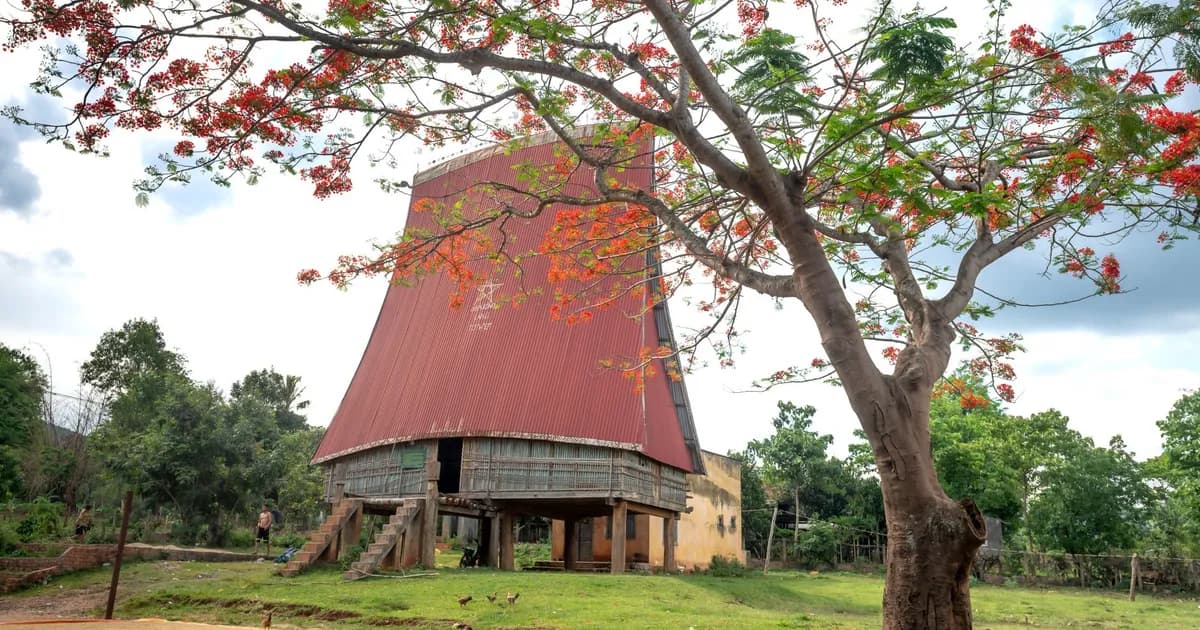
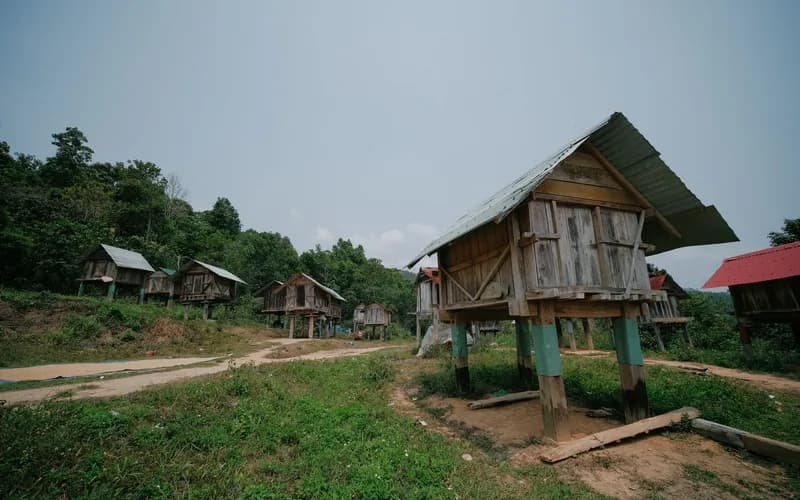
The architecture varies by region and is a large part of the appeal. Thai and Muong communities in the northwest build wooden stilt houses with a single large upper floor, where guests sleep in a communal row along one side. H'mong houses in the far north are lower, earthen-walled, darker and warmer, built for cold. Ede longhouses in the Central Highlands are long, narrow and raised, entered by a carved staircase. In the Mekong Delta, homestays are usually ground-level family homes surrounded by orchards and canals, and the water is closer than the walls.
The label has since expanded. Plenty of properties marketed as homestays are small guesthouses with private rooms and no family contact at all. These are often perfectly good places to sleep. They are simply not the thing the word originally described, and if cultural contact is why you booked, you will be disappointed by an excellent room.
One request. Up to five tailored proposals.
Skip contacting agencies one by one — share your trip once and let up to five trusted Vietnam agencies come to you. Free, with no obligation.
Get my free quotesWhat it costs
At a glance
- Price
- about 12 to 30 USD/night, varies by region
- Meals
- family-style, usually included
- Payment
- cash in Vietnamese dong
- Booking
- direct or community tourism organisations
- Best regions
- Sa Pa, Mai Chau, Pu Luong, Ha Giang, Mekong Delta
Homestays remain the strongest value in Vietnamese accommodation, and it is worth understanding how little of your money is involved.
- Rooms with Dzay or H'mong families in villages such as Ta Van or Lao Chai near Sa Pa typically run about 15 to 25 US dollars per night including family-style meals.
- White Thai community homestays in the northwest often start around 12 to 20 dollars.
- Some individually run H'mong homestays around Sa Pa sit nearer 30 dollars, usually for a private room rather than a communal platform.
- Ha Giang homestays are among the cheapest in the country, and the margin left to the family after food, fuel and platform commission is genuinely small.
That last point deserves emphasis. At these prices, tipping meaningfully, buying the extra meal, paying for the guided walk and not haggling are not generosity. They are the difference between a household breaking even and earning. Haggling over two dollars in a village homestay is the single most common way well-meaning travelers do harm without noticing.
Payment is usually cash in Vietnamese dong. Do not assume a card machine, and do not assume an ATM in the village. Arrive with enough cash for the stay plus meals and extras, which our guide to money, cards and connectivity in Vietnam covers in more detail.
Where the good ones are
Homestays exist across Vietnam, but they are meaningfully better in some regions than others, mostly because of how long the model has existed and how much competition has industrialised it.
The northwest, including Mai Chau, Pu Luong and the valleys around Sa Pa, has the longest tradition and the widest quality range, from genuine family stays to large stilt-house complexes serving tour groups. The far north around Ha Giang and Cao Bang offers a rawer version with less infrastructure and more contact. The Central Highlands, particularly around Lak Lake in Dak Lak, has fewer options and correspondingly less performance. The Mekong Delta has a strong tradition of orchard homestays around Cai Be and Can Tho where hosts cook from their own gardens and fish ponds.
For a specific, well-run example region we have written about at length, our piece on Pu Luong nature reserve describes the kind of valley where the model still works as intended.
Be aware that community tourism is being actively promoted nationally in 2026, which means new properties are opening quickly in regions that had few before. Growth is not automatically bad, but new supply arriving faster than local capacity is exactly the condition under which ownership drifts away from the community, an issue we examine in our analysis of Vietnam's inland tourism push.
Get matched with up to 5 trusted Vietnam agencies
- Free
- No obligation
- Up to 5 agencies
What to expect on arrival and at night
Set expectations honestly and the experience improves immediately.
Bathrooms are usually shared and usually outside the main sleeping area. Hot water exists in most places now but is not guaranteed and may be limited by the time of evening. Electricity can be intermittent in remote valleys. Wifi is common and unreliable; mobile data is often better.
Sleeping is frequently communal. In a traditional stilt house, guests lie side by side on thin mattresses along the floor, separated by mosquito nets rather than walls. This surprises people who booked what a platform described as a room. If you need a private room, filter for it explicitly and confirm by message before arriving.
Nights are colder than visitors expect in the northern mountains and the highlands, at any time of year. Blankets are provided but thin. A layer and warm socks change the night entirely.
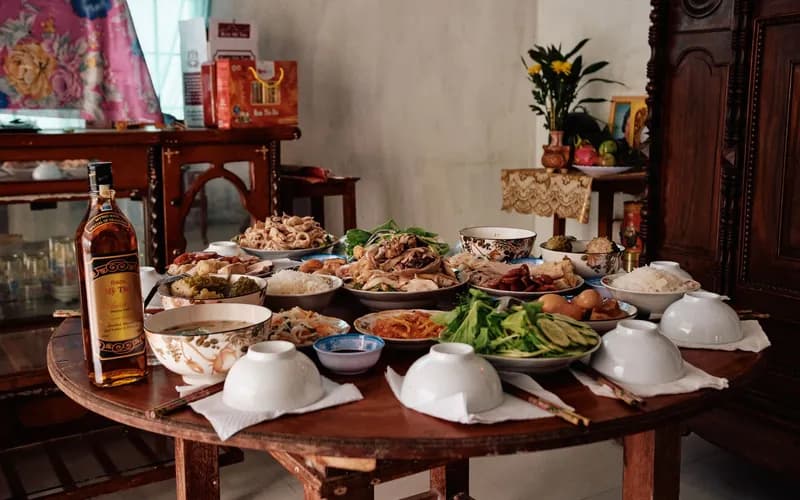
Meals are the centre of the experience. Dinner is usually shared, cooked from what the household has, and served family-style with rice at the middle. Breakfast is simpler. If you have dietary requirements, communicate them at booking rather than at the table, because a village household cannot improvise a second menu at short notice.
Etiquette that actually matters
Most etiquette advice about Vietnam is generic. In a homestay, a short list does real work.
- Remove your shoes before entering. This is standard across Vietnam and non-negotiable in ethnic minority households.
- Ask before photographing people, especially children, anyone in traditional dress and anything inside the home. A gesture toward the camera and a smile is the minimum; a translated request is better.
- Stay out of private areas. Your room and communal spaces are yours. The family's sleeping quarters, kitchen and storage are not, even when no door marks the boundary.
- Accept the toast. When corn or rice wine is poured and a toast is made, refusing outright reads as rejecting hospitality. You do not have to drink. A sip, a thank you, and setting the cup down is understood and sufficient.
- Dress modestly, particularly in rural and ethnic minority villages. This matters more than it does in Hanoi or on the coast.
- Join meals when invited, even if you are not hungry. The invitation is the point, not the food.
Our fuller treatment of cultural etiquette in Vietnamese temples, homestays and villages goes further, but those six carry most of the weight.
How to tell a family home from a built imitation
This is the question that determines whether your money supports a community or extracts from it, and platforms will not answer it for you. Some reliable signals.
Read reviews for the host's name. Genuine family homestays generate reviews that name people and describe them. Investor-built properties generate reviews that describe facilities. If forty reviews mention the view and none mention a person, you know what you have booked.
Look at the photographs for evidence of ongoing life. A working family home has clutter, drying laundry, agricultural equipment, a motorbike, children's things. A property styled entirely for photography, with no sign of anyone living there, is a hotel with a stilt-house roof.
Count the beds. A traditional house sleeping eight to twelve guests is plausible. A complex sleeping forty is a business, whoever owns it.
Ask directly before booking. Two questions do most of the work: who owns the house, and does the family live here. Genuine hosts answer easily and often proudly. Evasion is itself an answer.
Prefer booking direct or through community tourism organisations where they exist. Social enterprises and community-run networks, including hospitality training operations in Sa Pa and family homestay networks in the Mekong Delta, exist specifically to keep the margin local. Platform commission is a real deduction from a fifteen-dollar room.
Who should probably not book a homestay
Homestay
- Authentic contact with a host family and regional architecture
- The cheapest accommodation and strongest value in Vietnam
- Mostly communal sleeping and shared bathrooms, little privacy
- Hot water, heating and a controlled routine are not guaranteed
Hotel
- Reliable hot water, heating and a private, lockable room
- Easier for young children, mobility needs or strict diets
- Comfort and predictability throughout
- No family contact or cultural immersion
Honesty is more useful than enthusiasm here. Skip it, or choose a private-room version, if you sleep badly with noise or company, if you need reliable hot water and heating, if you are travelling with very young children who need a controlled routine, if you have mobility limitations that steep wooden stairs would make unsafe, or if you have strict dietary needs that a rural kitchen cannot reasonably accommodate.
There is no virtue in enduring a night you hate. One or two nights of homestay inside a longer trip that otherwise uses comfortable small hotels is a better structure than a fortnight of communal floors, and it is the balance we generally recommend in our complete slow travel guide to Vietnam.
What to Do Next
- Decide first whether you want cultural contact or a cheap characterful room. They are different products sold under one word.
- Filter and confirm by message whether sleeping is communal or private before you book. Do not rely on the listing category.
- Ask the host directly who owns the house and whether the family lives there. Book the ones who answer plainly.
- Bring enough cash in dong for the full stay plus meals and extras, and do not haggle.
- Pack a warm layer and socks for any homestay in the northern mountains or the highlands, in any season.
- Communicate dietary needs at the time of booking, never on arrival.
- Limit yourself to one or two homestay nights at a time within a longer itinerary, so the experience stays a highlight rather than a test of endurance.
Frequently Asked Questions
Are homestays in Vietnam safe?
Generally yes, and often safer than budget guesthouses because you are inside a family's home and social accountability is high. Standard precautions apply for valuables, since rooms in traditional houses frequently do not lock. Carry a small dry bag or pouch for documents and cash.
Do I need to book a homestay in advance?
In popular valleys during high season, yes, particularly for private rooms. In quieter regions you can often arrive and ask. Booking ahead is also the only way to have the ownership conversation before you commit, which is reason enough.
Will the host speak English?
Sometimes, often not, and less in the least touristed places, which are frequently the best ones. Younger family members usually manage some English. A translation app covers practical needs, and much of the value of a homestay does not require language at all.
How much should I tip at a Vietnamese homestay?
Tipping is not obligatory but it is meaningful at these price points. Something in the region of 50,000 to 100,000 dong per guest per night for a family stay is well received and materially changes the household's return. Pay for extras like guided walks separately and generously.
Can I stay in a homestay as a solo female traveler?
Yes, and it is a common and generally positive choice. Communal sleeping is mixed in most traditional houses, so if that is a concern, book a property offering private rooms and confirm the arrangement by message beforehand.
What should I bring to a homestay?
A warm layer, socks, a headtorch, earplugs, hand sanitiser, a small towel, any medication you need, and cash. Nothing else is essential, and a modest gift such as fruit or tea for the household is appreciated without being expected.
Is it better to book direct or through a platform?
Direct or through a community tourism organisation, where that is possible. Platform commission is a substantial share of a fifteen-dollar room. Many rural homestays are contactable by messaging app, and booking that way is straightforward once you have found the property.