

Vietnam has had a tourist VAT refund scheme for years, and most visitors leave without using it. Some do not know it exists. Others discover it forty minutes before boarding, at the wrong counter, holding a receipt that was never going to qualify. The rules were tightened and clarified by Decree 181/2025/ND-CP, in force since 1 July 2025, and the arithmetic changed again because Vietnam's temporary reduction of standard VAT from 10 percent to 8 percent has been extended through the end of 2026.
This is a practical guide to what you get back, who qualifies, where it is actually paid, and — the part most guides skip — whether the refund is worth building your departure around at all. For most slow travellers, the honest answer is no. For a minority buying tailoring, silk, art, ceramics or electronics, it is real money.
What Changed, and When
The current framework comes from Decree 181/2025/ND-CP, which took effect on 1 July 2025 and set out the procedure for VAT refunds to foreigners on goods purchased in Vietnam and carried out of the country. It confirmed the minimum invoice value, the sixty-day validity window, and the requirement that the goods physically leave with you.
The second moving part is the VAT rate itself. Vietnam's standard rate is 10 percent, but a temporary reduction to 8 percent on most goods and services has been repeatedly extended and currently runs through the end of 2026. Because your refund is calculated on the VAT you actually paid, the reduction shrinks the refund at the same time as it lowers the price you paid. That is not a bad trade, but it does change the maths in a way older guides do not reflect.
One request. Up to five tailored proposals.
Skip contacting agencies one by one — share your trip once and let up to five trusted Vietnam agencies come to you. Free, with no obligation.
Get my free quotesWho Qualifies
You are eligible if you hold a valid foreign passport, are not a Vietnamese citizen, and are not a member of an aircraft crew operating the departing flight. You must have been in Vietnam for no more than 183 days in the calendar year of departure, which quietly excludes many long-stay travellers and remote workers. And you must leave through an international checkpoint that has VAT refund facilities, carrying the goods with you.
That last condition is stricter than it sounds. The goods must be available for inspection at customs before check-in, which means they cannot already be inside a checked bag on the belt. Anything you have shipped home separately, consumed, worn out or given away does not qualify.
The Numbers That Decide Whether It Is Worth It
Three figures matter.
- Minimum spend: 2,000,000 VND on invoices from a single registered store on a single day. Two purchases of 1.2 million VND at the same shop on different days do not combine.
- Validity: goods must be purchased within 60 days of your departure date.
- Refund rate: you receive 85 percent of the VAT paid, with the remaining 15 percent retained as the service fee.
Run that through the current 8 percent rate and the effective refund is about 6.8 percent of the purchase price. On a 2 million VND purchase, roughly the minimum, that is about 136,000 VND — around five US dollars. On a 20 million VND purchase, it is about 1.36 million VND, which is worth the paperwork.
In other words, this scheme is designed for people making substantial purchases, not for people collecting receipts across a trip. If you want to understand where these amounts sit against typical trip spending, our Vietnam trip cost and budget guide gives the wider picture.
Get matched with up to 5 trusted Vietnam agencies
- Free
- No obligation
- Up to 5 agencies
Where You Can Actually Claim
This is where published information and practice diverge, so treat it carefully. Vietnam's designated VAT refund airports have included Noi Bai in Hanoi, Tan Son Nhat in Ho Chi Minh City, Da Nang, Cam Ranh near Nha Trang and Phu Quoc. In practice, the overwhelming majority of refunds are processed at Noi Bai and Tan Son Nhat, and coverage at the smaller airports has been intermittent.
The practical rule: if you are departing from Hanoi or Ho Chi Minh City, plan on the refund working. If you are departing from anywhere else, confirm in advance with the airport or your airline and have a plan for the refund not being available. Do not build a large purchase around a refund counter you have not verified.
Terminal layout matters too. Tan Son Nhat's international operations have been reshaped by the opening of Terminal 3, and travellers should confirm which terminal they depart from before allowing time for customs verification — our Terminal 3 guide covers the current layout. Departures from the new Long Thanh International Airport are a further variable as international traffic shifts there in phases; confirm refund facilities directly rather than assuming continuity.
Step by Step at the Shop
The refund is lost at the point of purchase far more often than at the airport.
- Shop only at retailers registered in the VAT refund scheme. They display a sign, and staff will know the term. Independent market stalls and most small shops are not registered.
- Present your original passport at the time of payment. A photograph or a photocopy is not accepted, and the passport details must be printed on the document.
- Ask specifically for the VAT refund invoice-cum-declaration form, not an ordinary receipt. This is a specific document. If the shop cannot issue it, the purchase will not qualify, no matter what they promise.
- Check that the form shows your full name, passport number, the goods description and the VAT amount, and that it is dated within 60 days of your departure.
- Keep the goods, the tags and the form together. Do not use the item, remove labels, or pack it deep in a case you intend to check.
Step by Step at the Airport
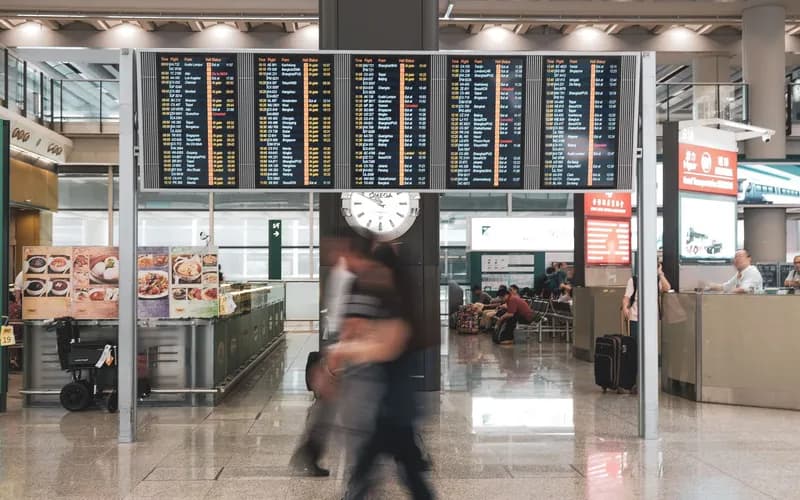
The airport process has two distinct stages in two different places, and confusing them is the most common failure.
First, before check-in, go to the customs verification counter in the public departures hall. At both Noi Bai and Tan Son Nhat this sits on the departures level near the airline check-in rows. Present your passport, boarding pass or ticket, the refund declaration forms and the goods themselves. Customs inspects and stamps.
Second, after you have checked in, cleared security and cleared immigration, go to the refund payment counter in the restricted international departure area. Present the stamped forms, your passport and your boarding pass. The refund is paid there.
Allow 30 to 45 minutes on top of your normal airport timing, and more at peak departure banks in the evening. If you are departing on a busy evening flight, treat this as a reason to arrive three hours early rather than two.
What Does Not Qualify
Services of any kind are excluded: hotel nights, tours, restaurant meals, spa treatments and transport. So are goods that are prohibited or restricted for export, and goods you have already consumed or used in Vietnam. Certain categories — including some antiques and cultural objects — carry export restrictions entirely separate from tax, and buying old ceramics or artefacts without documentation is a genuine risk regardless of any refund.
Purchases made informally, without a registered invoice, are simply outside the system. That covers most street markets, most craft villages, and most of the small independent workshops that slow travellers tend to enjoy buying from.
The Honest Assessment for Slow Travellers
For the way most readers of this site travel — long stays, small purchases, independent makers, local markets — the VAT refund is largely irrelevant, and chasing it can distort your buying towards registered chain retailers and away from the people you actually wanted to support.
There are three cases where it clearly makes sense: made-to-measure tailoring in Hoi An or Hanoi at a registered shop, high-value silk, lacquerware, art or ceramics bought from an established gallery, and electronics. In each of those, concentrating a purchase at one registered retailer on one day, above the 2 million VND threshold, converts a paperwork exercise into a meaningful discount.
There is also a timing consideration. Vietnam's cities are actively pushing evening retail as part of the night-economy strategy described in our analysis of what changes after dark in Vietnam, and registered retailers in those zones are the ones most likely to be able to issue refund paperwork correctly.
Common Failure Points
The refund fails, in rough order of frequency, because: the shop was not registered; the passport was not presented at purchase; an ordinary receipt was issued instead of the declaration form; the total at one shop on one day fell below 2 million VND; the goods were already checked in when the traveller reached customs; or the traveller went straight to the post-immigration payment counter without the customs stamp.
One more, easily avoided: paying by card and then losing the transaction record. Vietnam is now heavily QR- and card-based, as our guide to cashless payments for foreign travellers explains, and keeping the card slip alongside the refund form removes any argument at the counter.
What to Do Next
- Decide early whether you plan any purchase above 2 million VND. If not, ignore the scheme entirely and stop carrying receipts.
- If you do, concentrate that purchase at one registered retailer on one day rather than spreading it.
- Carry your physical passport when you go shopping for anything significant, and present it before paying.
- Ask explicitly for the VAT refund declaration form and check the details before you leave the shop.
- Confirm that your departure airport and terminal has a working refund counter, especially outside Hanoi and Ho Chi Minh City.
- Keep refundable goods in your hand luggage, or at least accessible, until customs has stamped the paperwork before check-in.
- Add 45 minutes to your airport arrival time, and read our money, cards and connectivity guide if you want the refund paid in a form you can actually use.
Frequently Asked Questions
How much VAT do tourists get back in Vietnam?
You receive 85 percent of the VAT paid, with 15 percent retained as a service fee. With the standard rate temporarily reduced to 8 percent through the end of 2026, the effective refund is roughly 6.8 percent of the purchase price on eligible goods.
What is the minimum spend for a Vietnam VAT refund?
Two million VND on invoices from a single registered store on a single day. Purchases at different shops, or at the same shop on different days, cannot be combined to reach the threshold.
Which airports process VAT refunds in Vietnam?
Noi Bai in Hanoi and Tan Son Nhat in Ho Chi Minh City are the reliable ones. Da Nang, Cam Ranh and Phu Quoc have appeared on the designated list, but coverage there has been intermittent, so confirm before departure if you are flying out from a smaller airport.
Can I claim a refund on hotels, tours or restaurant meals?
No. The scheme applies only to physical goods that leave Vietnam with you. All services, including accommodation, tours, transport and dining, are excluded.
How long before departure must I buy the goods?
Within 60 days of your departure date. Anything bought earlier in a long trip falls outside the window, which is a common problem for travellers spending several months in the country.
Do I need to show the actual items at the airport?
Yes. Customs verification happens before check-in, in the public departures hall, and officers may ask to see the goods. Keep them accessible rather than packed in a bag you have already handed over.
What if I have been in Vietnam more than 183 days?
You are not eligible. The scheme requires that you have not stayed in Vietnam for more than 183 days in the calendar year of your departure, which excludes many long-stay visitors and remote workers.
Is the refund paid in cash or to a card?
Refunds are generally paid at the counter, in Vietnamese dong or another available currency, with card or bank crediting offered in some cases. Ask at the counter what is available and keep the stamped paperwork until the payment has cleared.