

Vietnam has decided it wants your evenings. In July 2026 Hanoi approved a night-time economy project covering 2026 to 2030, with a stated ambition of pushing the share of visitor spending that happens after dark to somewhere between 25 and 30 percent of total travel expenditure. Ho Chi Minh City is working the same problem from a different angle. Provincial capitals from Da Nang to Hue have their own versions. Behind the policy language is a simple commercial calculation: a country receiving well over 13.9 million international visitors in the first seven months of 2026 alone, up nearly 14 percent year on year, would rather those visitors stayed an extra night and spent an extra evening than moved on at dawn.
For slow travellers this is one of the more interesting shifts in Vietnamese tourism, and one of the most easily misread. It is not primarily about nightlife in the Western sense. It is about extending the working hours of culture, and the results range from genuinely excellent to entirely synthetic depending on which street you happen to be standing on.
What Hanoi Actually Approved
The Hanoi plan is more specific than most tourism strategy documents. It designates categories of night-time zones rather than a single entertainment district. Heritage and cultural districts are centred on Hoan Kiem, Cua Nam, Ba Dinh, Son Tay and Soc Son. Modern entertainment hubs are earmarked for the western side of West Lake, My Dinh and Dong Anh. A third category covers creative-economy venues — theatres, cinemas, museums — operating on extended hours. A fourth pushes night activity out to the suburban craft villages, naming Bat Trang, Ba Vi and Huong Son.
The measurable targets are worth quoting because they explain the behaviour you will see. The city wants the night-time economy contributing around 5 percent of its gross regional domestic product by 2030. It wants average visitor stay extended to between 2.5 and 3.5 days. And it wants that 25 to 30 percent night-spending share. Every extension of opening hours, every new lighting installation on a heritage building, every pilot licence for a venue to trade past midnight is downstream of those three numbers.
That framing matters. When a city sets a target for how long you stay, it is implicitly admitting that people currently leave too quickly. Hanoi's honest problem is that a large share of international visitors treat it as a two-night hinge between Ha Long Bay and a flight south.
One request. Up to five tailored proposals.
Skip contacting agencies one by one — share your trip once and let up to five trusted Vietnam agencies come to you. Free, with no obligation.
Get my free quotesWhy Governments Want Your Evenings
Daytime tourism capacity in Vietnam's headline destinations is close to saturation at peak. You cannot put more people into Hoan Kiem Lake at eleven in the morning, or onto the Hoi An footbridges at sunset, without making the experience worse for everyone. Night-time capacity, by contrast, is largely unused. Museums close at five. Craft workshops close earlier. Most heritage sites are dark by six.
Shifting demand into those empty hours is the cheapest form of capacity expansion available, and it is a recognisable response to the pressure documented in our analysis of how overtourism is redrawing Vietnam's travel map. Spreading visitors across the clock is the temporal version of spreading them across the map.
There is a second driver, less discussed. Vietnamese domestic travellers already live at night. Evening is when Vietnamese families eat out, when young people gather, when markets are busiest and streets are most social. The night-economy push is partly an attempt to sell international visitors something the domestic market has always taken for granted, and the surge described in our piece on Vietnam's domestic travel boom has made that overlap commercially obvious.
Ho Chi Minh City's Different Bet
Ho Chi Minh City is approaching the night through cultural industries rather than zoning. The emphasis there falls on performance, music, film and creative venues, with the argument that the city's competitive advantage after dark is production rather than street trade. Practically, that means more programmed events, more ticketed evening experiences, and continued expansion of the pedestrianised and riverside areas that already fill up after seven.
Whether it works is an open question. The city has a functioning organic night already — the difference between a policy-created night district and a night that simply happens is visible within a minute of arriving in either. Districts 1, 3 and 5 do not need permission to be busy at ten in the evening.
Get matched with up to 5 trusted Vietnam agencies
- Free
- No obligation
- Up to 5 agencies
What the Night Already Looks Like
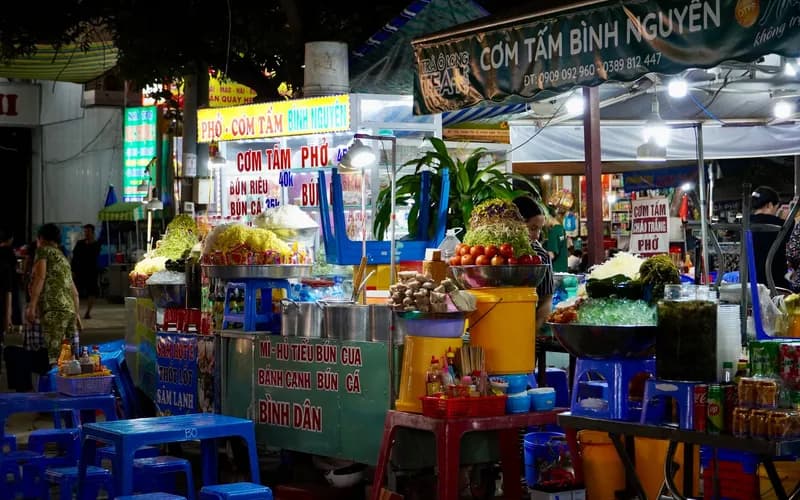
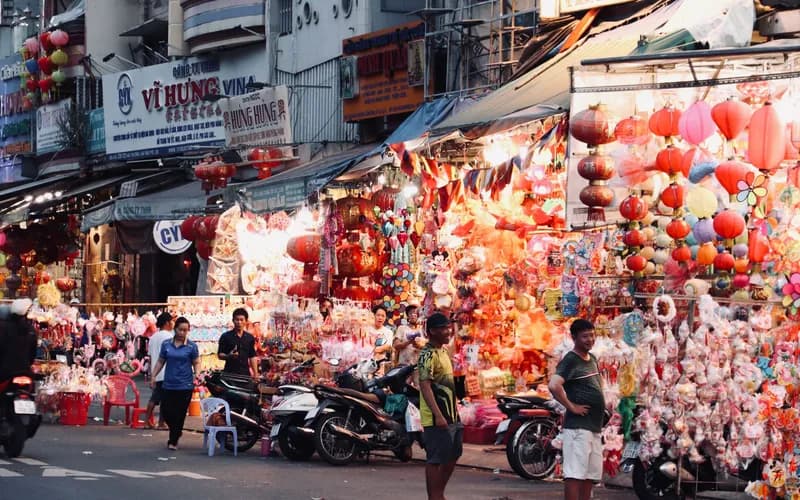
Before assuming the policy creates something new, it is worth being clear about what exists. Hanoi's Old Quarter weekend walking streets have run for years. Hoi An's lantern nights, timed to the full moon, are long established and now heavily attended. Da Nang has built a night identity around its bridges and riverfront. Ho Chi Minh City's Bui Vien is a self-organising phenomenon nobody planned. Night markets operate in nearly every provincial capital, and most of them exist for local shoppers rather than for visitors.
The best of Vietnam's night is not on any strategy map. It is the pavement seafood streets, the che stalls that open at nine, the bia hoi corners that empty by ten-thirty, the temple courtyards lit for a lunar festival. These are exactly the experiences described in our reporting on Vietnam's turn toward experience-first travel, and they need no policy support beyond being left alone.
Where This Helps Slow Travellers
Three genuine benefits are already visible.
- Extended museum and heritage hours. Where sites open into the evening, you get them at a fraction of daytime crowding and in far better light and temperature.
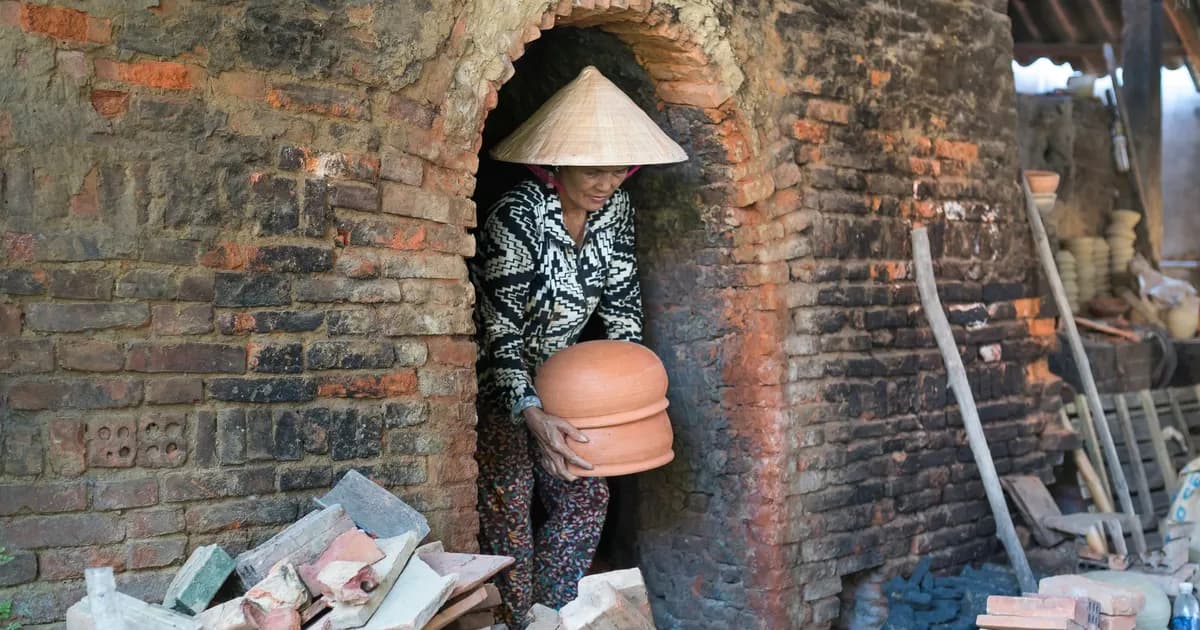
- Craft villages after work. Bat Trang's inclusion in the plan matters because a pottery village is a different place at seven in the evening, when kilns are cooling and the tour buses have gone, than at eleven in the morning.
- Better justification for staying longer. If a city gives you a reason to be there on a third evening, the argument for slowing your itinerary writes itself.
The last point is the most useful one. Slow travel and the night economy want the same thing from you, for entirely different reasons: more nights in fewer places.
Where It Cuts the Other Way
Be sceptical too. Manufactured night markets are a well-documented failure mode across Southeast Asia — the same souvenir stock, the same amplified music, the same rented stall frames, dropped into a location chosen by planners rather than by trade. Several Vietnamese cities have already built and quietly abandoned these.
Noise is the second problem, and it falls on residents rather than visitors. Extending trading hours in dense residential heritage quarters is not cost-free for the people who live above the shops. If you are choosing accommodation in Hoan Kiem or District 1 for 2027 and beyond, assume that "central" increasingly means "audible until late" and read reviews with that in mind.
Third, there is a real risk of the night becoming another checklist. A programmed evening of ticketed shows and illuminated bridges is not obviously better than an unstructured one spent on a plastic stool watching a street. Our slow travel charter exists partly as a defence against exactly this: filling time because a destination has made time fillable.
The Practical Side of Being Out Late
The logistics of the Vietnamese night are improving but uneven, and they are where most travellers get caught.
Urban rail helps in both major cities, but services stop earlier than European visitors expect — check last-train times rather than assuming, using our guide to riding Hanoi and Ho Chi Minh City's metro lines. Ride-hailing works reliably late in both cities, with surge pricing after big events.
Hanoi's phased restrictions on petrol motorbikes in the inner city add another variable to late-evening movement, particularly for travellers who had planned to ride themselves; the details are in our explainer on Hanoi's petrol motorbike ban. And payment at night is now overwhelmingly QR-based, which matters if you rely on cash after banks close.
How to Read a Night Zone Before You Commit
A short field test separates the real from the staged. Look at who is there: if more than half the customers are Vietnamese, and particularly if there are families and older people, the place is functioning normally. Look at the stock: if forty stalls sell the same twelve products, it was planned. Look at closing time: organically busy areas thin out gradually from around ten, while manufactured zones tend to run to a fixed schedule and empty all at once.
Look also at the food. A night market with a serious food section serving regional specialities is a market people actually use. One with novelty snacks and photograph-driven drinks is a market built for a target metric. The distinction is the same one we draw in our piece on Vietnam's Michelin moment and eating deeper.
What This Means for the Next Few Years
Expect a gradual, uneven rollout rather than a switch being flipped. Pilot licences will come first, in a handful of blocks, with extended hours applied to specific venues rather than whole districts. Expect some zones to succeed loudly and others to be abandoned without announcement. Expect heritage lighting projects to arrive faster than transport does, because they are cheaper.
For travellers, the strategic implication is straightforward: the value of a third and fourth night in a Vietnamese city is rising, and the value of a rushed two-night stop is falling. That is a rare case of official tourism policy and slow-travel instinct pointing in the same direction. It is worth taking advantage of before the night gets as crowded as the day already is.
What to Do Next
- Add a night to your two biggest city stops. Hanoi and Ho Chi Minh City both reward a third evening far more than they reward a third morning.
- Check evening opening hours for museums and heritage sites when you arrive, not before you book. Extended hours are being rolled out venue by venue and published locally.
- Build one deliberately unplanned evening into each city stay, with no ticket and no reservation.
- Choose accommodation one or two streets back from any designated night zone if you value sleep, and check recent reviews for noise.
- Set up QR payment before you need it after dark, and keep enough cash for stalls that still prefer notes.
- Confirm last metro times and have a ride-hailing app installed and funded before your first late evening out.
- If you want an itinerary built around evenings rather than around sights, start from our plan your journey page for Vietnam and say so explicitly at the briefing stage.
Frequently Asked Questions
What is Vietnam's night-time economy plan?
It is a set of city-level strategies to extend commercial, cultural and heritage activity into the evening. Hanoi's version, approved in 2026 and running to 2030, designates categories of night zones and targets 25 to 30 percent of visitor spending occurring after dark. Ho Chi Minh City is pursuing a similar goal through cultural industries.
Does this mean Vietnamese cities are becoming party destinations?
No. The emphasis is on heritage, culture, food, craft and performance rather than clubbing. Existing nightlife districts such as Bui Vien already operate without policy support. The change most travellers will notice is later opening at museums, craft villages and heritage sites.
Is the night safer or riskier for visitors?
Vietnam's major cities are generally safe late in the evening, with pickpocketing and traffic being the realistic risks rather than violence. The practical cautions are the same after dark as before: watch your bag on busy streets, be careful crossing roads, and use licensed ride-hailing rather than unmetered taxis.
Will night markets get more touristy?
Some will. Any zone created deliberately for visitor spending tends to converge on the same merchandise. The remedy is to prioritise markets with a real food section and a mostly local crowd, and to treat purpose-built night zones as optional rather than essential.
How does this affect quieter destinations?
Less than you might think in the short term. The plans are concentrated in Hanoi, Ho Chi Minh City and a handful of large tourism centres. Provincial towns will continue to have the kind of night they always had, which is often the better one.
Should I change when I book my trip because of this?
No. Nothing here is seasonal. What it should change is how long you stay in each place. Reallocating a night from a fourth destination to a third evening in your second destination is the practical response.
Are prices higher at night?
Sometimes, in designated zones and around ticketed events, and ride-hailing surges after large events end. Ordinary street food and neighbourhood restaurants are not meaningfully more expensive in the evening. If you are shopping seriously, check whether the retailer participates in the tourist refund scheme described in our guide to claiming Vietnam's VAT refund.