

In Vietnam, a cup of coffee is not a transaction. It is a seat, a stretch of time, and a small ritual you are invited to slow down for. The drink lands strong and sweet, the plastic stool is low, the free iced tea keeps coming, and nobody is waiting for you to leave. For a slow traveler, this is one of the country's most reliable pleasures: cheap, everywhere, and built entirely around lingering.
Vietnam is the world's second-largest coffee producer and the largest grower of robusta, the bold, high-caffeine bean that gives local coffee its dark punch. Coffee here is not a Western import sipped on the go. It is a daily social institution with its own tools, its own drinks, and its own unhurried pace. This guide is a practical how-to: what to order, how the phin filter works, where and how to sit, what things cost, and how to fold coffee stops into a slower, more grounded trip.
Why Vietnamese Coffee Tastes Different
The first sip surprises most first-timers. Vietnamese coffee is darker, thicker, and more bitter than the arabica most Westerners know, because it is overwhelmingly made from robusta. Robusta carries roughly twice the caffeine of arabica and a heavier, chocolatey, almost woody bitterness. That intensity is exactly why it pairs so well with sweetened condensed milk, the second half of the classic equation.
The heart of Vietnam's coffee country is the Central Highlands, centered on Buon Ma Thuot in Dak Lak province. Basalt soil, altitude between roughly 500 and 800 meters, and a reliable climate make it one of the best robusta-growing regions on earth. Buon Ma Thuot coffee even holds Geographical Indication status, the same kind of protected-origin label as Champagne or Parmigiano-Reggiano. French planters first brought coffee to the highlands in the early 1900s, and it has been woven into daily Vietnamese life ever since.
A newer wave matters too. Arabica now grows in cooler, higher pockets like Da Lat, and a specialty coffee scene has taken root in the cities. You will find third-wave cafes roasting single-origin beans and pulling careful pour-overs. Both worlds are worth exploring, but the soul of Vietnamese coffee remains the strong, sweet, phin-brewed cup on a street corner.
One request. Up to five tailored proposals.
Skip contacting agencies one by one — share your trip once and let up to five trusted Vietnam agencies come to you. Free, with no obligation.
Get my free quotesThe Phin: How Vietnamese Coffee Is Brewed
Almost every traditional cup starts with a phin, the small metal drip filter that sits on top of your glass. Watching it work is part of the pleasure. There is nothing to rush, and nothing you can do to speed it up.
Here is how a phin brews, so you know what you are looking at:
- Ground coffee, medium-fine, goes into the chamber
- A perforated press or gravity insert sits on top, tamped lightly
- A little hot water is added first to let the grounds bloom for around 45 seconds
- The chamber is topped up, and coffee drips slowly into the glass below over four to six minutes
That slow drip is the whole point. A phin cannot be hurried, which is why coffee here is never a grab-and-go affair. You order, you wait, you watch the drops fall, and by the time it is done you have already started to slow down. If you fall for it, a phin is one of the best souvenirs you can carry home, light, cheap, and endlessly useful.
The Drinks Worth Ordering
You could spend a whole trip working through the menu. These are the ones that define the culture and reward slow, curious drinking.
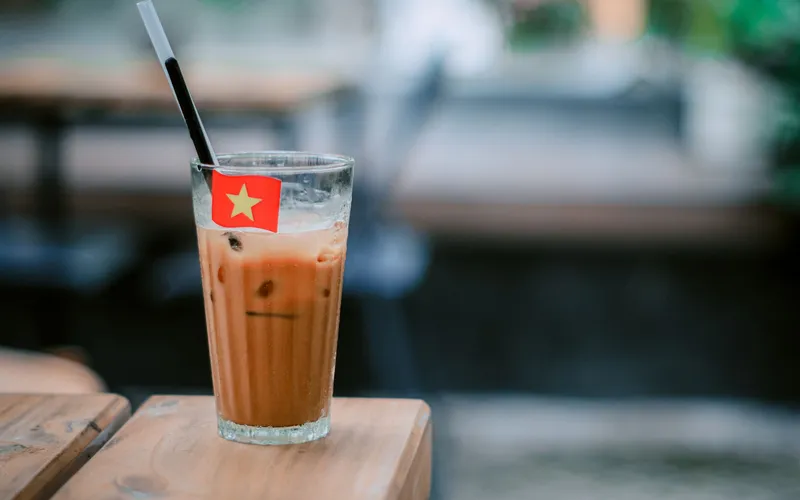
Ca phe sua da (iced milk coffee). The national default. Strong phin coffee dripped over a layer of sweetened condensed milk, stirred, then poured over ice. Sweet, powerful, and refreshing in the heat. Order "ca phe sua nong" if you want it hot instead.
Ca phe den (black coffee). Just phin coffee, no milk, served hot (nong) or iced (da). Bracingly bitter and the purest way to taste robusta.
Bac xiu. A gentler, milkier cousin from Saigon, made with more milk than coffee and often fresh milk alongside the condensed. If ca phe sua da feels too intense, start here.
Ca phe trung (egg coffee). A Hanoi invention from the 1940s, born of wartime milk shortages when a Giang Cafe founder whipped egg yolk into a rich, custardy cream over strong coffee. It tastes like drinkable tiramisu. Hanoi's Old Quarter is its spiritual home.
Ca phe muoi (salt coffee). Created in Hue around 2010, this adds a lightly salted cream that tempers the bitterness and lifts the sweetness. It has since spread nationwide and even gone viral abroad, but Hue remains the place to try it at the source.
Ca phe dua (coconut coffee). Strong coffee blended with coconut milk or cream and ice into something closer to a frozen dessert. Rich, cooling, and a favorite on hot afternoons.
Trying one signature drink in the city that made it famous, egg coffee in Hanoi, salt coffee in Hue, is a lovely, low-effort way to give a slow itinerary shape. It pairs naturally with the kind of unhurried, place-by-place travel we describe in our ultimate slow travel guide to Vietnam.
Get matched with up to 5 trusted Vietnam agencies
- Free
- No obligation
- Up to 5 agencies
Where and How to Sit
Vietnamese coffee has three broad settings, and each offers a different rhythm.
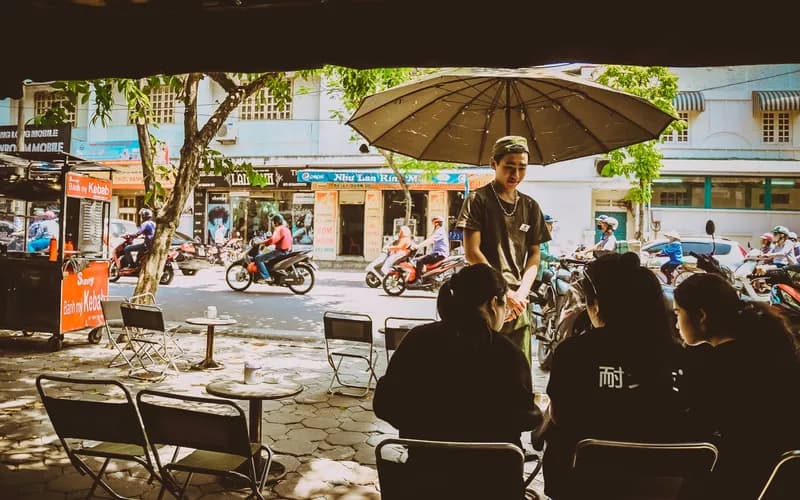
Sidewalk cafes (quan ca phe via he). The most authentic experience, and the most quintessentially Vietnamese. You perch on a tiny plastic stool on the pavement, often facing the street rather than a table, and watch the city move. This is people-watching as a national pastime.
Traditional shophouse cafes. Older, calmer indoor spaces, often with garden courtyards, ceiling fans, and regulars who have sat in the same chair for years. Ideal for a long, quiet morning.
Specialty and third-wave cafes. The modern city scene, with careful roasting, air conditioning, wifi, and single-origin menus. Good for a slower work session or escaping the midday heat.
A few points of etiquette make you a better guest. On a sidewalk, remember you are occupying public pavement, so keep your feet and bag tucked in and be ready to shift for a passing scooter or vendor. The complimentary iced tea (tra da) that arrives with your coffee is a genuine gesture of hospitality, and refills are usually free. Above all, there is no pressure to leave. The price of your drink buys you time, so use it.
What It Costs
Coffee is one of the great bargains of travel in Vietnam, which makes it easy to build several stops into a single day without a second thought.
- Street and sidewalk coffee: roughly 15,000 to 30,000 dong
- Ca phe sua da at a typical cafe: around 25,000 to 45,000 dong
- Salt or coconut coffee: roughly 45,000 to 75,000 dong
- Specialty and third-wave cafes: 50,000 to 120,000 dong
At the street end, that is barely more than a dollar for a drink and an hour of shade. Cash is still king at the smallest stalls, though city cafes increasingly take QR payments. For a fuller picture of paying, cards, and connectivity on the ground, see our practical guide to money, cards, and connectivity.
Buying Beans and a Phin to Take Home
Coffee makes an honest, useful souvenir, far better than mass-produced trinkets. A bag of beans and a cheap aluminum phin let you keep the ritual going long after you fly home.
A few practical tips for buying well:
- Look for beans from named regions, especially Buon Ma Thuot and Dak Lak for robusta, or Da Lat and Cau Dat for arabica
- Decide between whole beans (fresher, needs a grinder) and pre-ground for a phin (medium-fine)
- Buy from specialty roasters or reputable shops if you want traceable, single-origin coffee rather than blends bulked out with fillers
- Pick up a stainless-steel or aluminum phin; they are light, inexpensive, and pack flat
- Sweetened condensed milk travels well too if you want to recreate ca phe sua da at home
If you would rather meet the source, the Central Highlands around Buon Ma Thuot offer plantation visits and roastery tours, a genuinely off-thesis-free way to understand where your cup comes from. It sits well alongside the emerging, less-trodden regions we cover in our piece on Vietnam's emerging regions.
Using Coffee to Slow Your Trip Down
This is the part that matters most for a slow traveler. Coffee in Vietnam is not fuel to keep moving faster. It is a built-in excuse to stop.
Treat a morning coffee as an anchor rather than a pit stop. Arrive without a plan, take the low stool, order a ca phe sua da, and give yourself an hour to simply watch a neighborhood wake up, the market carts, the school runs, the old men playing chess. You will learn more about a place from one slow hour on a stool than from a rushed loop of its landmarks. Coffee stops naturally rein in the temptation to over-schedule, an easy trap we unpack in our guide to the 10 mistakes slow travelers make.
What to Do Next
- Try ca phe sua da on your first morning to calibrate your palate to robusta's strength and sweetness.
- Sit on a sidewalk stool at least once and give yourself a full unhurried hour, no phone, just the street.
- Order one city signature at its source: egg coffee in Hanoi, salt coffee in Hue.
- Learn to read a phin brewing so you know when your cup is ready, roughly four to six minutes.
- Buy a phin and a bag of regional beans before you leave, and note the roaster so you can reorder.
- Build one deliberate coffee anchor into each travel day to keep your pace slow and your attention open.
Frequently Asked Questions
Is Vietnamese coffee stronger than what I am used to?
Usually yes. It is made mostly from robusta, which has around twice the caffeine of arabica and a heavier, more bitter flavor. Start with a milk-based drink like ca phe sua da or the gentler bac xiu if you are sensitive to caffeine or strong bitterness.
What is the difference between ca phe sua da and bac xiu?
Both mix coffee with milk, but the ratio flips. Ca phe sua da is coffee-forward with sweetened condensed milk, while bac xiu is milkier and gentler, made with more milk than coffee and often fresh milk alongside the condensed. Bac xiu is the softer, sweeter option.
Why is the tea free?
Complimentary iced tea (tra da) is a standard gesture of hospitality that arrives with your coffee, and refills are usually free. It also cools your palate between sips of strong, sweet coffee. Accept it as part of the ritual.
Do I need to tip or leave quickly?
Tipping is not expected at everyday cafes, and there is no pressure to leave. In Vietnamese coffee culture the price of your drink buys you time, so lingering is normal and even encouraged. Just be tidy on a shared sidewalk.
Where should I try egg coffee and salt coffee?
Egg coffee is a Hanoi original, best sampled in the Old Quarter where it was invented in the 1940s. Salt coffee comes from Hue, created there around 2010, so the imperial city is the place to drink it at the source.
Can I bring coffee home easily?
Yes. Ground coffee and beans pack well, and a light aluminum or stainless phin costs little and travels flat. Look for beans from named regions like Buon Ma Thuot for the best sense of where your cup comes from.
Is specialty coffee worth seeking out, or should I stick to street coffee?
Both are worth your time. Street and sidewalk coffee give you the authentic social ritual at almost no cost, while third-wave cafes in the cities offer carefully roasted single-origin beans, air conditioning, and a calm place to work. A slow trip has room for both.