How to Explore Cambodia by Bicycle: Routes, Rentals and Riding Safely
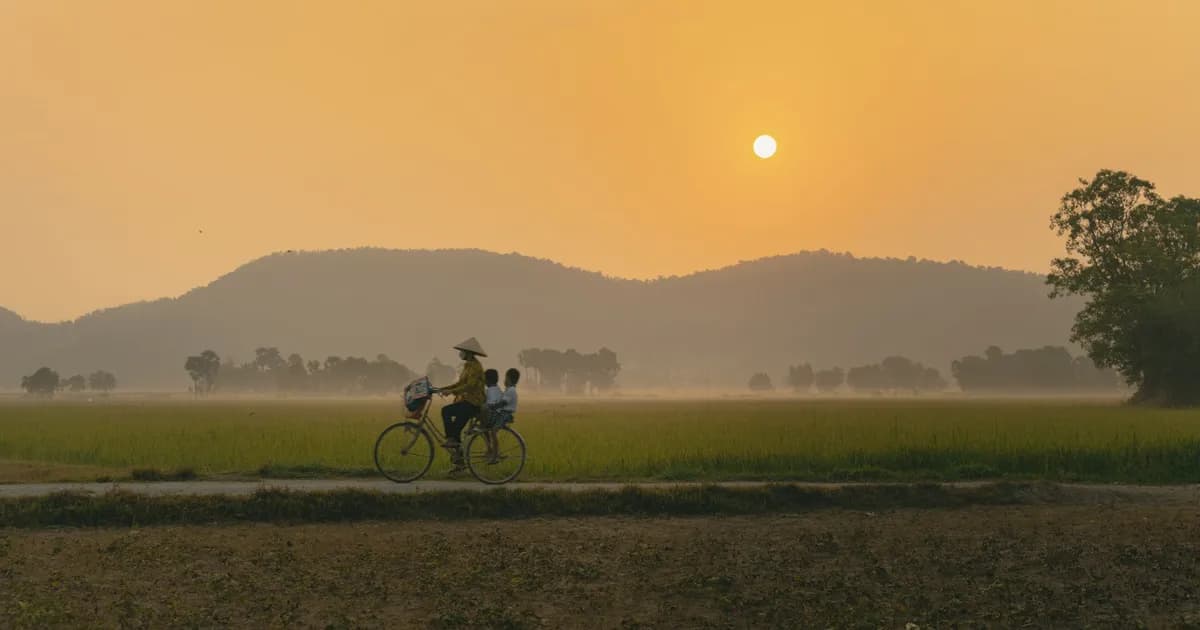
There is a particular sound to rural Cambodia at seven in the morning: children calling "hello" from a wooden house on stilts, a moto engine fading into the distance, the creak of your own pedals on a red-dirt lane between rice paddies. You only really hear it from a bicycle. At cycling speed you notice the palm-sugar stills, the monks collecting alms, the ducks being herded along a canal. You also stop more, talk more and spend more in small places.
Cambodia is well suited to the bicycle. Much of the country is flat, distances between villages are short, and the best sights, from Angkor to the Mekong islands, are spread out in ways that suit a slow wheel. This guide explains where to ride, how to rent or bring a bike, how to deal with heat and traffic, and how to build cycling into a slow trip without turning it into an endurance event.
Why the Bicycle Suits Cambodia
Three things make Cambodia a natural cycling destination. First, the terrain: the central plains, the Tonle Sap basin and the Mekong corridor are almost entirely flat, so you do not need to be especially fit to cover 30 to 50 kilometres in a morning. Second, the network of small roads and dirt tracks: away from the national highways, lanes run between villages, pagodas and fields, carrying little more than motorbikes and cattle. Third, the scale of the sights: Angkor's temples, Battambang's countryside and the islands of the Mekong are all a few kilometres apart, perfect for a bike and awkward by car.
There is also a softer reason. Cambodians are used to bicycles; many rural families still rely on them. A foreigner on a bike is more approachable than one inside a minivan, and the exchange that follows, a question about where you are going, an offer of sugar cane juice, is often the highlight of the day.
One request. Up to five tailored proposals.
Skip contacting agencies one by one — share your trip once and let up to five trusted Cambodia agencies come to you. Free, with no obligation.
Get my free quotesAngkor by Bike: The Classic First Ride
For many travellers, the first Cambodian ride is around the temples of Angkor, and it is a good one. The terrain is flat, shaded in places, and the distances between the major temples suit cycling well: the classic Small and Grand Circuits together cover roughly 40 kilometres. The APSARA National Authority has also built a dedicated bicycle track of around 23 kilometres that winds through the park away from the main roads, starting near the old checkpoint on the road from Siem Reap and running past the west side of Angkor Wat.
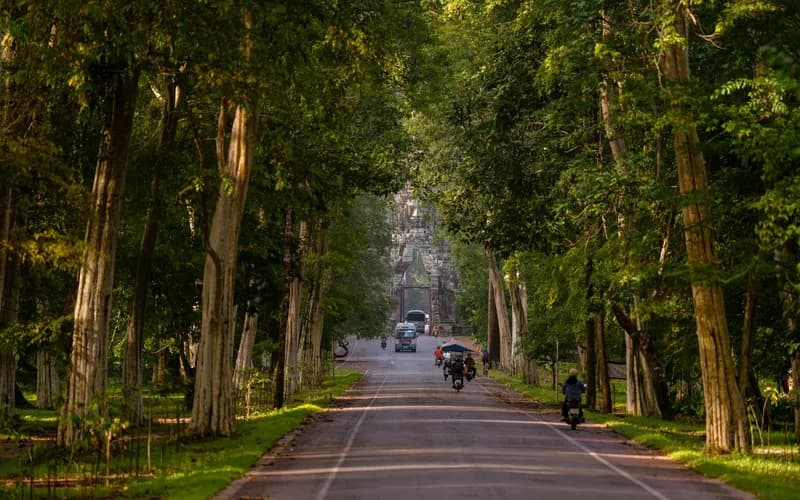
You still need a valid Angkor Pass to enter the park by bike, and checkpoints do inspect them. A sensible approach is to split the temples over two or three days rather than attempting both circuits in one hot day, riding early to the big-name temples and saving the afternoon for shade and rest. If you are planning your days around sunrise, crowds and temple order, our guide on how to plan your days at Angkor pairs well with a cycling itinerary.
In Siem Reap, many guesthouses rent basic bicycles for a few dollars a day, and specialist shops offer better-maintained mountain bikes, hybrids and e-bikes at higher prices, often with hotel delivery. E-bikes are a useful compromise if you want to cover more ground in the heat, but check the battery range and where you can recharge before setting off to the outer temples.
Battambang's Countryside Loops
If Angkor is the classic, Battambang is the connoisseur's choice. Cambodia's second city sits among some of the country's most beautiful farmland, and within minutes of leaving town you are on lanes lined with rice paddies, fruit orchards and small family workshops making rice paper, fish paste or rice wine.
Popular loops take in the hilltop temple of Wat Ek Phnom to the north, the village roads along the Sangker River, and the limestone hill of Phnom Sampeau to the south-west, although that last ride runs partly along a busier road. Local social enterprises and cycling operators run half-day and full-day rides that stop at family workshops and introduce you to people you would never meet otherwise; they are also a good source of well-maintained rental bikes if you prefer to ride alone. Our portrait of Battambang and the countryside around it is a good starting point for planning a few slow days there.
Get matched with up to 5 trusted Cambodia agencies
- Free
- No obligation
- Up to 5 agencies
The Mekong by Bicycle: Kratie, Koh Trong and Beyond
The Mekong in north-east Cambodia offers some of the gentlest and most memorable cycling in the region. From Kratie, a short ferry crosses to Koh Trong, a large river island where bicycles are the natural way to get around. A loop of the island takes a couple of hours at an easy pace, past stilt houses, pomelo orchards and a small floating village, with the river visible almost all the way round.
North of Kratie, the riverside road towards Kampi, where Irrawaddy dolphins can be seen, is a pleasant ride of around 15 kilometres. More ambitious riders can follow sections of the Mekong Discovery Trail, a network of riverside routes developed to spread tourism income into villages between Kratie and Stung Treng, a distance usually quoted at around 180 kilometres. Homestays along the way make it possible to ride it in stages over several days. For background on the town and its dolphins, see our guide to Kratie and the slow river life of the Mekong.
Kampot, Kep and the Southern Coast
The south offers a different flavour: salt flats, pepper farms, limestone karsts and the sea. From Kampot, quiet roads lead east towards the salt fields and on to the crab market at Kep, roughly 25 kilometres away, with side trips to pepper plantations and cave pagodas along the way. The route is mostly flat, though the heat and glare off the salt pans can be intense, so start early.
Near Phnom Penh, the Mekong islands just upstream of the capital, such as Koh Dach with its silk-weaving villages, make a pleasant half-day escape from city traffic. Access arrangements have changed over the years, so ask locally about the current ferry or road connection before you set out.
Renting, Bringing or Joining a Tour
You have three main options, and many travellers combine them.
- Renting locally. Basic city bikes cost a few dollars a day from guesthouses in Siem Reap, Battambang, Kratie and Kampot. Better mountain bikes and hybrids from specialist shops cost more, but are worth it for longer rides. Check brakes, tyres and gears, ask for a lock and a helmet, and photograph the bike before you leave.
- Bringing your own bike. Touring cyclists do cross Cambodia with their own bikes. Most airlines accept boxed bicycles as special baggage, and buses and minivans will often carry a bike in the hold for a small extra fee, but confirm when booking. Spare parts for high-end road bikes are hard to find outside Phnom Penh and Siem Reap.
- Joining a guided ride. Specialist operators run day rides and multi-day tours with support vehicles, local guides and pre-arranged accommodation. Guided multi-day tours typically cost significantly more than independent travel, but remove the logistics and put you in villages you would struggle to find alone.
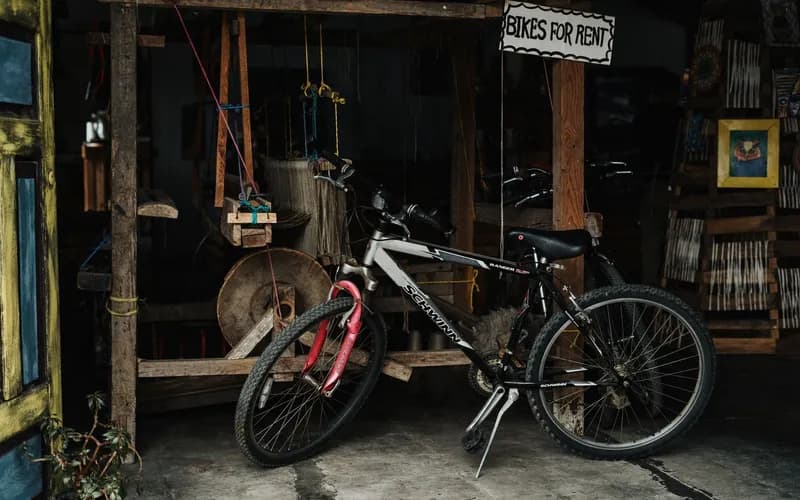
A good middle path for slow travellers is to base yourself in one town for several nights, rent a quality bike, and ride different loops each morning, perhaps adding one guided day to meet families and workshops through a local operator.
Staying Safe on Cambodian Roads
Road traffic is the biggest physical risk for any visitor to Cambodia, and cyclists are among the most exposed road users. That does not mean you should not ride, but it does mean you should ride deliberately.
- Wear a helmet, even if locals often do not, and bring your own if you are particular about fit.
- Avoid national highways where possible. Trucks, buses and fast cars use them, and the hard shoulder is often shared with motorbikes going the wrong way.
- Traffic drives on the right, but expect vehicles from every direction, particularly at junctions. Ride predictably, signal clearly and make eye contact.
- Do not ride after dark. Many vehicles have weak or no lights, and potholes and livestock are hard to see.
- Watch for dogs in villages. Most are noisy rather than dangerous; slowing down, dismounting and walking past calmly usually works better than racing away.
- Carry a basic repair kit, a spare inner tube and a pump. Village mechanics fixing motorbikes can often patch a bicycle tyre too.
Make sure your travel insurance covers cycling, and check the terms if you plan a multi-day tour or ride off-road.
Heat, Seasons and Health
The main enemy of the cyclist in Cambodia is not hills but heat. Temperatures regularly exceed 32 degrees Celsius, and humidity makes it feel hotter. Ride from dawn until around 10am, rest through the middle of the day, and resume only in the late afternoon if at all. Drink more than you think you need, add electrolytes, and stop at the first sign of dizziness or headache.
The most comfortable months for cycling are roughly November to February, when the air is drier and cooler. March to May is extremely hot. The rainy season, from about June to October, brings lush green landscapes and fewer visitors, but also muddy tracks, sudden downpours and flooded roads in low-lying areas. Our guide on how to stay healthy in Cambodia in the heat and the rain covers hydration, mosquitoes and medical care in more depth.
Sun protection matters as much as water: long, light sleeves, a buff or neck cover, sunglasses and high-factor sunscreen. Insect repellent is essential at dawn and dusk.
Riding Etiquette and Responsible Cycling
Cycling brings you into close contact with rural life, and a few simple habits keep that contact positive. Dress modestly when stopping at pagodas and villages, carrying a light layer to cover shoulders and knees. Ask before photographing people, and accept a "no" gracefully. When children run alongside asking for money or sweets, a smile and a wave is better than handing things out, which encourages children to leave school and wait by the road.
Spend money in the places you pass through: a coconut from a roadside stall, lunch at a village noodle shop, a night in a homestay. These small transactions are how cycling tourism benefits communities. And leave nothing behind: carry your water bottles and wrappers until you find a proper bin, because waste collection in rural areas is limited. These principles are at the heart of our slow travel charter, and they matter more on two wheels than anywhere else.
What to Do Next
- Decide on your cycling style: a few relaxed day rides from comfortable bases, or a multi-day tour with luggage.
- Plan your trip for November to February if you want the most comfortable riding conditions.
- Choose two or three bases, such as Siem Reap, Battambang and Kratie, and allow at least three nights in each.
- Pack a helmet, padded shorts, sun protection, electrolytes and a basic repair kit.
- Rent a quality bike from a specialist shop on day one and ride a short test loop before committing to longer routes.
- Book at least one guided ride with a local operator to reach family workshops and villages you would not find alone.
Frequently Asked Questions
Is Cambodia a good country for cycling?
Yes. Much of Cambodia is flat, the countryside is crossed by quiet lanes between villages, and major sights such as Angkor, Battambang's farmland and the Mekong islands are spread over distances that suit a bicycle. The main challenges are heat and traffic on national roads.
Can I cycle around Angkor?
Yes. Cycling is one of the best ways to see the temples. The Small and Grand Circuits together cover roughly 40 kilometres, and a dedicated bicycle track of around 23 kilometres runs through the park. You still need a valid Angkor Pass, and it is best to split the temples over several days.
How much does it cost to rent a bicycle in Cambodia?
Basic bicycles from guesthouses usually cost a few dollars a day. Better mountain bikes, hybrids and e-bikes from specialist shops cost more. Guided day rides and multi-day tours are priced separately and include guides, support and often meals.
What is the best time of year to cycle in Cambodia?
November to February offers the most comfortable conditions, with drier air and cooler mornings. March to May is extremely hot, and the rainy season from about June to October brings green scenery but also mud, downpours and flooded roads.
Is it safe to cycle on Cambodian roads?
It is manageable with care. Avoid national highways where possible, wear a helmet, never ride after dark, and stay alert at junctions. Rural lanes and island roads are generally much quieter and more pleasant than main roads.
Can I bring my own bicycle to Cambodia?
Yes. Many touring cyclists do. Airlines usually accept boxed bikes as special baggage, and buses often carry bikes in the hold for a small fee, but confirm in advance. Bring spare parts for high-end bikes, as they are hard to find outside the main cities.