Takeo and the Funan Heartland: Angkor Borei, Phnom Da and Cambodia's Oldest Canals
Long before anyone raised a stone at Angkor, people in the flat, flood-prone south of what is now Cambodia were digging canals, trading with India and Rome, and carving some of the finest sculpture in Southeast Asia. That world was Funan, and its heartland lies in Takeo, a quiet rice-growing province barely two hours from Phnom Penh. Most visitors never come. Those who do find a straight, ancient waterway, a hill temple rising from the paddies, and a provincial town where nobody is trying to sell you anything.
This is not a destination that dazzles on arrival. Takeo rewards patience: an early start, a slow boat, an afternoon with nothing planned. If you have already walked the temples of Siem Reap and want to understand where Khmer civilisation came from, this is the place to spend two or three unhurried days.
Why Takeo Matters: The Funan Story in a Rice-Field Province
Chinese envoys of the third century described a kingdom they called Funan, centred on the lower Mekong and the coast of the Gulf of Thailand. Archaeologists now link it to a network of settlements stretching from Oc Eo, in today's Mekong Delta in Vietnam, to Angkor Borei in southern Takeo. Between them ran canals, some of them dead straight for tens of kilometres, cut across what was then a vast seasonal marsh.
Excavations at Angkor Borei over the past three decades have pushed the story of settlement there back to the last centuries before the common era. Brick foundations, ceramics, beads and inscriptions show a sizeable walled town that traded far beyond the region. When power later shifted north, first to the Chenla kingdoms and eventually to Angkor, the south kept its canals, its rice and its temples, but slipped out of the spotlight.
That shift is exactly why Takeo feels the way it does today. There is no grand monument to anchor mass tourism, no ticketing complex, no ring of hotels. Instead there is a landscape that still works much as it did: water managed for rice, boats used for transport, and hilltop sanctuaries that locals continue to visit as places of worship rather than as sights. If you want to see how the pre-Angkorian story continues further north, our piece on Kampong Thom and the brick towers of Sambor Prei Kuk makes a natural companion.
One request. Up to five tailored proposals.
Skip contacting agencies one by one — share your trip once and let up to five trusted Cambodia agencies come to you. Free, with no obligation.
Get my free quotesGetting There and Where to Base Yourself
Takeo town sits roughly 80 kilometres south of Phnom Penh along National Road 2. By car or minivan the journey usually takes between one and a half and two hours, depending on traffic leaving the capital. Buses and shared minivans leave Phnom Penh several times a day and typically cost a few dollars; a private car with driver for the day runs in the region of USD 30 to 40 and lets you stop at Tonle Bati and Phnom Chisor on the way.
It is entirely possible to see Angkor Borei and Phnom Da as a long day trip from the capital, and many people do. The slow-travel case for staying overnight is strong, though. The best boat light is early in the morning, the town is at its most pleasant around dusk by the lake, and you avoid the return drive in afternoon heat.
Accommodation in Takeo is simple. Expect a handful of guesthouses and small hotels with air-conditioned rooms, generally in the USD 10 to 40 range, many of which do not appear on booking platforms. Arriving mid-week without a reservation is usually fine; weekends and Khmer holidays bring domestic visitors and it is worth phoning ahead. If you enjoy staying with families, ask your guesthouse or boat operator about village homestays near Phnom Da, and read our guide on how Cambodian homestays work and what to expect before you commit.
The Canal Journey to Angkor Borei
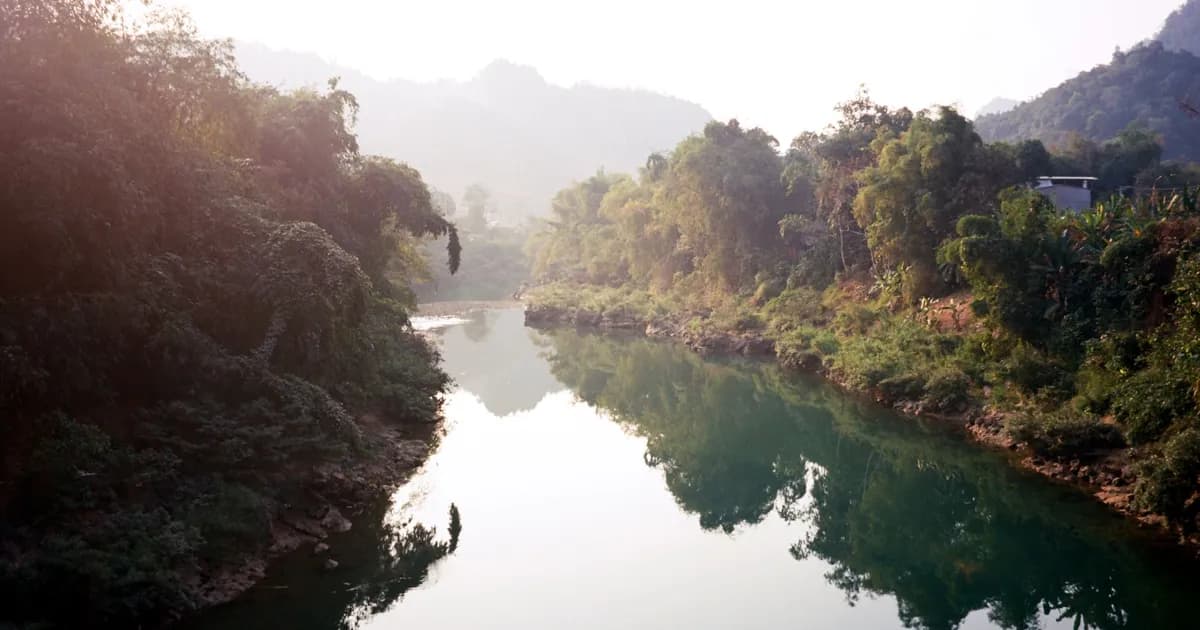
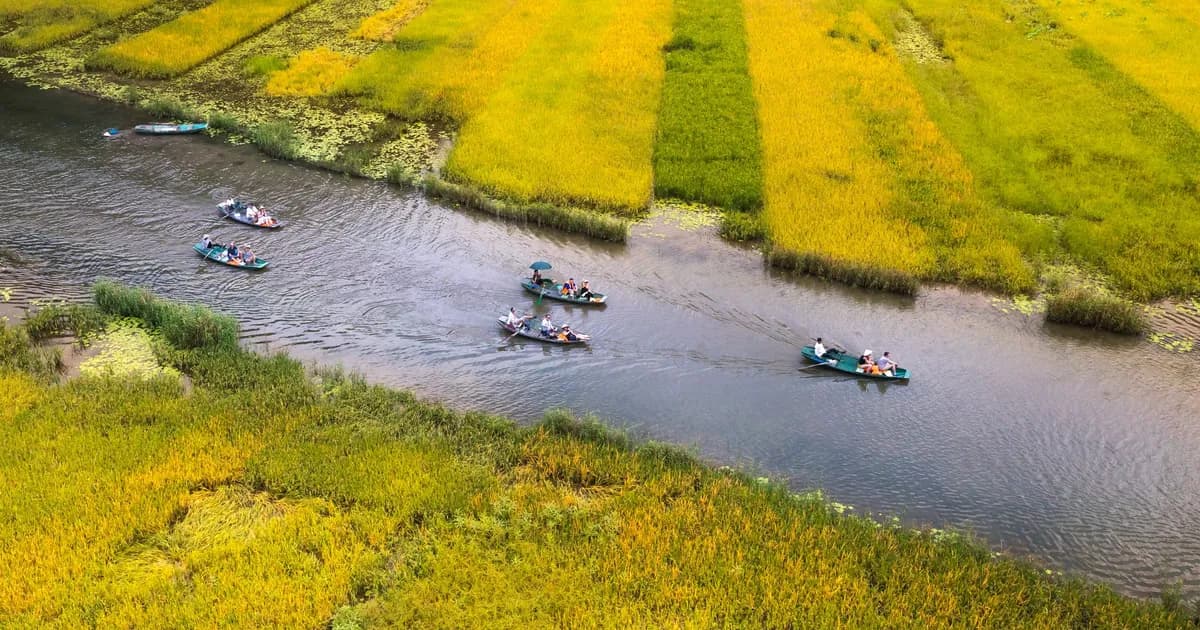
The heart of any visit is the boat trip east from Takeo town. Small open speedboats leave from the waterfront on the eastern side of town, and the channel they follow runs almost perfectly straight towards the horizon. It is a canal, not a river, and it is widely considered to follow the line of a Funan-era waterway. Sitting low in the boat, with egrets lifting off the paddies and fishing platforms sliding past, it is not hard to imagine cargo moving along the same line nearly two thousand years ago.
Boats generally take up to four passengers and are hired as a whole. Recent reports put the price at roughly USD 30 to 40 per boat for the return trip combining Angkor Borei and Phnom Da, but fuel costs and season move the figure, so agree the route, the stops and the total before you set off. In high water the outward run takes about 45 minutes to an hour; in the dry season, when the boat has to pick its way along a shallower channel, allow closer to an hour and a half. Many boats have no roof, and life jackets are not always provided. Bring a hat, sunscreen, water and a light rain layer, and ask about life jackets before you board.
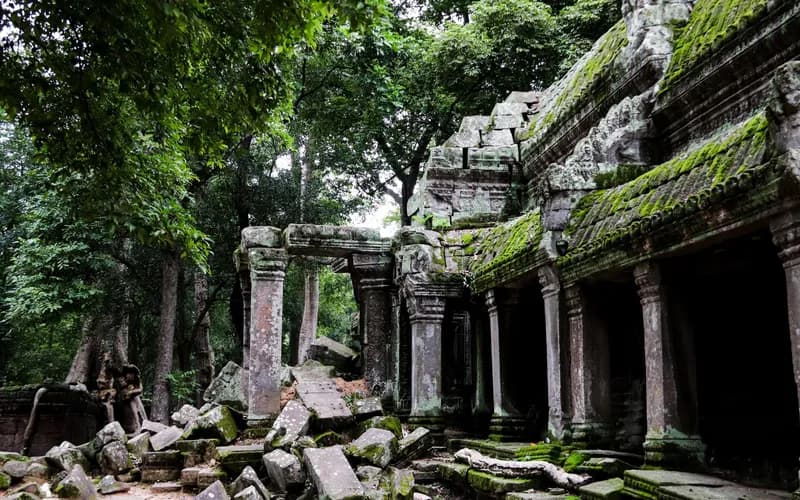
At Angkor Borei itself, the small museum is the main stop. Its collection of pre-Angkorian sculpture, pottery and excavated objects is modest in size but significant in age, and the entry fee is a few dollars at most. Around the town you can still trace sections of the old earthen ramparts and moat. Do not expect dramatic ruins: the value here is in context, in standing on the site of one of mainland Southeast Asia's earliest urban centres and seeing how ordinary it looks today.
Get matched with up to 5 trusted Cambodia agencies
- Free
- No obligation
- Up to 5 agencies
Phnom Da and Asram Maha Rosei: Temples on the Floodplain
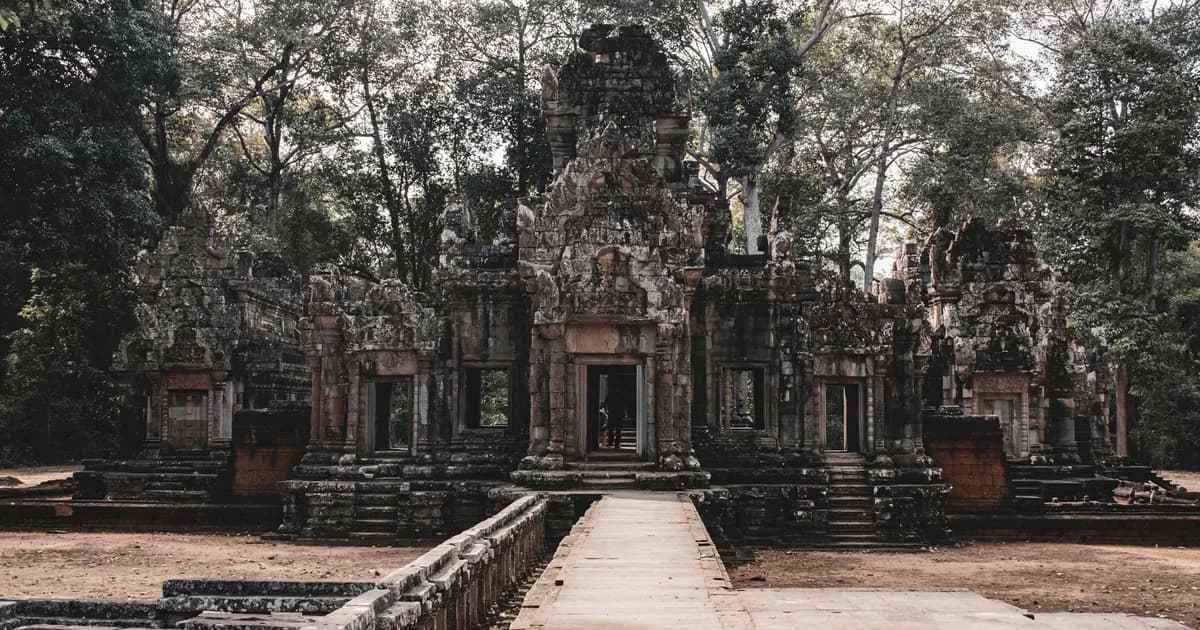
A short hop from Angkor Borei, Phnom Da rises abruptly out of the flat land. On its summit stands a tall brick-and-laterite tower, much restored and rebuilt over the centuries on a sanctuary whose sculptures belong to around the sixth century. The climb involves a few hundred steps and rough rock in places; take it slowly in the heat. From the top, the view across the floodplain is the clearest way to understand Funan: water, rice, canals, and a few low hills acting as islands.
The sculptures found here gave their name to an entire artistic style. Several of the most celebrated pieces, including a monumental eight-armed Vishnu, are now displayed in the National Museum of Cambodia in Phnom Penh. Seeing them there before or after your trip adds depth to both visits, and fits well into a day spent exploring Phnom Penh at walking pace.
Just below the summit, on the slope of the neighbouring outcrop, sits Asram Maha Rosei, a small stone sanctuary generally dated to the seventh century. It is unlike almost anything else in Cambodia: a compact cella wrapped in an inner walkway, built of carefully fitted stone blocks, with a design that scholars compare to temples further west in the Indian world. It is a quiet, slightly overgrown place, and a good spot to sit for a few minutes before the boat ride back. A small admission fee, historically around USD 2, is collected at Phnom Da.
Beyond the Boat: Phnom Chisor, Tonle Bati and Neang Khmau
Takeo's other sights line up conveniently along the road from Phnom Penh, which is why a private driver on the way down makes sense.
- Tonle Bati, about 35 kilometres from the capital, pairs a lakeside picnic area with two Angkorian-period temples, Ta Prohm of Tonle Bati and the smaller Yeay Peau. On weekends the lake fills with Phnom Penh families renting bamboo huts over the water; on a weekday morning the temples are nearly empty.
- Phnom Chisor is an eleventh-century hilltop temple reached by several hundred steps. The galleries are partly ruined, the monks' presence is real, and the view south over the plain towards Takeo is one of the best in the region. Go early, before the heat builds.
- Prasat Neang Khmau, the "Temple of the Black Lady", is a small brick sanctuary near the main road with a local legend attached and faint traces of old paintwork inside. It is a ten-minute stop, but it rounds out the picture of how many layers of history sit in this province.
- Phnom Tamao Wildlife Rescue Centre, run by the Forestry Administration with conservation partners, houses animals rescued from the wildlife trade. Choose a visit that supports the rescue work rather than one sold as an animal encounter.
Seasons, Water and the Best Time to Go
Takeo is a landscape defined by water, so the season shapes your trip more than in most parts of Cambodia. From roughly August to November the floodplain can become a single sheet of water, the canal journey is fast and spectacular, and Phnom Da genuinely looks like an island. This is also the heart of the rainy season, so expect afternoon storms, muddy village tracks and the occasional delay.
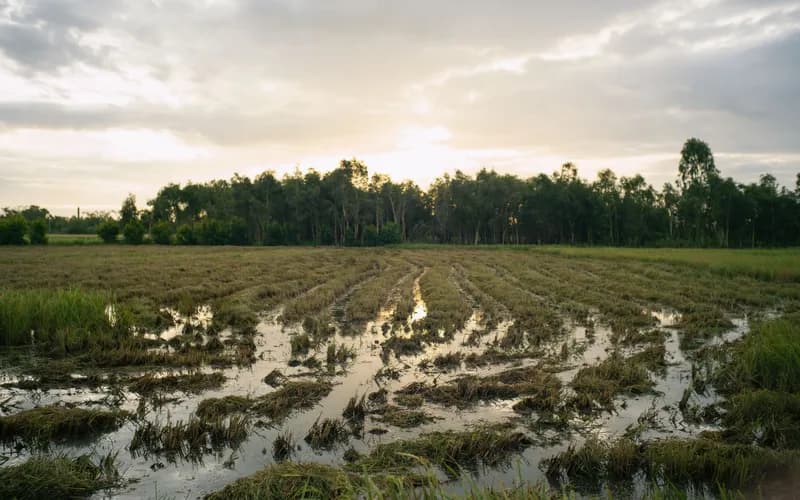
From December to February the water recedes, the air is at its most comfortable and the paddies turn from green to gold around harvest. Boat trips still run, but slower. March to May is the hottest period: the landscape is dusty, the canal is at its lowest, and climbing Phnom Da or Phnom Chisor at midday is a genuine test. If you come then, start at dawn and plan a long lunch in the shade.
Slow Days in Takeo Town
Takeo town itself is a working provincial capital built around a broad lake and the canal waterfront. It is pleasant rather than pretty. Mornings start at the central market, where river fish, palm sugar and fresh vegetables tell you more about the local economy than any museum. Afternoons are for the lakefront promenade, where families gather as the heat fades and food stalls set up for the evening.
Eating is straightforward and inexpensive: rice plates, noodle soups and grilled fish at the market for a dollar or two, a few simple riverside restaurants serving amok and lok lak, and iced coffee almost anywhere. English is limited, so a few words of Khmer, a translation app and a relaxed attitude go a long way. Cycling is an easy way to explore the flat countryside around town; ask your guesthouse about bicycle hire and keep to quieter roads away from National Road 2.
Honest Caveats
Takeo is not for everyone, and it is better to know that before you go.
- The ruins are modest. If you expect Angkor-scale monuments, you will be disappointed. The appeal is historical depth and landscape, not scale.
- Infrastructure is basic. Accommodation, signage and English-language information are limited. Card payments are rare outside a few hotels; carry US dollars and riel, and have a KHQR-enabled payment app if you use one.
- Boats are simple. Open boats, strong sun and variable safety equipment mean you should prepare properly and speak up if something feels wrong.
- The landscape is changing. Takeo lies on the route of the Funan Techo Canal, a major waterway project linking the Mekong to the coast. Our analysis of what the Funan Techo Canal means for travellers explains where works are visible and how they may affect the countryside.
Combining Takeo with the Rest of Your Route
Takeo fits neatly into a southern Cambodia itinerary. From Phnom Penh, the logical sequence is Tonle Bati and Phnom Chisor on the way down, one or two nights in Takeo for the canal and Phnom Da, and then onward by road towards Kampot and Kep, roughly two to three hours to the south-west depending on the route. That turns a day trip into a genuine journey through the rural south, and it avoids doubling back to the capital.
Travellers heading to or from Vietnam's Mekong Delta can also use Takeo as a stepping stone: the Phnom Den crossing lies to the south of the province and connects towards Chau Doc and the Oc Eo archaeological area on the Vietnamese side, which completes the Funan story. Check the current status of land crossings and e-visa acceptance before you plan around it, because rules at smaller border gates change more often than at the major ones.
For travellers who like context, a sensible rhythm is: National Museum in Phnom Penh first, to see the Phnom Da sculptures; Takeo second, to see where they came from; and the Angkor temples later, to see what the story became. Seen in that order, Cambodia's history reads like a single long thread rather than a list of monuments.
What to Do Next
- Block at least one night in Takeo town rather than attempting everything as a day trip, and aim for a weekday.
- Visit the National Museum in Phnom Penh before you leave the capital, and look for the Phnom Da gallery.
- Arrange a private car from Phnom Penh that stops at Tonle Bati and Phnom Chisor on the way south.
- Book your canal boat through your guesthouse the evening before, agree the price and stops, and plan to leave by 7am.
- Pack sun protection, water, cash in small notes and a light rain layer for the boat.
- Continue by road to Kampot or Kep rather than returning to the capital, and use our Cambodia journey planner to shape the rest of the route.
Frequently Asked Questions
Is Takeo worth visiting if I have already seen Angkor?
Yes, if you are interested in history and landscape rather than monumental scale. Takeo shows you the Funan period that came before Angkor, the canal system that made it possible, and a rural Cambodia that sees very few foreign visitors.
How do I get from Phnom Penh to Takeo?
Takeo town is about 80 kilometres south of Phnom Penh on National Road 2. Buses and minivans take roughly one and a half to two hours and cost a few dollars; a private car for the day costs around USD 30 to 40 and can include Tonle Bati and Phnom Chisor on the way.
How much does the boat to Angkor Borei and Phnom Da cost?
Small boats taking up to four passengers are usually hired as a whole for roughly USD 30 to 40 for the return trip covering both sites. Prices vary with fuel and season, so confirm the total, the stops and the waiting time before departure.
When is the best time to visit Takeo?
For the most dramatic canal journey, come between August and November when the floodplain is under water, accepting rain and some mud. For comfortable temperatures and golden harvest landscapes, December to February is ideal. March to May is very hot.
Can I visit Takeo as a day trip?
You can, and many people do, but it is a long day with a lot of driving. Staying one night lets you take the boat early in the morning, enjoy the lakefront in the evening and continue south towards Kampot and Kep without doubling back.
Where are the famous Phnom Da sculptures now?
Several of the most important pieces, including a large eight-armed Vishnu, are displayed at the National Museum of Cambodia in Phnom Penh. Seeing them there helps you understand what once stood on the hill you visit in Takeo.
Keep reading
More from the ground · Cambodia