Kampong Chhnang: Cambodia's Pottery Port and the Slow Tonle Sap Shore
Most travellers see Kampong Chhnang from a bus window. The road from Phnom Penh to Battambang runs straight through it, the driver pulls over for ten minutes, and the town slides past as a blur of fruit stalls and unfinished concrete. That is a pity, because this provincial capital on the banks of the Tonle Sap River is one of the few places in Cambodia where a craft, a waterway and a working community still sit within a few kilometres of each other. Give it a night and the pace of the country changes around you.
This is not a place of headline monuments. It is a place of clay, water and routine, and it rewards the kind of traveller who is happy to watch someone else work. Below is an honest look at what is here, what to expect, and how to fit it into a slower route through the centre of the country.
Why Kampong Chhnang deserves a night
Kampong Chhnang sits in west-central Cambodia, a short distance south of the Tonle Sap lake itself, roughly 90 kilometres from Phnom Penh along National Road 5. Its old Khmer name is often translated as the "Port of Marmites", the port of cooking pots, and that tells you what the province is known for. Pottery making here is described locally as a tradition reaching back many centuries, with some sources tracing it as far as the sixth century. Treat the exact date with some caution, but the continuity of the craft is real and visible.
The province is also a working landscape. Around four in five residents are said to depend on rice farming or fishing, which means the rhythm of the day follows the paddies and the river rather than the tour schedule. Because the town is a stopover rather than a destination, you will meet far fewer visitors than in Siem Reap or Kampot. That is the appeal and also the limit: there is little polished infrastructure, English is patchy outside a handful of guesthouses, and you will need to arrange your own plan.
For UNRUSH readers, the useful way to frame it is as a depth stop. One night, two half-days, no rush. If you only have an hour, you will see a pot and miss the point.
One request. Up to five tailored proposals.
Skip contacting agencies one by one — share your trip once and let up to five trusted Cambodia agencies come to you. Free, with no obligation.
Get my free quotesThe Port of Marmites: watching pottery being made
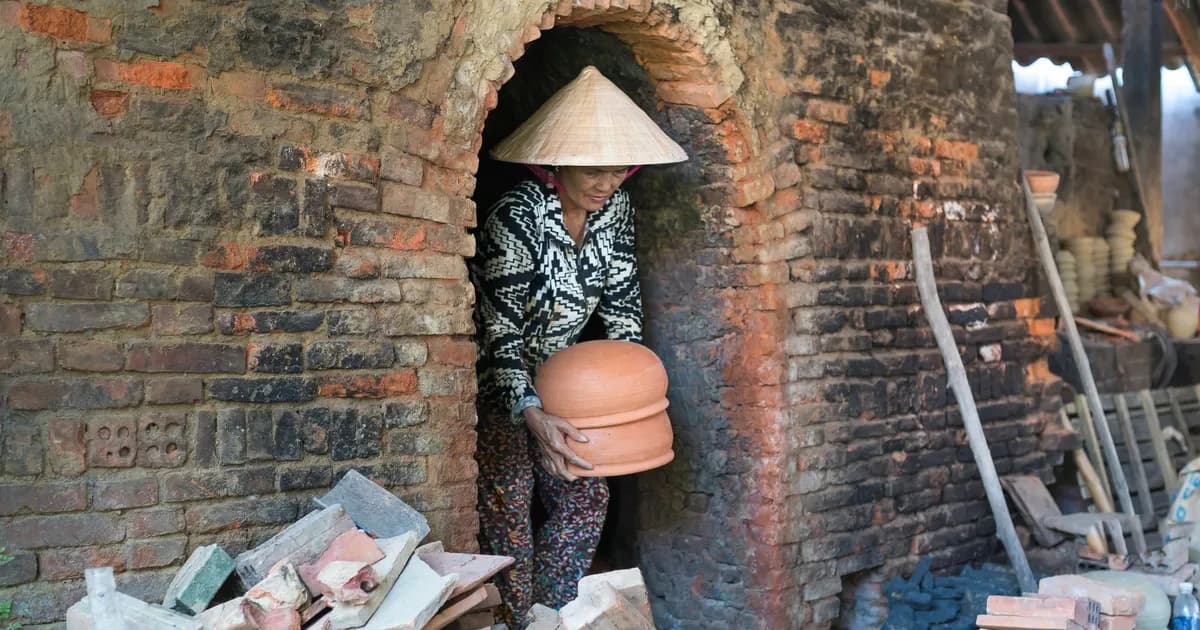
The pottery is the reason to come, and the best way to meet it is on foot or by bicycle in the villages around the town rather than in a showroom. Clay pots, water jars and traditional cookware are shaped largely by hand, with the potter walking around the piece rather than spinning a wheel in the Western sense. Firing is done in open or simple kilns, and the finished pieces are stacked by the roadside, ready for traders who carry them to markets across the country.
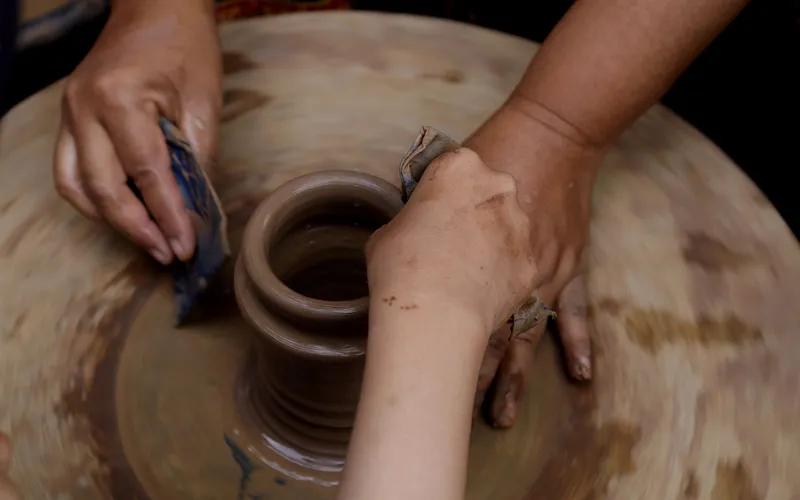
What to look for when you visit:
- The forming stage, where a lump of clay becomes a rounded pot in a few minutes of patient paddling and turning.
- The drying yards, where hundreds of unfired pieces sit in the sun before they go into the kiln.
- The stacking of fired pots onto carts and boats, which shows how the trade still moves.
Most families will let you watch and many will let you try, usually for a small tip or a purchase. Buy something small and useful, a lidded pot or a rice cooker, rather than a decorative piece that will not survive your luggage. Ask before photographing faces, and do not haggle hard over objects that took a day to make. If you want to pay a fair price, offer slightly more than the first number rather than less. Local guides can set up a visit in advance, and a driver or guide who knows the family will make the whole thing smoother than turning up unannounced.
If you enjoy craft travel more broadly, this pairs naturally with the wider story of Cambodia's living arts and craft revival, which explains why workshops like these matter to travellers who prefer depth over volume.
The floating villages by motorboat
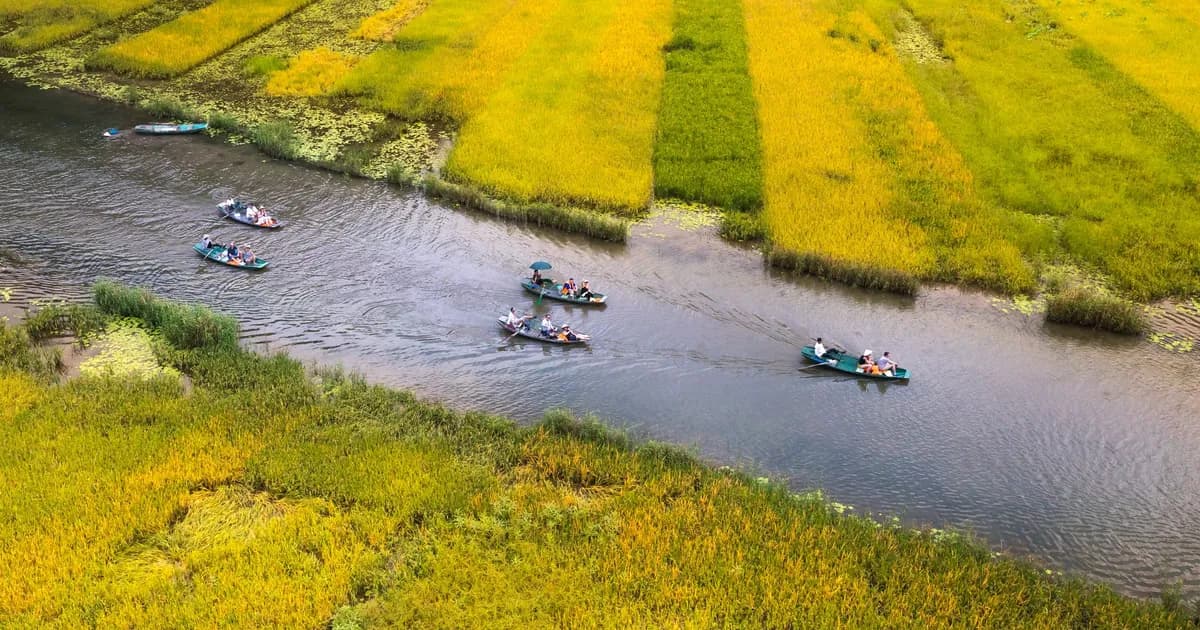
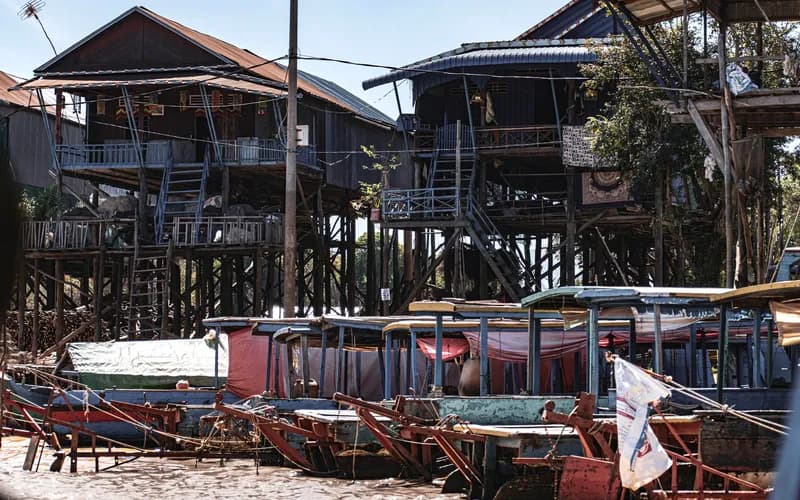
The second reason to stop is the water. Kampong Chhnang has floating communities on the Tonle Sap River, and two names come up most often for boat visits: Chnok Tru and Phoum Kantal. These are primarily fishing villages, and many residents are Cham Muslims, which gives the neighbourhoods a different character from the Khmer and Vietnamese-heritage floating villages near Siem Reap. Houses, schools, small shops and even a place of worship sit on pontoons, and daily life runs by boat.
A motorboat tour is the standard way to see them. Late afternoon is the nicest time, when the light softens, fishers return and families gather on their verandas. Expect a short, quiet trip rather than a spectacle. The more important question is how you go about it. These are homes, not exhibits, and the same ethics apply as anywhere on the lake. Our guide to visiting Tonle Sap's floating villages responsibly covers the key points: hire a local boatman, do not hand out sweets or money, ask before photographing, and spend a little in the village rather than only on the boat.
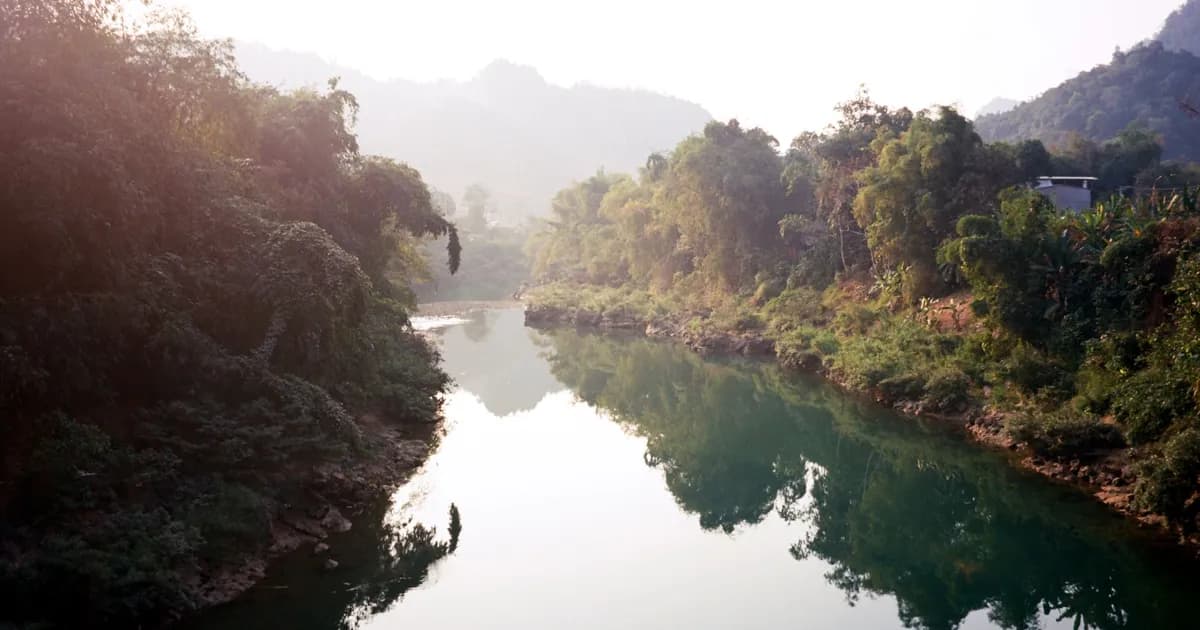
Water levels matter too. In a normal year the river is high from roughly August to November and falls sharply in the dry months, which changes what you see and how far boats can go. Ask your boatman what the channel looks like that week before you pay.
Get matched with up to 5 trusted Cambodia agencies
- Free
- No obligation
- Up to 5 agencies
Phnom Neang Kong Rey and the long views
For a change of pace, head up. Phnom Neang Kong Rey is a hill associated with Khmer legend, and it offers wide views across the countryside with light walking rather than serious trekking. Many visitors pair it with sunrise or sunset and a quiet half-hour at the top. Wat Thoam Mavoan, a temple on higher ground, is also described as a good viewpoint, with the Cardamom massif visible on a clear day and Aoral, Cambodia's highest peak at 1,813 metres, somewhere on the horizon.
Dress modestly if you are entering temple grounds, carry water, and go in the cooler hours. In the wet season the paths can be slick, so wear shoes with grip. Clear mornings after rain are often the best for visibility, while the dusty late dry season can flatten the view.
Getting there and moving around
The simplest way to arrive is by bus or minivan from Phnom Penh, typically two to three hours depending on traffic and stops, with several companies running daily. The same road continues north to Pursat and Battambang, so Kampong Chhnang slots in as a natural break. If you are building a longer route, our overview of how to travel Cambodia overland by train, bus, boat and shared taxi will help you compare options and avoid the common mistakes.
Once in town, distances are short but sights are scattered. Tuk-tuks and motorbike taxis work for a half-day circuit of the pottery villages and the river, and a driver for a day is inexpensive by international standards. Agree the route and price before you set off. Cycling is possible on the flat roads, though traffic on the main highway is heavy and you should stay off it where you can.
Where it fits on a slower route
Kampong Chhnang works best as a bridge. Coming from Phnom Penh, it breaks the long run to the northwest and gives you a gentler arrival into the country's craft and river heartland. Heading south from Battambang, it is a restful stop before the capital. If you have already read about Battambang and the countryside around it, think of Kampong Chhnang as its quieter sibling, with less to tick off and more to simply watch.
A sensible rhythm is one night, arriving by mid-morning, visiting pottery villages while the kilns are working, resting through the heat, then a boat at four and an early dinner. The next morning, take the hill at first light and leave by lunchtime. Do not try to add Kampong Chhnang to a fast eight-city loop. It will feel like a checklist, and the whole value of the place is that it does not.
Where to stay, eat and when to go
Accommodation is modest. Online listings show a range from small pottery-themed guesthouses at around 18 US dollars a night to a few higher-end resort properties well above 100 dollars, so check current rates and recent reviews before you commit. Food is local: noodle soups, grilled fish, fresh river produce and market snacks. Eating where the residents eat is cheap and usually good, but stick to freshly cooked food and bottled or filtered water.
The most comfortable season runs from November to April, when rainfall is low and daytime temperatures sit around the mid-twenties to low thirties Celsius at the cooler end. The green season has its own charm, with brighter paddies and fewer visitors, but roads and river access can be less predictable. The strength of the river itself has become less reliable in recent years, a theme we explore in our analysis of the weakening Tonle Sap flood pulse.
What to Do Next
- Decide how many nights you can spare, and aim for one full night rather than a stop between buses.
- Choose your season: November to February for comfort, the green season for quiet.
- Ask a local guide or your accommodation to arrange a pottery family visit in advance.
- Build Kampong Chhnang into a route using our plan your journey page, linking it with Phnom Penh and Battambang.
- Carry small notes for tips and purchases, and keep your plans flexible around the river level.
Frequently Asked Questions
How far is Kampong Chhnang from Phnom Penh?
It is roughly 90 kilometres by road along National Road 5, and most buses and minivans take around two to three hours depending on traffic. It is an easy half-day trip or an overnight stop on the way to Pursat and Battambang.
Is Kampong Chhnang worth visiting if I only have a day?
It can be, but only if you accept that you will see a slice. A day trip lets you watch pottery and take a short boat ride. A single night is much better, because the late afternoon on the river and the early morning on the hill are the best moments and both fall outside normal day-trip hours.
Can I try making pottery myself?
Often yes. Many families are happy to let visitors have a go, usually in exchange for a purchase or a small tip. Arrange it through a guide or your guesthouse and confirm the price in advance, so the visit stays friendly and does not turn into a negotiation.
Are the floating villages here a tourist attraction like those near Siem Reap?
They are much quieter and much less set up for visitors. People live and work there, so a short respectful motorboat visit is appropriate, but there is little infrastructure and no performance. Hire a local boatman and treat it as a visit to a neighbourhood.
What is the best time of year to visit?
November to April is the most comfortable, with lower humidity and little rain. From roughly August to November the river is higher and the countryside is green, which is attractive but can make roads and boat access less predictable. Check conditions locally before you go.
Is it safe to eat and drink in Kampong Chhnang?
Standard precautions apply. Choose freshly cooked food, drink bottled or filtered water, and avoid ice of unknown origin. If you have a sensitive stomach, eat at busy local places rather than empty ones, and carry basic rehydration salts.
Do I need to speak Khmer?
No, but a few words go a long way in a town where English is not widely spoken. Learning a greeting and a thank you will change how people respond to you.
Keep reading
More from the ground · Cambodia