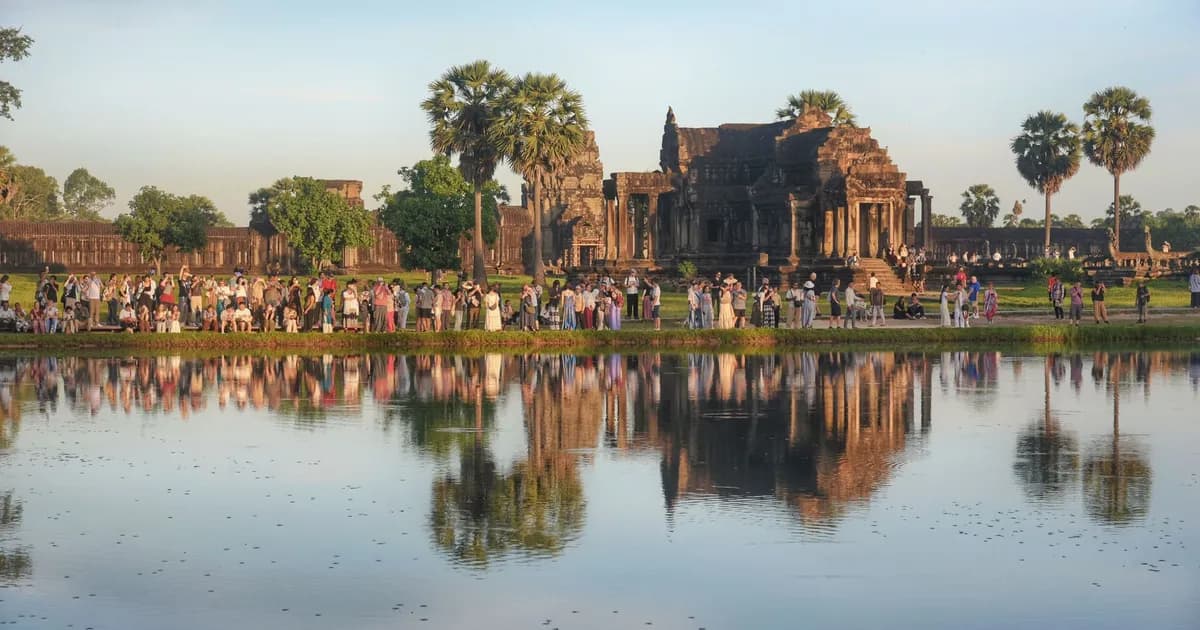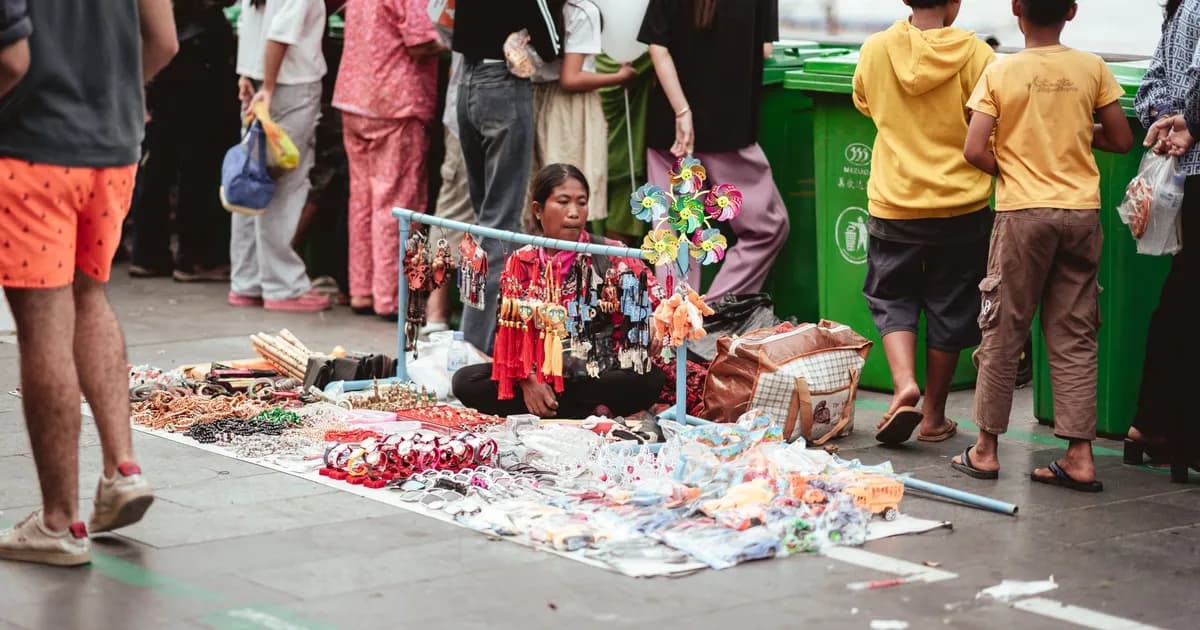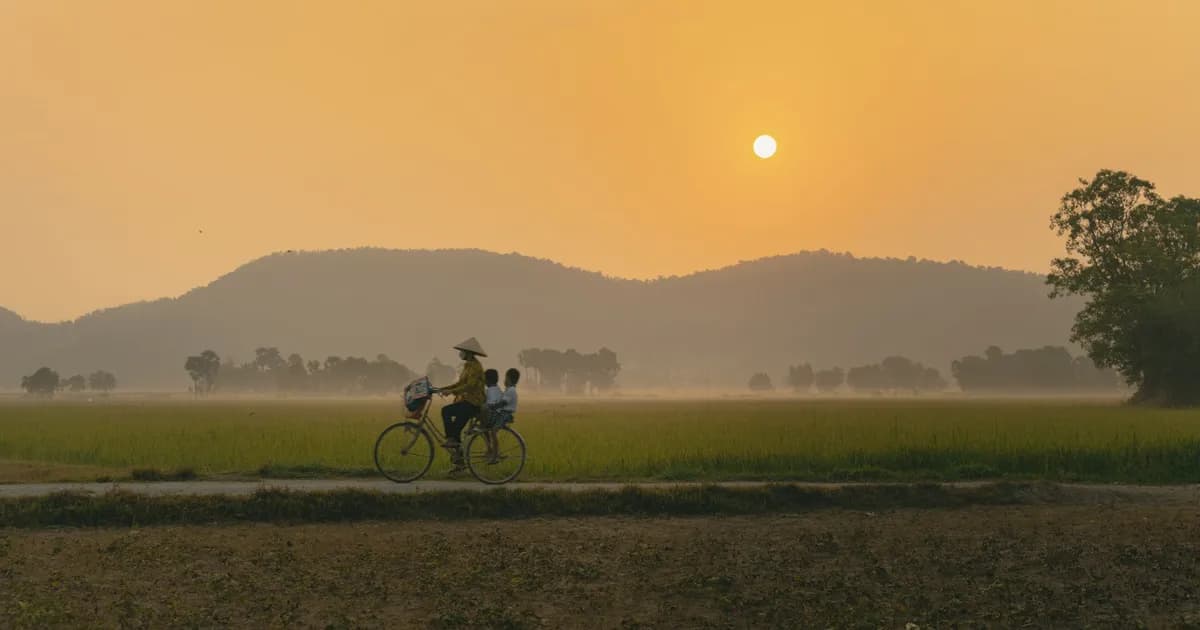


Cambodia is a small country pretending to be a large one. Phnom Penh to Siem Reap is about 320 kilometres; Phnom Penh to the coast is barely 230. On a map you could cross the whole thing in two days. In practice, road conditions, ferry crossings, weather and the national habit of stopping frequently mean that overland travel here takes longer than the distances suggest, and that is precisely the argument for doing it. This is a guide to what actually runs, what it costs, and where the comfortable option is worth paying for.
Why Overland Still Makes Sense in Cambodia
Domestic flights exist between Phnom Penh, Siem Reap and Sihanoukville, but the country is too compact for them to save much time once you count airport transfers and check-in. A one-hour flight from Phnom Penh to Siem Reap becomes a four-hour door-to-door exercise, against five to six hours on a decent bus for a fraction of the price and a much lower carbon cost.
More to the point, the ground between Cambodian cities is where the country is legible. The stilt villages of the Tonle Sap floodplain, the rubber plantations east of the Mekong, the sugar palms standing alone in flooded paddy: none of this appears at cruising altitude. Travellers who fly between the three headline destinations often leave with the impression that Cambodia is Angkor plus a capital plus a beach, which is a considerable misreading.
The trade-off is comfort and predictability. Cambodian ground transport is cheap and adequate rather than good. Schedules slip. Air conditioning fails. Drivers overtake into oncoming traffic. Building slack into your plan matters more here than in Thailand or Vietnam, and our Cambodia trip cost and budget guide sets out what the various tiers actually cost.
One request. Up to five tailored proposals.
Skip contacting agencies one by one — share your trip once and let up to five trusted Cambodia agencies come to you. Free, with no obligation.
Get my free quotesThe Road Network: What Has Changed
Cambodia's main highways have improved substantially over the last decade. National Road 6 between Phnom Penh, Siem Reap and the northwest is sealed and generally in good condition. National Road 5 along the western side of the Tonle Sap has been widened in stages. The Phnom Penh to Sihanoukville expressway, opened in 2022, cut the run to the coast to roughly two to three hours for private vehicles and premium buses, against five or more on the old road.

Away from these arteries, the picture is different. Provincial roads to Mondulkiri, Ratanakiri, Preah Vihear and much of Koh Kong range from good to genuinely rough, and unsealed sections become slow or impassable during heavy rain between roughly July and October. Journey times published by operators for these routes should be treated as optimistic. Add a third to any wet-season estimate for the northeast.
Buses and Minivans: The Backbone
Buses do most of the work. Full-size coaches with air conditioning run the major intercity corridors many times a day. Expect to pay roughly 8 to 15 US dollars for Phnom Penh to Siem Reap, 8 to 14 for Phnom Penh to Sihanoukville, and similar for Phnom Penh to Battambang. Premium operators charge more for fewer seats, reclining chairs, onboard toilets and a direct routing.
Minivans are the faster, less comfortable alternative. They typically shave an hour or two off the same route by making fewer stops, at the cost of tight seating and, on some operators, aggressive driving. They are the practical choice for shorter provincial hops where no coach runs.
A few honest notes:
- Sleeper buses on the Phnom Penh to Siem Reap night run are cheap and save a hotel night, but the beds are short by European standards and the roads are noisy. Most travellers arrive rested only in theory.
- Hotel pickup is common in Siem Reap and Phnom Penh but often means an hour of circling before you actually leave.
- Buses depart from company terminals rather than a single central station, so confirm which terminal your ticket uses.
Get matched with up to 5 trusted Cambodia agencies
- Free
- No obligation
- Up to 5 agencies
The Train: Slow, Cheap and Limited
Cambodia has two railway lines, both radiating from Phnom Penh. The Southern Line runs 264 kilometres to Sihanoukville via Takeo, Kep and Kampot. The Northern Line runs towards Poipet on the Thai border, though passenger services have generally terminated at Battambang.
Fares are low. The full Phnom Penh to Sihanoukville run has typically cost around 10 US dollars, with Kampot around 9 and Takeo around 6; Phnom Penh to Battambang has run at roughly 8 dollars. Journey times are around five and a half to six hours south, six and a half north.
The critical caveat is frequency. Passenger services on the southern line have often operated at weekends and public holidays only, with the line otherwise given over to freight, and schedules have changed repeatedly. The northern line beyond Battambang has been subject to upgrade works and suspension. Do not build an itinerary around a Cambodian train until you have confirmed the specific departure with Royal Railway or a reputable booking agent within a week or two of travel, and always keep a bus as the fallback.
When it runs, it is the most pleasant way to reach Kampot and Kep, and it is a fine slow approach to Battambang and its countryside.
Shared Taxis and Private Cars
Shared taxis, usually a Toyota Camry carrying six or seven passengers, remain the default for Cambodians on many routes. They leave when full from market areas rather than terminals, cost slightly more than a bus, and are considerably quicker. They are also cramped and are not the place to be precious about personal space.
Buying two seats, or the whole car, converts this into a comfortable private transfer at a reasonable price. A private car with driver between major cities generally runs 60 to 120 US dollars depending on distance, which for two or three people travelling together is competitive with premium bus tickets and allows stops.
For the northeast and the Cardamom foothills, a private vehicle is often the only sensible option, and hiring one through a local operator rather than at a taxi rank buys you a driver who knows the roads.
Boats and the River Routes
Cambodia's river network was its highway system for centuries, and remnants of that remain.
The Siem Reap to Battambang boat crosses the Tonle Sap and ascends the Sangker River in seven to nine hours when water is high. It is uncomfortable, hot and slow, and it is one of the most memorable journeys in the country. It is frequently suspended in the dry months from roughly February to June.
The Siem Reap to Phnom Penh express boat across the Tonle Sap is faster but far less interesting, and most travellers find the bus a better use of the day.
On the coast, ferries from Sihanoukville serve Koh Rong and Koh Rong Sanloem in around 45 minutes to an hour, running frequently in the dry season and reducing in the monsoon when swells build. Kampot and Kep have local boats to Koh Tonsay and the mangrove channels. Our piece on Kampot and Kep covers the southern coast in detail.
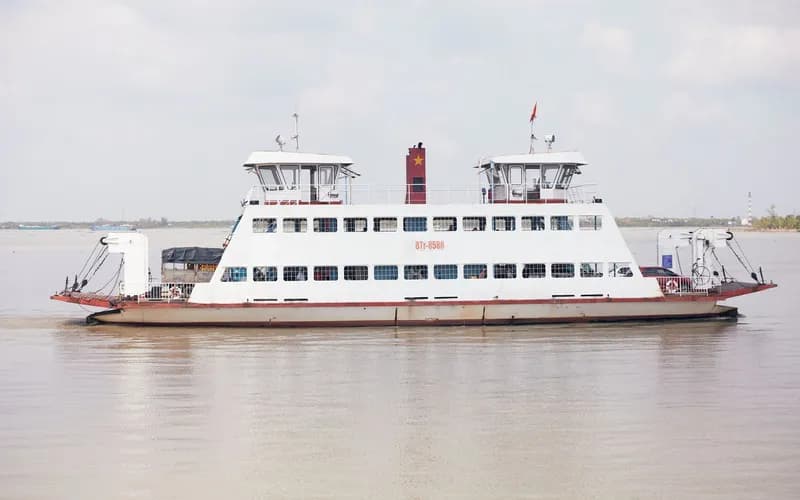
Small Mekong ferries still link riverbank communities north of Phnom Penh towards Kratie, and a slow crossing at a rural landing is one of the quietest pleasures available in Cambodia.
Motorbikes, Tuk-Tuks and Local Hops
Within towns, tuk-tuks are the standard. Both PassApp and Grab operate in Phnom Penh and Siem Reap, which removes almost all haggling and typically undercuts street prices. Outside those cities, agree the fare before you get in, and hire by the day for countryside circuits rather than by the stop.
Renting a motorbike is legal but requires a valid Cambodian licence or a recognised international permit; riding without one voids most travel insurance and police checks do occur. Cambodian road behaviour is unforgiving of hesitation, and the country's road fatality rate is high. If you are not a confident rider with recent experience in Southeast Asian traffic, hire a driver instead. Bicycles, by contrast, are an excellent way to explore Battambang, Kampot, Kratie and the Angkor park itself.
Booking, Prices and Safety
Book intercity buses online through the operators themselves or through aggregators, which show most companies and allow seat selection. Booking one or two days ahead is enough outside Khmer New Year in mid-April and the Water Festival in November, when everything sells out and roads are congested.
Practical points worth internalising:
- Carry small US dollar notes and Cambodian riel. Torn or marked dollars are frequently refused.
- Keep your passport accessible; provincial checkpoints occasionally ask.
- Overnight road travel carries higher risk than daytime travel. Where the choice exists, travel in daylight.
- Leave a buffer day before any international flight rather than connecting the same day from a distant province.
Anyone planning a route across several regions will find the sequencing advice on our plan your journey page useful for deciding how much ground is reasonable in the time you have.
What to Do Next
- Sketch your route on a map and count travel days honestly, allowing a half day for any leg over 250 kilometres.
- Decide which two or three legs deserve a premium bus or private car, and accept basic transport for the rest.
- Check current train departures directly with Royal Railway before committing to a rail leg, and hold a bus alternative.
- If you want the Siem Reap to Battambang boat, schedule it between roughly July and January and verify water levels a week out.
- Book long-distance tickets one to two days ahead, and much further ahead around Khmer New Year and the Water Festival.
- Install a ride-hailing app before arrival for city transfers in Phnom Penh and Siem Reap.
- Build one buffer day into any itinerary that ends with an international departure.
Frequently Asked Questions
Is it better to fly or go overland within Cambodia?
Overland, in almost all cases. The country is compact enough that flights save little real time once transfers and check-in are included, and they cost several times more. The exception is a tight schedule where you must connect Sihanoukville or the islands to Siem Reap in a single day, or where a road route has been disrupted.
How much should I budget for transport?
For independent travellers using standard buses and occasional shared taxis, roughly 10 to 20 US dollars per travel day is realistic. Premium buses and private cars push that to 40 to 100 dollars per transfer. Transport is rarely the largest line in a Cambodian budget.
Are Cambodian buses safe?
Reasonably, with caveats. Larger operators maintain their fleets adequately and staff drive more conservatively than minivan drivers. The genuine risks are night driving, overtaking on two-lane highways, and provincial roads in heavy rain. Choosing daytime departures and established companies removes most of the exposure.
Can I still take the train from Phnom Penh to Battambang?
Services have run on the Northern Line as far as Battambang, at around 8 US dollars for a journey of roughly six and a half hours, but frequency has been limited and the line has been subject to upgrade works. Confirm the specific departure with Royal Railway shortly before travel and treat a bus as your default.
What about crossing into Thailand or Vietnam by land?
Vietnam land crossings, principally Bavet to Moc Bai on the Phnom Penh to Ho Chi Minh City road and the Mekong crossing to Chau Doc, have operated normally. The Thai land border is a separate question and has been closed to ordinary crossings; see our update on the Thailand-Cambodia land border before planning any overland link to Thailand.
How far ahead should I book?
One to two days is sufficient for most routes and most of the year. Around Khmer New Year in mid-April and the Water Festival in November, book at least a week ahead and expect longer journeys, as much of the country is on the road at the same time.
Is renting a motorbike a good idea?
Only for experienced riders with the correct licence. Cambodia has one of the higher road fatality rates in the region, insurance is void without a valid permit, and rural surfaces are inconsistent. A driver for the day costs little and removes the entire problem. Bicycles are a far better fit for the slow travel this country rewards.