Stung Treng: Cambodia's Northern Mekong Wetlands, Preah Rumkel and the Slow Frontier
Most travellers cross northern Cambodia in a single day, watching Stung Treng pass by from the window of a minivan bound for Laos. That is a shame. This small river town, set where the Mekong and the Sekong rivers meet, is the gateway to one of the country's least-visited wetland landscapes: a flooded forest, a protected stretch of river where Irrawaddy dolphins still surface, and a handful of community-run ecotourism projects that welcome visitors on the villagers' terms. It is not polished, and it does not try to be. For anyone willing to spend two or three unhurried days, it is one of the most rewarding corners of the country.
Where Stung Treng sits, and why it rewards slowness
Stung Treng is a provincial town in the far northeast, with a walkable centre that takes about 20 minutes to cross on foot. National Road 7 runs through it, linking Kratie to the south with the Lao border to the north. That position explains both its quietness and its appeal. It is a place most people pass through, so tourism has stayed small, personal and, for now, largely undeveloped.
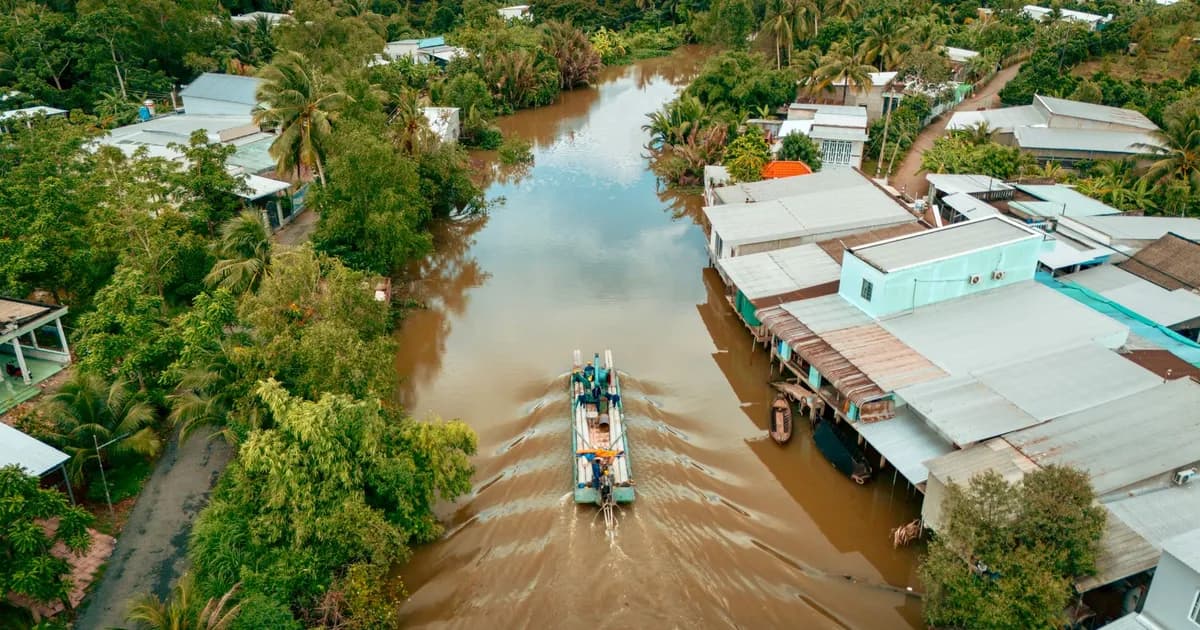
The town itself is modest: a riverside promenade along the Sekong that fills with families at sunset, a market, a few guesthouses and simple restaurants. There is no commercial airport. The nearest are Siem Reap, roughly 350 km away, and Phnom Penh, around 450 km. What the town offers is an honest base from which to reach the river, the islands and the forest.
Slow travel suits this region because everything revolves around water and light. Boats leave early, when the river is calm and wildlife is most active. Afternoons are for resting through the heat. Evenings belong to the riverbank. If you try to fit Stung Treng into a half-day, you will mostly see the road. Give it two nights and the place begins to make sense.
One request. Up to five tailored proposals.
Skip contacting agencies one by one — share your trip once and let up to five trusted Cambodia agencies come to you. Free, with no obligation.
Get my free quotesGetting there without rushing
There are three realistic approaches. From Phnom Penh, daily buses take about 9 to 10 hours and cost roughly 12 to 15 US dollars, according to current listings. From Kratie, around 140 km south, a bus or minivan takes about three hours for 5 to 8 dollars. From Siem Reap the journey is roughly 6 to 7 hours and usually involves a change somewhere along the way, often via Kampong Cham or Kratie.
Our recommendation is to arrive from Kratie, which pairs naturally with Kratie and the Mekong: Dolphins, Islands and the Slow River Life. The two towns sit on the same stretch of river, and travelling between them lets you see the Mekong change character as it narrows and braids around islands.
If you are continuing to Laos, the Trapaeng Kriel crossing lies about 55 km north, roughly an hour by minivan for around 5 dollars. Lao visas are available on arrival at roughly 30 to 42 dollars depending on passport, though you should confirm current rules before travelling. For the broader picture of moving between regions, our guide to how to travel Cambodia overland explains how buses, boats and shared taxis fit together.
The Stung Treng Ramsar site and the flooded forest
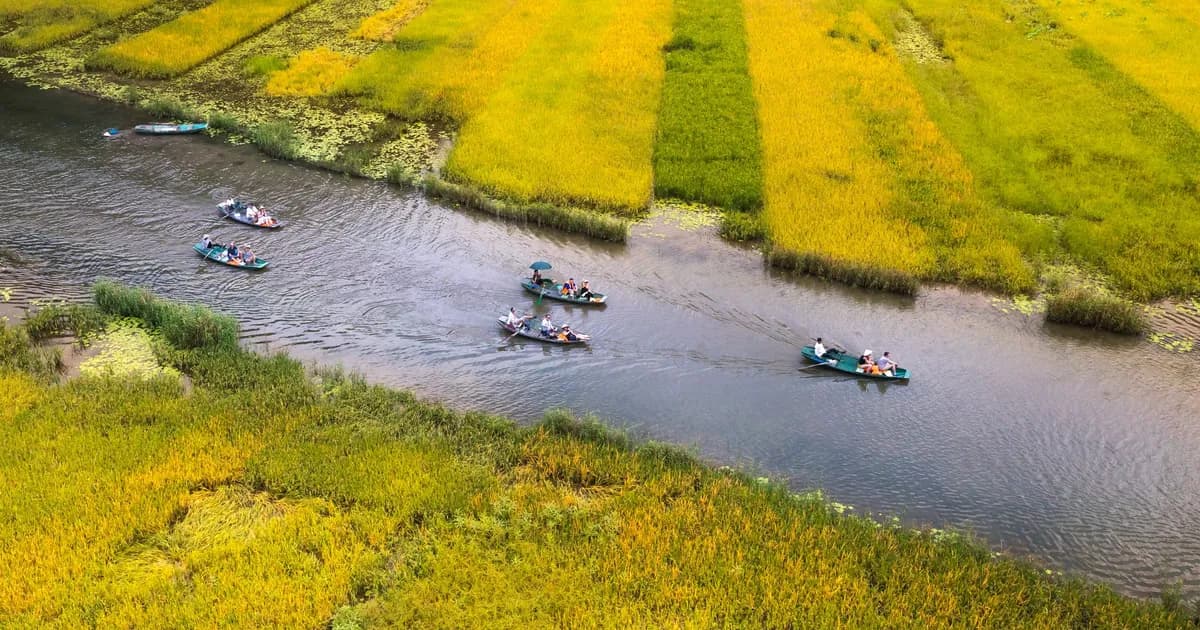
The heart of the region's natural interest is the Stung Treng Ramsar site, a wetland of about 1,460 hectares on the northern Mekong. It is one of five Ramsar sites in Cambodia, alongside Tonle Chhmar, Koh Kapi, Stung Sen and Prek Toal. The landscape is a mosaic of islands, channels, sandbars and seasonally flooded forest.
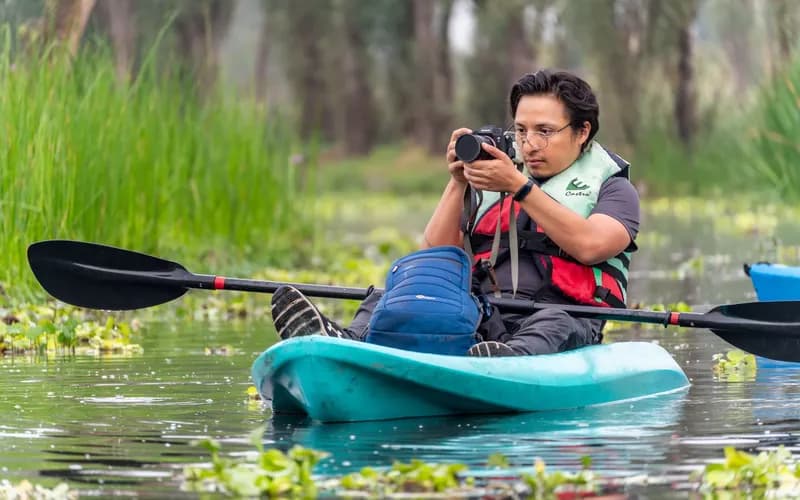
The seasons change everything. From May to October the river rises and floods the forest, so you can paddle or ride a small boat between the trunks of tall trees, in green shade. From November to April the water falls, and the same trees reveal tangled aerial roots, while limestone outcrops and sandy beaches appear. Neither season is better, only different. The wettest months are the most atmospheric for kayaking, while the dry months suit walking and birdwatching. Local operators generally describe September to December as the best window for flooded-forest paddling, when the water is high but the heaviest rain is passing.
If you are weighing the rainy months, read how to travel Cambodia in the green season first. The northern roads can become slow after heavy rain, and flexibility matters more than a tight schedule.
Expect to pay roughly 15 to 30 dollars per person for a half-day or full-day kayaking trip arranged in town, though prices vary by operator and group size.
Get matched with up to 5 trusted Cambodia agencies
- Free
- No obligation
- Up to 5 agencies
Koh Han, O'Svay and the community model
What distinguishes Stung Treng from many other ecotourism regions is that several of its projects are community-based. Koh Han, an elongated island within the Ramsar site, is run by the Samros Koh Han Ecotourism Community in Koh Sneng village. A management committee was established in 2016 with support from the NTFP Exchange Programme and Partners for Forestry and Fisheries. Reporting from 2021 noted that it had welcomed over 1,000 visitors and earned around 4,000 dollars for the community, supplementing farming, fishing and livestock. Of its 28 members, 14 are women.
Those figures are small, and that is exactly the point. This is supplementary income, not mass tourism. Boat excursions for groups of up to six were reported in early 2024 at roughly 70,000 to 150,000 riel, about 17.50 to 37.50 dollars, depending on the route. Community homestays were quoted at around 3 dollars per person, with pre-ordered meals at 5 to 10 dollars. Treat all of these as indicative and confirm directly before you go.
Borey O'Svay is the other well-known community, with about 46 members offering catering, lodging and boat services. The same reporting noted that visitor numbers had fallen to around 10 percent of pre-pandemic levels, with the busiest period running from February to Khmer New Year in April. A full day with an O'Svay community guide, including boat transfer and lunch, has been listed at roughly 15 to 25 dollars per person.
Dolphins at the northern end of their range
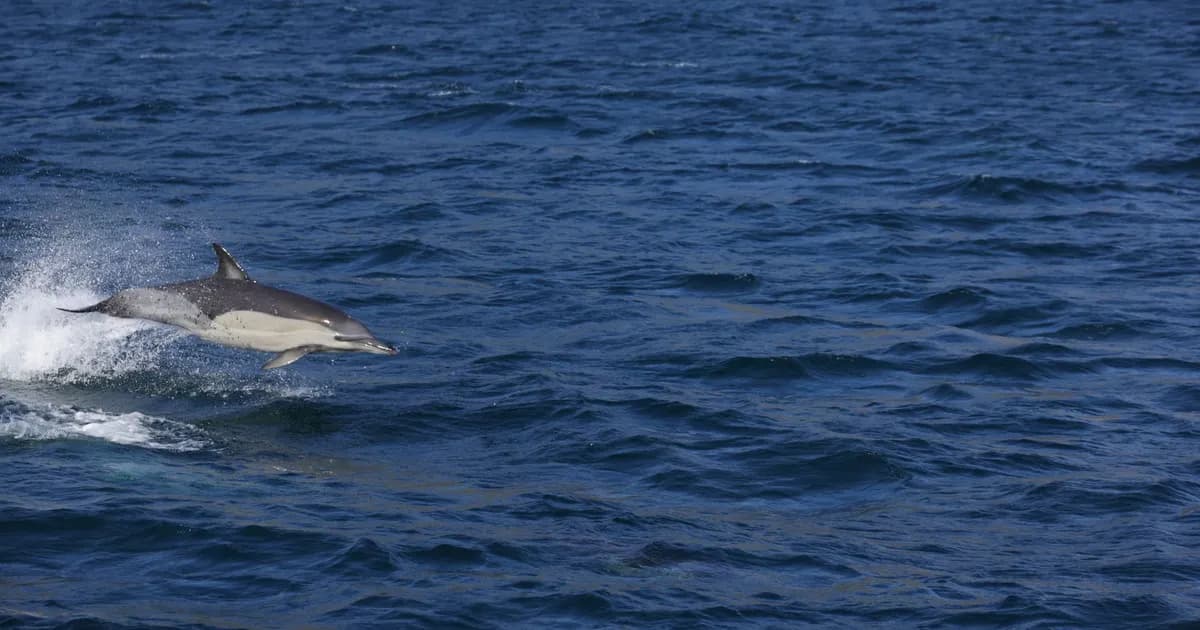
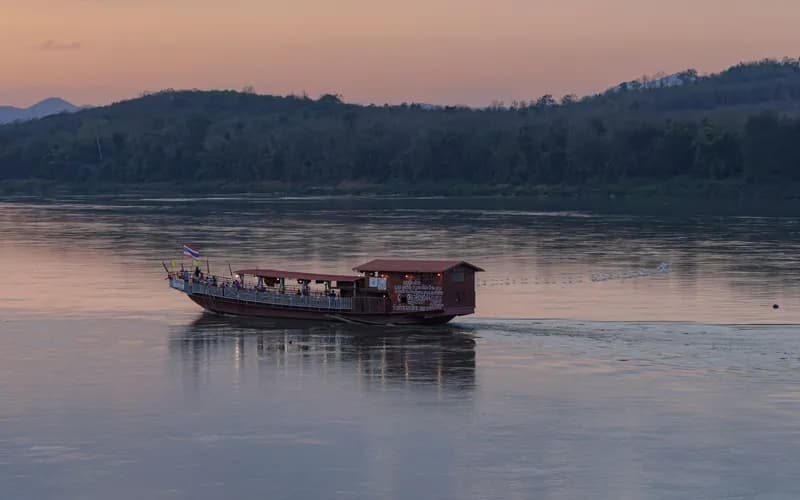
The Mekong's Irrawaddy dolphins live along roughly 120 km of river between Kratie and Stung Treng provinces. The population has been listed as critically endangered by the IUCN since 2004, and Cambodia's Ministry of Agriculture, Forestry and Fisheries has estimated that only 117 remain. In Stung Treng, the main dolphin pools lie in and around the Chheuteal Dolphin Protection Area near Preah Rumkel, and in the quieter Thala Barivat district north of town.
A dolphin boat trip typically lasts two to three hours and costs about 10 to 20 dollars per person. Early morning gives the best chance, and sightings are never guaranteed. You may see a rounded head and a curved back break the surface two or three times, then nothing for twenty minutes. That is the real experience, and it is worth accepting on those terms. For the wider context, read our analysis of what the 117 remaining Mekong dolphins mean for travellers, including how to choose boats that keep a respectful distance.
Preah Rumkel and the Sopheak Mit waterfall
Preah Rumkel is a river village around 35 km north of Stung Treng, near the Lao border, and it is the best-known base for dolphin watching in the province. The route can be rough, and by motorbike it takes about one to one and a half hours. Guided day trips from town cost roughly 15 to 25 dollars. Near the village is the Sopheak Mit waterfall, a secluded cascade that makes a calm detour.
Preah Rumkel also hosts events. In 2025 the Ministry of Tourism and provincial authorities staged the first Mekong Dolphin and Kayak Festival here, over 30 May to 1 June, with a dolphin blessing ceremony, kayak races and camping. In August 2026, around 1,000 people joined a 5 km run for the Mekong river dolphins in Stung Treng province, according to the Ministry of Tourism. These events signal growing official interest, which can bring both investment and pressure. Visiting outside event dates is quieter and kinder to the village.
A slow three-day plan
Day one: arrive from Kratie, walk the Sekong promenade, eat simply, and sleep early. Day two: an early boat or kayak into the flooded forest or around Koh Han, a long lunch, then an unplanned afternoon. Day three: a day trip to Preah Rumkel for the dolphins and the waterfall, returning for sunset by the river.
Getting around locally is straightforward. Motorbike rental is around 5 to 8 dollars a day, a tuk-tuk for a half-day about 10 to 15 dollars, and a bicycle 2 to 3 dollars. Ride-hailing apps do not operate in Stung Treng. For how buses, boats and shared taxis fit together across the country, see our guide to travelling Cambodia overland. If you rent a motorbike, check the rules in our guide to licences and fines before you set off.
Travelling well in a fragile place
A few habits make a difference. Book through community committees or local guides when possible, so money stays in the villages. Keep boats slow and at a distance from dolphins, and never let a driver chase them. Bring refillable water bottles, because plastic waste is a real problem on river islands. Carry small notes in dollars and riel, since there are few cash machines outside the town. And be honest about expectations: the lodging is simple, the food is village cooking, and the schedule follows the water.
Remember too that this is a border region. Conditions on the ground can change, so check current advice for your nationality, and confirm that any crossings you plan to use are open. Our guide on Cambodia off the beaten path places Stung Treng in a wider network of quiet destinations.
What to Do Next
- Decide your season. Choose May to October for flooded-forest paddling, or November to April for walking, birdwatching and exposed roots.
- Build Stung Treng into a Mekong route between Kratie and either Ratanakiri or the Lao border, rather than treating it as a day stop.
- Contact a community committee or a local guide a few days ahead to confirm boat availability and prices.
- Pack light layers, sun protection, insect repellent, a dry bag and small notes in dollars and riel.
- Use our plan your journey page to place two or three nights here within a wider itinerary, or ask a local travel agency to arrange transport and homestays.
Frequently Asked Questions
How many days do I need in Stung Treng?
Two nights is the practical minimum, three is better. That gives you one morning on the river or in the flooded forest and one day trip to Preah Rumkel for dolphins and the waterfall, with time to rest in between.
Is Stung Treng worth visiting if I have already seen dolphins in Kratie?
Yes. The dolphins belong to the same population along the same river stretch, but Stung Treng offers a quieter setting, the flooded forest, and community-run stays. Many travellers combine both, using Kratie for the dolphin pool at Kampi and Stung Treng for the wetlands.
When is the best time to visit?
It depends on what you want. The rainy months from May to October flood the forest for kayaking, while November to April exposes roots and beaches and suits birdwatching. Late September to December is often cited as a good balance for paddling.
Can I guarantee seeing dolphins?
No. Sightings are never guaranteed, and the population is estimated at only 117 animals. Early morning trips give the best odds, and a calm, patient approach matters more than the boat you choose.
How do I get from Stung Treng to Laos?
The Trapaeng Kriel border is about 55 km north, around an hour by minivan for roughly 5 dollars. Lao visas are generally available on arrival, but confirm current fees and rules for your passport before you travel.
Are there cash machines and good phone coverage?
Services are limited outside the town. Carry enough cash in small notes before heading to the islands or Preah Rumkel, and expect patchy signal in remote areas.
Is it suitable for families?
Yes, with realistic expectations. Boat trips are gentle, but roads can be rough and accommodation is simple. Children who enjoy being outdoors tend to love it.
Keep reading
More from the ground · Cambodia