Cambodia's Living Arts: The Craft Revival Reshaping Travel in 2026
Cambodia's most famous heritage is carved in stone: the temples of Angkor, a thousand years old and known the world over. But a quieter, more fragile heritage is having a moment of its own in 2026, and for the slow traveller it may be the more moving story. Across the country, the living crafts that were almost extinguished within living memory, silk weaving, stone and wood carving, silverwork, lacquer, are being deliberately revived, and travel is increasingly built around meeting the artisans who keep them alive. This is Cambodia's other renaissance, and it is worth understanding.
Where the temples show what Cambodian civilisation once achieved, the living arts show what it is rebuilding. The distinction matters, because one is a monument and the other is a pulse. Increasingly, travellers are seeking out the pulse.
A near-extinction, and a recovery
To understand why this revival is so significant, you have to understand how close these crafts came to vanishing. Under the Khmer Rouge in the 1970s, Cambodia's artisans were among the many targeted, and with the death of a generation of master craftspeople, centuries of accumulated skill, in weaving, in carving, in music and dance, was very nearly lost. The knowledge that survived did so in fragments, carried by a handful of elderly survivors.
The recovery has been one of the quiet triumphs of modern Cambodia. Organisations founded in the decades since, most famously Artisans Angkor, established in 1992, set out to rescue these skills by training young people from rural families in the old techniques, rebuilding a chain of knowledge that had been all but severed. What began as small training centres has grown into a network employing hundreds of artisans, the majority of them women. This is the backdrop to Cambodia's reinvention beyond its temples, a theme we explore in Siem Reap's reinvention beyond Angkor.
One request. Up to five tailored proposals.
Skip contacting agencies one by one — share your trip once and let up to five trusted Cambodia agencies come to you. Free, with no obligation.
Get my free quotesWhat is actually happening in 2026
The revival reaches a visible milestone in 2026. Artisans Angkor is culminating a major transformation with the inauguration of a new Living Art Village near Siem Reap, scheduled for November 2026, conceived as a place where visitors can watch live demonstrations of silk weaving, lacquerwork, repoussé metalwork, and stone and wood sculpture in one setting. It is explicitly designed to give travellers a reason to linger and to channel tourism into the local craft economy.
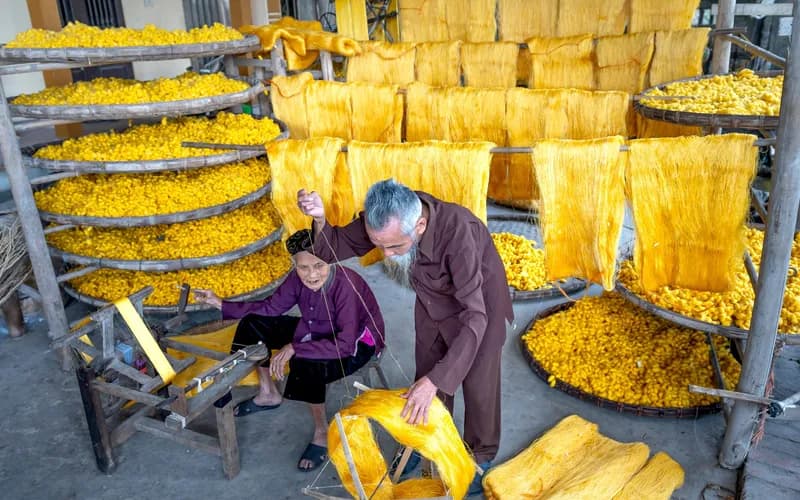
Alongside this headline project, the broader picture is one of steady growth. Silk weaving in particular has seen a marked revival, with production having roughly doubled over the past decade and providing income for many rural women across provinces including Takeo, Battambang, Banteay Meanchey, Siem Reap and Kampot. The craft economy, in other words, is not a nostalgia project; it is a living, growing part of Cambodian rural life, and 2026 is a moment when it becomes markedly more visible to visitors.
Silk, stone, silver and lacquer
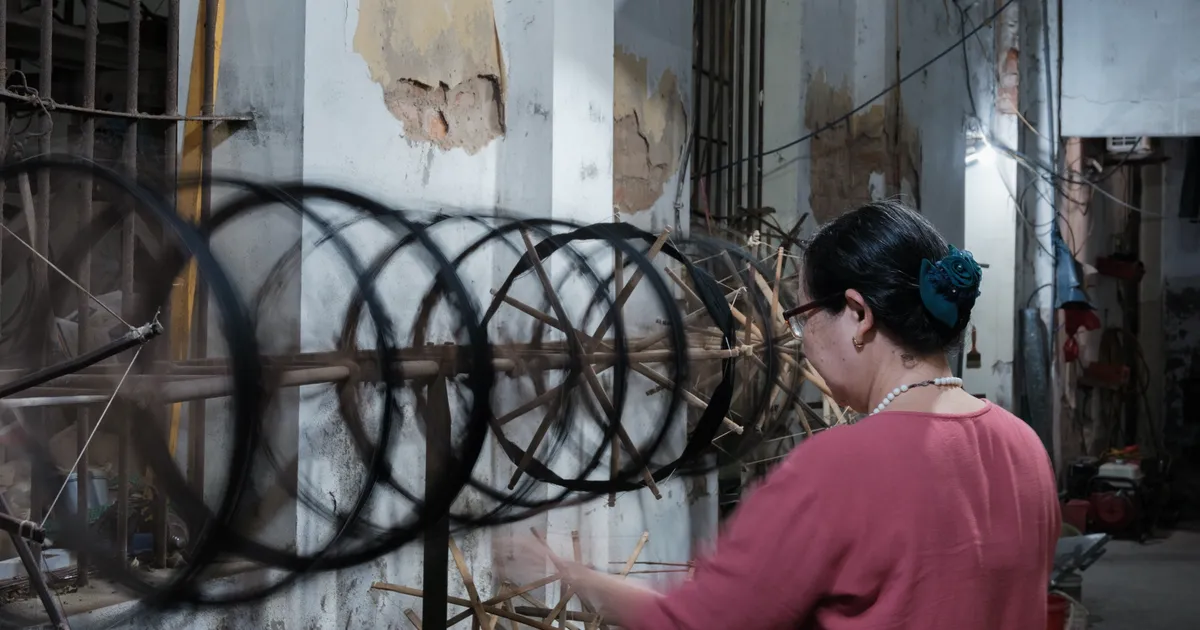
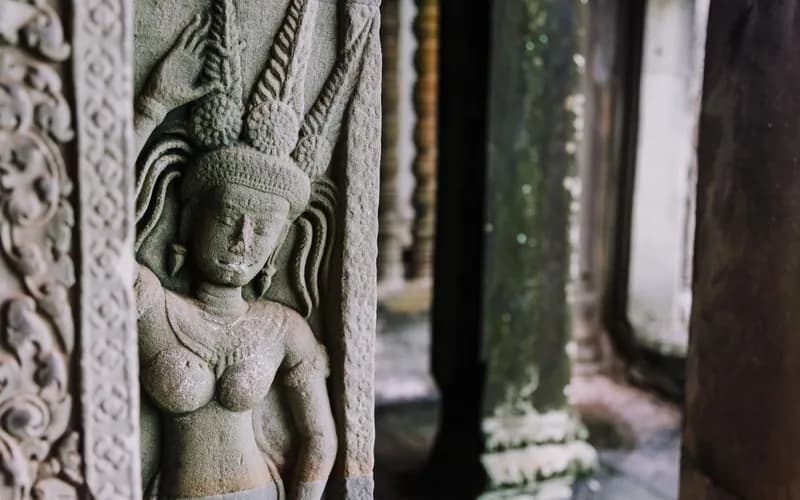
The crafts at the heart of this revival each carry a distinct tradition. Cambodian silk, woven on wooden looms often by women in village workshops, ranges from everyday fabrics to the intricate ikat and twill weaves that were once the preserve of the royal court; watching a length of patterned silk emerge thread by thread is a lesson in patience that no finished product conveys. Stone and wood carving continue the sculptural tradition visible on the temples themselves, now applied to new work by a new generation.
Silverwork and repoussé metalwork, in which designs are hammered into sheet metal from behind, and lacquerware, built up in painstaking layers, complete the picture. Each of these is slow, skilled, hand work, and each is best appreciated not as a souvenir but as a process witnessed. Seeing the crafts made, rather than merely bought, is what transforms a shopping stop into a genuine cultural encounter, and it is the difference our guide to travelling Cambodia ethically encourages travellers to seek.
Get matched with up to 5 trusted Cambodia agencies
- Free
- No obligation
- Up to 5 agencies
Why this matters now
The craft revival is riding a broader shift in what travellers want. Across the region, the appetite has moved away from ticking off monuments and towards experiences with depth, meaning and human contact, exactly what watching an artisan at work provides. Cambodia, long defined in the traveller's mind by a single spectacular temple complex, benefits enormously from having more to offer, and the living arts give the country a way to spread visitors, and their spending, beyond the Angkor turnstiles.
There is also a values dimension that aligns closely with slow travel. Craft tourism, done well, puts money directly into the hands of rural artisans and helps sustain skills that would otherwise struggle to compete with cheap factory goods. It rewards attention over speed and process over product. For a country still rebuilding a heritage it nearly lost, every traveller who chooses to watch silk being woven rather than buy a machine-made scarf is casting a small vote for that heritage's survival.
Where to meet the living arts
For the traveller, the practical question is where to encounter all this. Siem Reap is the natural hub, both for Artisans Angkor and its 2026 Living Art Village and for the silk farms and weaving workshops in the surrounding countryside, making it easy to add a craft day to an Angkor itinerary. But the crafts are not confined to the tourist centre; the weaving provinces of Takeo and Kampot, and towns such as Battambang, offer quieter, more workaday encounters with artisans in their own communities.
The richest approach is to weave craft encounters into a slower journey around the country rather than treating them as a single stop. A morning at a village loom, an afternoon watching a carver, a conversation with a silversmith, these add texture to a trip in a way that no amount of temple-viewing can, and they draw you into corners of Cambodia the day-tripper never sees. Our slow travellers guide to Cambodia can help you shape a route that leaves room for these encounters.
What it means for slow travellers
For the slow traveller, Cambodia's craft revival is close to an ideal fit. It rewards exactly the qualities this kind of travel is built on: patience, curiosity, a willingness to sit and watch, and a preference for meeting people over collecting sights. It offers a way to engage with Cambodia's culture that is active rather than passive, and that leaves a tangible benefit behind in the communities you visit.
It also reframes the whole trip. A visitor who comes only for Angkor sees Cambodia's past; one who also seeks out its living arts sees its present and its future, a country actively reclaiming what was almost taken from it. In 2026, with new spaces opening and the crafts more accessible than ever, there has rarely been a better moment to travel Cambodia this way. To build a trip that balances the temples with the living arts, a specialist on our Cambodia plan-your-journey page can help you find the right workshops and weavers.
Beyond the workshop: music, dance and living heritage
The revival is not confined to things made by hand. The same near-severed thread runs through Cambodia's performing arts, and their recovery has been just as remarkable. Classical apsara dance, the graceful court tradition depicted on the temple walls, was carried through the dark years by a handful of surviving dancers and has since been painstakingly restored and passed to new generations. Shadow puppetry, using large leather figures held against a lit screen, and the pinpeat ensembles whose gongs and xylophones accompany ceremony and theatre, have been revived alongside it.
For the traveller, this widens the living-arts experience well beyond the loom and the carver's bench. An evening of classical dance or shadow puppetry, performed by companies dedicated to keeping these forms alive, is one of the most affecting cultural experiences the country offers, and it complements the daytime craft encounters perfectly. Many of these performances are staged specifically so that ticket revenue supports the artists and their training, making attendance itself a small act of preservation.
Taken together, the crafts and the performing arts amount to a single story: a culture deliberately rebuilding the heritage it nearly lost, and inviting travellers to be part of the effort simply by paying attention. For the slow traveller who values depth over spectacle, this is Cambodia at its most quietly moving, and a reason to give the country far more than the two or three days that Angkor alone tends to command.
What to Do Next
- Add at least one craft day to your itinerary rather than treating artisans as a quick shopping stop.
- In Siem Reap, seek out silk farms and weaving workshops, and watch for the new Living Art Village opening in late 2026.
- Look beyond Siem Reap to the weaving provinces of Takeo and Kampot and towns like Battambang for quieter encounters.
- Prioritise watching crafts being made over simply buying finished goods, and buy directly from artisans.
- Weave craft visits into a slower country-wide route rather than a single stop.
Frequently Asked Questions
What is Cambodia's craft revival?
It is the deliberate rebuilding of traditional Cambodian crafts, silk weaving, stone and wood carving, silverwork and lacquer, that were almost lost under the Khmer Rouge. Organisations such as Artisans Angkor have trained a new generation, and the crafts now support many rural livelihoods.
What is opening in Cambodia in 2026?
Artisans Angkor is inaugurating a new Living Art Village near Siem Reap, scheduled for November 2026, where visitors can watch silk weaving, lacquerwork, metalwork and sculpture demonstrated together. It is designed to make the living arts more accessible to travellers.
Where can I see traditional crafts in Cambodia?
Siem Reap is the main hub, with silk farms, weaving workshops and Artisans Angkor. The weaving provinces of Takeo and Kampot and towns such as Battambang offer quieter encounters with artisans in their own communities, away from the main tourist centre.
Why did Cambodia's crafts nearly disappear?
Under the Khmer Rouge in the 1970s, artisans were among those targeted, and the deaths of many master craftspeople nearly severed centuries of accumulated skill. The revival since has rebuilt these traditions by training young people in techniques carried by a few survivors.
Is craft tourism a good way to support Cambodia?
Yes, when done thoughtfully. Watching crafts being made and buying directly from artisans channels money to rural communities and helps sustain skills that struggle against cheap factory goods. It is a slow, meaningful way to engage with the country.
How much time should I set aside for craft experiences?
Even a single dedicated day, watching silk woven or a carver at work, adds real depth to a Cambodia trip. Travellers with more time can weave several such encounters into a slower route through the weaving provinces and craft towns.
Keep reading
More from the ground · Cambodia