Cambodia's Thin Flight Map: What Techo's First Year Changes for Travellers
Cambodia spent most of the last decade building airports. It now has one of the largest airport sites in the world twenty kilometres south of Phnom Penh, a handsome replacement gateway outside Siem Reap, and a coastal terminal at Sihanoukville that handles roughly five flights a week. What it does not have, a year into the new era, is a flight network that lets you move around the country by air. For anyone planning a slow, multi-stop trip, that single fact matters more than any terminal architecture, and it points the itinerary in a direction we would recommend anyway.
A gateway built for a country that has not arrived yet
Techo International Airport opened commercially on 9 September 2025, taking over all of the capital's international and domestic traffic from the old Pochentong site. It covers around 2,600 hectares, which puts it among the largest airport land footprints anywhere, and its first phase is designed for something like fifteen million passengers a year.
In its first twelve months it handled a little under two million international passengers. That is a respectable start for a new airport and a very long way from fifteen million. The gap is not a criticism of the airport; it is a description of Cambodian tourism in 2026. The infrastructure has been built ahead of the demand, deliberately, on a bet about the 2030s.
For travellers the practical consequences are mostly about geography and time. Techo is further out than the airport it replaced, the transfer is longer, and the ground arrangements are still settling. Our update on getting from Cambodia's new airports into town covers the current transfer options, costs and timings at both Techo and Siem Reap-Angkor.
One request. Up to five tailored proposals.
Skip contacting agencies one by one — share your trip once and let up to five trusted Cambodia agencies come to you. Free, with no obligation.
Get my free quotesWhat the first-year numbers actually say
Three figures frame the picture. Techo handled roughly 2.4 million international and regional passengers in the first half of 2026. Cambodia's total air passenger traffic was down about four percent year on year in the first quarter, and down around six percent across the first five months. And Angkor ticket sales for January to August 2026 came to fewer than 475,000, a fall of about twenty-nine percent on the same period in 2025.
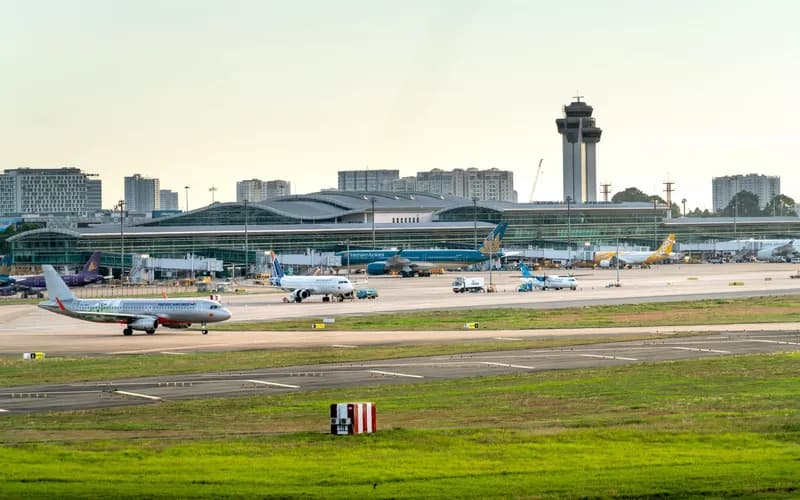
Read together, those numbers say something specific. The new gateway is capturing a larger share of a smaller pie. Passengers are arriving in Phnom Penh, but fewer of them are continuing to Siem Reap, and the flagship heritage site is seeing a sharp contraction rather than a recovery. Officials have attributed the Angkor decline to a slow post-pandemic recovery compounded by the border conflict with Thailand, which is a fair reading.
The domestic network is the weak link
Here is the part that catches people out. Cambodia's national carrier serves around eleven destinations in total, most of them international. Domestically, the network is thin to the point of being notional. Techo runs roughly 708 flights a week. Siem Reap-Angkor runs about 224. Sihanoukville runs about five. The newest domestic route, Phnom Penh to Dara Sakor in Koh Kong province, launched in December 2025 at four round trips a week.
If you assumed you would fly Phnom Penh to Siem Reap, or Phnom Penh to the coast, check schedules before you commit to dates. In practice most travellers will find that the timings do not work, the frequency is too low to absorb a delay, or the fare makes no sense against the ground alternative. Flying internally in Cambodia is possible; treating it as the default is a planning error.
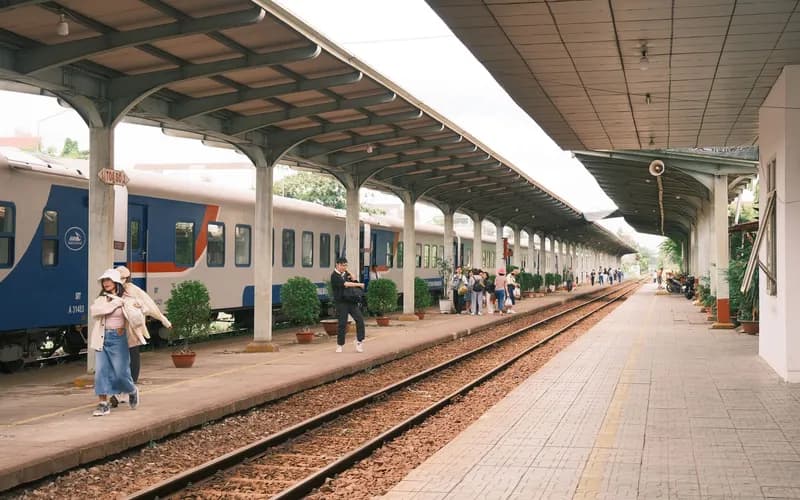
The good news is that the ground network has improved faster than the air network. Our guide to Cambodia by train in 2026 sets out the Royal Railway routes, timings and fares, including the Phnom Penh to Sihanoukville line that now does real work for travellers rather than existing as a curiosity.
Get matched with up to 5 trusted Cambodia agencies
- Free
- No obligation
- Up to 5 agencies
Siem Reap is fighting for its own routes
Siem Reap-Angkor International Airport is in an unusual position: a large, modern facility serving a destination whose visitor numbers have fallen sharply. Its response has been aggressive incentives. Airlines launching a new route or resuming a suspended one have been offered full waivers on landing, parking, lighting and aerobridge charges for the first year.
It has produced results at the margin. Emirates added Siem Reap via Bangkok, and IndiGo opened Kolkata to Siem Reap, which quietly makes Cambodia much easier to reach from eastern India. Neither changes the fundamental shape of the map: Siem Reap remains a regional-feed airport, reached via Bangkok, Singapore, Kuala Lumpur, Ho Chi Minh City or Hanoi rather than directly from Europe or North America.
There is an upside to a quiet Siem Reap that is worth naming honestly. The temples are emptier than they have been in twenty years, guides and drivers have availability, and the outlying sites are almost deserted. Our article on Koh Ker and Cambodia's northern temple frontier covers the circuit that benefits most from this lull.
The closed land border changed the maths
For twenty years the standard way into Cambodia from Thailand was overland: Bangkok to Poipet, then on to Siem Reap. Crossings in the contested northern sector have been closed since mid-2025, and the classic backpacker route is not currently available.
This has pushed traffic that used to arrive by bus into the air, mostly via Bangkok as a transfer rather than as a start point, and it has made Vietnam and Laos relatively more important as land gateways. It has also reshaped internal routing: with the northwest corner quieter, itineraries increasingly run north from Phnom Penh along the Mekong, or south to the coast, rather than making the traditional beeline for Angkor.
If you are arriving overland from anywhere, check the current position before you buy anything non-refundable. Border status in this region has changed several times since 2025 and operators are slow to update.
Who is actually flying to Cambodia now
The composition of arrivals matters as much as the total. China was Cambodia's largest source market before the pandemic and has not fully returned; around 331,000 Chinese visitors arrived in the first four months of 2026. To accelerate that, Cambodia ran a visa-free pilot for Chinese passport holders from 15 June to 15 October 2026, allowing multiple entries and stays of up to fourteen days with only an online arrival card.
Whether that pilot is extended, and whether it is broadened to other nationalities, is one of the more consequential open questions for 2027. Cambodian officials have signalled that future visa-free expansion depends heavily on how the Chinese trial performs. For Western travellers the visa position is unchanged, but the second-order effects are real: a surge in group traffic would change hotel pricing and crowd patterns in Siem Reap and Sihanoukville within a season.
What this means for a slow itinerary
The practical translation is simple. Build a Cambodia itinerary around one arrival airport, one departure airport, and ground transport in between. Fly into Techo and out of Siem Reap, or the reverse, and do not plan internal flights as connective tissue.
That constraint is a gift for anyone travelling slowly. The distances are modest, the roads have improved dramatically, and the ground journeys are where most of the country actually happens: the Mekong towns, the market stops, the provincial capitals nobody flies to. Our guide to travelling Cambodia overland explains the realistic combinations of train, bus, boat and shared taxi, including which legs are genuinely pleasant and which are simply endured.
Where the real gains are: rail, road and river
Cambodia's transport story in 2026 is not aviation. It is the expressway network, the slow revival of the railway, and the incremental upgrading of provincial roads. The Phnom Penh to Sihanoukville expressway turned a grinding six-hour drive into a straightforward one; further sections are under construction.
The consequence is that overland travel in Cambodia has become predictable in a way it never used to be. You can plan a four-hour leg and expect it to take four hours. Our update on what Cambodia's expressways change for travellers covers the network as it stands and the routes still waiting on it.
The honest risks in the next twelve months
Three things could move this picture. A durable settlement on the Thai border would reopen the northwest and restore the overland corridor, which would lift Siem Reap quickly. A renewal or expansion of visa-free entry would change arrival volumes faster than any new terminal. And a serious domestic route, properly scheduled between Phnom Penh, Siem Reap and the coast, would finally justify the airports that have been built.
None of these is certain, and none is in a traveller's control. What is in your control is how you build the trip. Fewer places, longer stays, ground transport between them: the approach set out in our charter for slow travel happens to be the approach that Cambodia's 2026 flight map forces on you anyway.
What to Do Next
- Check whether your long-haul itinerary routes through Bangkok, Singapore, Ho Chi Minh City, Doha or Dubai, and price open-jaw options into Techo and out of Siem Reap.
- Do not assume a domestic flight exists; verify current schedules directly before you fix any internal dates.
- Price the ground alternative for every internal leg, including the train where it runs, and compare door-to-door times rather than flight times.
- Verify current land border status with Thailand before booking anything overland in the northwest.
- Allow a full afternoon for the Techo transfer on arrival day, and do not schedule a tight onward connection.
- If your dates are flexible, take advantage of the current lull at Angkor rather than waiting for numbers to recover.
Frequently Asked Questions
Can I fly from Phnom Penh to Siem Reap in 2026?
Domestic services exist but are limited and schedules change. Do not build an itinerary around one without verifying current timetables directly with the airline. In most cases the road or rail alternative will be more reliable and better value, particularly once airport transfer time at both ends is counted.
Which airport should I fly into?
Techo, south of Phnom Penh, has by far the most international frequency at roughly 708 flights a week and is the practical default. Siem Reap-Angkor, at about 224 flights a week, works well if your trip is temple-focused or you are coming via Bangkok, Singapore or Kolkata. An open-jaw booking using both is usually the best structure.
Is Sihanoukville airport useful?
Barely, as things stand. It handles on the order of five flights a week, so it cannot be relied on for a scheduled itinerary. The expressway from Phnom Penh and the railway line are both more dependable ways to reach the coast and the island ferries.
Why have Angkor visitor numbers fallen so much?
Ticket sales for January to August 2026 were down roughly twenty-nine percent year on year. Officials point to a slow post-pandemic recovery compounded by the border conflict with Thailand, which closed the overland route that historically delivered a large share of Siem Reap's visitors.
Does the Chinese visa-free pilot affect me?
Not directly unless you hold a Chinese passport. Indirectly it may: the pilot ran from 15 June to 15 October 2026, and any extension or broadening of visa-free entry would change arrival volumes, hotel pricing and crowd patterns at the main sites within a season.
Is it still possible to reach Cambodia overland?
Yes, from Vietnam and Laos, where the gates have continued to operate. The Thai crossings in the contested northern sector have been closed since mid-2025. Check the current position immediately before travel, because it has changed more than once and operators are slow to update their pages.
Has the new airport made Phnom Penh harder to reach?
No, easier by air and slightly harder on the ground. Techo carries more international frequency than the airport it replaced, but it sits roughly twenty kilometres south of the city, so the transfer is longer. Plan the arrival day around that rather than around the flight's landing time.
Keep reading
More from the ground · Cambodia