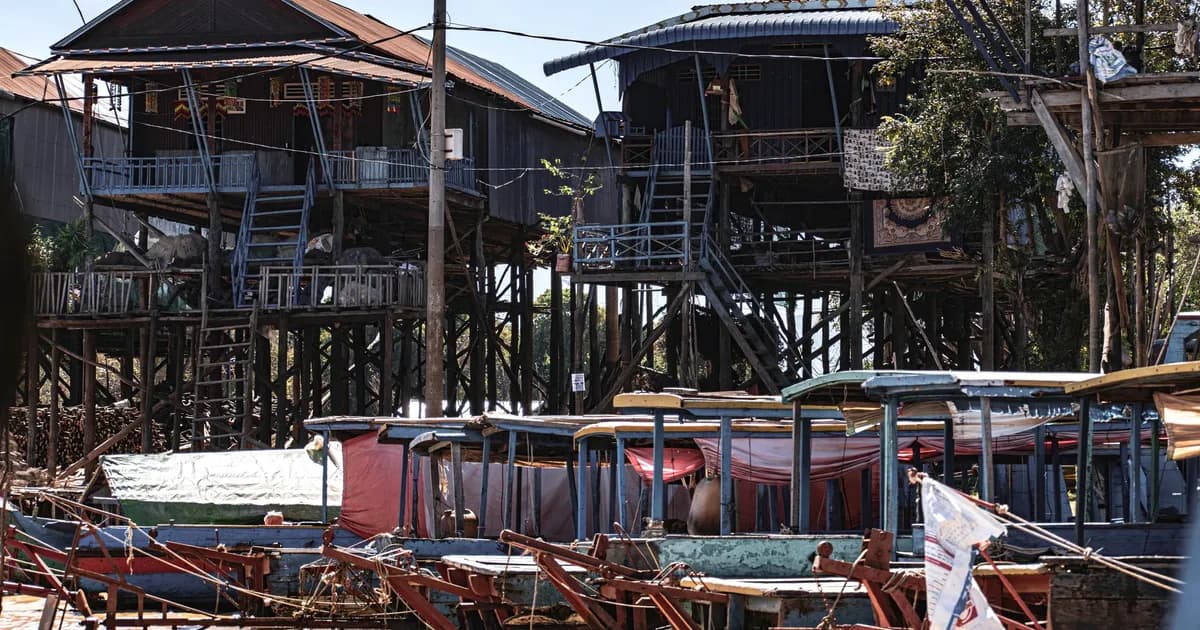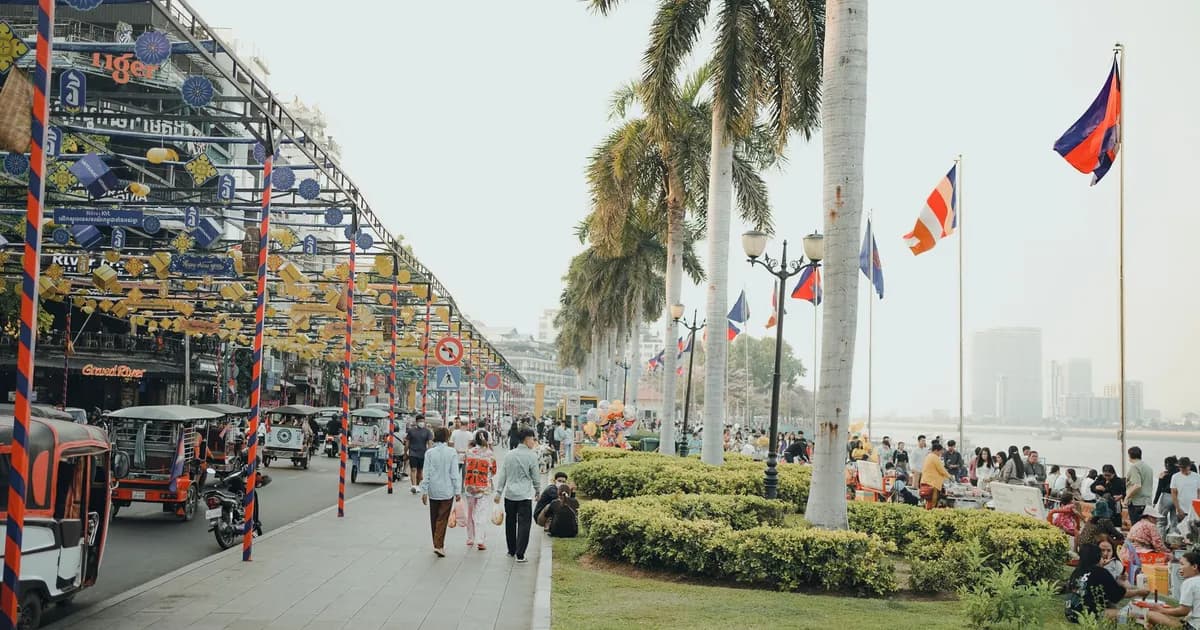
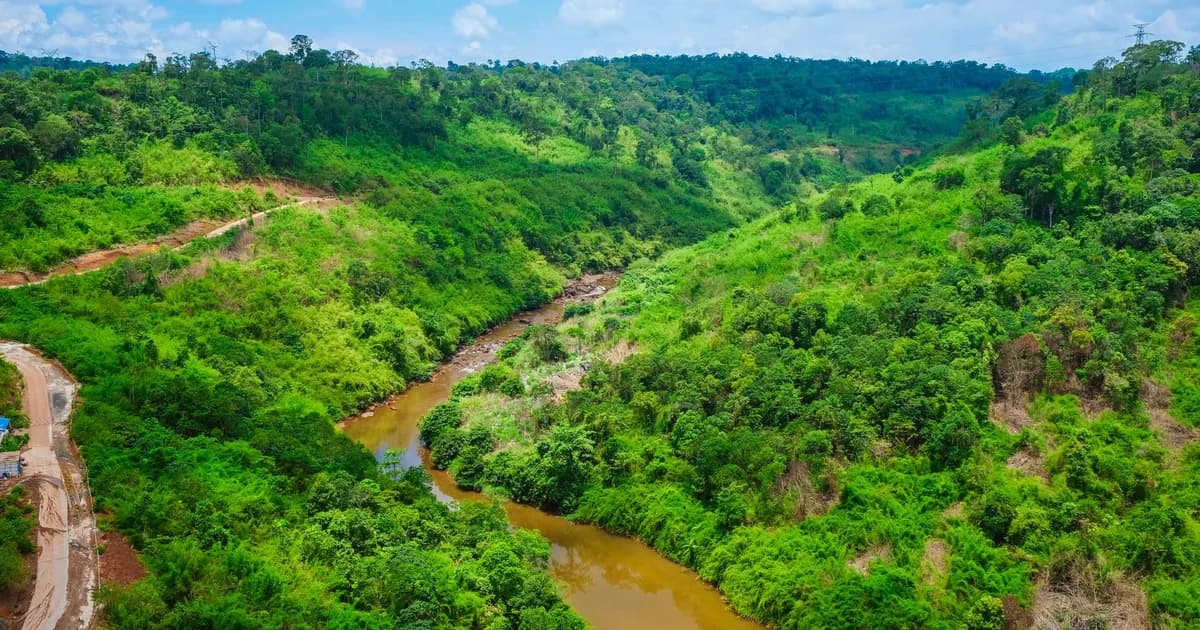

Cambodia's tourism story has always been told through Angkor. Roughly two decades of arrivals data, hotel construction and marketing budgets have pointed at one archaeological park in one province. But the more interesting movement in Cambodian travel right now is happening several hundred kilometres away, in the rainforest of the Cardamom range and the highland provinces of the east, where villages rather than tour companies are increasingly the ones selling the experience. It is small, uneven and frequently oversold. It is also the most genuinely promising development in Cambodian tourism in years.
What Community-Based Ecotourism Actually Means Here
The term is used loosely enough to be almost meaningless in marketing copy, so it is worth defining what the Cambodian version involves at its best.
In a genuine community-based ecotourism site, the village holds a formal agreement with the government or a conservation NGO that ties tourism income to forest protection. Bookings are handled through a village committee rather than an outside agent. Guiding, cooking, boat handling and homestay hosting rotate among households on a roster, so income spreads rather than concentrating in three families. A share of revenue goes into a community fund for schools, wells or a village clinic. And crucially, the arrangement is contingent: the forest has to stay standing for the income to continue.
That last condition is the whole point. Cambodia has lost forest cover at one of the fastest rates in the world over the last twenty-five years, driven by logging concessions, agro-industrial plantations and small-scale clearance by households with few alternatives. Ecotourism is not going to reverse that on its own. What it can do, in specific places, is make an intact forest worth more standing than felled to the people who live beside it.
One request. Up to five tailored proposals.
Skip contacting agencies one by one — share your trip once and let up to five trusted Cambodia agencies come to you. Free, with no obligation.
Get my free quotesThe Cardamoms: Chi Phat and the Conservation Economy
The Cardamom Mountains, spanning Koh Kong and neighbouring provinces, form one of the largest remaining contiguous rainforest blocks in mainland Southeast Asia. They hold elephants, gibbons, sun bears and a long list of species that exist almost nowhere else in the country in viable numbers.
Chi Phat is the reference case. Established in 2007 with Wildlife Alliance, the project turned a village whose economy had rested substantially on logging and wildlife poaching into a community ecotourism site offering multi-day trekking, mountain biking, river trips, forest camping and birdwatching. Former poachers became guides. Accommodation is deliberately simple: village homestays and small guesthouses, with basic rooms historically in the range of a few dollars and meals at two to four dollars, though rates have drifted upward and published figures are worth confirming directly.
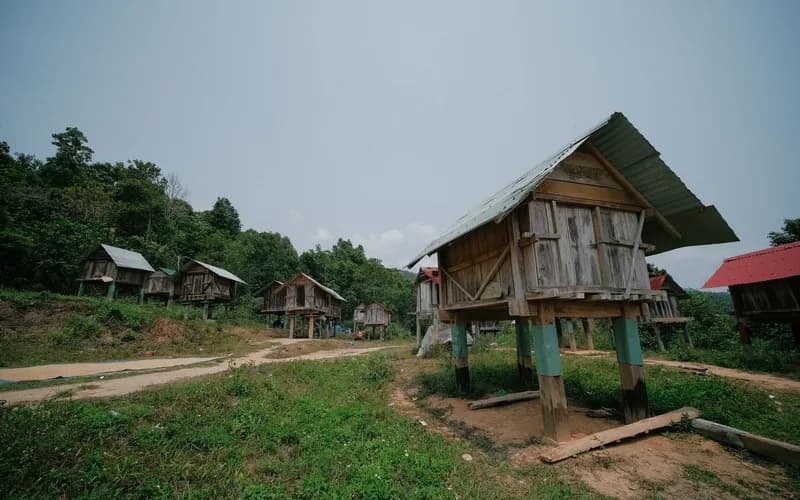
What makes Chi Phat instructive is not that it is idyllic, because it is not. Reviews regularly note gaps between advertised and charged prices, variable guiding quality and organisational inconsistency. It is instructive because the model demonstrably shifted local incentives, and because it has been replicated. Community sites now operate at multiple points around the Cardamom massif, alongside a small number of higher-end conservation lodges that fund patrols through room rates.
For travellers already drawn to quieter Cambodia, this territory sits naturally alongside the areas we cover in our guide to Cambodia off the beaten path.
Mondulkiri and the Elephant Reckoning
Mondulkiri, in the east, is Cambodia's highland province: rolling hills, cooler air, waterfalls, and the largest Bunong indigenous population in the country. It has become the focus of the country's sharpest debate about animal tourism.
A decade ago, elephant riding was standard in Cambodia, including at Angkor itself. That has substantially unwound. Riding was phased out at the Angkor park, and Mondulkiri's projects have positioned themselves around a walking-and-observing model: visitors accompany rescued or retired elephants through forest, watch them bathe and feed, and do not sit on them.
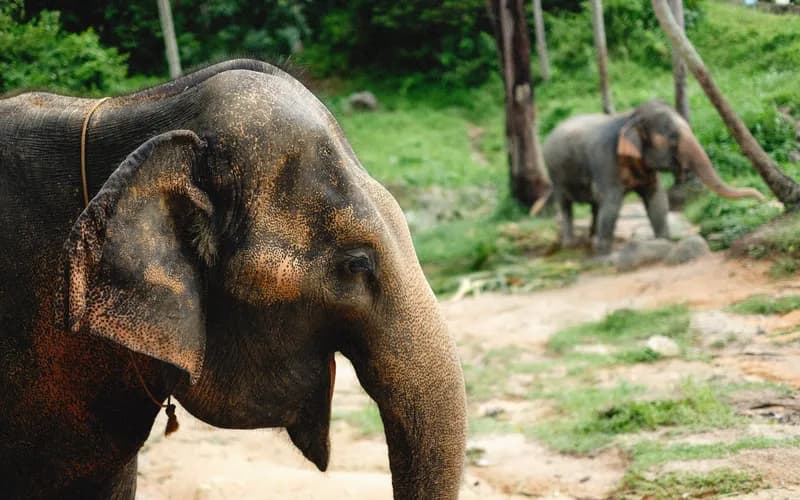
Travellers should still apply scrutiny rather than accepting the label. Reasonable questions to ask any Mondulkiri project before booking:
- Are visitors permitted to ride, bathe with, or physically restrain the elephants? A genuine sanctuary says no to all three.
- How many elephants, and how much forest do they have access to?
- Are the animals chained overnight, and if so for how long?
- Is the Bunong community that owns or historically kept these elephants paid, and how?
- What is the daily visitor cap?
Projects that answer these openly are generally the ones worth supporting. Projects that answer with photographs of tourists hugging elephants are not.
Get matched with up to 5 trusted Cambodia agencies
- Free
- No obligation
- Up to 5 agencies
Ratanakiri and the Indigenous Northeast
Further north, Ratanakiri is less visited and, for now, less organised. Virachey National Park offers multi-day treks with local guides; the crater lake at Yeak Laom is managed by the surrounding indigenous community; and villages across the province practise weaving, resin tapping and rotational agriculture that predate the Cambodian state.
The province rewards travellers who arrive without a checklist. Roads are poor, wet-season access is genuinely difficult from around July to October, and the tourism infrastructure is thin. What it offers instead is a part of Cambodia where the Khmer-centric national story does not fully apply, and where the visitor is straightforwardly a guest.
Indigenous tourism planning for the northeast has existed on paper for years. Implementation has been slower, and the pressure from rubber and cashew plantations on the same land is severe. Travellers here should understand that they are visiting a landscape under active contest.
Kratie, the Mekong and the Dolphin Question
Between the east and the capital, Kratie sits on the Mekong at the edge of the last stronghold of the Irrawaddy dolphin in the river. Boat trips from Kampi to watch them have become the province's signature activity and a meaningful income source for boat-operating families.
The honest framing matters. The Mekong dolphin population is very small, counted at well under two hundred animals in recent survey work and by some counts under a hundred, and it faces gillnet entanglement, habitat fragmentation and hydropower pressure. Well-run trips keep engines off and distance maintained. Poorly run trips chase.
Choose operators that use paddle or drift near the pools, refuse to book anything promising close approaches, and go early morning or late afternoon when boat traffic is lightest. Kratie is also simply a good slow stop in its own right, with a French-era riverfront and near-total absence of tour buses.
What Is Driving the Shift
Several things are converging.
Demand has changed. Post-pandemic travellers to Southeast Asia have shown consistent appetite for lower-density, nature-based and community-linked experiences, and Cambodia's operators have noticed. This tracks the broader rebalancing we described in our analysis of Cambodia's 2026 tourism shift.
Conservation funding has become harder to sustain from donors alone, pushing NGOs to build revenue models that survive the end of a grant cycle. Tourism, imperfectly, is one.
And practically, the closure of the Thai land border has redirected regional itineraries. Travellers who once passed through the northwest quickly on their way to or from Thailand now enter by air and move within Cambodia, which makes an eastern or Cardamom leg easier to justify.
The Honest Limits
None of this should be romanticised.
Community ecotourism reaches a small number of villages. Cambodia has thousands. Where it works, the sums involved are modest against what a cashew plantation or a mining concession can pay, and several sites have seen forest loss continue at their edges regardless.
Quality is inconsistent. Guiding standards vary widely, English is limited in places, and safety practices on treks and river trips are not always what a European operator would recognise. Booking systems can be unreliable, and a village committee does not answer email at the speed of a Siem Reap agency.
There is also a labelling problem. A growing number of businesses attach the word ecotourism to conventional operations with no community ownership and no conservation link. The distinguishing question is not what the brochure says but where the money goes and who decides.
How to Travel This Well
Give these places time. A single night at a forest site is extractive in effect: you generate work and impact without contributing much. Two or three nights minimum, longer where trekking is involved.
Book direct where the community operates a booking office, and where you use an agency, ask what proportion of the price reaches the village. Reputable operators answer that question. Our Cambodia travel agencies page lists vetted companies, and the principles we hold them to are set out in our slow travel charter.
Travel in the dry season for the northeast and the deep Cardamoms, roughly November to April. Bring cash, as card acceptance is close to nonexistent. Accept simple accommodation without complaint, and understand that a homestay is someone's house, not a hotel with a rustic theme.
Pair a forest leg with a slower urban one. A week combining the Cardamoms with a few days somewhere like Battambang gives a far more complete reading of the country than temple-hopping alone.
What to Do Next
- Pick one forest region rather than three, and give it at least three nights.
- Check seasonality first: November to April for Ratanakiri, Mondulkiri and the interior Cardamoms.
- Ask any elephant project the five questions above, in writing, before you pay anything.
- Book community sites directly through their own office where one exists.
- For dolphin trips at Kratie, choose an operator that commits to engines off and no close approach.
- Carry sufficient US dollars and small riel notes, since ATMs are scarce outside provincial towns.
- Ask your agency, plainly, what share of your payment reaches the community, and treat evasion as an answer.
Frequently Asked Questions
Is community-based ecotourism in Cambodia genuinely beneficial or is it greenwashing?
Both exist. Genuine sites have village-run booking, rotating household employment, a community fund and a formal link between tourism income and forest protection. Greenwashed operations use the vocabulary without the ownership structure. The reliable test is to ask who receives the money and who makes decisions; legitimate projects answer directly.
Where should I go first if I only have time for one forest region?
The Cardamoms, most likely Chi Phat or one of the neighbouring community sites, because access from Phnom Penh or the south coast is reasonable and the model is the most established. Mondulkiri suits travellers specifically interested in elephants and Bunong culture; Ratanakiri suits those with time, tolerance for rough roads and no fixed expectations.
Are Mondulkiri elephant sanctuaries ethical?
The better ones are, and the sector has improved substantially since riding was phased out. Standards still vary. Insist on no riding, no forced bathing, meaningful forest access, a visitor cap and payment to the Bunong communities. Projects that hesitate on those points should be avoided regardless of their name.
When is the best time to visit Cambodia's forest regions?
November to April is the reliable window. Roads to Mondulkiri, Ratanakiri and the interior Cardamoms deteriorate significantly during the rains from roughly July to October, and some tracks become impassable. The forest is at its most beautiful just after the rains end, in November and December.
How much does a community ecotourism stay cost?
Considerably less than most travellers expect. Village homestays and simple guesthouses have historically run from a few dollars to around fifteen per night, with meals at roughly two to four dollars and guided treks priced per day per group. Rates have risen and vary by site, so confirm current prices with the booking office rather than relying on published figures.
Can I combine a forest leg with Angkor?
Easily. Siem Reap connects by road to Battambang and onwards, and to Phnom Penh, from where both the Cardamoms and the east are reachable. Two weeks comfortably accommodates four nights at Angkor, a slow inland stop and four or five nights in a forest region without rushing.
Is trekking in Cambodian forest safe?
Generally, with sensible precautions and a local guide. Real hazards are heat, dehydration, leeches in the wet season and, in a small number of areas, residual unexploded ordnance. Never leave marked trails, never trek without a guide from the community, and confirm what medical evacuation arrangements exist before committing to a multi-day route.