
Cambodia's Big Dig: What the Funan Techo Canal Means for Travellers in 2026
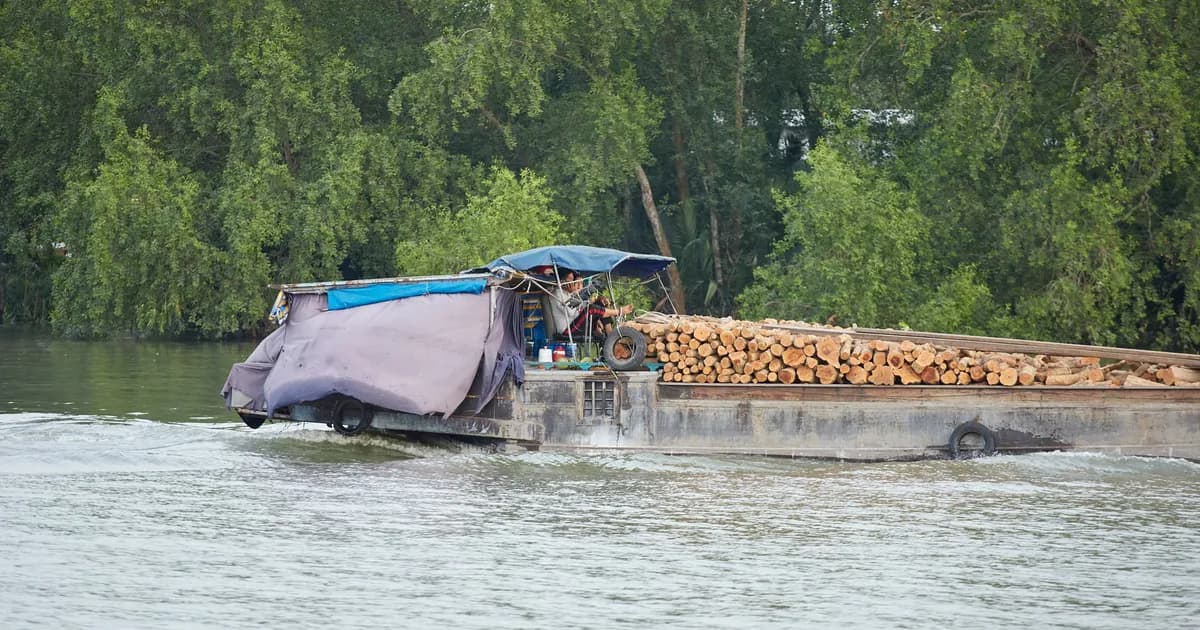
Somewhere south of Phnom Penh, on the flat rice country between the Mekong and the sea, Cambodia is digging the largest civil engineering project in its modern history. The Funan Techo Canal is not a tourist attraction and it is not trying to be one. But it runs straight through four provinces that slow travellers use constantly, it is reshaping the landscape of the southern delta, and it has become the single most revealing argument the country is having with itself about what kind of future it wants. If you are travelling in Cambodia over the next few years, you will see it, and it is worth understanding what you are looking at.
What the canal actually is
The Funan Techo Canal is a planned inland waterway of roughly 180 kilometres, cutting from the Mekong river system south of Phnom Penh across the delta plain to the Gulf of Thailand. In the documentation notified to the Mekong River Commission, the design includes three navigation locks and a series of road bridges, with a channel deep and wide enough for vessels in the region of 3,000 deadweight tonnes. Construction began with a groundbreaking ceremony in August 2024, and completion has been targeted for 2028.
The stated purpose is economic sovereignty rather than tourism. At present the great majority of Cambodia's container trade moves down the Mekong and out through Vietnamese ports. A domestic canal to a Cambodian deep-water outlet would, in theory, let Cambodian cargo reach the sea without passing through a neighbour's territory. Reported costs have hovered around 1.7 billion US dollars, with financing and ownership structures that have been revised more than once and that involve Chinese state-linked construction interests alongside Cambodian shareholders.
That is the official story, and it is worth taking seriously on its own terms. A small economy that pays a transit premium on almost every export container has an obvious reason to want its own route to the sea.
One request. Up to five tailored proposals.
Skip contacting agencies one by one — share your trip once and let up to five trusted Cambodia agencies come to you. Free, with no obligation.
Get my free quotesWhere it runs, and which places it touches
The alignment crosses Kandal, Takeo, Kampot and Kep provinces. Anyone who has travelled the southern loop will recognise the list immediately: this is the country you pass through on the way from Phnom Penh to the pepper farms, the salt pans and the crab market.
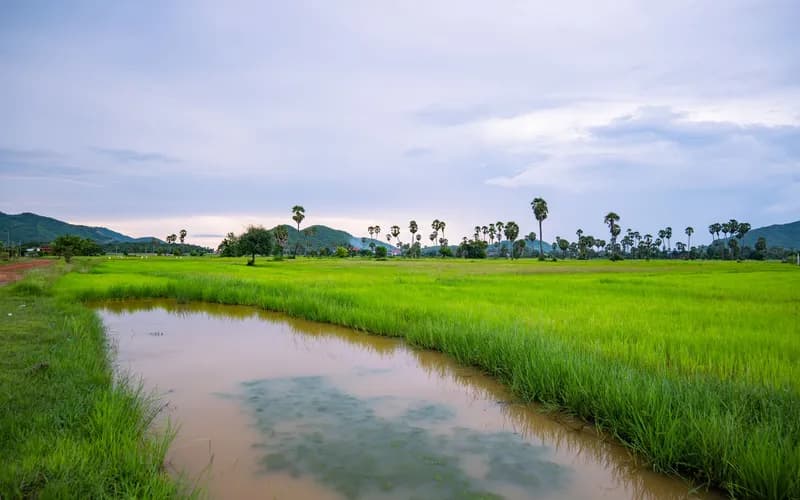
That matters for two reasons. First, it is farmland, not wilderness. The canal is being cut through an inhabited, worked, densely irrigated landscape of rice fields, orchards, villages and family plots. Second, it ends on a stretch of coast that has, until now, been one of the calmest and least industrialised in Cambodia. If your mental picture of Kep is the one we describe in our piece on Kampot and Kep as Cambodia's slow coast, then the arrival of a shipping channel and its associated logistics zone is a significant change to hold in mind.
None of this makes those places not worth visiting. Kampot and Kep remain two of the most rewarding towns in the country. It simply means the region is in motion, and travellers who arrive expecting a fixed postcard will be surprised.
What is actually built so far
Here honesty matters more than headlines, in both directions. For a long period the project's own public progress reporting showed very little movement, and through late 2025 and into early 2026 the official dashboard was still showing effectively no measured progress. Sceptics read that as evidence the canal was largely political theatre.
Then, during 2026, the picture changed. The project moved into visible earthworks, with the government describing a second phase of the broader integrated water resource management programme and construction advancing along sections of the route. What you can see from the road today is not a canal. It is a construction corridor: spoil heaps, haul roads, survey markers, diverted irrigation channels and sections of stripped land where rice used to be.
The practical reading for a traveller in 2026 is this. The canal is real, it is being built, it is behind its original publicity schedule, and the 2028 completion date should be treated as an ambition rather than a timetable.
Get matched with up to 5 trusted Cambodia agencies
- Free
- No obligation
- Up to 5 agencies
The contested part: water, farmland and the delta
This is where the project stops being an infrastructure story and becomes a regional argument.
Cambodia chose not to undertake a formal Prior Consultation process under the Mekong Agreement, on the position that the canal draws from a tributary system and does not constitute a diversion of the Mekong mainstream. Vietnam and a number of independent analysts disagree, and the Stimson Center and other research bodies have published assessments arguing that the hydrological effects, particularly on dry-season flows, have not been adequately studied or disclosed.
The concern downstream is specific. Vietnam's Mekong Delta is already under severe pressure from upstream dams, drought, subsidence and saltwater intrusion, and any additional dry-season abstraction is consequential for rice and aquaculture there. Within Cambodia, researchers and reporting by outlets such as Mongabay have raised questions about altered flooding patterns, effects on the Tonle Sap system, and impacts on coastal and marine habitats near the canal mouth.
The counter-argument from the Cambodian side is that the volumes involved are modest relative to Mekong flows, that the scheme has irrigation benefits for farmers along the route, and that the country is entitled to develop its own water infrastructure. What is missing, and what almost every independent observer has asked for, is a published, peer-reviewable environmental and hydrological impact assessment. Until that exists, the disagreement cannot really be settled, only argued.
Who is being moved
The government has said it expects roughly 2,305 households, in the order of 11,525 people, to be affected by the canal's construction. Reporting from the affected provinces describes prolonged uncertainty: residents unsure whether their land is inside the alignment, compensation negotiations that have been slow and inconsistent, and local officials who themselves say they have not been given clear information.
This is not unusual for a project of this scale anywhere in the world. It is also not a detail. When you pass a village of half-demolished houses beside a fresh embankment in Takeo, you are looking at people whose compensation question has not yet been answered. Slow travel that pretends not to see that is not really slow travel.
What this changes for travellers in practice
In the short term, less than you might expect, and mostly in the form of friction rather than closure.
- Road works and diversions on the routes between Phnom Penh, Takeo, Kampot and Kep. Journey times on some sections are less predictable than they were.
- Dust and heavy truck traffic in the dry season along haul routes near the alignment.
- Changed river and irrigation channels in parts of Kandal and Takeo, which affects some local boat trips.
- A gradual shift in the character of the Kep and Kampot hinterland as land is acquired and logistics development follows.
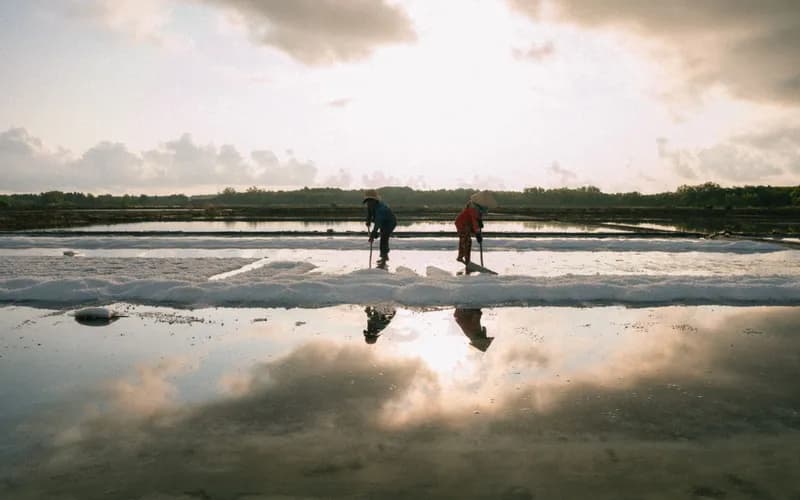
What it does not do is close the south. The temples, the pepper farms, the salt fields, the crab market, the river at Kampot and the hill road to Bokor all remain exactly where they were. If anything, the sensible response is to go sooner rather than later, and to build the kind of itinerary described in our slow traveller's guide to Cambodia, which weights time in place over distance covered.
If you specifically want a coastline that construction has not touched, the far southwest is the answer. The Cardamom coast is a different world, as we describe in our piece on Koh Kong and the Cardamom coast.
The quieter story: a country deciding what it wants to be
The canal is the most visible expression of a wider choice Cambodia is making in this decade. The same period has produced a new capital airport, a growing expressway network, large coastal concessions, and a tourism ministry pushing to spread visitors beyond Siem Reap.
Set against that, the tourism numbers have been sober. Cambodia has had a difficult couple of years for arrivals, and the sector has been rebuilding trust as much as capacity, a picture we set out in our analysis of Cambodia's quiet year for arrivals. The canal belongs to a strategy that treats logistics, not visitors, as the engine. Whether that turns out to be the right bet is a question nobody can answer yet.
For the traveller, the useful observation is simply that Cambodia in 2026 is not a finished place being preserved. It is a country under construction, with all the noise, opportunity and unresolved cost that implies.
How to travel well through a landscape under construction
There is a way to handle this that is neither wilful blindness nor disaster tourism.
Ask local guides about it, and listen to the answer rather than the one you expected. Opinions in the affected provinces are genuinely mixed: some farmers want the irrigation, some want their land back, many want a straight answer about compensation. Spend money with businesses in the towns rather than only at coastal resorts, since the local economy absorbs the disruption either way. Do not photograph demolished homes or displaced families as scenery. And keep your own expectations flexible about travel times.
This is the practical end of what we mean by responsible slow travel, and it is set out more fully in the UNRUSH slow travel charter.
What to Do Next
- If Kampot, Kep and the southern delta are on your list, plan them for this year rather than filing them away for later.
- Add a buffer of thirty to sixty minutes on road journeys between Phnom Penh, Takeo and the coast, particularly in the dry season.
- Ask your accommodation or driver about current road conditions the day before you travel, not the week before.
- Choose a local operator or guide who will talk about the project honestly rather than steering around it.
- Follow the Mekong River Commission and independent research organisations for updates rather than relying on promotional coverage.
- If you want an untouched coast, route southwest to Koh Kong and the Cardamoms instead of, or as well as, Kep.
- Treat the 2028 completion date as provisional and re-check before planning around any river or canal route.
Frequently Asked Questions
Is the Funan Techo Canal open to tourist boats?
No. It is a freight navigation project, not a passenger route, and it is not finished. There is no plan on the public record for tourist cruising on the canal, and it should not feature in any itinerary you are offered.
Does the canal affect travel to Kampot and Kep right now?
Only marginally. Expect occasional road works, diversions and heavy truck traffic on the routes through Kandal and Takeo, and allow extra time. The towns themselves, the pepper farms, the salt pans and the coast are all operating normally.
When will the canal be finished?
The stated target is 2028. Progress has been slower than the original announcements implied, with very little measured progress reported into early 2026 before earthworks accelerated later that year. Treat 2028 as an ambition rather than a fixed date.
Why is Vietnam concerned about it?
Vietnam's Mekong Delta is already dealing with reduced dry-season flows, saltwater intrusion and subsidence. Any further abstraction upstream matters there. Cambodia did not run a formal Prior Consultation under the Mekong Agreement, arguing the canal is not a mainstream diversion, and that procedural decision is a large part of the dispute.
How many people are being displaced?
The Cambodian government has cited roughly 2,305 households, about 11,525 people, as affected. Independent reporting from Kandal, Takeo, Kampot and Kep describes unresolved compensation and considerable uncertainty among residents about whether their land falls inside the alignment.
Should I avoid southern Cambodia because of the project?
No. Avoiding a region because it is changing is the wrong instinct, and it takes money away from exactly the communities bearing the disruption. Travel there, allow more time, choose local businesses, and be willing to see the construction rather than looking past it.
Where can I find reliable information on the project?
Look at the Mekong River Commission's published material, independent policy research such as the Stimson Center's Mekong work, and environmental reporting outlets including Mongabay. Government announcements and promotional travel coverage should both be treated as partial accounts.