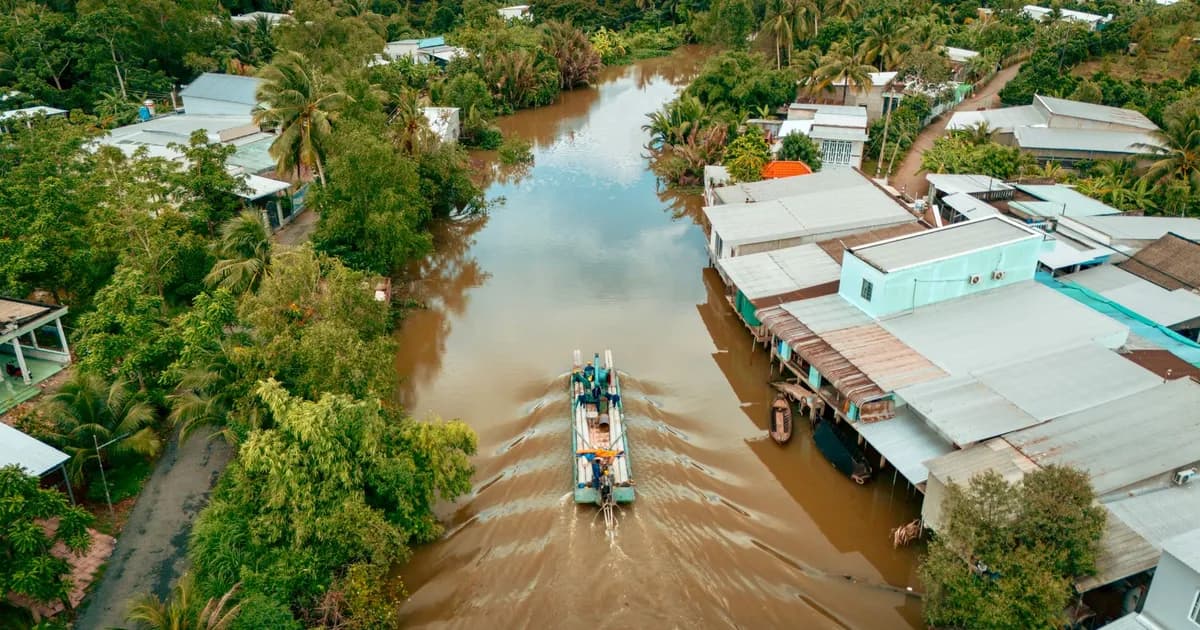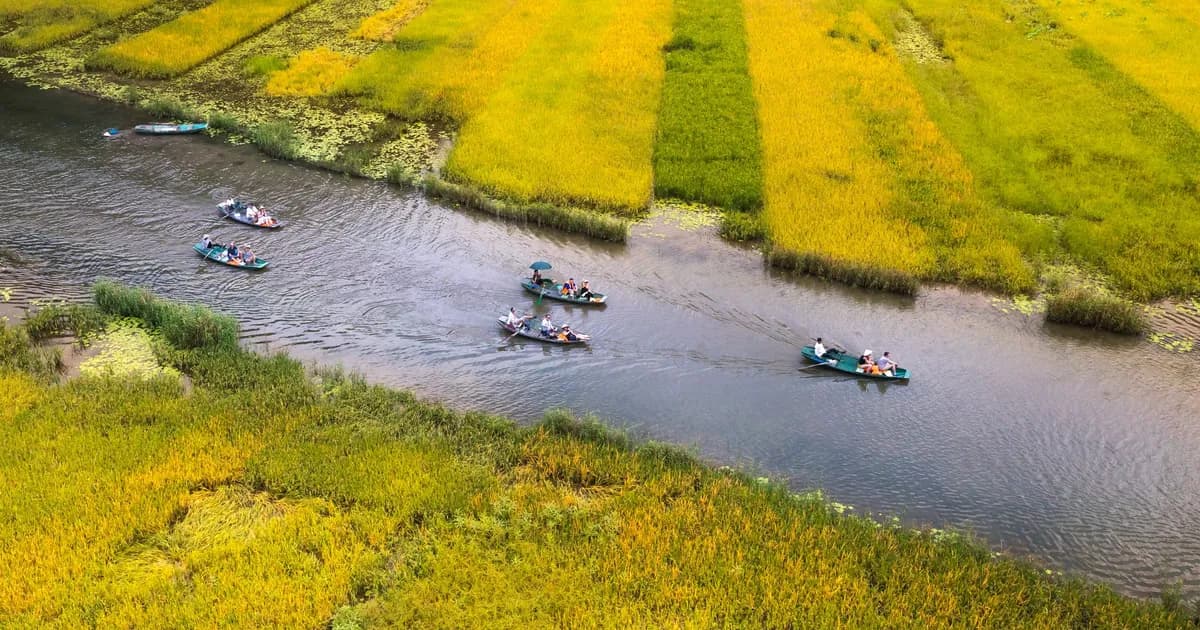


Most itineraries treat Phnom Penh as a transit lounge with monuments: one night, two museums, an early flight north. It is a mistake, and a common one. Cambodia's capital is a low-rise, river-facing city of roughly two and a half million people, still built at human scale, and it rewards travellers who give it three or four days more than almost anywhere else in the country. In 2026 it is also the steadiest point on Cambodia's tourism map. While national arrivals fell sharply through the first half of the year, Phnom Penh's foreign visitor numbers dipped only around five percent, against declines of roughly thirty percent in Siem Reap province. The crowds thinned. The city did not.
Why the Capital Deserves More Than a Night
Phnom Penh is not a picture-postcard city, and that is precisely its value. Where Siem Reap organises itself around a single monumental attraction, the capital asks you to read it slowly: French colonial shophouses with laundry strung across their balconies, New Khmer Architecture from the 1960s standing beside glass towers, monks collecting alms at dawn on streets that fill with motorbikes by seven. Very little here is staged for visitors, which means very little here can be consumed in an afternoon.
The practical argument is just as strong. Phnom Penh is now Cambodia's transport hub in a way it was not five years ago, with Techo International Airport open to the southeast of the city and expressways running towards the coast. Almost every overland route in the country passes through it or near it. If you are changing buses here anyway, staying three nights costs you very little additional time and changes the shape of the whole trip. For a sense of how the capital fits into a longer route, our slow travel guide to Cambodia sets out the regional rhythms and seasons.
One request. Up to five tailored proposals.
Skip contacting agencies one by one — share your trip once and let up to five trusted Cambodia agencies come to you. Free, with no obligation.
Get my free quotesFour Rivers and a Grid: How the City Is Laid Out
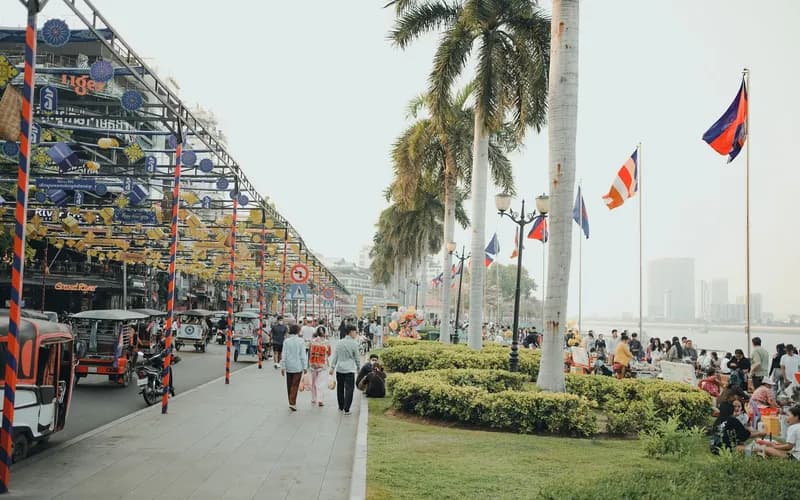
Phnom Penh sits at the Chaktomuk, the confluence where the Mekong, the Tonle Sap and the Bassac meet and part again. That junction explains the city's shape. The riverfront promenade, Sisowath Quay, runs north to south along the water for about two kilometres, and almost everything a first-time visitor wants sits within a couple of kilometres of it.
The street grid helps enormously. Odd-numbered streets run north to south, even-numbered streets run east to west, and the big named boulevards — Norodom, Monivong, Sihanouk, Mao Tse Toung — cut across them. Once you understand that logic, you can navigate on foot or by tuk-tuk without a map, which is more than can be said for most Southeast Asian capitals. Distances between the main sights are short: the Royal Palace to the National Museum is a two-minute walk, and the Russian Market is about four kilometres south, a fifteen-minute ride.
The practical caveat is heat and traffic. Pavements are often occupied by parked motorbikes, and crossing a boulevard requires walking steadily and predictably rather than waiting for a gap that never comes. Plan walking for early morning and late afternoon and use a ride-hailing app in between.
Neighbourhoods Worth Walking
Riverside and Daun Penh. The oldest visitor-facing quarter, wrapped around the Royal Palace, the National Museum and Wat Phnom. It is the most polished part of the city and the most touristed, but the early mornings along the quay — aerobics classes, badminton, coffee carts — belong to residents rather than visitors.
Tonle Bassac and BKK1. South of the palace, this is where Phnom Penh's contemporary self lives: independent coffee roasters, bookshops, galleries and the cocktail alleys of Bassac Lane and Langka Lane. It is dense enough to explore properly on foot in an evening.
Toul Tom Poung. Named after its market, better known to visitors as the Russian Market, this is the most genuinely lived-in neighbourhood of the three. Street food carts sit next to independent cafés, tailors next to mechanics. Stay here if you would rather be in a working district than a hotel strip.
Chroy Changvar. Across the Japanese Friendship Bridge on the peninsula, quieter, with long river views back towards the city skyline at sunset.
Get matched with up to 5 trusted Cambodia agencies
- Free
- No obligation
- Up to 5 agencies
The Hard History, Visited Properly
Two sites document the Khmer Rouge period, and both should be approached with more care than a standard sightseeing stop. Tuol Sleng Genocide Museum, the former S-21 prison, opens daily from 08:00 to 17:00 and charges around five US dollars for adult foreign visitors, with an audio guide strongly recommended. Choeung Ek, the killing field about fifteen kilometres south of the centre, charges roughly six dollars including its audio guide.
A few things are worth saying plainly. Do the two on the same day if you can bear it, because they are one story told in two places, and doing them separately dilutes both. Do them in the morning, when you have energy. Do not photograph yourself smiling anywhere on either site. Give yourself the rest of the day free — a long lunch, a slow walk, nothing scheduled. Many visitors underestimate how much these places take out of them.
Guides at both sites include survivors and relatives of victims. Paying for a guide, or buying their published testimony, is one of the few directly useful things a visitor can do. If you want a wider frame for these choices, we have written about travelling in Cambodia ethically, including the orphanage and voluntourism questions that still circulate here.
Markets, Silk and the Craft Trail
Phsar Tuol Tom Poung, the Russian Market, is the one most travellers should prioritise. It opens around 07:00 and runs to about 17:00, and it is at its best before nine, when the produce is fresh and the covered aisles are still bearable. Beyond the silk scarves and factory-second clothing there is a serious silverwork and stone-carving section, and a food court in the middle that many residents rate above anywhere on the riverside.
Phsar Thmei, the Central Market, is the architectural draw: a 1937 Art Deco dome painted ochre, one of the finest buildings of its era in Southeast Asia. It is more of a place to look at than to shop in. Phsar Kandal and Phsar Orussey are working markets with almost no visitor infrastructure, which is exactly why they are interesting.
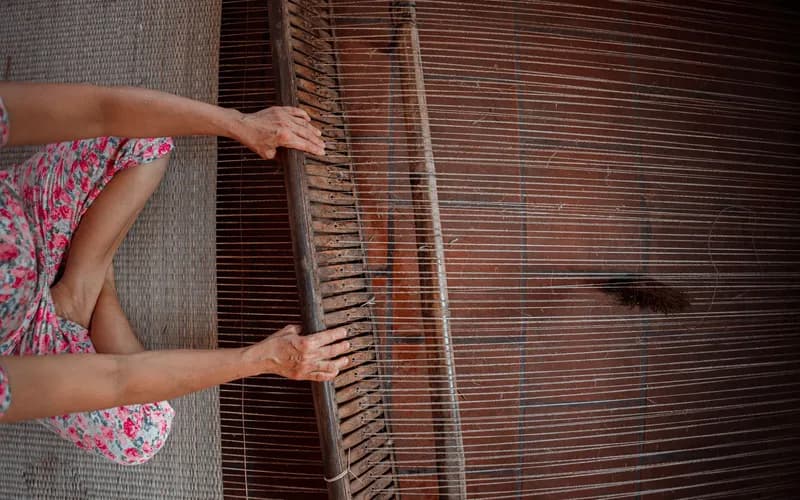
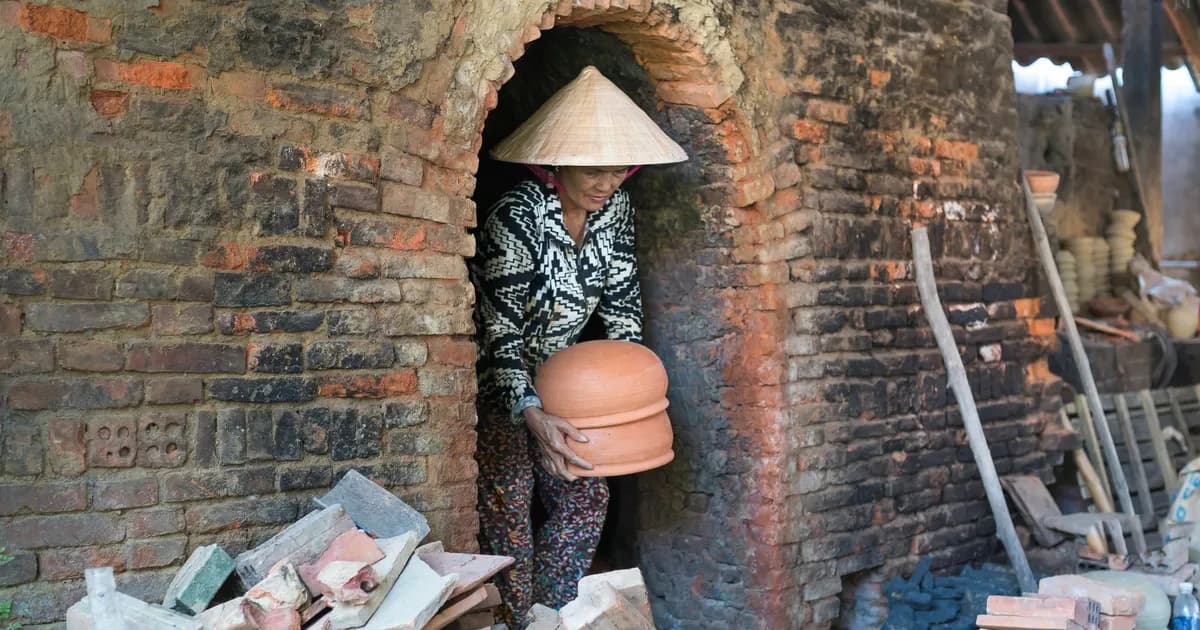
For craft rather than souvenirs, the capital has become the centre of a genuine revival — weaving cooperatives, ceramics studios, natural dye workshops and silversmiths who train apprentices rather than importing stock. This is part of a national shift we covered in Cambodia's craft and living arts revival. Ask where a piece was made and by whom; the honest sellers will tell you without hesitation.
Eating Through a Phnom Penh Day
Breakfast in Phnom Penh is soup. Kuy teav, a rice noodle broth with pork, is sold from carts and shopfronts from about 06:00 and disappears by mid-morning. Bai sach chrouk — grilled pork over broken rice with pickled vegetables and a bowl of clear broth — is the other classic, and at around one to two dollars it remains one of the best-value breakfasts anywhere in the region.
Lunch is where the city's Chinese, Vietnamese and Cham communities show themselves: num banh chok noodle stalls, Cham beef stews, Teochew braises. Dinner ranges from riverside barbecue to a small but serious fine-dining scene in Tonle Bassac that works almost entirely with Cambodian ingredients.
A few habits help. Eat where there is turnover. Carry small riel notes for street carts even though the city runs largely on dollars and QR payments. And do not skip the fruit stalls: mangosteen, rambutan and longan in season are cheap and superb. Our guide to Cambodian food goes deeper into dishes and regional differences.
Off the Grid: Islands, Ferries and Day Trips
The best half-day in Phnom Penh costs about a dollar. Take the local ferry from the northern riverfront to Koh Dach, the Mekong island widely called Silk Island, where weavers still work wooden looms beneath stilted houses. Hire a bicycle at the landing, ride the flat lanes past fruit gardens and village pagodas, and be back in the city by late afternoon. It is genuinely rural, fifteen minutes from a capital city.
Other options within reach: Oudong, the royal capital before Phnom Penh, with hilltop stupas about forty kilometres northwest; Phnom Chisor, an eleventh-century Angkorian temple south towards Takeo; and the Mekong Discovery routes north, which link to river towns such as Kratie and its dolphin reaches if you are heading upriver rather than back to Siem Reap.
When to Come and How Long to Stay
November to February is the driest and coolest window, with daytime highs around 30 to 32 degrees Celsius and low humidity — the easiest time to walk the city. March to May is genuinely hot, regularly touching 38 degrees, and midday walking becomes unwise. June to October is the green season: heavy but usually short afternoon downpours, lush countryside, thinner crowds and lower room rates.
Three nights is the minimum that lets the city breathe. Four is better. A workable shape: day one for the palace, museum and riverside; day two for Tuol Sleng and Choeung Ek in the morning and nothing demanding afterwards; day three for Koh Dach or the markets; day four for whichever neighbourhood you liked most. Because heat is the main constraint on all of this, it is worth reading our practical health advice for Cambodia before you arrive.
Where Phnom Penh Falls Short
Honesty matters more than enthusiasm. Air quality in the dry season is poor, particularly in February and March when agricultural burning drifts in. Traffic is heavy and pedestrian infrastructure is weak. Petty theft — mostly phone and bag snatching from moving motorbikes — is a real risk along the riverside and in BKK1 after dark; carry your phone in a front pocket and do not walk with it in your hand.
The city also has an uncomfortable relationship with the online scam industry that has damaged Cambodia's reputation internationally. This has no practical bearing on ordinary visitors, who will never encounter it, but it is why you may see unusually blunt advice in government travel notices. Read those notices, then read them in proportion.
Finally, the palace and museum both close at midday on some schedules and cash is often required at ticket desks. Bring small dollars.
What to Do Next
- Block three to four nights in Phnom Penh rather than one, and put them at the start of your trip while your energy is highest.
- Choose a base by character: Riverside for convenience, Tonle Bassac for cafés and food, Toul Tom Poung for everyday city life.
- Book Tuol Sleng and Choeung Ek for a single morning, with an audio guide, and leave the afternoon deliberately empty.
- Set an alarm for one early morning and walk the quay before 07:00 — it is the best free hour in the city.
- Take the Koh Dach ferry on a weekday and hire a bicycle at the landing.
- Carry small US dollar notes and riel for change, and set up a QR payment app for everything else.
- When you are ready to build the wider route, start with planning your Cambodia journey and, if you want ground support, compare vetted Cambodian travel agencies.
Frequently Asked Questions
How many days do I need in Phnom Penh?
Three nights is the realistic minimum for the palace, the two Khmer Rouge memorial sites, one market morning and a river island. Four lets you add a neighbourhood you have grown fond of, or a day trip to Oudong. One night is only enough to see the inside of a hotel and a museum.
Is Phnom Penh safe for visitors in 2026?
Broadly, yes, with ordinary city precautions. Violent crime against visitors is rare. Snatch theft from motorbikes is the genuine risk, concentrated along the riverside and in nightlife areas after dark. Keep your phone away, use a cross-body bag on the side away from the road, and take a ride-hailing car rather than walking long distances late at night.
What does it cost to visit the main sights?
Expect around ten US dollars each for the Royal Palace and the National Museum, five dollars for Tuol Sleng and about six for Choeung Ek including its audio guide. Ticket desks frequently want cash in small US dollar notes, so do not rely on a card.
Is Phnom Penh walkable?
In parts, and at certain hours. The riverside, Daun Penh and Tonle Bassac are all walkable in the early morning and after about 16:00. Pavements are frequently blocked by parked motorbikes, and midday heat from March to May makes long walks a bad idea. Use tuk-tuks or a ride-hailing app for anything over about a kilometre in the heat.
When is the best time of year to visit?
November to February for comfortable walking weather and clear skies. June to October for greener landscapes, fewer visitors and lower prices, accepting an afternoon downpour most days. March to May is the hardest, with sustained heat above 35 degrees and poorer air quality early in that window.
Can I use cards, or do I need cash?
Both. Phnom Penh runs largely on US dollars and increasingly on QR payments through the national KHQR system, which most restaurants and even market stalls accept. But government ticket offices, ferries, tuk-tuks and small carts still prefer cash. Carry a mix of small dollar notes and riel, and treat riel as your small change below one dollar.
Is the Khmer Rouge history too much for children?
Tuol Sleng sets a minimum recommended age and the content at both sites is graphic and unflinching. Most families with children under about fourteen visit Choeung Ek only, or skip both and use the National Museum and Royal Palace instead. There is no obligation to include them, and no shame in deciding they are not right for your group.