How to Visit Tonle Sap's Floating Villages Responsibly
The Tonle Sap is one of Southeast Asia's natural wonders: a vast freshwater lake at the heart of Cambodia that swells and shrinks dramatically with the seasons, and around whose shifting edges whole communities live on and above the water. Visiting its floating and stilted villages can be one of the most memorable experiences of a Cambodian trip, or one of the most dispiriting. The difference lies almost entirely in how, and where, you choose to go, and in whether you take the time to choose well rather than grabbing the first tour on offer. This is a guide to doing it the responsible way.
The stakes are real. Some village tours have become exploitative operations that extract money from tourists while giving little back to the communities they parade past, and the lake itself is under genuine environmental pressure. A little knowledge before you go turns a potential tourist trap into a genuine and respectful encounter.
What the Tonle Sap is, and why it matters
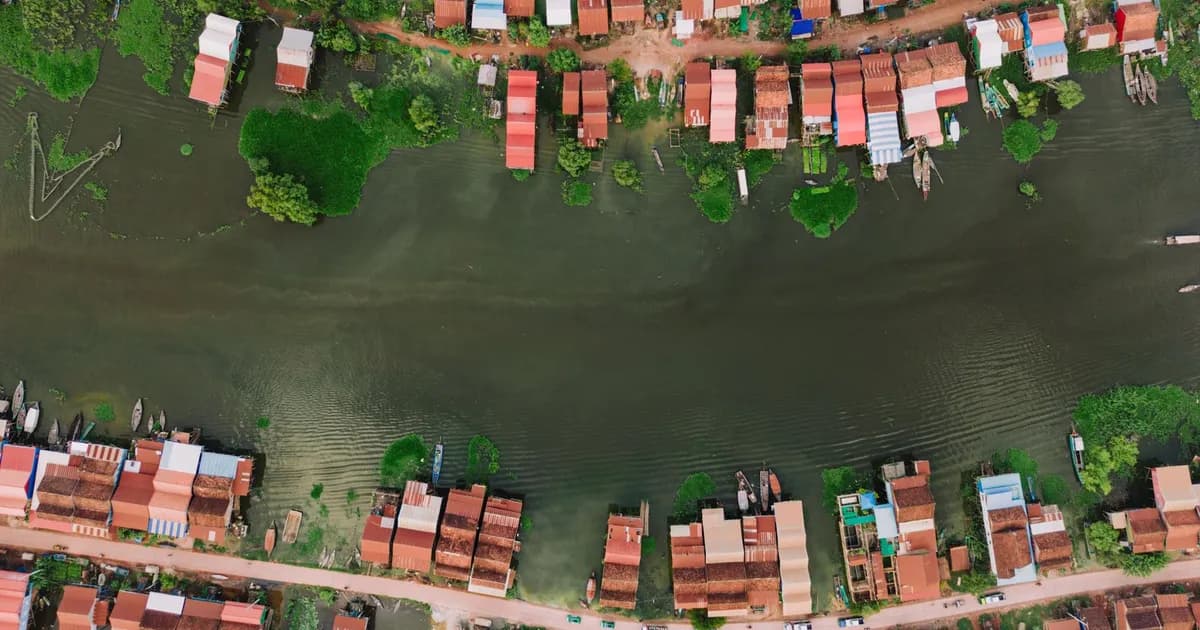
The Tonle Sap is the largest freshwater lake in Southeast Asia, and one of the most extraordinary, because it breathes. In the dry season it is relatively small and shallow; when the monsoon swells the Mekong, the river connecting the two actually reverses its flow and pours water back into the lake, which expands several times over. This annual pulse makes the Tonle Sap one of the most productive inland fisheries on earth, and it has shaped a way of life found almost nowhere else, communities of floating and stilted houses that rise and fall with the water.
For the traveller, this is what makes a visit worthwhile: not a photo opportunity, but a glimpse of a genuinely amphibious civilisation, where homes, schools, shops and temples float or stand on stilts, and where the boat is the only road. Understanding the lake's importance, ecological and human, is the first step to visiting it well. Our slow travellers guide to Cambodia sets the lake in the context of a wider, unhurried trip.
One request. Up to five tailored proposals.
Skip contacting agencies one by one — share your trip once and let up to five trusted Cambodia agencies come to you. Free, with no obligation.
Get my free quotesThe main villages, and how they differ
Several villages are accessible from Siem Reap, and they are not equal. Chong Kneas is the closest and by far the most visited, which is precisely its problem. Mechrey is smaller and quieter. Kampong Phluk is known for its stilted houses and a flooded forest you can paddle through in the wet season. Kampong Khleang, the furthest from Siem Reap, is the largest community on the lake, home to thousands of people in a mix of stilted and floating houses, and generally the most rewarding precisely because it is the least geared to tourism.
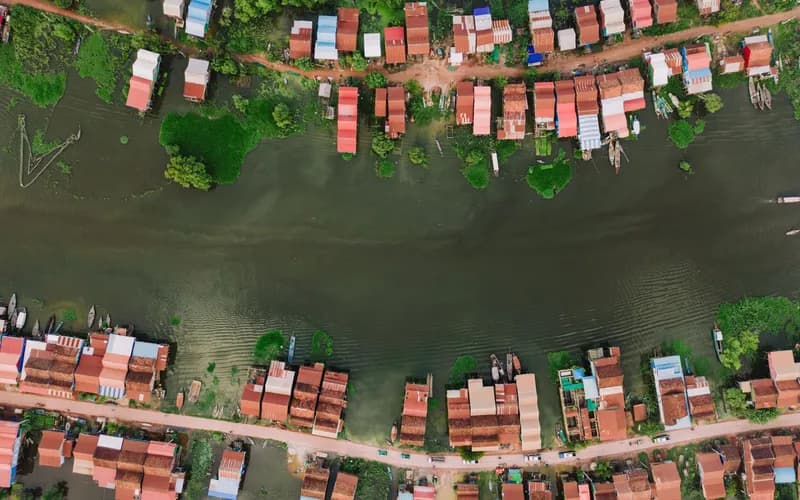
As a rule, the closer and easier a village is to reach from Siem Reap, the more heavily touristed and the less authentic it tends to be. The extra hour it takes to reach Kampong Khleang is repaid many times over in the quality of the experience: a real working community going about its life, rather than a performance staged for a conveyor belt of boats. For travellers who value the road less taken, our guide to Cambodia off the beaten path reinforces the case for going further.
Why Chong Kneas has a bad reputation
It is worth being blunt about Chong Kneas, because it is the village most travellers are steered towards and the one most likely to disappoint. Its proximity to Siem Reap has made it the default stop, and with that has come a reputation for aggressive commercialism: inflated boat prices, pressure to buy overpriced goods, staged encounters, and schemes that channel money to operators rather than residents. Some of the practices reported there, including visits to orphanages and pressure to buy expensive rice for schools, are exactly the kind of thing responsible travellers are now advised to avoid.
None of this means the people of Chong Kneas are at fault; they are as much subject to an exploitative system as the visitors are. But it does mean that turning up unprepared and taking the first cheap tour offered is the surest way to have a bad, and ethically dubious, experience. Knowing to look further afield, or to choose a better operator, is the single most useful thing a visitor can do. The principles in our guide to travelling Cambodia ethically apply here more than almost anywhere.
Get matched with up to 5 trusted Cambodia agencies
- Free
- No obligation
- Up to 5 agencies
Choosing a responsible way in
The good news is that responsible ways to visit the Tonle Sap exist and are not hard to find. The key is to choose community-based or community-owned operators, organisations that are run by or genuinely partnered with the villagers, and that channel the bulk of the money back into the community. Several such initiatives operate at Kampong Khleang and other villages, offering boat trips and meals where your fee supports local families directly rather than a distant tour company.
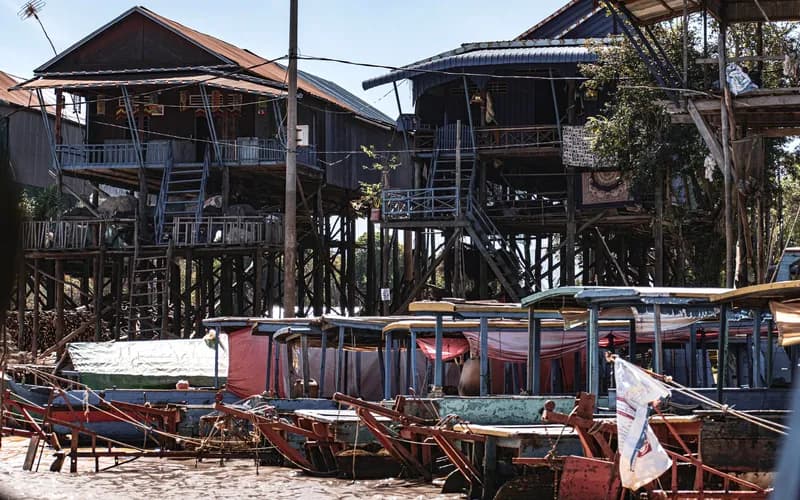
Ask the right questions before you book: who owns the boat, where the money goes, and whether the tour supports the community. Avoid operators who push orphanage visits or pressure you into buying gifts for schools, both red flags. Booking through a reputable, transparent operator, rather than the cheapest option touted on a Siem Reap street corner, is worth every extra dollar, and a specialist on our Cambodia travel agencies page can point you to genuinely community-based trips.
Prek Toal for the birdwatchers
There is one more reason to venture onto the Tonle Sap that has nothing to do with villages. Prek Toal, at the edge of the lake, is the largest waterbird colony in Southeast Asia and a Ramsar-listed core zone of a UNESCO biosphere reserve, a breeding ground for some of the world's most endangered large waterbirds. For anyone with an interest in nature, a guided visit in the breeding season is a genuine highlight, and one that directly supports the conservation of a globally important wetland.
A trip to Prek Toal is more of a commitment than a village tour, requiring an early start and a longer boat journey, but it is a world away from the commercial circuit. Going with the recognised conservation-linked operators ensures your visit funds the protection of the colony rather than disturbing it. It pairs naturally with a slower Siem Reap stay that also takes in the temples; our guide to planning your days at Angkor can help you fit the lake around the archaeological park.
When to go: the lake's rise and fall
Timing shapes the Tonle Sap experience more than almost anywhere in Cambodia, because the lake changes so dramatically through the year. In the wet season and the months just after, roughly from the middle of the year into the early dry season, the lake is at its fullest, the flooded forest at Kampong Phluk is navigable, and the floating villages are at their most striking. This is generally the best window for a visit.
In the height of the dry season the water drops sharply, some channels become too shallow for boats, and the floating villages can sit on cracked mud rather than water, a less photogenic and sometimes impractical scene. If a village visit is a priority, aim for the higher-water months, and always check current conditions locally before booking, as the exact timing shifts from year to year with the rains.
Etiquette on the water
However and wherever you visit, a few principles keep the encounter respectful. Remember that these are people's homes, not a theme park; photograph with discretion and always ask before pointing a camera at someone, especially children. Do not hand out sweets, money or gifts to children, which encourages begging and keeps them out of school; if you want to help, support a legitimate community organisation instead.
Buy any refreshments or crafts from the villagers directly, keep noise and disturbance to a minimum, and follow your guide's lead on where it is appropriate to go. Approach the visit as a guest in a working community rather than a spectator at a show, and it becomes a genuine meeting rather than an intrusion. That shift in attitude, as much as the choice of operator, is what makes a Tonle Sap visit something to be proud of. A modest tip for the boatman and crew at the end is welcome and appropriate; open-ended handouts to villagers along the way are not, and the distinction is worth keeping clear in your mind as you go.
What to Do Next
- Choose a village beyond Chong Kneas, ideally Kampong Khleang, for a more authentic and less commercialised visit.
- Book through a community-based or transparent operator, asking who owns the boat and where the money goes.
- Avoid tours that push orphanage visits or pressure you to buy gifts for schools.
- Consider Prek Toal with a conservation-linked operator if you are interested in birds and wetlands.
- Time your visit for the higher-water months, and check local conditions before booking.
Frequently Asked Questions
Which Tonle Sap village should I visit?
Kampong Khleang is generally the most rewarding: it is the largest lake community and the least geared to tourism, though it takes longer to reach from Siem Reap. Kampong Phluk is known for its flooded forest, while Chong Kneas, the closest, is best avoided for its commercialism.
Why should I avoid Chong Kneas?
Chong Kneas has a reputation for aggressive commercialism, inflated prices, staged encounters and schemes that benefit operators over residents, including orphanage visits and pressure to buy costly gifts for schools. Choosing a village further out, or a responsible operator, gives a far better experience.
How do I visit the Tonle Sap responsibly?
Choose community-based or community-owned operators, ask who owns the boat and where the money goes, avoid orphanage visits and gift-buying schemes, photograph with permission, and treat the villages as homes rather than attractions. Booking through a transparent operator is worth the extra cost.
When is the best time to visit the floating villages?
The higher-water months, roughly from mid-year into the early dry season, are best, when the lake is full, the flooded forest is navigable and the villages are at their most striking. In the peak dry season the water drops and some channels become too shallow for boats.
What is Prek Toal?
Prek Toal is the largest waterbird colony in Southeast Asia, a Ramsar site within a UNESCO biosphere reserve at the edge of the Tonle Sap. Guided visits in the breeding season are a highlight for nature lovers and, through recognised operators, directly support the colony's conservation.
Is it ethical to visit the floating villages at all?
Yes, if done thoughtfully. Visiting a genuine community through a responsible, community-based operator can bring welcome income and interest to lake villages. The harm comes from exploitative tours and disrespectful behaviour, both of which are avoidable with a little preparation.