

Cambodia's tourist calendar was built by people selling package holidays, and it says: come between November and February. That advice is not wrong, but it hides something. The wet months, roughly May through October, are when the country looks most like itself: rice in the ground, the Mekong at full power, temples dark with moisture, and prices and crowds at their lowest point of the year. Travelling then is entirely feasible. It just requires understanding how the rain behaves rather than fearing it.
What the Green Season Actually Is
Cambodia has two seasons rather than four. The southwest monsoon brings rain from around May to October, and the dry northeast monsoon takes over from November to April. Within that, the useful sub-divisions are: hot and dry from March to May, wet and warm from June to August, wet and heaviest from late August to early October, and cool and dry from November to February.
Temperatures in the wet months typically sit between 28 and 34 degrees Celsius, which is a little lower than the April peak but with markedly higher humidity. The country does not become cold or unpleasant. It becomes green, wet and slower.
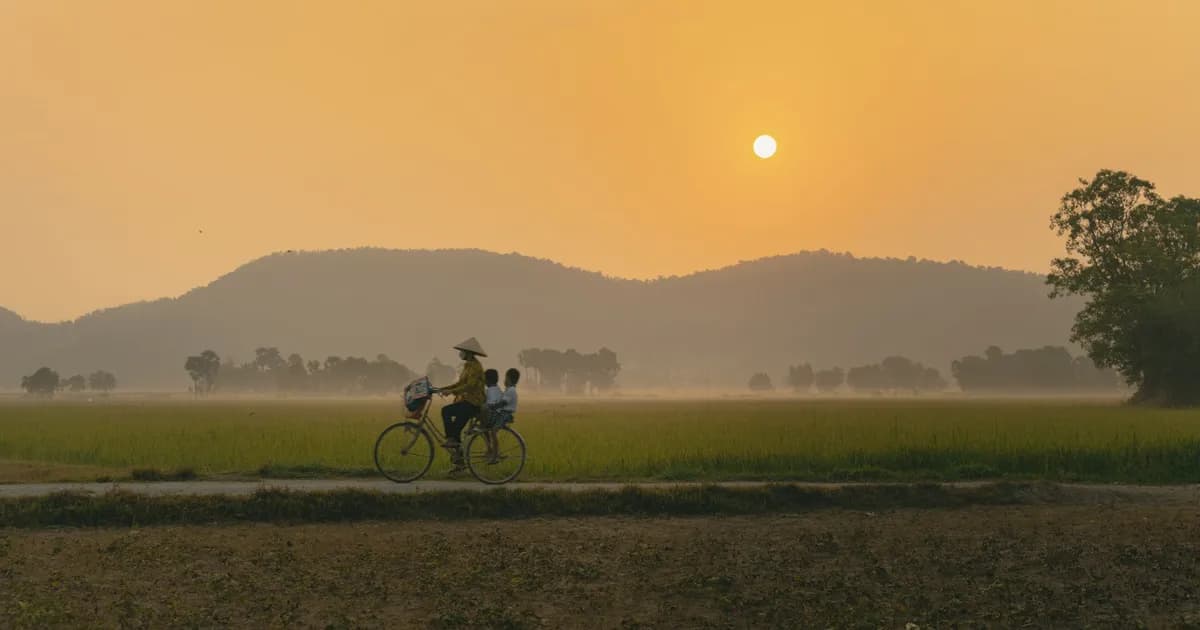
The term "green season" is a marketing coinage, but it describes something real. Between June and October the landscape is transformed: dry brown paddies become mirrors of standing water, the sugar palms stand out against saturated colour, and the rivers rise metres rather than centimetres.
One request. Up to five tailored proposals.
Skip contacting agencies one by one — share your trip once and let up to five trusted Cambodia agencies come to you. Free, with no obligation.
Get my free quotesThe Daily Rhythm of Rain
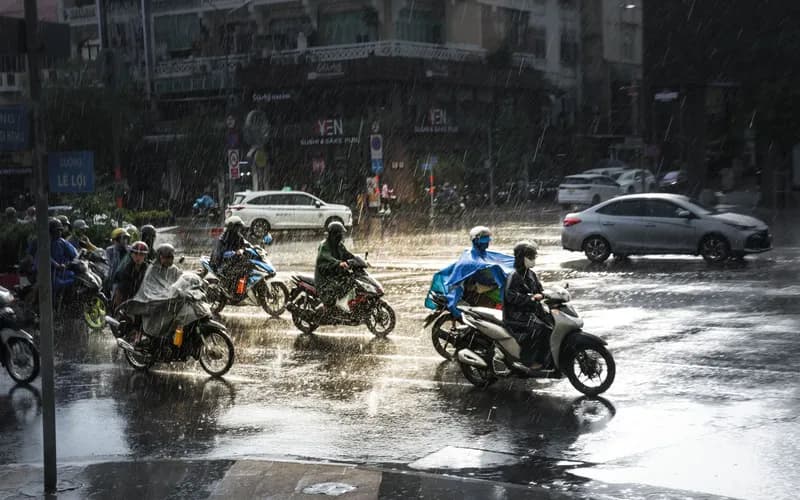
The single most useful thing to understand is that green-season rain in Cambodia is usually an event, not a condition. The characteristic pattern is a clear or hazy morning, a build-up of cloud through midday, one heavy downpour in the mid to late afternoon lasting perhaps one to two hours, and a washed, cooler evening.
That pattern is not guaranteed, and in the wettest weeks of late August and September you can get several grey days in a row and genuine multi-hour rain. But most of the time you can plan around it almost as a timetable: temples, markets and outdoor activity in the morning, something indoor or a long lunch when the sky darkens, and back out by five.
Practically, this means the green season penalises rigid schedules and rewards flexible ones. If you have booked a single narrow window for one activity, rain is a problem. If you have three days in a place and no fixed plan, it is barely an inconvenience.
What Gets Better
The advantages are substantial and often understated.
- Crowds thin dramatically. Angkor's most photographed corners become negotiable, and lesser sites can be empty.
- Accommodation rates fall. Discounts of 30 to 50 percent off high-season prices are commonly quoted, and negotiation on multi-night stays works.
- The landscape is at its best. Rice country, waterfalls in the northeast, and the Cardamom forests all peak now.
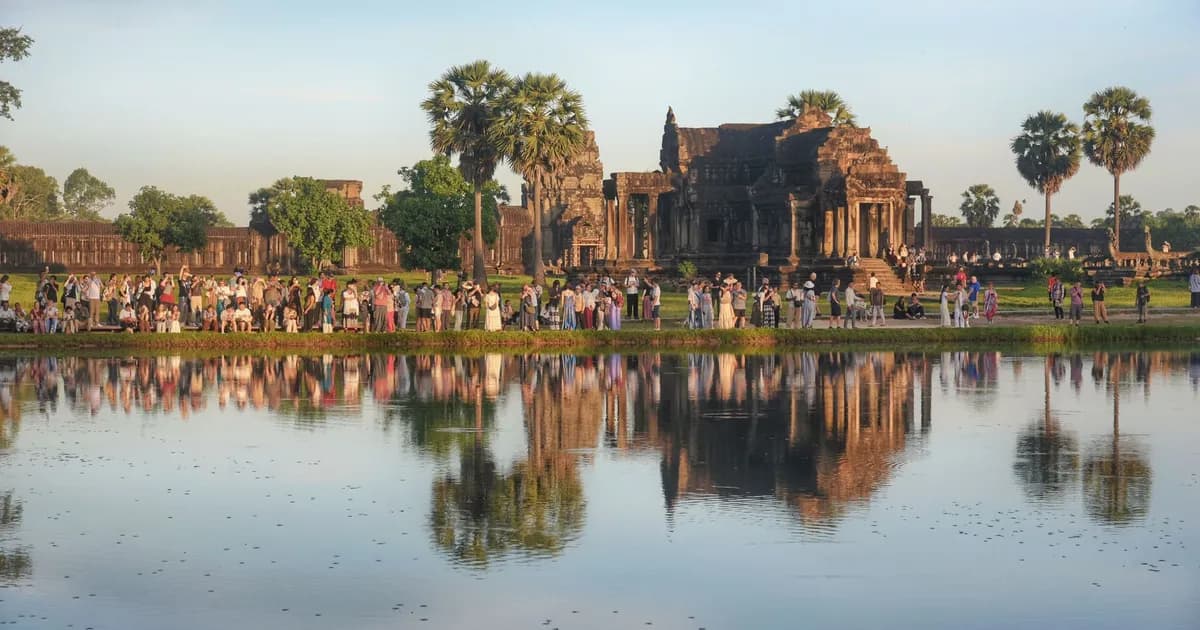
- Temples photograph better. Angkor's moats and barays fill, giving reflections that simply do not exist in March, and wet stone shows carving detail that dry glare flattens.
- Waterfalls actually flow. In Mondulkiri and Ratanakiri, dry-season falls are often a trickle; in the wet they are the reason to go.
If you are still deciding when to come, our slow traveller's guide to Cambodia sets out the regional trade-offs month by month.
Get matched with up to 5 trusted Cambodia agencies
- Free
- No obligation
- Up to 5 agencies
What Gets Harder
Honesty matters more than enthusiasm here.
Beaches and islands are the clearest loss. The sea off Sihanoukville and the Koh Rong islands is rough between roughly June and September, boat crossings are cancelled at short notice, and the water is often cloudy. If islands are the point of your trip, the green season is the wrong choice.
Unpaved roads deteriorate. Cambodia's paved network has improved enormously, but provincial and village roads turn to mud, and access to remote community projects, the Cardamom interior and parts of the northeast can be genuinely restricted.
Some sites become harder rather than easier. Jungle temples get slippery. Trekking in the highlands means leeches and constant wet feet. Sunrise photography is a lottery.
And a practical annoyance: laundry does not dry. Neither do shoes. Plan for it.
Roads, Boats and Getting Around
The main highways and expressways run normally through the wet season. Buses and minivans between Phnom Penh, Siem Reap, Battambang, Kampot and Kampong Cham keep to something close to schedule, with occasional delays. This is the backbone of green-season travel and it is reliable.
Where the season bites is the last stretch. The final ten kilometres of dirt to a homestay, a forest camp or a village project is what floods, not the national road. Ask any operator directly whether their site is accessible in the month you are coming, and treat a vague answer as a no.
Boats behave in the opposite way to roads. High water makes the Tonle Sap and Mekong routes easier, and the flooded forest around the great lake is genuinely accessible only when the water is up. Sea crossings, as noted, get worse.
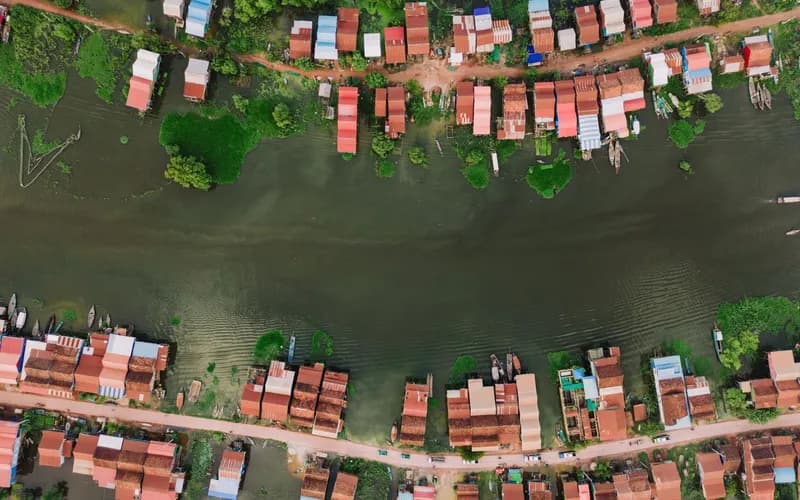
Give yourself an extra buffer day before any international flight. A single washed-out provincial road is not a crisis; missing a flight because of one is.
Where to Go, and Where Not To
The green season redistributes the map rather than shrinking it.
Strong choices: Angkor and Siem Reap, where the wet actually improves the site and thins the crowds; the Tonle Sap and its flooded forest; Kratie and the middle Mekong, where the river is at its most impressive; Battambang and the rice country around it; Phnom Penh, where rain is a two-hour interruption in an urban day; and the river towns generally. Our piece on Kampong Cham describes a place that is arguably better in high water than low.
Weak choices: the islands and the coast between June and September; long treks in the Cardamoms; and anywhere reached only by unsealed road, unless you have local confirmation and slack in your schedule.
At Angkor specifically, adjust your timing rather than your ambition. Early starts matter more than usual, because the afternoon is where the weather goes. Our guide to planning your days at Angkor applies, with the morning window compressed.
Packing for Wet Heat
Forget the waterproof jacket. In 32 degrees and full humidity, a rain shell is a portable sauna, and you will be wetter inside it than out. Cambodians use a thin poncho or simply wait the rain out under an awning, and both are better answers.
What genuinely helps: quick-dry synthetic or light merino clothing rather than cotton; two pairs of footwear so one can dry; sandals you are willing to soak; a dry bag or heavy-duty bag liner for electronics and documents; and a small umbrella, which doubles as sun cover.
Leave space for the fact that nothing dries. If you are travelling for more than a fortnight, budget for laundry services rather than washing anything yourself.
Health in the Wet Months
Mosquito exposure rises with standing water, and dengue risk is higher in the wet season than the dry. Dengue mosquitoes bite during daylight, particularly early morning and late afternoon, so repellent is a daytime habit here, not just an evening one. Long sleeves in the hours around dawn and dusk are worth the mild discomfort.
Water-borne illness risk also rises where drainage is poor and flooding mixes systems. Stick to sealed or filtered water, be more selective about raw salads and ice in flooded areas, and wash hands more often than feels necessary.
Slips and cuts are underrated. Wet stone at temple sites, mud tracks and flooded pavements cause more traveller injuries than anything exotic. Clean minor wounds promptly, because they heal slowly in constant humidity. Our full notes are in how to stay healthy in Cambodia.
The Festivals That Shape the Calendar
Two events anchor the end of the wet season and both are worth planning around.
Pchum Ben, the ancestors' festival, runs as a fifteen-day observance through late September and into October, with the concluding days as public holidays. In 2026 those fall on 10 to 12 October. It is a deeply serious occasion rather than a spectacle, and it is one of the best windows into Khmer religious life, but it also closes offices, empties cities and fills provincial roads.
Bon Om Touk, the water festival, marks the reversal of the Tonle Sap's flow as the wet season ends. In 2026 it falls on 23 to 25 November. Phnom Penh becomes extremely crowded, accommodation prices spike, and the boat races draw hundreds of thousands of people. Come for it deliberately or avoid it deliberately, but do not stumble into it.
What to Do Next
- Decide first whether islands matter to you. If they do, travel between November and April instead; if they do not, the green season is genuinely the better trip.
- Build a flexible skeleton rather than a fixed itinerary, with two or three nights per stop so an afternoon of rain costs you nothing.
- Book accommodation for shorter horizons than usual and negotiate directly for multi-night stays, since availability is high.
- Confirm road access in writing with any remote lodge, homestay or community project before committing.
- Front-load each day: outdoor plans before one o'clock, indoor or restful plans after.
- Check the 2026 dates for Pchum Ben in October and Bon Om Touk in November against your route before booking.
- Use plan your journey to build a wet-season route with realistic travel times and buffer days.
Frequently Asked Questions
Does it rain all day in Cambodia's green season?
Usually not. The typical pattern is a dry morning and one heavy downpour in the afternoon lasting one to two hours. Extended grey days do occur, most often in late August and September, but continuous all-day rain is the exception rather than the rule.
Which months are the wettest?
Late August through September is generally the heaviest period, with early October still substantially wet. June and July are wet but more intermittent, and May is a transitional month that often stays hot and dry into its first half.
Is Angkor worth visiting in the rain?
Yes, and arguably more so. The moats and reservoirs fill, the stone darkens and shows carving detail better, the vegetation is at its most vivid and visitor numbers are at their annual low. Start early, carry a poncho and accept that afternoon sessions may be interrupted.
Will roads and buses still run?
Main highways and intercity buses operate normally with occasional delays. The problems occur on unsealed provincial and village roads, which can become impassable. Confirm access with any operator located off a paved road before you book.
Can I still visit the islands?
You can reach them in reasonable weather windows, but crossings from June to September are frequently rough or cancelled, and the sea is often cloudy. Treat island time in these months as a possibility rather than a plan, and keep alternatives ready.
How much money does travelling in the green season save?
Accommodation is the main saving, with discounts commonly quoted at 30 to 50 percent below high-season rates and further room to negotiate on longer stays. Transport, entrance fees and food are broadly unchanged, and the Angkor pass is not discounted.
What should I pack that I would not pack in the dry season?
A thin poncho rather than a waterproof jacket, a dry bag for electronics, a second pair of shoes so one can dry, quick-drying clothing instead of cotton, and stronger daytime mosquito repellent. A small umbrella earns its space in both rain and sun.