
Bali's Transit Reset: What the Scrapped Subway Means for Travellers
For two years, the answer to Bali's traffic problem had a shape: a 16-kilometre underground metro from the airport to Canggu, tunnelled at up to 30 metres, financed by international investors, with the first phase promised for 2027. In August 2026 the Bali provincial government quietly changed the answer. The metro is off. In its place comes an autonomous electric tram, and a timeline that most people who have watched Indonesian infrastructure will treat with patience rather than faith. For anyone planning a slow trip to Bali in the next few years, the practical conclusion is simple and worth stating plainly: do not build your itinerary around a train that does not exist.
The plan that was announced, and the plan that was never built
The Bali Urban Subway was launched with a groundbreaking ceremony at Central Parkir Kuta on 4 September 2024, attended by the island's acting governor and the regent of Badung. The design was ambitious by any standard: four phases eventually linking Ngurah Rai airport to Kuta, Seminyak, Berawa and Cemagi, then to Jimbaran, Udayana and Nusa Dua, then to Sanur via Sesetan and Renon, and finally up to Ubud. Ten tunnel boring machines were to be deployed. Headline investment figures of around 20 billion US dollars were cited.
Between that ceremony and August 2026, no tunnelling began. The ceremony marked a commitment, not a contract, and the private capital that the model depended on did not materialise at the scale required. This is not unusual. Groundbreaking events in Indonesia frequently precede financial close rather than follow it, and the gap between the two is where a great many projects quietly end.
One request. Up to five tailored proposals.
Skip contacting agencies one by one — share your trip once and let up to five trusted Indonesia agencies come to you. Free, with no obligation.
Get my free quotesWhat replaced it
On 7 August 2026, Governor Wayan Koster announced that the mass rapid transit plan had been dropped in favour of an autonomous rail rapid transit system, usually shortened to ART. The stated reasoning was pragmatic: ART is cheaper, faster to deploy and technologically simpler than a tunnelled metro.
ART is not a metro and it is not a conventional tram. It is a long articulated electric vehicle that follows painted or sensor-marked guideways on existing roads, with no rails and no tunnels. Chinese-built systems of this type run in several cities, and the appeal is obvious: capital cost is a fraction of heavy rail, and deployment is measured in months rather than a decade.
The stated first phase runs from Ngurah Rai airport to Canggu, with an aspiration to open in 2027. Whether that date survives contact with land acquisition, road-width constraints and the Badung traffic that the system is meant to fix is the open question.
Why the money never arrived
Three structural problems sat under the metro plan, and they are worth understanding because they will also shape the tram.
- Ridership economics. Bali's peak-load travel is tourists moving between the airport and a dispersed set of resort areas, plus a large local commuting population that overwhelmingly uses motorbikes because motorbikes are cheap, flexible and already owned. Persuading a household with two scooters to pay for a train is harder than building the train.
- Geology and heritage. Tunnelling under southern Bali means working through volcanic soils and past a dense fabric of temples, family compounds and subak irrigation systems whose legal and ritual protections are real. Every metre of alignment is a negotiation.
- The land above. The corridors where the metro was most needed are precisely the corridors where land values rose fastest during the post-pandemic building boom, which is itself now subject to restrictions. We looked at that in detail in our analysis of Bali's construction moratorium and the limits of growth.
Get matched with up to 5 trusted Indonesia agencies
- Free
- No obligation
- Up to 5 agencies
What the Jakarta experience suggests
Jakarta is the natural comparison, and the honest lesson is mixed. The capital built a genuinely good MRT line and a large bus rapid transit network, and both are well used. Congestion did not disappear. Transport researchers have repeatedly found that new capacity in a fast-growing city is absorbed rather than banked: journeys that were previously not made now get made, and road space freed by former drivers is refilled.
That does not make transit projects pointless. It makes their benefit different from the one that is usually sold. A working airport-to-Canggu line would give visitors and workers a reliable journey time, which is not the same as making the road faster. Reliability is worth a great deal to anyone who has missed a flight in the Kuta bypass. It just should not be sold as a cure for traffic.
Java offers a more encouraging precedent, where sustained investment in conventional inter-city rail has changed how people move across the island. We covered that shift in Java's rail renaissance, and the contrast is instructive: Java's success came from upgrading a network that already existed and already had passengers.
The traffic reality in the meantime
Nothing about the announcement changes conditions on the ground in 2026, so plan for those conditions.
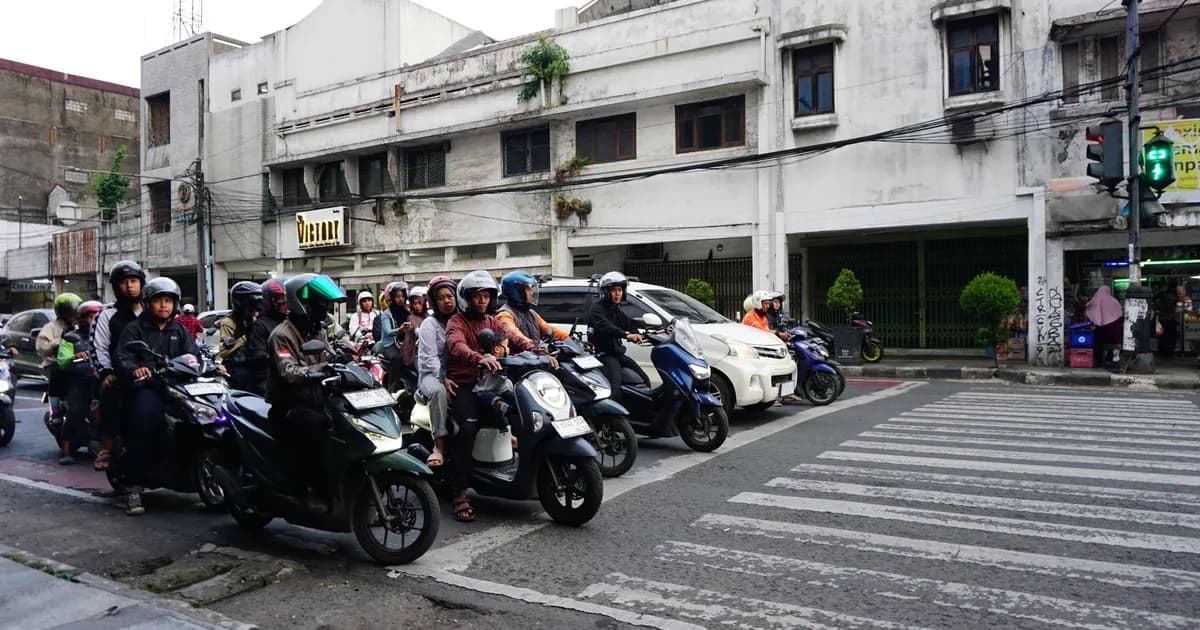
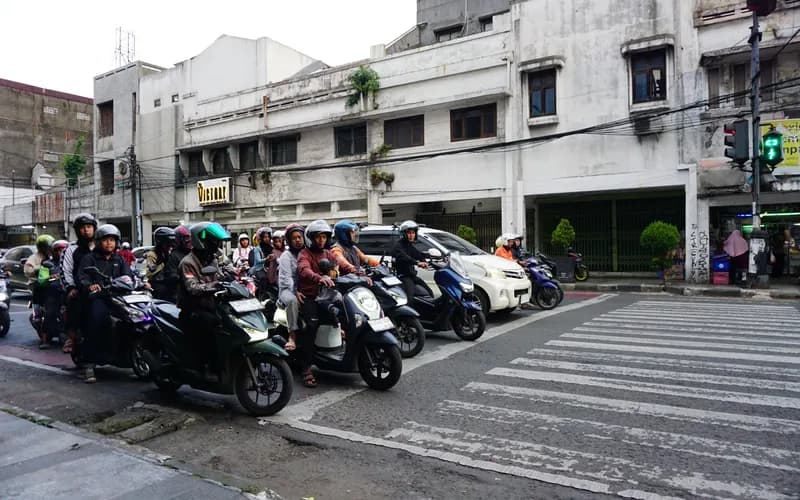
The Ngurah Rai to Canggu journey, roughly 20 kilometres, routinely takes 75 to 120 minutes in the late afternoon and can exceed two hours on a Friday. Ubud to the airport needs a two-hour allowance in the morning and more in the afternoon. The Sunset Road and Kuta bypass corridors are saturated for most of the daylight hours, and the situation worsens during the domestic holiday peaks in late June to early July and around the end-of-year period.
Ride-hailing works in most of the south and around Ubud, but pick-up restrictions imposed by local transport cooperatives still apply at several beaches, markets and transport hubs, and they are enforced informally rather than by signage. Scooter rental remains the default local solution and remains the single largest cause of tourist injury on the island. Our practical guidance on drivers, scooters and road safety sets out the trade-offs in how to get around Indonesia by road.
How slow travellers should actually plan around this
The strategic response to a transport system that does not exist is not to wait for it. It is to design a trip that needs less transport.
Stay longer in fewer places. A week split between Kuta, Ubud, Amed and Uluwatu is a week spent substantially in a car. The same week spent in two bases, with days radiating outwards on foot or by bicycle, delivers more of the island and less of the bypass.
Choose bases where walking works. Sidemen, Munduk, Amed, Pemuteran, Ubud's northern villages and the Bukit's quieter lanes all support days without a vehicle. The southwestern coastal strip largely does not.
Move at the hours when the road moves. Long transfers before 8am or after 8pm routinely halve in duration. Airport departures are the exception: allow three hours for the journey plus check-in on any afternoon flight.
Consider the wider island, or the wider country. Bali is a fraction of Indonesia, and much of the friction in its south simply does not exist in Sumbawa, Flores, Sulawesi or the Bandas. Our guide to Indonesia off the beaten path is a good starting point, as is our East Java overland route, which reaches Bali by train and ferry rather than by plane.
The wider pattern this fits into
The transit reversal is not an isolated administrative decision. It belongs to a broader recalibration in which Bali's provincial government is trying to manage the consequences of very rapid growth with instruments it only partly controls. A building moratorium on new hotels and villas in the busiest regencies, a tourism levy on foreign arrivals, tightened conduct rules and enforcement against visitors working illegally are all part of the same response.
Infrastructure is the hardest of these to deliver, because it requires capital, land and time rather than regulation. That is precisely why it keeps slipping. Rules can be announced on a Thursday; tunnels cannot.
For visitors, the useful reading is that Bali is entering a period in which the island's managers are actively trying to shape demand rather than simply accommodate it. Travelling in a way that reduces load, by staying longer, moving less, using local guesthouses and spending outside the saturated south, is now aligned with policy rather than merely virtuous. When you are ready to turn that into an itinerary, our plan your journey page is where to start.
What to Do Next
- Build your 2026 and 2027 Bali itineraries on the assumption that no rail or tram service exists, and treat any opening as a bonus.
- Reduce your number of bases to two or three for a two-week trip, and choose each one for what you can reach on foot.
- Budget realistic transfer times: two hours from Ubud or Canggu to the airport, three hours door to gate for an afternoon flight.
- Schedule long road transfers early in the morning or after the evening peak.
- Book a driver by the day for multi-stop excursions rather than stringing together separate ride-hailing trips, which is usually cheaper and always less stressful.
- If you want a genuinely low-traffic Indonesian trip, pair a short Bali stay with an island or region where the road network is not the binding constraint.
- Check the provincial government's announcements shortly before you travel, since levy amounts, conduct rules and transport pilots have all changed at short notice.
Frequently Asked Questions
Is the Bali metro definitely cancelled?
The mass rapid transit plan was publicly abandoned by the provincial governor in August 2026 in favour of an autonomous tram system. Indonesian infrastructure policy can reverse again, and the metro's promoters have not formally disappeared, but no tunnelling was ever started and there is currently no funded metro project. Treat it as cancelled for planning purposes.
What is autonomous rail rapid transit?
ART is a long articulated electric vehicle that runs on ordinary roads, following optical or sensor-based guidance rather than steel rails. It behaves like a tram, costs far less to build than a metro, and can be deployed in months rather than years. The trade-off is that it shares road space unless dedicated lanes are enforced, which is the key variable in whether it works in southern Bali.
Will the airport to Canggu line really open in 2027?
The stated target is 2027 for the first phase. Land acquisition, guideway construction and the road-width constraints along the corridor make that ambitious. Treat 2027 as the earliest plausible date for a partial, possibly limited, service and plan as though it will not be available.
Has Bali's traffic got worse recently?
Yes, on most measures. Vehicle numbers have grown faster than road capacity, particularly in Badung regency, and the spread of accommodation and workplaces north into Canggu, Pererenan and Cemagi has lengthened the average journey. The building moratorium is partly a response to this.
What is the best way to get from the airport to Ubud?
A pre-booked car with a driver, which costs roughly IDR 350,000 to 500,000 and takes between 90 minutes and three hours depending on the hour. Ride-hailing is cheaper but pick-up at the airport is restricted to designated points and can involve a wait. Arriving late at night is by far the fastest option.
Should this change whether I visit Bali at all?
No, but it should change how. Bali's problems are concentrated in a relatively small area of the south. The east, north and interior remain quiet, affordable and easy to move around. A trip designed around those areas, or around a longer stay in fewer places, avoids most of what people complain about.
Does the tourism levy fund transport projects?
The 150,000 rupiah levy on foreign arrivals is earmarked broadly for cultural preservation and environmental management rather than for a specific transport scheme. It is not the funding mechanism for either the abandoned metro or the proposed tram, both of which depend on investment and state budgets.