Java's Rail Renaissance: Why Slow Travellers Are Taking the Train in 2026
Indonesia is a country of islands and, in the traveller's imagination, of flights and ferries between them. But on Java, the crowded, cultured heartland where more than half the nation lives, a quieter revolution is under way: the train is back. From a gleaming new bullet train to a comfortable, scenic network of expresses crossing the island, Java's railways are having a renaissance, and for the slow traveller they offer one of the most rewarding, low-carbon and simply pleasant ways to see the real Indonesia. In 2026, the smart way to travel Java is increasingly by rail.
This is a shift worth understanding, because it runs against the grain of how most visitors picture Indonesian travel. The plane may be faster, but on Java the train is often better, and the reasons why say something about where the country is heading.
Whoosh: Southeast Asia's first bullet train
The headline is Whoosh, the high-speed line that opened for commercial service in late 2023 and made Indonesia the first country in Southeast Asia to run a true bullet train. Connecting Jakarta with Bandung along a corridor of around 143 kilometres, it travels at speeds approaching 350 kilometres an hour and has cut a journey that once took three hours by road or conventional rail to under an hour. It is electric, smooth and modern, with air-conditioned carriages in several classes, and it has proved genuinely popular, carrying tens of thousands of passengers a day.
For the traveller, Whoosh is a striking glimpse of a faster Indonesia, and a very easy, comfortable way to link the capital with the cooler highland city of Bandung. But as impressive as it is, the bullet train is not really the heart of Java's rail story. It is a short, single corridor, and the deeper renaissance lies in the network around it.
One request. Up to five tailored proposals.
Skip contacting agencies one by one — share your trip once and let up to five trusted Indonesia agencies come to you. Free, with no obligation.
Get my free quotesThe real story is the whole network
What makes Java such a rewarding place to travel by train is not the one high-speed line but the extensive conventional network that threads the island end to end. Operated by the national railway, this system links Jakarta with Yogyakarta, Solo, Semarang, Surabaya and dozens of towns between, on comfortable, punctual and inexpensive trains that most foreign visitors overlook. This is one of the best-kept secrets of travel in Indonesia.
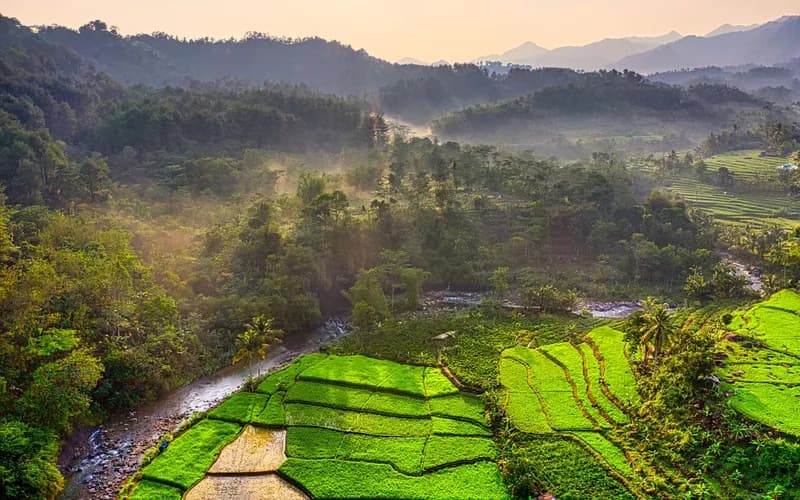
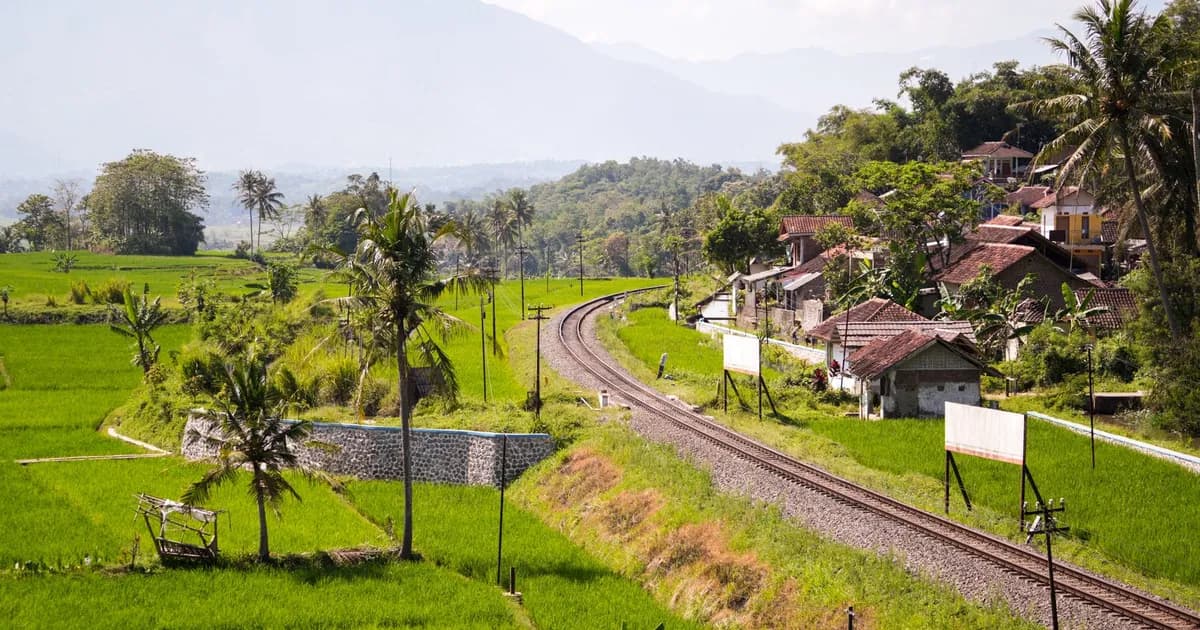
The scenery is a large part of the appeal. Java's trains run through a landscape of astonishing beauty and density: emerald rice terraces, volcanoes on the horizon, villages, markets and rivers sliding past the window in an endless panorama of island life. A daytime train across central Java is not merely transport; it is one of the great slow journeys of the region, and it delivers you into the heart of the cultural cities. Our guide to Yogyakarta and central Java covers the destinations these rails connect.
Why trains suit Java so well
Java is almost purpose-built for rail travel, and understanding why explains the renaissance. It is a long, narrow, densely populated island, with its major cities strung in a line from the capital in the west to Surabaya in the east, exactly the geography at which trains excel. The distances are too long to drive comfortably and too short to make flying, with its airport transfers and check-ins, genuinely faster once the whole journey is counted.
The train also solves problems that flying creates. It carries you city-centre to city-centre, avoiding the sprawl and traffic of Java's airports; it lets you watch the country unfold rather than staring at a seatback; and it slashes the carbon of your trip. For the slow traveller trying to move around Indonesia thoughtfully, the contrast with island-hopping by plane is stark, and our guide to island-hopping Indonesia slowly shows how rail on Java fits into a lower-impact wider journey.
Get matched with up to 5 trusted Indonesia agencies
- Free
- No obligation
- Up to 5 agencies
The classes and the experience
Part of what makes Java's trains so pleasant is the choice and quality on offer. The conventional network runs in several classes, from air-conditioned economy through business to comfortable executive, and in recent years the railway has added premium panoramic and luxury coaches with large windows designed expressly to make the most of the scenery. Even the standard executive class is clean, spacious and reliable, and far more comfortable than a cramped budget flight.
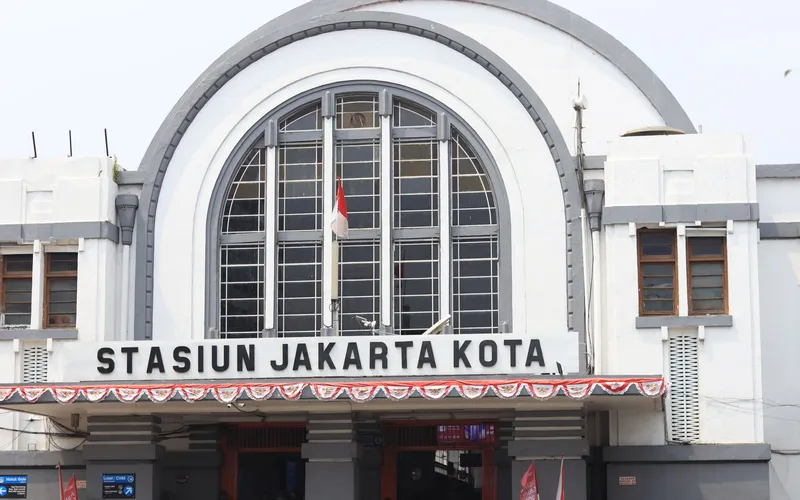
Booking has become straightforward too, with tickets available online in advance, which is wise on popular routes and around holidays when trains fill. The stations themselves, many of them handsome colonial-era buildings, are part of the pleasure. The overall experience, comfortable seats, punctual departures, a trolley service and a moving picture of Java outside the window, is a world away from the grind that travel between cities can be elsewhere, and it is winning over a growing number of visitors.
The plan to extend across Java
The renaissance is set to deepen. The government has signalled ambitions to extend high-speed rail beyond the Jakarta-Bandung corridor, potentially all the way east to Surabaya, which would eventually link Java's great cities on a single fast line. That is a long-term project, years from completion, but it points to a clear direction of travel: Java is investing in rail as a backbone of how the island moves.
For now, the practical takeaway is that the fast future is still arriving, while the excellent conventional network is here today. The slow traveller need not wait for the bullet train to reach Surabaya; the existing scenic expresses already make Java one of the best rail-travel islands in Asia, and arguably the more rewarding for their unhurried pace. This is part of a broader rebalancing of Indonesian tourism beyond Bali, a theme we explore in how Indonesia is redrawing its tourism map.
What it means for slow travellers
For anyone who travels by the slow-travel creed, Java's rail renaissance is close to ideal. It offers a way to cross one of the world's most fascinating islands that is comfortable, affordable, low-carbon and deeply scenic, delivering you to the doorsteps of the cultural cities rather than to distant airports. It turns the journey between destinations into a highlight rather than a chore, which is the very essence of travelling slowly.
The practical advice is simple: on Java, default to the train. Use it to link Jakarta, Bandung, Yogyakarta, Solo and Surabaya, choose a daytime service for the scenery on the most beautiful stretches, book ahead in busy periods, and treat the journey as part of the experience. To build a Java itinerary around the railways, our slow travellers guide to Indonesia and a specialist on our Indonesia plan-your-journey page can help you plan.
The overnight train, and a few practical notes
One of the quiet joys of Java's network is the overnight train. On the longest routes, such as Jakarta to Surabaya, sleeper and comfortable seated services run through the night, letting you cover the length of the island while you rest and wake to the countryside sliding past at dawn. It is an experience that budget flights cannot match, and it saves a night's accommodation into the bargain, a small pleasure that captures why rail travel here feels like a gain rather than a compromise.
A few practical habits make the most of it. Book through the national railway's official channels or app well ahead on popular routes, particularly around Indonesian public holidays, when trains sell out weeks in advance. Choose executive or panoramic class for the long daytime stretches where the scenery earns its keep. Arrive at the grand old stations with a little time to spare, and carry snacks, though a trolley service and station vendors keep you well fed. Note that punctuality is genuinely good by regional standards, so do not treat departure times as approximate.
Above all, resist the instinct to fly simply because it is the default. On Java, the train is not the fallback option but frequently the best one, and building your itinerary around it, rather than around airports, transforms the texture of a trip. It is a rare case where the slower, greener, cheaper choice is also the more comfortable and more beautiful, which is exactly the kind of alignment slow travel is always looking for, and on Java, unusually, you rarely have to choose between doing the right thing and doing the pleasant one.
What to Do Next
- On Java, make the train your default for travel between cities rather than flying.
- Try Whoosh for the fast Jakarta-Bandung hop, but rely on the conventional network for the wider island.
- Choose a daytime executive or panoramic service for the most scenic stretches across central Java.
- Book tickets online in advance, especially on popular routes and around holidays.
- Link Jakarta, Bandung, Yogyakarta, Solo and Surabaya by rail, treating the journeys as part of the trip.
Frequently Asked Questions
What is Whoosh?
Whoosh is Indonesia's high-speed railway, the first true bullet train in Southeast Asia, which opened for commercial service in late 2023. It connects Jakarta with Bandung over about 143 kilometres at speeds near 350 kilometres an hour, cutting the journey to under an hour, with modern air-conditioned carriages in several classes.
Is it worth travelling around Java by train?
Very much so. Java has an extensive, comfortable and inexpensive conventional rail network linking Jakarta, Yogyakarta, Solo, Semarang and Surabaya, running through beautiful scenery. For the slow traveller it is more pleasant, more scenic and lower-carbon than flying, and it delivers you into city centres rather than distant airports.
What are the train classes on Java?
Java's conventional trains run in several classes, from air-conditioned economy through business to comfortable executive, plus premium panoramic and luxury coaches with large windows for the scenery. Even standard executive class is clean, spacious and reliable, and far more comfortable than a budget flight.
How do I book train tickets in Indonesia?
Tickets for Java's trains can be booked online in advance, which is advisable on popular routes and around holidays when services fill up. Booking ahead lets you choose your class and secure a daytime service on the most scenic stretches.
Will the high-speed line be extended?
The government has signalled plans to extend high-speed rail beyond Jakarta-Bandung, potentially east to Surabaya, which would link Java's major cities on a single fast line. That is a long-term project, so for now the excellent conventional network remains the way to travel most of the island.
Is the train better than flying within Java?
For most journeys on Java, yes. The island's cities lie in a line at distances well suited to rail, and once airport transfers and check-in are counted, the train is often as fast, far more scenic, more comfortable and much lower in carbon, taking you city-centre to city-centre.
Keep reading
More from the ground · Indonesia