How to Choose Ethical Wildlife Experiences in Indonesia
Indonesia holds some of the most extraordinary wildlife on Earth: orangutans in the peat forests of Borneo and Sumatra, tarsiers no bigger than a fist in Sulawesi, the dragons of Komodo, manta rays gliding past Nusa Penida and whale sharks in the eastern seas. It also hosts a large and often invisible industry of captive animals, photo props and "sanctuaries" that are nothing of the sort. The difference between a wildlife experience that supports conservation and one that fuels cruelty is rarely obvious from a booking page. This guide gives you the questions, red flags and species-by-species advice to tell them apart.
Why Wildlife Tourism in Indonesia Needs a Filter
Wildlife tourism can be a powerful force for protection. Park fees fund rangers, trekking guides earn more from living orangutans than from logging, and villages near reefs gain a reason to protect them. Much of what makes Indonesia special survives in part because visitors pay to see it.
The same demand, though, creates incentives to cut corners. Animals are taken from the wild to stand in for selfies, fed to guarantee sightings, or kept in poor conditions because tourists will pay to touch them. Captive-animal attractions tend to cluster where tourists are concentrated, in Bali above all, and they are often marketed with words like rescue, sanctuary or conservation.
The good news is that Indonesia is moving in the right direction. At the end of 2025 the Ministry of Forestry issued Circular Letter No. 6 of 2025, formally ending elephant riding at conservation and tourism facilities across the country, with permit revocation as the penalty for non-compliance. Travellers' choices helped create the pressure for that change, and they can do so again.
One request. Up to five tailored proposals.
Skip contacting agencies one by one — share your trip once and let up to five trusted Indonesia agencies come to you. Free, with no obligation.
Get my free quotesThe Five Questions to Ask Before You Book
Before you pay for any wildlife experience, ask these questions. If the operator cannot answer them clearly, move on.
- Is the animal wild and free to leave? The best encounters happen on the animal's terms, in its own habitat, where it can walk, swim or fly away.
- Is there direct contact? Touching, holding, riding, bathing or feeding wild animals is almost always a red flag. Genuine rescue centres minimise human contact because they want animals to return to the wild or at least live with dignity.
- Is the animal performing? Tricks, painting, dancing or posing for photographs mean the animal has been trained, usually through deprivation or punishment.
- Where does the money go? Legitimate operations pay park fees, employ licensed local guides and are open about their conservation partners. Vague claims about "helping animals" are not enough.
- What happens if you do not see anything? An honest operator will tell you sightings are never guaranteed. Operations that promise a sighting every time are often feeding, baiting or holding animals.
Elephants: After the Riding Ban
Sumatran elephants are critically endangered, and for years parks in Bali and Sumatra offered rides, bathing and shows. That era is formally over. Following the ministry's circular, Bali Zoo ended rides, and Mason Elephant Park, one of the last venues still offering them, halted riding on 25 January 2026 after receiving official warnings.
The ban is a genuine step forward, but it does not automatically make every elephant venue ethical. Look for places that let elephants move freely in large enclosures, do not use chains for long periods or bullhooks, and do not offer bathing sessions or close-contact feeding as a product. If you want to see elephants, wild encounters are possible in Sumatra's Way Kambas National Park and parts of Aceh, though sightings depend on season and luck, and a respectful distance is essential.
Get matched with up to 5 trusted Indonesia agencies
- Free
- No obligation
- Up to 5 agencies
Orangutans: Feeding Platforms, Treks and Rehabilitation Centres
Orangutans are the wildlife experience most visitors to Indonesia want, and there are good ways to do it.
In Central Kalimantan, Tanjung Puting National Park is reached by klotok, a wooden river boat on which you eat and sleep as you travel upstream to feeding stations such as Camp Leakey. Rangers put out supplementary food for orangutans, many of them rehabilitated ex-captives or their descendants, which come and go as they please. Our guide to Tanjung Puting and its slow river journey covers how to choose a responsible boat operator.
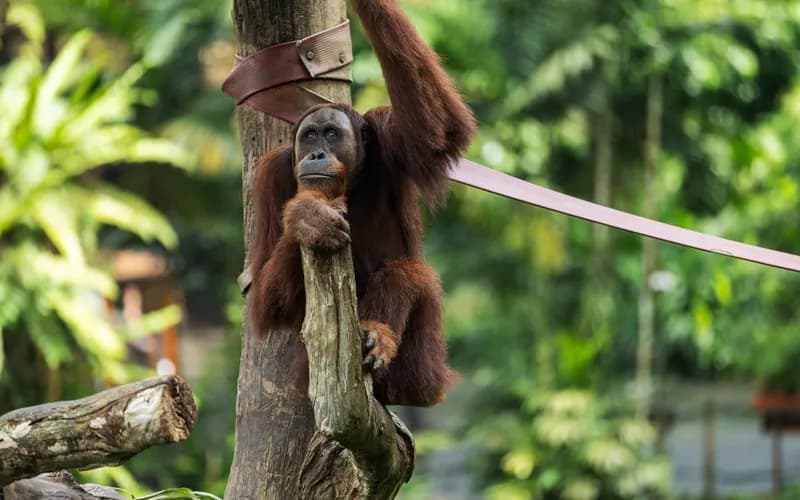
In North Sumatra, Bukit Lawang on the edge of Gunung Leuser National Park is the classic base for jungle treks. Treks inside the park must be led by a certified guide, and the local guide association's rules are clear: stay at least 10 metres from orangutans, never feed, touch or call them, use no flash, and stay on the trail. The problem is that not every guide follows them. Some still lure semi-wild orangutans with fruit to guarantee a photo, which habituates the animals, spreads disease and can lead to aggressive encounters. Ask guides directly whether they feed orangutans, and walk away from any who hesitate.
Genuine orangutan rehabilitation centres in Indonesia generally limit or prohibit contact with the public, because orangutans destined for release must stay wary of humans. Any place that lets you hold a baby orangutan or take a selfie with one is not a rescue centre.
Primates Closer to the Road: Macaques, Tarsiers and Lorises
Long-tailed macaques live around many Bali temples, including Ubud's Sacred Monkey Forest and Uluwatu. They are wild, bold and sometimes aggressive, and at Uluwatu some have learned to snatch glasses and phones and trade them back for food. Do not carry food, keep loose items in a zipped bag, do not make eye contact or smile with bared teeth, and never feed them. Bites happen and require medical attention.
Spectral tarsiers can be seen at dusk in Tangkoko Nature Reserve in North Sulawesi, emerging from strangler fig trees to hunt insects. The experience is magical when handled well: a small group, a licensed ranger, a short wait in silence and no flash, since tarsiers' enormous eyes are extremely sensitive. We describe the reserve in our feature on North Sulawesi, Bunaken and Tangkoko. Avoid any place that keeps tarsiers in cages for visitors.
Slow lorises are protected in Indonesia, yet they still appear as photo props and pets, often with their teeth clipped. They are nocturnal and venomous, and being handled in daylight is deeply stressful for them. If someone offers you a loris to hold, decline and, if you can, report it to the authorities or to a wildlife organisation.
Komodo Dragons: Rangers, Distance and Timing
Komodo dragons are the world's largest lizards, and seeing them on Komodo or Rinca is one of Indonesia's great experiences. Visits inside the national park are guided by park rangers carrying forked sticks, and you walk set trails with them. Keep the distance they ask for, move slowly, stay together, and never approach a dragon for a photograph, however still it seems. Dragons are wild predators and have attacked people.
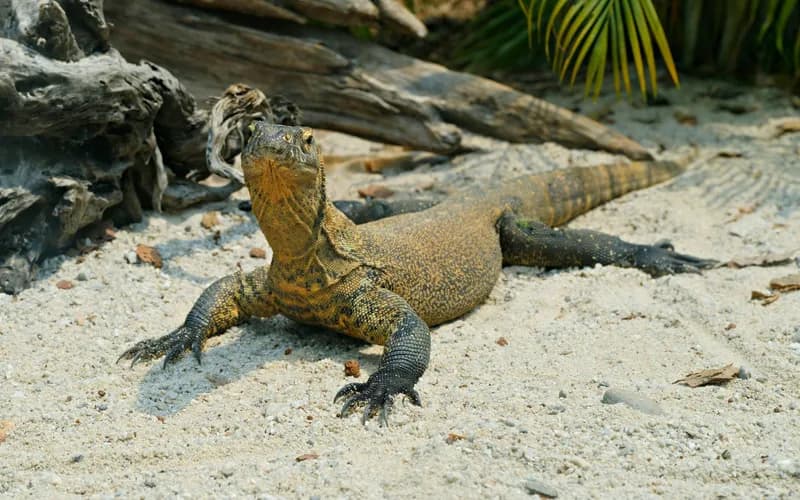
Visits have also become more regulated. Our update on Komodo National Park fees, permits and the visitor cap explains the current system. Plan your trip with a licensed operator, avoid the midday heat when dragons are least active and trails most crowded, and treat the rangers' instructions as rules rather than suggestions.
Civet Coffee and Other Hidden Captivity
Some of the most common animal cruelty in Indonesian tourism is disguised as a food experience. Kopi luwak, coffee made from beans that have passed through the digestive system of the Asian palm civet, was once a rare product of wild civets. Tourism turned it into an industry. Investigations by World Animal Protection found civet coffee plantations multiplying along tourist roads in Bali, with civets poached from the wild and kept in small, barren cages on wire floors, force-fed coffee cherries. Of the venues inspected across Bali, Lombok and Gili Trawangan, none met the animals' most basic welfare needs.
There is no reliable way for a visitor to verify "wild-sourced" claims, so the simplest ethical choice is to skip civet coffee altogether. Enjoy the many excellent Indonesian coffees grown on smallholder farms in Sumatra, Java, Bali, Flores and Sulawesi instead.
Other hidden captivity to avoid includes songbird markets selling wild-caught birds, "turtle islands" where turtles are kept in tanks for photographs, snake and owl photo props on beaches, and any attraction offering to let you swim with captive dolphins.
In the Water: Mantas, Whale Sharks, Turtles and Dolphins
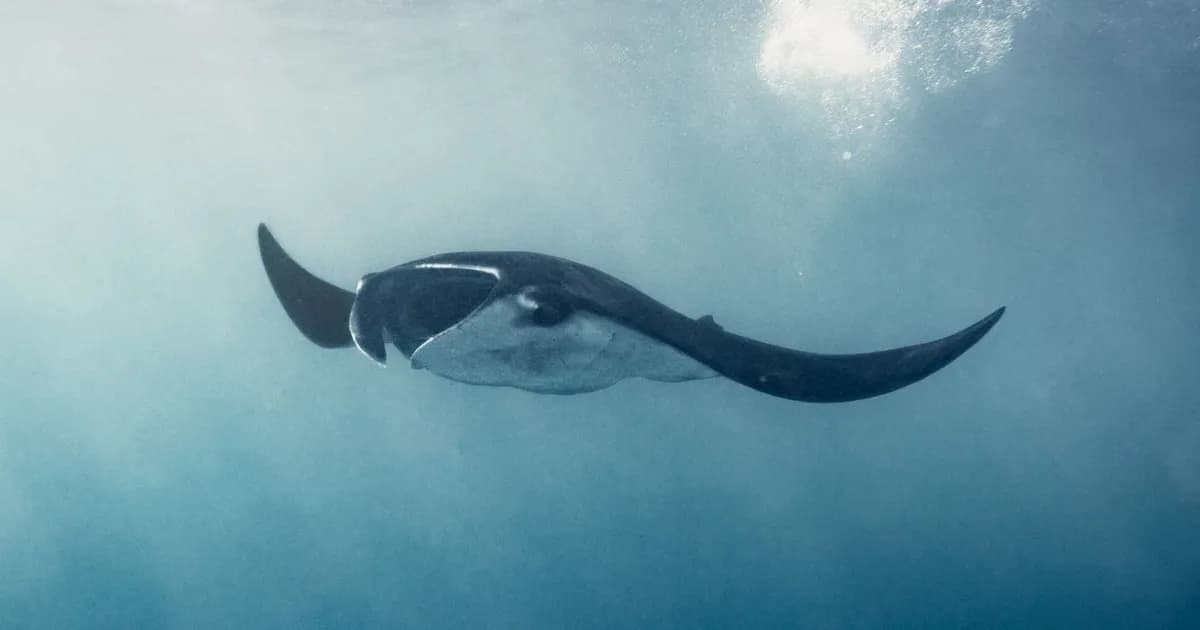
Marine encounters are among Indonesia's finest, and the same principles apply underwater. At manta cleaning stations around Nusa Penida and Komodo, keep your distance, never touch or chase, stay low or to the side rather than above, and avoid flash. Our guide to how to snorkel and dive responsibly in Indonesia covers reef etiquette in detail.
Whale sharks gather in a few places where fishermen feed them, notably around fishing platforms in Cenderawasih Bay in Papua and near Gorontalo in Sulawesi. These encounters are spectacular but debated, because feeding changes the sharks' behaviour. If you go, choose operators that limit swimmer numbers, keep people away from the sharks' heads and tails and forbid touching.
For turtles, support projects that protect nests on the beach and release hatchlings without staged sunset ceremonies. For dolphins, the dawn boat trips off Lovina in north Bali can turn into dozens of boats chasing the same pod. If you go, choose a small operator willing to keep its distance and turn off the engine, or skip it and watch from the shore.
Photography, Social Media and Your Own Behaviour
Much of the demand for exploitative wildlife tourism is driven by photographs. A picture of you holding a loris, hugging a baby orangutan or riding an elephant encourages others to seek the same image. The most useful thing you can do online is to share the other kind of photograph: an orangutan high in the canopy, a tarsier at a respectful distance, a manta passing overhead.
Your own behaviour matters too. Never feed wild animals, keep noise down, stay on trails, take your rubbish with you and follow the instructions of rangers and guides even when they seem cautious. If you see something that concerns you, note the place, date and details and share them with a recognised animal welfare organisation, rather than confronting staff on the spot.
What to Do Next
- Decide which species matter most to you and research where they can be seen in the wild.
- Before booking, ask the five questions above and note how operators respond.
- Choose licensed local guides and pay national park fees through official channels.
- Leave civet coffee, animal photo props and captive-dolphin attractions off your itinerary.
- Build patience into your plans: sightings are never guaranteed, and rushed trips create pressure to bait animals.
- Read our slow travel charter for the principles behind how we choose partners and experiences.
Frequently Asked Questions
Is elephant riding still allowed in Indonesia?
No. At the end of 2025 the Ministry of Forestry issued a circular letter ending elephant riding at conservation and tourism facilities nationwide, and Bali's remaining riding venues stopped in early 2026. Be wary of any operator still offering rides, bathing sessions or shows, and check that elephant venues let animals move freely.
Is it ethical to visit orangutan feeding platforms?
Feeding platforms in national parks such as Tanjung Puting are generally considered acceptable, because orangutans come and go freely and the food supplements a wild diet for rehabilitated animals. What is not acceptable is guides feeding orangutans on jungle treks, or any place that lets you touch or hold them.
Should I try kopi luwak in Bali?
We recommend skipping it. Investigations have repeatedly found civets kept in small cages and force-fed coffee cherries, and visitors have no reliable way to verify claims that beans are wild-sourced. Indonesia produces many excellent coffees that involve no animal suffering.
How close can I get to Komodo dragons?
Only as close as the park ranger allows, which is usually several metres. Dragons are wild predators and can move fast. Walk with your ranger, stay in the group, and never approach for a photograph, even if a dragon appears to be resting.
How can I tell if an animal sanctuary is genuine?
Genuine sanctuaries and rescue centres minimise contact between visitors and animals, do not allow holding, riding or performing, are open about their veterinary care and release programmes, and often limit visitor numbers. If the main attraction is touching animals or taking selfies with them, it is not a sanctuary.
Is swimming with whale sharks in Indonesia ethical?
It depends on how it is done. Most Indonesian whale shark encounters involve fishermen feeding the sharks, which alters their behaviour. If you choose to go, pick operators that limit group sizes, forbid touching and flash, and keep swimmers away from the sharks' heads and tails.