
How to Eat at a Warung in Indonesia: Ordering, Etiquette and Staying Well
If you want to understand Indonesia, eat where Indonesians eat. The warung, a small, usually family-run eatery that can be a roadside stall, a front room with plastic stools or a modest shopfront with a glass cabinet of dishes, is the backbone of everyday food across the archipelago. It is cheap, fast, local and often excellent. It is also where many first-time visitors hesitate, unsure how to order, whether the food is safe or what the unspoken rules are.
This guide is the evergreen version of what a friendly local would tell you. It covers the main kinds of warung, how to order without much language, how paying works, a few habits of etiquette, how to keep your stomach happy and how to eat well in different regions. Prices are deliberately described in broad terms, because they vary widely between a Javanese town, a Sumatran highway stop and a Bali tourist street.
What a warung actually is
The word warung simply means a small shop or stall. In practice it covers a surprising range. A warung nasi serves rice with several side dishes. A warung makan is a general small eatery. A warteg, short for warung Tegal, is a style of simple eatery associated with the Central Java town of Tegal and common in Jakarta. A warung kopi is a coffee stall, often with fried snacks. Specialist stalls focus on a single dish: bakso (meatball soup), soto (spiced soup), mie ayam (chicken noodles), gado-gado (vegetables with peanut sauce), sate (grilled skewers) or nasi goreng (fried rice).
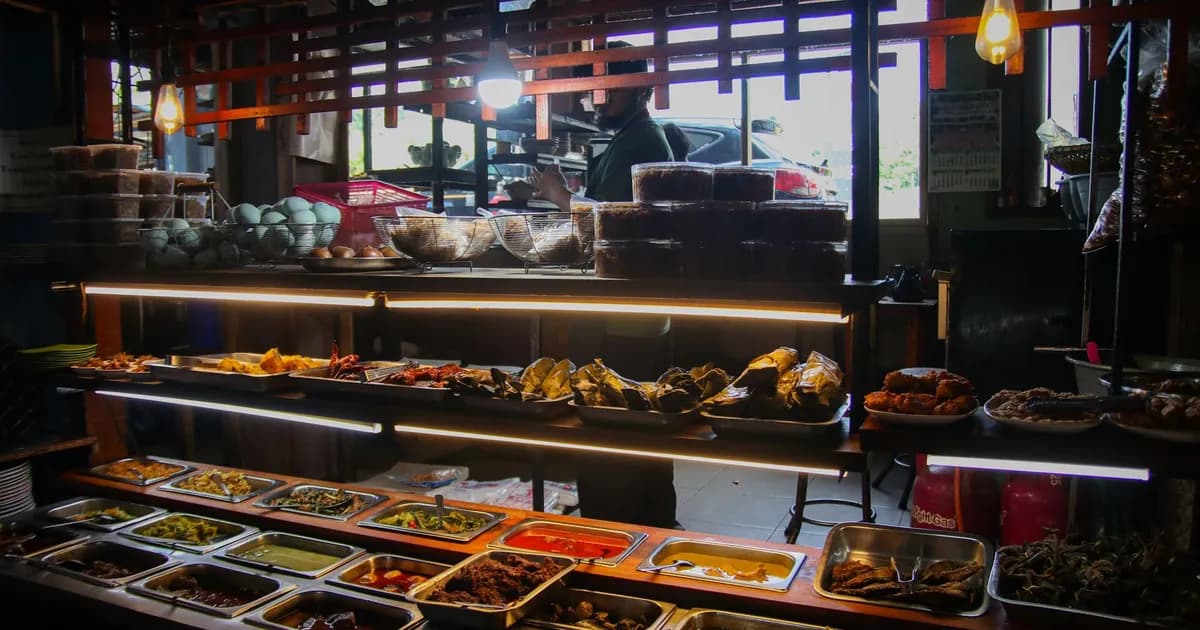
What they share is a home-kitchen logic. Food is cooked in the morning or in batches, kept warm or at room temperature in a glass cabinet and served in minutes. The menu is what you see. That visibility is a gift to the traveller, since you can point at what you want and you can judge, with your own eyes, how busy and clean the place looks.
For a deeper tour of the dishes themselves, see our guide to Indonesian food for slow travellers. This article focuses on how to eat, not only what.
One request. Up to five tailored proposals.
Skip contacting agencies one by one — share your trip once and let up to five trusted Indonesia agencies come to you. Free, with no obligation.
Get my free quotesHow to choose a good warung
You do not need a guidebook to pick well. A few signals do most of the work.
- Look for turnover. A busy warung at the local lunch hour means fresh food that does not sit for long. An empty one at noon is a warning.
- Watch the food. Dishes should be covered or kept in a glass cabinet, and the rice and hot items should be genuinely hot.
- Look at the cook. A person frying or grilling to order, with a clean cloth and a tidy station, is usually a good sign.
- Follow the crowd of locals, not the signboard in English. Prices written only in English can mean a tourist markup.
- Trust your senses. If the place smells off or the oil looks dark and old, leave without drama and eat somewhere else.
Eating early in a trip at a simple, busy warung, and choosing cooked-to-order dishes such as grilled fish, fried rice or noodle soup, is a gentle way to let your stomach adjust.
How to order with very little Indonesian
Ordering is easier than it looks, because the system is built around pointing. In a cabinet-style warung, you stand at the counter, look at the dishes and say what you want, or you take a plate and indicate each item. The server will often compose a plate of rice with your chosen sides, which is the classic nasi campur, literally mixed rice.
A handful of phrases is enough:
- "Satu nasi campur, ya" means one mixed rice, please.
- "Pakai ayam" means with chicken; "pakai telur" means with egg; "pakai tempe" means with tempeh.
- "Tidak pedas" means not spicy; "sedikit pedas" means a little spicy; "pedas" means spicy.
- "Makan di sini" means eating here; "bungkus" means wrapped to take away.
- "Minum apa?" means what to drink; "es teh" is iced tea and "teh hangat" is warm tea.
- "Berapa?" means how much; "terima kasih" means thank you.
If you want to go a little further than these phrases, our guide on learning enough Bahasa Indonesia to travel well shows how to build a small, usable vocabulary in a few weeks. Even a clumsy attempt is met with warmth.
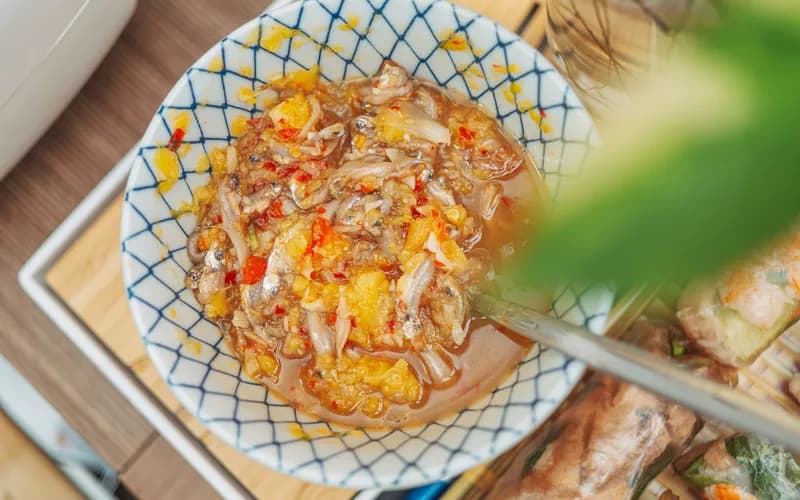
Sambal, the chilli condiment, is central. It may come on the side, on the plate or in a small dish. Taste a little first; the heat level varies enormously by region, and a Sumatran sambal can be fiercer than a Javanese one, which often leans sweeter.
Get matched with up to 5 trusted Indonesia agencies
- Free
- No obligation
- Up to 5 agencies
The Padang model and other ways of paying
Not every warung works the same way, and the payment logic differs.
At a cabinet-style warung, the server totals your plate after you have eaten, or sometimes before. Ask "berapa?" and pay at the counter.
At a warung that serves soup or noodles, you usually pay when you finish. Say "bayar" or catch the eye of the owner.
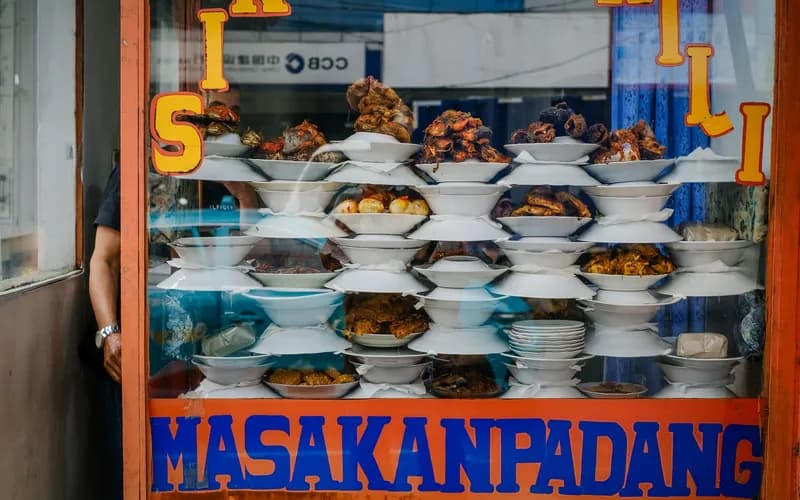
At a Padang restaurant, a style from West Sumatra found across the country, the table is covered with small dishes the moment you sit, without you ordering. You eat what you want, and you are charged only for what you touched. It is a fair system, and the staff count the dishes. If you do not want something, say so politely and send it back untouched.
On payment itself, cash remains the norm in small warungs, in small notes. Larger towns and tourist areas increasingly accept QR payments, but you cannot count on it. Our guide to money and connectivity in Indonesia explains cash, ATMs and QRIS in more detail. Keep small notes: a vendor may struggle to change a very large one early in the day.
As for price, a simple plate at a local warung away from tourist centres is generally inexpensive by international standards, often far less than a restaurant meal in a tourist zone. Treat any number you read online as indicative, check what locals appear to be paying and ask the price before you order if nothing is posted.
Etiquette at the table
Etiquette in a warung is relaxed, but a few habits are worth knowing.
Eat with your right hand if you eat by hand, and use the right hand to pass, give and receive. The left hand is traditionally considered unclean. Many warungs provide a spoon and fork, with the spoon in the right hand and the fork pushing food onto it; the knife is rarely used. Wash your hands at the sink often located at the back or side.
Do not start a conversation about price with raised voice; be polite, smile and ask once. Haggling over food prices is not usual and can cause offence.
Respect religious norms. Most of Indonesia is Muslim, so many warungs are halal and do not serve pork or alcohol. In Hindu Bali and in some Christian and Chinese-Indonesian areas, pork and alcohol are available. During the fasting month of Ramadan, many warungs in Muslim-majority areas close during the day or serve behind a curtain, and visitors should avoid eating or drinking openly in front of fasting people in smaller towns. Our guide on Ramadan, Nyepi and the religious calendar helps you plan around these periods.
Finish what you take. Leaving a very full plate is not offensive, but a polite word of thanks such as "enak" (delicious) is always welcome.
Staying well: practical hygiene
Most visitors eat at warungs for weeks without trouble. The risk is manageable with a few sensible rules.
- Drink bottled or properly filtered water, and ask for sealed bottles. Avoid tap water, including for brushing teeth if you have a sensitive stomach.
- Ice is a common question. In established eateries ice is usually commercial tube ice, made from treated water, but if you are cautious in the first days, choose hot tea or bottled drinks.
- Choose food that is cooked hot and eaten promptly. Dishes that have sat at room temperature for hours, especially in the heat, are riskier than a freshly fried dish.
- Be careful with raw vegetables, unpeeled fruit and salads in places where you cannot see the washing water.
- Carry hand sanitiser and use it before eating if no sink is available.
- Pack oral rehydration salts, which are cheap and useful.
If you have a persistent stomach problem, with fever, blood or severe dehydration, seek medical care rather than waiting it out. Our broader guide on staying healthy in Indonesia covers water, mosquitoes and medical care in remote areas, and it should be read alongside this one.
Regional habits worth knowing
Eating changes with the map. In Java, food tends to be sweeter, with tempeh, tofu, soy sauce and peanut sauces. In Sumatra, expect richer coconut-milk curries, a stronger chilli presence and the Padang style. In Bali, a babi guling stall or a nasi campur Bali plate is a local pleasure. In eastern Indonesia, fish, grilled meats and root crops feature more heavily, with strong sambal made from lime and fresh chilli.
Coffee culture has its own warung logic. In Aceh, a kopi shop is a social institution, and ordering a cup and staying a while is part of the point. If you visit Indonesia's far northwest, our regional focus on Pulau Weh and Sabang shows how to combine simple eating with the island's slow rhythm.
A slow-travel way to eat
The warung is more than cheap food. Eating there is one of the most direct ways to spend money locally, to meet the people who live near you and to understand a place by its flavours. If you are staying in a homestay, ask the owner where they eat; they will often send you to their favourite stall. Taking the same breakfast spot for several days builds a small relationship, and the owner will begin to remember how you like your coffee.
Try not to treat the warung as a stunt or a photo opportunity. Order properly, eat what you ordered, thank the cook and leave a small tip if you wish, though tipping is not expected in a simple warung. Rounding up the bill is a kind gesture.
What to Do Next
- Learn five phrases: nasi campur, tidak pedas, bungkus, berapa and terima kasih.
- On day one, choose a busy warung with cooked-hot dishes and eat a simple plate.
- Carry small notes and a little hand sanitiser, and buy sealed bottled water.
- Ask your host or driver to name their favourite warung nearby, and go there.
- Build your plan using our plan your journey page, leaving slack in the day for long, unhurried meals.
Frequently Asked Questions
Is it safe to eat at a warung?
Generally yes, if you choose busy places where food is cooked hot and served promptly. Avoid dishes that have sat at room temperature for hours, drink bottled water and wash or sanitise your hands.
How much does a meal cost?
Prices vary by region and by how close you are to tourist areas. A simple plate in a local warung is usually inexpensive by international standards. Ask the price before ordering if nothing is posted, and treat online figures as indicative only.
How do I ask for food that is not spicy?
Say "tidak pedas" when you order, or ask for the sambal on the side. Taste it carefully, since heat varies by region.
Do I tip at a warung?
Tipping is not expected. Rounding up the bill or leaving small change is appreciated but optional.
What if I am vegetarian?
Say "saya vegetarian, tidak pakai daging" and point to dishes with tempeh, tofu, eggs and vegetables. Check that the sauce or sambal does not contain shrimp paste, which is common, and be aware that stock may contain meat.
Can I eat with my left hand?
It is better not to. Use your right hand to eat, give and receive, or use a spoon and fork.
Is ice safe?
In established eateries ice is usually commercially made from treated water, but if you are cautious, especially in your first days, choose hot tea or bottled drinks.