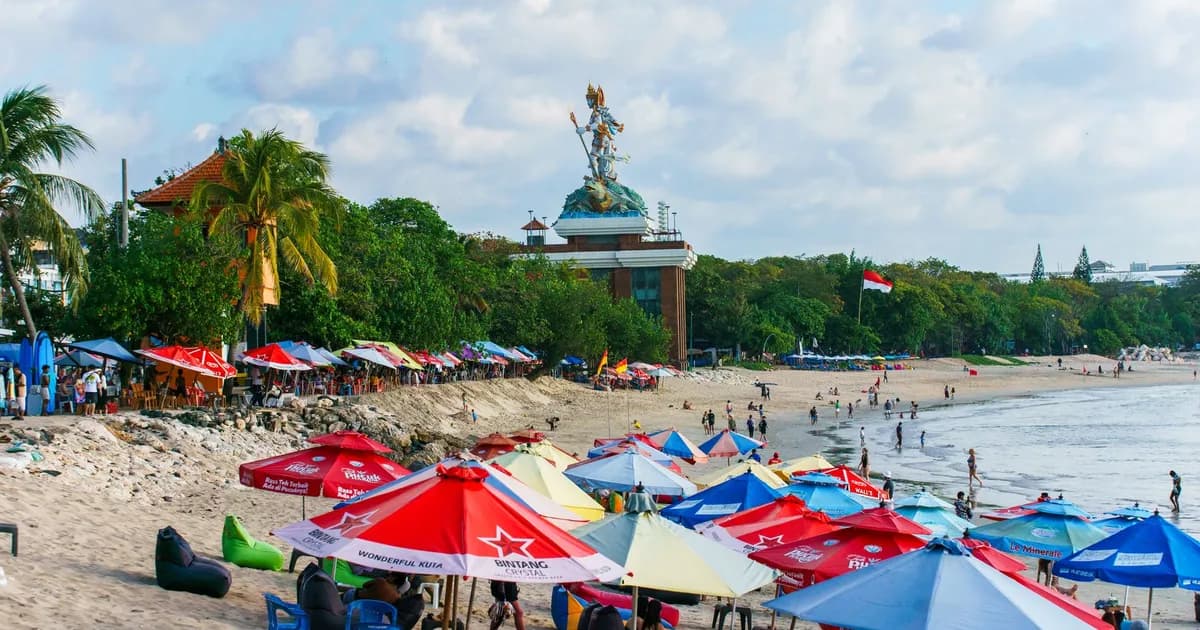


Somewhere in Indonesia this morning, a volcano is erupting. That is not a dramatic statement, it is an ordinary one: the archipelago sits along the most active stretch of the Pacific Ring of Fire, holds roughly 130 volcanoes classified as active, and logs eruptive events by the thousand every year. What has changed is not the geology. It is the degree to which that geology now interferes with the way people travel here, and how visibly it collides with an aviation network built for punctuality.
For anyone planning an Indonesian trip in the second half of 2026, volcanic activity has quietly moved from the "interesting scenery" column to the "itinerary risk" column. This is what is actually happening, and what a sensible traveller should do about it.
Why 2026 Feels Different
Indonesia has always erupted. The shift is that the eruptions are now regularly touching the country's busiest tourism artery. Mount Lewotobi Laki-laki, on the eastern end of Flores, began a sustained phase of activity in late 2024 and has not settled since. Its ash columns, some of which have reached ten kilometres and beyond, drift west on prevailing winds directly into the approach corridors for Bali.
The result has been a repeating pattern rather than a single event: cancellations and diversions at Bali's Ngurah Rai airport in late 2024, again through 2025, and a further wave in April 2026, with renewed eruptions reported into late August. Each episode is short, usually 24 to 72 hours of disruption, but each one strands a fresh cohort of travellers who assumed a volcano 400 kilometres away had nothing to do with their flight.
Meanwhile, the underlying tempo is high. Indonesian monitoring authorities have recorded more than four thousand eruptive events across the archipelago during 2026, with Semeru in East Java responsible for a large share of them.
One request. Up to five tailored proposals.
Skip contacting agencies one by one — share your trip once and let up to five trusted Indonesia agencies come to you. Free, with no obligation.
Get my free quotesWhat Is Actually Erupting
At the time of writing, several Indonesian volcanoes are in simultaneous eruption, and four significant ones sit at the second-highest alert level: Merapi in Central Java, Semeru in East Java, Anak Krakatau in the Sunda Strait, and Lewotobi Laki-laki in East Nusa Tenggara. Lewotobi produced another ash column of around 2.5 kilometres in late August 2026 and remains at that elevated level.
None of that means the country is closed. It means specific mountains, specific exclusion radii and specific flight corridors are affected, while the overwhelming majority of Indonesia is entirely unaffected. The mistake travellers make is binary thinking: either panicking and cancelling a trip to Sumatra because of an eruption in Flores, or ignoring the situation entirely until they are sleeping on an airport floor.
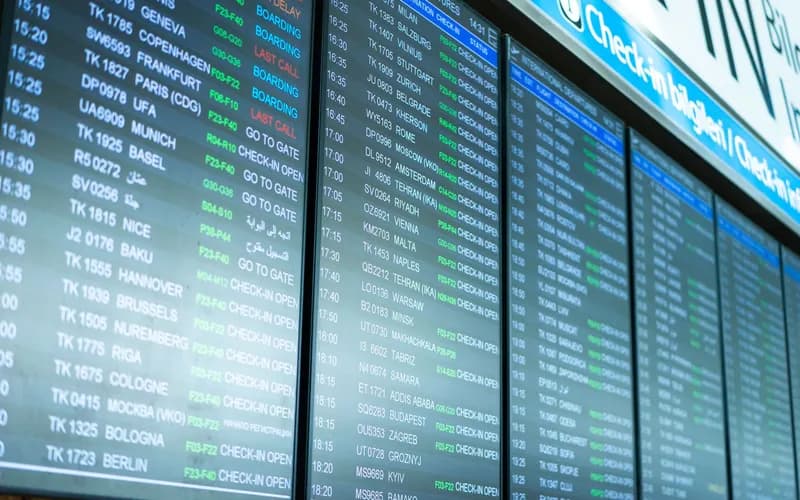
How Ash Closes an Airport Hundreds of Kilometres Away
Volcanic ash is pulverised rock and glass. Ingested into a jet engine it melts, coats the turbine components and can cause flameout. Airlines therefore do not fly through it, and the decision is not really theirs alone: the Volcanic Ash Advisory Centre in Darwin models plume dispersal for this region and issues advisories that carriers and regulators act on.
Because the models track where ash is going rather than where the volcano is, an airport can close under a perfectly blue sky. This is why Bali is vulnerable to a mountain on another island, and why the disruption is often route-specific: services from Australia may be suspended while flights from Jakarta continue, or vice versa, depending on which corridor the plume occupies.
Two practical consequences follow. First, the airport being open does not mean your particular flight is operating. Second, once a closure lifts, the backlog takes a further day or two to clear, so the disruption is always longer than the closure itself.
Get matched with up to 5 trusted Indonesia agencies
- Free
- No obligation
- Up to 5 agencies
Reading the Alert-Level System
Indonesia's Centre for Volcanology and Geological Hazard Mitigation, usually abbreviated PVMBG, runs a four-step scale that every traveller here should be able to read:
- Level I, Normal. Background activity.
- Level II, Waspada. Elevated unrest; usually a small exclusion zone around the crater.
- Level III, Siaga. Eruption likely or ongoing; exclusion zones typically widen to several kilometres and climbing is normally prohibited.
- Level IV, Awas. Major eruption underway or imminent; evacuations.
The free MAGMA Indonesia app and website publish the current level, the daily observation reports and the exclusion radius for every monitored volcano. Radii in 2026 have ranged from roughly three to seven kilometres depending on the mountain. This is the authoritative source, and it is more current than any tour operator's website or any news aggregator.
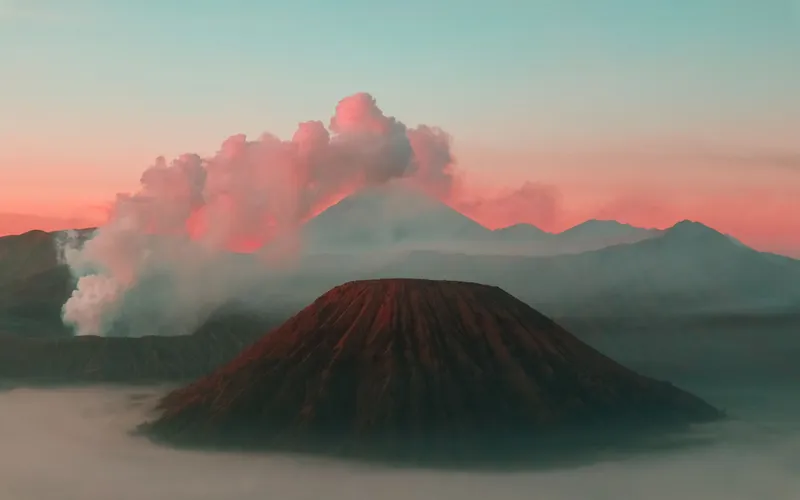
If you plan to climb anything, check the level the week before and again the morning you go. Our guide to climbing Indonesia's volcanoes responsibly sets out the etiquette and safety basics; in 2026 the alert level should be the first thing you look at, not the last.
What It Means for Bali Arrivals
If Bali is your entry or exit point, treat a same-day international connection as a gamble. The specific risks are: an inbound flight diverted to Surabaya or Jakarta, an outbound flight cancelled with rebooking two or three days out during peak season, and hotel availability tightening immediately as thousands of people simultaneously extend.
Sensible mitigations are unglamorous. Arrive at least two days before any onward long-haul flight. Keep a screenshot of your booking reference and the airline's local contact. Avoid the cheapest non-changeable fare on the segments that matter. And know that the ferry and road network across Java and Bali keeps working during ash events, which is often the fastest way out of a stalled airport region. The revival of Java's rail network, which we covered in our piece on why slow travellers are taking the train, has quietly become a genuine contingency plan as well as a pleasure.
Flores, Lombok and the Trekking Question
For eastern Indonesia the effects are more direct. Airports at Maumere, Ende and Labuan Bajo have all seen intermittent disruption during Lewotobi's active phases, and the road across Flores runs within sight of the mountain. Travel through the region is not prohibited, but it is exposed, and the exclusion zone around the volcano is enforced.
Rinjani on Lombok, Bromo and Ijen in East Java, and Merapi near Yogyakarta each have their own status and their own local rules. Levels change; permits and summit access are suspended and restored accordingly. Anyone building an overland route across Flores should read our Flores overland itinerary alongside the current alert levels rather than assuming last year's conditions still apply.
The rule that matters most: never enter a marked exclusion zone. Guides who offer to take you inside one are not offering local knowledge, they are offering to void your insurance and endanger their own community's rescue services.
Insurance and the Small Print
Volcanic disruption sits in an awkward corner of travel insurance. Three points are worth checking before you buy rather than after:
- Some policies exclude volcanic ash and natural-disaster disruption entirely, or treat it as a "known event" once activity is already being reported, which can void cover bought after that date.
- Cover for missed connections and additional accommodation is often capped at a level well below what three extra nights in Bali actually costs.
- Any injury or loss sustained inside an official exclusion zone will not be paid, no matter how good the policy.
Read the disruption clause specifically. If it does not mention volcanic activity, assume the worst and price the risk yourself.
Building an Itinerary That Absorbs Disruption
The honest conclusion is not that you should avoid Indonesia. It is that the country rewards itineraries with slack in them, and punishes tightly optimised ones. Practically, that means fewer internal flights and longer stays in each place, buffer days before any fixed commitment, and refundable or flexible fares on the segments that genuinely cannot slip.
It also means favouring surface transport where it exists. Trains across Java, ferries between the closer islands and long-distance buses are unaffected by ash advisories, and they turn a delay into a different journey rather than a lost one. Our guide to island-hopping Indonesia without wrecking your schedule covers how to build that slack in without adding weeks to a trip.
The Slow-Travel Argument
There is a version of this story that reads as bad news, and a version that does not. Indonesia's volcanoes made the soil that grows its rice, built the reefs that draw its divers and shaped nearly every landscape people come here to see. The disruption they cause is the visible cost of the thing that makes the place extraordinary.
A traveller moving quickly through four islands in twelve days experiences an eruption as a catastrophe. A traveller spending twelve days in one region experiences it as weather. That difference is not luck; it is itinerary design, and it is the practical core of the slow-travel approach we argue for.
What to Do Next
- Install the MAGMA Indonesia app before you leave and check the alert level for any volcano near your route.
- Build two buffer days before any international departure from Bali or Labuan Bajo.
- Buy insurance early, and read the natural-disaster and missed-connection clauses in full.
- Book flexible fares on the segments that cannot slip, and cheap fares only where a delay would be survivable.
- Identify a surface alternative for each internal flight: which ferry, which train, which bus.
- Never plan a summit climb without checking the alert level the same morning.
- Use our Indonesia planning overview to build a route with fewer, longer stops rather than more, shorter ones.
Frequently Asked Questions
Is it safe to travel to Indonesia in 2026 with volcanoes erupting?
Yes, with normal precautions. Eruptions are localised, exclusion zones are clearly published, and the vast majority of the archipelago is unaffected at any given moment. The realistic risk to a visitor is disruption to flights, not physical danger, provided you stay outside marked exclusion zones.
Will an eruption in Flores really cancel my flight to Bali?
It can. Ash from Lewotobi Laki-laki has repeatedly drifted west into Bali's flight corridors since late 2024, causing cancellations and diversions at Ngurah Rai. The effects are usually short, in the range of 24 to 72 hours, with a further day or two of backlog afterwards.
How do I check the current status of an Indonesian volcano?
Use MAGMA Indonesia, the official platform of the national volcanology agency, which publishes alert levels, daily observation reports and exclusion radii for every monitored volcano. Airline apps and the Darwin Volcanic Ash Advisory Centre cover the aviation side.
Does travel insurance cover volcanic ash cancellations?
Sometimes, and often less than travellers assume. Many policies exclude volcanic disruption, cap accommodation reimbursement well below actual costs, or refuse claims on policies bought after activity was already reported. Read the disruption clause before purchase.
Can I still climb Rinjani, Bromo or Ijen?
Access depends on each mountain's current alert level and local park decisions, which change through the year. Climbing is normally suspended at the higher alert levels and permits are withdrawn. Check the alert level in the week before and again on the morning of the climb.
What should I do if I am stuck by an ash closure?
Contact your airline immediately rather than waiting at the counter, extend your accommodation before availability collapses, and look at surface options. Ferries, trains and buses continue operating during ash events and are frequently the quickest way to reach an unaffected airport.
Does volcanic activity affect diving and snorkelling?
Not usually, unless ashfall reaches the area or boat operations are suspended locally. The greater practical effect is on the flights that get you to the dive region, which is another argument for allowing spare days at either end of a liveaboard or resort booking.