Lombok Beyond Rinjani: The South Coast, Sembalun and the Slow Loop
Lombok sits an hour's flight or a four-hour ferry crossing from Bali, and for most visitors it functions as a corridor rather than a destination. Land at Praya, transfer to Senaru or Sembalun, climb Rinjani, come back down, fly out. That produces a strong week and a sore pair of knees, and it misses the island almost entirely. Lombok covers a little more ground than Bali but carries roughly a third of the population, and you feel that arithmetic everywhere: long empty bays on the south coast, cool garlic-and-tobacco country on the eastern slopes, Sasak villages where weaving is still household work rather than performance, and a cluster of small islands off the northwest that have been famous for three decades and still run on horse carts.
How Lombok Actually Divides
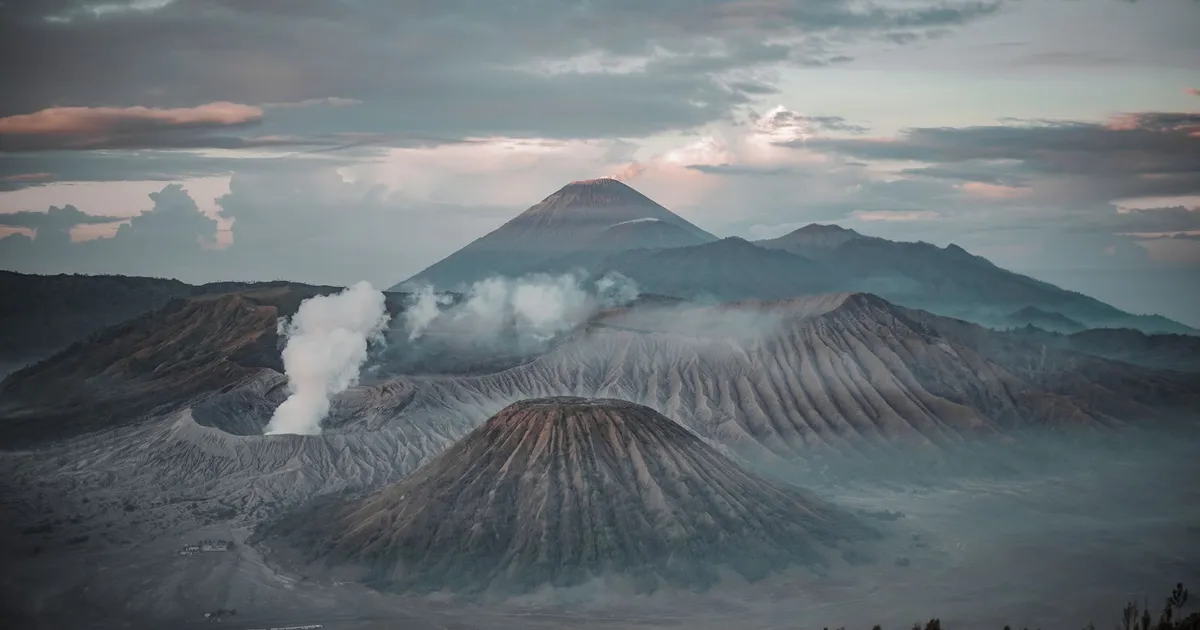
Lombok is easy to hold in your head. A volcanic massif fills the north, Rinjani rising to 3,726 metres with the crater lake Segara Anak inside it, and the villages of Senaru, Bayan and Torean at its feet. The west is the populated side: the city of Mataram, the old port district of Ampenan, the hotel strip at Senggigi, and Bangsal harbour, where boats leave for the Gili islands. The centre is farmland climbing into hills, with Tetebatu and Sapit the two places travellers actually stop. The south is not a resort strip but a series of separate bays divided by headlands, running from Selong Belanak round through Kuta and Tanjung Aan to Ekas. The east, around Labuhan Lombok and up into Sembalun, is the least visited quarter and the one that rewards an unhurried driver most.
What this means in practice is that nothing on Lombok is far, but everything takes longer than the map suggests. Praya airport to Kuta is under half an hour. Praya to Sembalun is three to four hours on roads that climb hard and narrow at the end. Treat 120 kilometres as a half-day rather than ninety minutes, and you will stop resenting the island.
If the volcano is part of your plan, read up on the current Rinjani permit, quota and insurance rules before you fix any dates. The booking system now constrains when you can start and from which gate, and that single detail reshapes an itinerary more than anything else on the island.
One request. Up to five tailored proposals.
Skip contacting agencies one by one — share your trip once and let up to five trusted Indonesia agencies come to you. Free, with no obligation.
Get my free quotesThe South Coast: Bays, Not a Strip
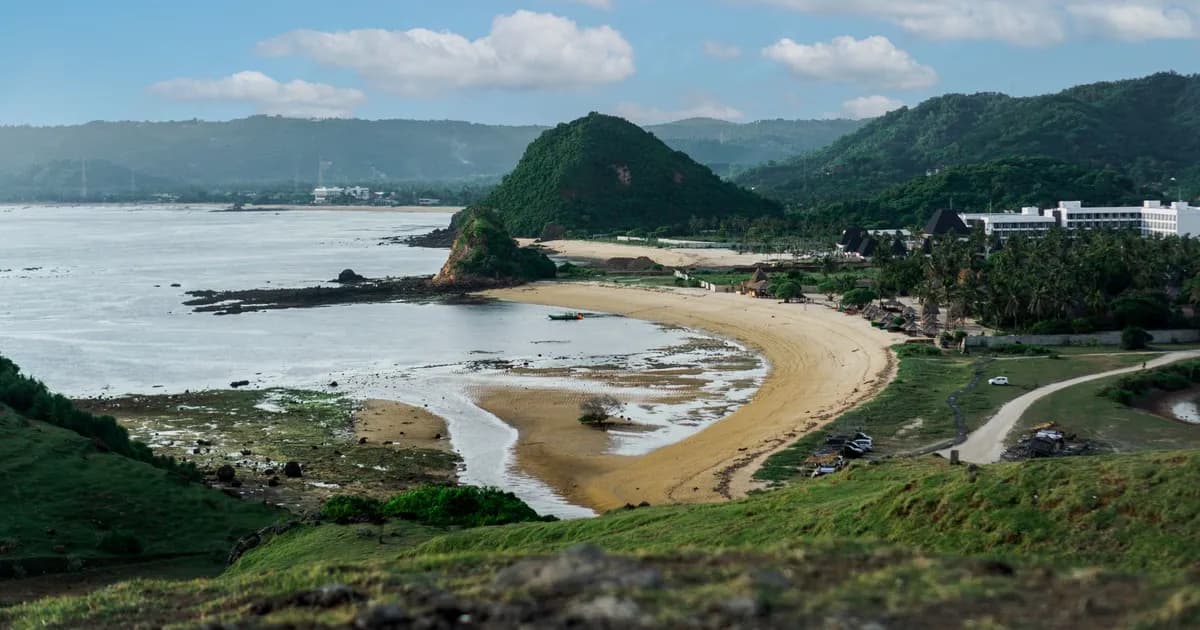
Lombok's south coast is the part of the island that has changed most in the last five years, and it is still not what people expect. The coastline here faces the Indian Ocean directly, so the water is a harder blue than Bali's and the swell is serious. Between the headlands sit a dozen crescent bays, each effectively its own microclimate of wind and surf: Selong Belanak with its long shallow beginner break, Mawun almost perfectly enclosed, Tanjung Aan with two distinct ends and the Bukit Merese headland beside it, Gerupuk reachable only by boat across a lagoon, and Ekas far enough east that most day trips never arrive.
Kuta Lombok, at the centre, is the practical base. It has grown from a single dusty road into a small town with proper coffee, bike rental, dive shops and a night market, and it now sits beside the Mandalika development and its racing circuit. That circuit matters for timing: when the MotoGP round runs at Pertamina Mandalika, currently scheduled for early October, rooms across the whole south coast are booked out months ahead and prices triple. If you want the bays quiet, avoid the fortnight either side.
The slow-travel version of this coast is to pick one bay and stay a week rather than photographing six in a day. Rent a scooter or hire a driver for two days, work out which bay suits your swimming, and then walk the headlands in the early morning when the light is low and the warungs are just opening. Most of the coastal walking here is unmarked and unglamorous, and almost nobody does it.
Sembalun, Sapit and the Eastern Slopes
Cross to the eastern flank of Rinjani and the temperature drops. Sembalun sits in a high valley at around 1,150 metres, ringed by ridges, and it grows garlic, strawberries and vegetables rather than rice. Mornings are cold enough for a fleece. The valley is the main northern trailhead for Rinjani, which means it has more guesthouses than its size suggests, but it is also a perfectly good destination in its own right: the Pergasingan and Anak Dara hills give you three-hour walks with the full volcano wall in front of you, and both are steep, obvious and do not need a permit.
Sapit, on the southeastern slope, is quieter still and almost never appears in itineraries. It is a scatter of hamlets in coffee and clove country with views down to the Alas Strait and across to Sumbawa on clear days. There is very little to do, which is the point. Further north, Senaru and Bayan hold the island's oldest Wetu Telu mosques and the twin waterfalls of Sendang Gile and Tiu Kelep, where the combined entrance fee remains small, in the region of 20,000 rupiah, and the second falls involves wading a river channel.
The eastern slopes are where Lombok stops feeling like a beach island. Expect cloud by mid-afternoon most of the year, roads that are fine but narrow, and a food culture built on grilled fish, plecing kangkung and a chilli tolerance considerably higher than Bali's. Ask for your sambal on the side the first few times.
Get matched with up to 5 trusted Indonesia agencies
- Free
- No obligation
- Up to 5 agencies
Sasak Villages Without the Coach Park
The Sasak are Lombok's majority people, Muslim with a distinctive local practice in the north, and their architecture and textiles are the island's cultural centre of gravity. The three villages on the standard circuit are Sade, Rambitan and Ende, all within twenty minutes of Kuta. Sade is the busiest and the most managed: you are assigned a local guide at the parking area, you will not wander freely, and the visit runs on donations rather than a fixed ticket. Ende, smaller and further south, sees the fewest visitors and is the calmer stop of the three.
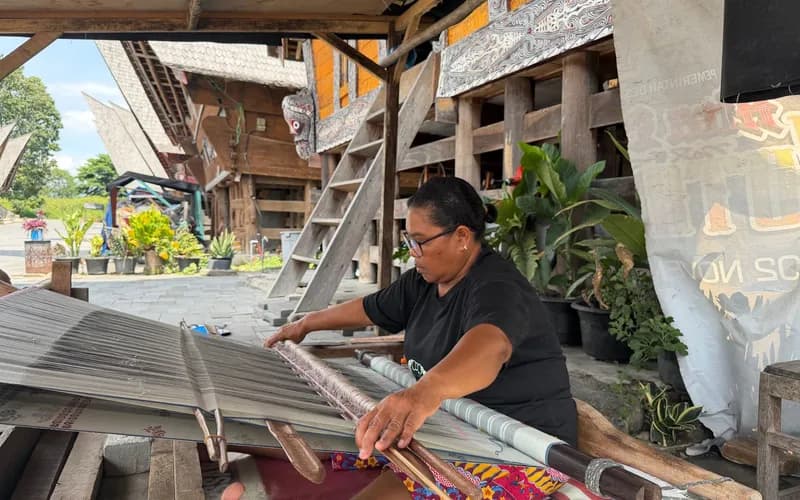
None of this is fake, but it is compressed. The honest version is that these villages are genuinely inhabited and genuinely dependent on visitor income, so the encounter is transactional in both directions. Go early, accept the guide, buy a textile if you want one, and do not photograph interiors without asking. The weaving is the real content: backstrap looms, natural dyes in some households, and songket work that takes weeks per piece. Sukarara, inland near Praya, is the weaving village with the most working looms and the least theatre.
For a deeper version, stay overnight in the hills instead of visiting by day. Choosing a family-run place well makes an enormous difference to what you actually see, and our guide to choosing and booking a homestay in Indonesia covers the questions worth asking before you commit to a village stay.
The Gilis, and the Gilis Nobody Means
Three small islands off Lombok's northwest corner carry the name Gili, which simply means small island in Sasak, and there are more than twenty others around the coast. The famous three are Trawangan, Meno and Air. All three ban motorised transport, so you walk, cycle or take a cidomo horse cart. Trawangan is the busiest and has the nightlife and the dive industry; Air is the middle option with the best mix of food and quiet; Meno is the small, salt-lake, snorkel-and-nothing-else island.
They are not undiscovered and it is dishonest to pretend otherwise. What they still offer is scale: you can walk round Meno in about an hour and round Air in ninety minutes, and once you step off the eastern strips the islands empty out. The turtle-heavy snorkelling on the Air and Meno reefs remains reliable, although coral condition varies sharply and the underwater sculpture sites off Meno are busy by mid-morning. Go out at seven.
The Gilis nobody means are the southwest group: Gili Nanggu, Gili Sudak and Gili Kedis, reached by small boat from Tawun or Lembar on the west coast. They have a handful of bungalows between them, no bars and no ferry crowd. If your idea of an island day is a hammock and a book, that is where it lives.
Getting There and Getting Around in 2026
There are three ways in. Flights land at Lombok International Airport near Praya, which is convenient for the south coast and inconvenient for everything else. The slow public ferry runs Padangbai to Lembar continuously, takes four to five hours, and costs in the region of 50,000 to 60,000 rupiah on foot, which makes it the cheapest crossing in the region by a wide margin. Fast boats from Bali typically run 350,000 to 600,000 rupiah depending on operator and season, and the pattern has shifted: most now arrive at Bangsal in the north rather than Lembar, with a direct Padangbai to Senggigi service also running. Check where your boat actually lands before you book a hotel.
Ticketing for the public ferries has tightened, with named tickets and identity checks now standard, and our explainer on Indonesia's ferry rules and online-only ticketing covers the paperwork and the cut-off times.
On the island, a car and driver for a full day runs roughly 600,000 to 800,000 rupiah and is the sane option for the Sembalun and Senaru legs. Scooters cost 70,000 to 100,000 rupiah a day and are the right tool for the south coast bays only. Enforcement of licence rules has hardened across Indonesia, so carry a physical international permit with the motorcycle endorsement and the vehicle registration document, not photos on a phone. Public minibuses exist but run on local logic and will cost you half a day.
What Two Weeks Actually Looks Like
A workable slow shape is four nights on the south coast in one bay, two nights at Tetebatu or Sapit in the centre, three nights in Sembalun with two day walks, two nights at Senaru for the waterfalls and the old mosques, and three nights on Gili Air or Meno to finish. That is five moves in fourteen nights, which is about the upper limit before travel starts eating the trip.
If you are climbing Rinjani, insert the trek between Sembalun and Senaru and add two recovery nights, because the descent is brutal on the knees and you will not enjoy a beach transfer the next morning. If you are not climbing, swap in the southwest Gilis for two nights instead. Either version leaves room for weather, which on Lombok is not a formality.
Costs, Seasons and Honest Caveats
Lombok is cheaper than Bali for accommodation and roughly equivalent for food, with the south coast the most expensive corner and the eastern slopes the least. A comfortable mid-range double runs 400,000 to 900,000 rupiah outside peak weeks; village homestays sit well below that. Fuel, water and simple warung meals cost the same as anywhere in Nusa Tenggara.
Seasonally, the dry months from May to September give you the most reliable trekking and the roughest south-coast swell. The wet season from November to March brings afternoon storms, occasional cancelled fast boats and much greener highlands, and Rinjani's official route normally closes for part of it. Our destination guide to where to go in Indonesia and when sets Lombok's calendar against the rest of the archipelago, which matters if you are combining islands.
Three honest caveats. Water supply in the south is under pressure in dry years and some properties truck it in, so a long hot shower is not a neutral act. Lombok is a conservative Muslim island outside the tourist strips, so swimwear away from the beach reads badly, and Ramadan changes opening hours substantially. And the sea on the south coast kills people every year: rip currents at Kuta, Aan and Selong Belanak are strong and unpatrolled, and local advice about where to swim is not caution for its own sake.
What to Do Next
- Decide first whether Rinjani is in or out, because that single choice sets your season, your route and roughly a third of your budget.
- Book your arrival by matching the port to your first base: Bangsal for the Gilis and the north, Lembar for the west, Praya for the south coast.
- Pick one south-coast bay and book four nights there rather than spreading two nights across three towns.
- Reserve a car and driver for the Sembalun and Senaru transfers, and keep scooters for short coastal days only.
- Check the Mandalika race calendar and the Ramadan dates against your window before confirming anything.
- If you want the island read for you rather than assembled yourself, our plan your journey page for Indonesia is the place to start.
Frequently Asked Questions
Is Lombok worth visiting if I am not climbing Rinjani?
Yes, and arguably more so. Without the trek you have time for the south coast bays, the eastern highlands and the Sasak weaving villages, none of which require permits or fitness. A fortnight without the volcano is a fuller picture of the island than a week built around it.
How many days do I need for Lombok?
Ten days is the sensible minimum for the island plus the Gilis; fourteen lets you add Sembalun or Sapit without rushing. A four-day stopover only really works if you stay in one place, which is a perfectly good way to use it.
Are the Gili Islands too crowded now?
Gili Trawangan is busy year-round and unapologetically so. Gili Air is manageable, Gili Meno is quiet, and the southwest Gilis near Lembar are genuinely empty. Crowding on all of them concentrates on the eastern beaches and between ten and four, so early mornings still feel like the islands did years ago.
Should I take the fast boat or the public ferry from Bali?
The public ferry is cheap, frequent and slow, and lands at Lembar in the west. Fast boats cost roughly six to ten times more, take under two hours, and now mostly land at Bangsal in the north. Choose by where you are going first, not by speed, and accept that fast boats cancel in rough weather.
Is it safe to ride a scooter on Lombok?
On the south coast roads, with an international permit and a helmet, it is reasonable. On the mountain roads to Sembalun and Senaru, less so: gradients are steep, surfaces vary and there is no phone signal in stretches. Enforcement of licence and registration rules has become strict, and riding without the right paperwork also voids most travel insurance.
When is the worst time to visit Lombok?
January and February bring the heaviest rain, the most fast-boat cancellations and a partly closed Rinjani. The MotoGP fortnight in early October is the other window to avoid if you want quiet and reasonable room rates, although the island is otherwise excellent that month.
Is Lombok a good first stop in Indonesia?
It works well as a second stop. Arriving in Bali or Java first gives you a gentler introduction to Indonesian logistics, and Lombok rewards you more once you already read the rhythm of ferries, warungs and prayer times.