Tanjung Puting: A Slow River Journey to Borneo's Orangutans
Some journeys are defined by their destination and some by their pace, and a trip to Tanjung Puting is emphatically the latter. In the far south of Indonesian Borneo, in the province of Central Kalimantan, lies a national park of blackwater rivers and swamp forest that is home to one of the world's great populations of orangutans. But what makes it unforgettable is not just the wildlife; it is the way you experience it. You travel by klotok, a traditional wooden riverboat, sleeping on deck under the stars and drifting slowly upriver through the jungle, in what is one of the purest and most rewarding slow-travel experiences in all of Indonesia.
This is not a place you rush. Reaching it takes effort, the days move at the speed of the river, and the rewards accumulate slowly: a flash of orange in the canopy, the hush of the forest at dusk, a night sky uncorrupted by any light. For travellers who want an adventure with genuine depth, and a wildlife encounter that puts the animals first, Tanjung Puting is one of the country's quiet wonders.
Where Tanjung Puting is and why it matters
Tanjung Puting National Park occupies a large expanse of lowland forest and peat swamp in Central Kalimantan, on the Indonesian side of Borneo. It is one of the most important places on earth for the conservation of the Bornean orangutan, a critically endangered great ape found only on this island, and it has been a centre of orangutan rehabilitation and research for decades. The park protects not only orangutans but also proboscis monkeys, gibbons, hornbills and a wealth of other wildlife, all woven into a river landscape of extraordinary beauty.
Its significance is more than scenic. Orangutans face grave threats from habitat loss, and places like Tanjung Puting are vital refuges. Visiting responsibly supports the conservation effort and gives the forest an economic value that helps justify its protection, which is part of what makes a thoughtful visit here so worthwhile. It is a rare chance to see one of our closest relatives in something close to the wild.
One request. Up to five tailored proposals.
Skip contacting agencies one by one — share your trip once and let up to five trusted Indonesia agencies come to you. Free, with no obligation.
Get my free quotesThe klotok: your slow boat and floating home
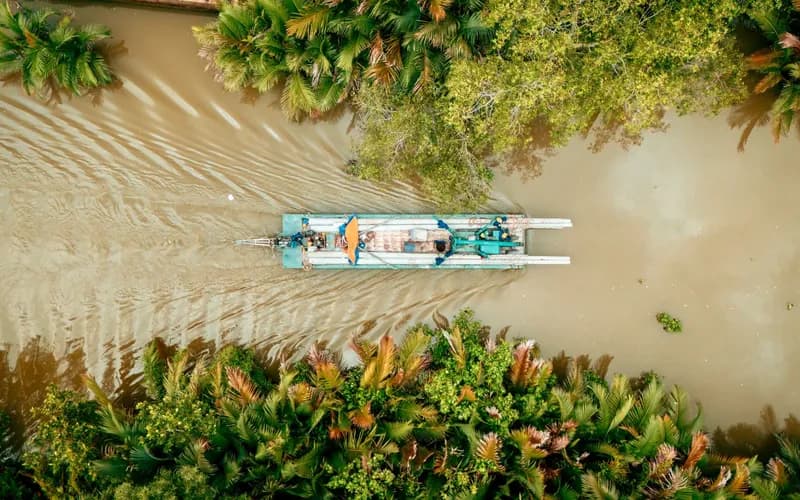
The heart of the experience is the klotok. These traditional wooden boats, chugging gently along the rivers, serve as your transport, your dining room and your bedroom for the duration of a trip. By day you sit on the open upper deck watching the jungle slide by, scanning the banks for wildlife; by night the crew moors the boat, rigs a mosquito net over a mattress on deck, and you fall asleep to the sounds of the forest under a canopy of stars. It is simple, romantic and utterly memorable.
Travelling this way is what makes Tanjung Puting such a profound slow-travel experience. There is no rushing between sights, no schedule beyond the rhythm of the river, and no barrier between you and the environment you have come to see. Meals are cooked fresh on board by your crew, the pace is entirely unhurried, and the days dissolve into a gentle flow of watching, drifting and simply being present. It is the antithesis of packaged tourism.
Meeting the orangutans
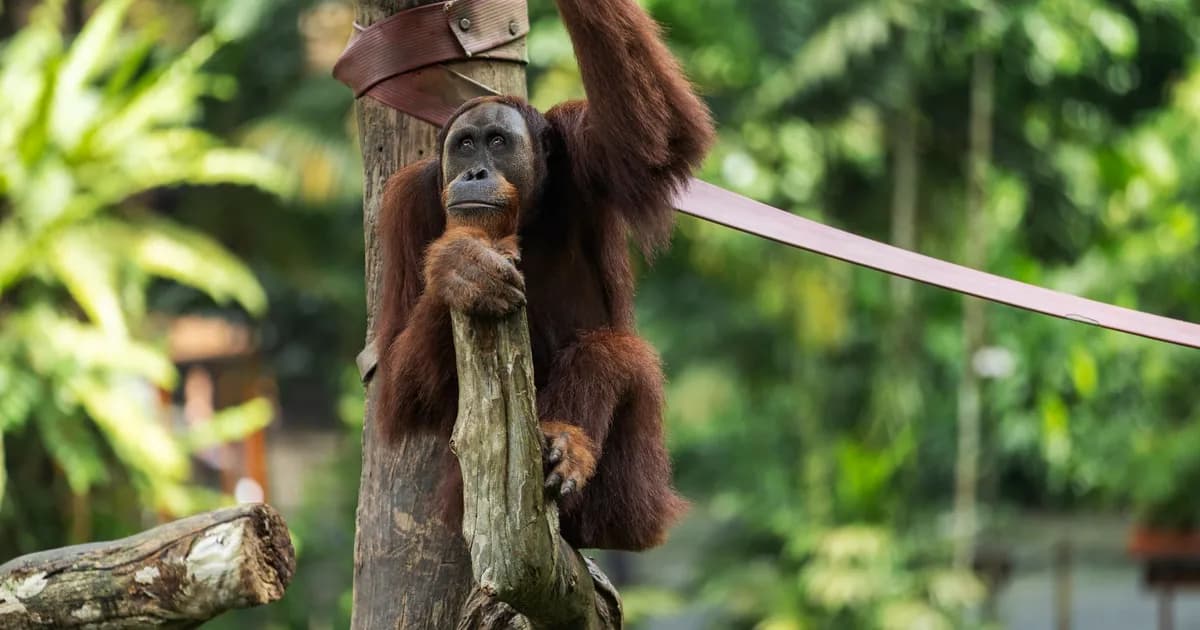
The classic itinerary follows the Sekonyer River upstream, stopping at a series of feeding stations and camps run for orangutan rehabilitation, the most famous being Camp Leakey, a legendary research site. At scheduled feeding times, rangers put out food, and semi-wild orangutans emerge from the forest to feed, giving visitors a remarkable opportunity to observe them at close range: mothers with infants, dominant males, juveniles swinging through the trees. Seeing these intelligent, expressive animals in their forest home is genuinely moving.
It is important to understand the nature of these encounters. The feeding stations support orangutans that have been rehabilitated or are semi-wild, so this is not quite the untouched wilderness some imagine, but it remains a powerful and largely respectful way to see them. Responsible operators and rangers enforce rules to keep a safe distance and avoid disease transmission, and the whole experience is oriented around observation rather than interaction, in the spirit of the responsible wildlife tourism we advocate across Indonesia.
Get matched with up to 5 trusted Indonesia agencies
- Free
- No obligation
- Up to 5 agencies
Doing it responsibly
Because orangutans are so vulnerable, how you visit matters enormously. Keep your distance, never attempt to touch or feed the animals, follow your guide's instructions precisely, and stay away entirely if you have any cold or illness, as orangutans are highly susceptible to human diseases. Choose an operator with a genuine commitment to conservation and to fair treatment of local crews, rather than simply the cheapest option, and be wary of anything that promises unnatural closeness or interaction.
This careful, low-impact approach is part of a wider reckoning about the limits of wildlife and marine tourism in Indonesia, which we explore in our piece on Indonesia's marine tourism and the limits of growth. The same principles apply in the forest: the goal is to see these animals in a way that helps rather than harms them, and that means putting their welfare first at every turn.
Getting there and how long to go
Reaching Tanjung Puting is part of its slowness. Most visitors fly to the town of Pangkalan Bun in Central Kalimantan, then transfer to the river port of Kumai, where the klotok journeys begin. Because it sits well off Indonesia's main tourist trail, getting there takes a deliberate effort, but that is exactly what keeps it special and relatively uncrowded. It is a natural fit for travellers exploring beyond the obvious, in the spirit of our guide to Indonesia off the beaten path.
A typical klotok trip lasts two to three days and two nights, which is enough to reach Camp Leakey, see several feeding stations and settle into the rhythm of the river. Rushing it to a single day is possible but misses the point entirely; the magic lies in the overnight stays and the slow accumulation of jungle time. This kind of multi-day, single-focus journey is exactly what our slow traveller's guide to Indonesia is built around.
When to go
Tanjung Puting can be visited year-round, but the drier months, roughly from around June to September, are generally the most comfortable, with lower rainfall and easier river conditions. The wet season brings heavier rain but also lush forest and can be rewarding for those who do not mind the showers. Wildlife viewing at the feeding stations is reliable throughout the year, since it follows the feeding schedule rather than the seasons.
Whenever you go, come prepared for a hot, humid, buggy environment. Bring light long-sleeved clothing, strong insect repellent, sun protection and a good attitude to simple conditions, and remember that this is a wild place, so patience and low expectations of comfort are rewarded with an experience that few other destinations can match.
Fitting it into a wider trip
Tanjung Puting rewards being treated as a destination in its own right rather than a quick add-on. Kalimantan is a vast, wild region that most travellers overlook entirely, and reaching Tanjung Puting is a wonderful way to experience a side of Indonesia far removed from the beaches of Bali. It fits naturally into the broader dispersal of travel across the archipelago that we describe in our piece on how Indonesia is rewriting its tourism map beyond Bali.
For those planning a longer Indonesian journey, it pairs well with the cultural depth of Java or the volcanoes and lakes of Sumatra, offering a wild, wildlife-focused contrast. Our plan your journey page can help you weave a Kalimantan river journey into a wider, slower exploration of the country.
Beyond the orangutans
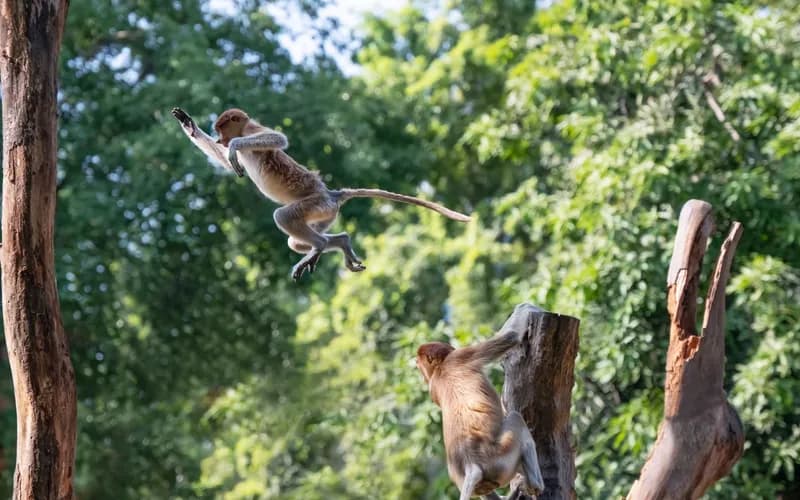
While the orangutans are the headline, a klotok trip reveals a far richer world, and slowing down lets you notice it. The riverbanks teem with life: troops of long-nosed proboscis monkeys, endemic to Borneo, gather in the trees at dusk, gibbons call from the forest, hornbills cross the sky, and kingfishers flash along the water. In the evenings, fireflies light the mangroves and the black river mirrors the stars, an experience of stillness that stays with people as much as the apes.
Part of the reward is simply the tempo of river life. With no schedule beyond the next bend, the days settle into a gentle routine of watching, reading, eating and dozing on deck as the forest slides past. Your boat crew, often local people with deep knowledge of the river, become part of the experience, and the shared meals and quiet conversations add a human warmth to the wildlife. It is this combination of extraordinary nature and unhurried rhythm that makes Tanjung Puting linger in the memory long after you have left the river behind.
What to Do Next
- Plan a two-to-three-day klotok trip so you can reach Camp Leakey and truly settle into the rhythm of the river.
- Choose an operator with a genuine conservation ethos and fair treatment of local crews, not just the lowest price.
- Fly to Pangkalan Bun and transfer to Kumai, where the river journeys begin.
- Follow responsible wildlife rules strictly: keep your distance, never touch or feed the animals, and stay away if you are ill.
- Travel in the drier months of around June to September for the most comfortable river conditions.
- Pack for heat, humidity and insects, and treat Tanjung Puting as a destination in itself using our plan your journey page.
Frequently Asked Questions
What is the best way to see orangutans in Tanjung Puting?
By klotok, a traditional wooden riverboat that serves as your transport and floating accommodation. You travel slowly upriver, sleeping on deck, and visit feeding stations and camps such as Camp Leakey where semi-wild orangutans emerge to feed.
How many days do I need for Tanjung Puting?
A two-to-three-day trip with two nights on the klotok is ideal. It gives you time to reach Camp Leakey, visit several feeding stations and experience the overnight river journey that makes the trip so special.
How do I get to Tanjung Puting?
Most visitors fly to Pangkalan Bun in Central Kalimantan, then transfer to the river port of Kumai, where klotok trips begin. It sits well off the main tourist trail, which is part of what keeps it special.
Is visiting the orangutans ethical?
It can be, if done responsibly. The feeding stations support rehabilitated and semi-wild orangutans, and the focus is on observation rather than interaction. Keep your distance, never touch or feed them, stay away if ill, and choose a conservation-minded operator.
When is the best time to visit?
The drier months from around June to September are generally the most comfortable for river conditions, though the park can be visited year-round and wildlife viewing at the feeding stations is reliable throughout the year.
What should I bring?
Light long-sleeved clothing, strong insect repellent, sun protection, a torch and a tolerance for simple, humid, buggy conditions. The klotok provides meals and basic bedding, so you can travel fairly light, but come prepared for a genuinely wild environment.