

For twenty years, the honest answer to where you sleep in Laos was: a family guesthouse, a converted shophouse, or one of a handful of colonial-era hotels charging European prices for a river view. That is changing faster in 2026 than at any point since the country opened to tourism. Marriott is entering the market in Luang Prabang. Minor Hotels is putting nearly two hundred rooms on the Vientiane riverfront. A Chinese hotel group has signed four management agreements at once. At the other end of the spectrum, village-run lodges and homestays are winning regional standards awards for the first time. Both movements matter, and they are not the same story.
The Numbers Behind the Building
Laos closed 2025 with 4,580,709 international visitors, an eleven per cent increase on 2024. In the first five months of 2026 the country logged more than 2.1 million arrivals, roughly forty-seven per cent of an annual target of 4.46 million and about eight per cent ahead of the same period a year earlier. Luang Prabang alone recorded more than 824,000 arrivals between January and April.
The composition matters as much as the total. Thailand supplies close to a third of arrivals, with China and Vietnam close behind. These are overwhelmingly short-haul, regional and often overland or rail-borne visitors. Long-haul European and North American numbers are recovering but remain a minority, and they behave completely differently: longer stays, higher nightly spend, more sensitivity to atmosphere and less to brand recognition.
Hotel developers read those two markets and build for both. The result in 2026 is a strange split market where a 197-room international property and a six-room village lodge are opening in the same country in the same quarter, chasing entirely different guests.
One request. Up to five tailored proposals.
Skip contacting agencies one by one — share your trip once and let up to five trusted Laos agencies come to you. Free, with no obligation.
Get my free quotesWhat Is Actually Opening in 2026
The concrete list is short enough to name.
- Avani+ Lanexang Vientiane, part of Minor Hotels, is bringing 197 rooms and suites to the Mekong riverfront in the capital, with four restaurants, a spa, an outdoor pool and a conference facility built for groups of several hundred.
- La Residence Phou Vao in Luang Prabang is set to reopen under Marriott's Luxury Collection, expected around October 2026. It keeps its 41 rooms and its hillside gardens above the old town, so this is a rebranding of an existing landmark rather than new construction.
- H World Group has entered Laos with four management agreements. Its Intercity Hotel Vientiane opened near Wattay International Airport in early 2026, a JI Hotel is going in on the Vientiane riverside, and an Orange-branded airport hotel is due later in the year, the first of that brand outside China.
- Independent boutiques continue to open in Luang Prabang at a steady clip, mostly in the twenty-to-forty-room range.
Read that list carefully and a pattern appears. Almost everything at scale is going into Vientiane, and Vientiane is not where most leisure travellers want to spend their nights. The capital is a business and conference city, an arrival point, and increasingly a railway junction. The new supply is chasing corporate travel, Chinese and Thai regional demand and the meetings market as much as tourism.
Vientiane Becomes a Hotel City
Vientiane has always been under-hotelled relative to its role. It is a capital, an aviation gateway, the southern terminus of the Laos-China railway and a border city an hour from Thailand. Until recently it had very little between backpacker guesthouses and a couple of tired four-stars.
The 2026 wave changes that. Two of the H World properties sit deliberately near the airport, which tells you they are built for transit and crew rather than for holidays. The Avani+ is the first genuinely contemporary large hotel on the riverfront in years. For travellers, the practical effect is welcome and modest: a reliable first and last night, decent breakfast, a real lobby to wait in when a train or flight slips.
What it does not change is why you would linger. Vientiane still rewards two nights rather than five. Use the improved hotel stock as a hinge in the itinerary, not a destination, and put your real nights where the landscape is.
Get matched with up to 5 trusted Laos agencies
- Free
- No obligation
- Up to 5 agencies
Luang Prabang and the Heritage Ceiling
Luang Prabang is the opposite problem. Demand is rising sharply, the peninsula is a UNESCO World Heritage site, and there is a hard physical limit on how many rooms can exist inside the protected zone. New capacity therefore goes outward, across the river or up the valley, or it goes upward in price.
That is why Marriott's arrival takes the form of a rebrand of an existing hillside property rather than a new build. It is also why room rates in the peninsula in high season have drifted well above what most of Laos costs. The heritage rules are doing their job, and the price is the price of that protection. We have written separately about how Luang Prabang is handling its visitor surge, and the hotel question sits right at the centre of it.
The slow-travel calculation here is simple. In December and January, a night on the peninsula buys you proximity and very little quiet. In the shoulder months, the same room costs less and the town behaves better. If your dates are flexible, move them.
The Other Half: Lodges, Homestays and Community Tourism
The more interesting development in 2026 has nothing to do with international brands. Laos has been building out a certified community accommodation sector, and it is starting to be recognised abroad.

At the ASEAN Tourism Forum in early 2026, Luang Prabang province collected twenty-one awards, and tourism facilities in the province received twenty-six ASEAN standards awards and certificates for the 2025 to 2026 cycle. Laos took four awards under the ASEAN Homestay Standard, one in Vang Vieng district and three in Champasak, and five under the ASEAN community-based tourism standards, including recognition for the wildlife-viewing operation at Nam Et-Phou Louey National Park in Houaphan.
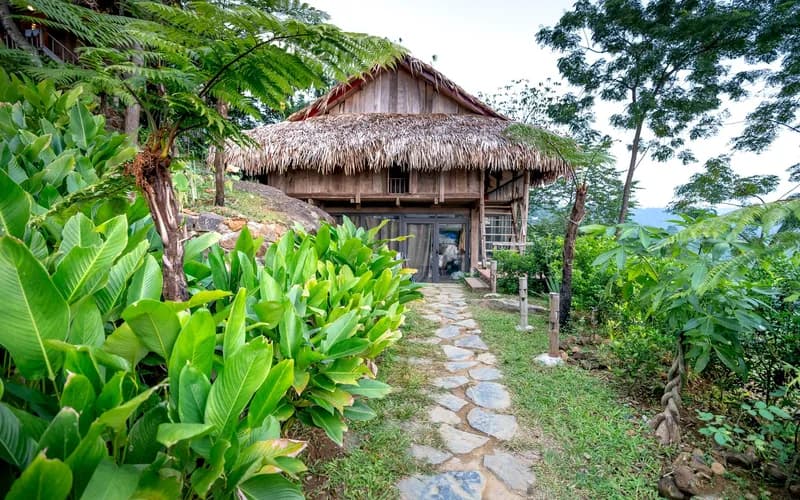
This is the accommodation layer that actually distinguishes Laos. A certified homestay in Champasak or a park lodge in the north is not competing with a riverside five-star. It is offering something the five-star structurally cannot: money that stays in the village, hosts who are not employees, and a night in a place with no lobby at all. If you want to book that side of the country well, our guide to choosing a responsible community trek and homestay explains what to ask before you commit.
What the Standards Actually Mean
Laos now applies a set of ASEAN tourism standards domestically, including a green hotel standard, a homestay standard and community-based tourism criteria. These are not marketing badges invented by the properties themselves. They are audited schemes with published criteria covering waste, energy, water, local sourcing, staff conditions and community benefit.
They are also imperfect. Certification is voluntary, the audit cycle is slow, and plenty of genuinely excellent small operators have never applied because the paperwork is beyond them. Treat a green hotel or homestay certificate as a positive signal rather than a guarantee, and treat its absence as neutral rather than damning.
The useful question is narrower and easy to ask by email before booking: who owns this property, how many of the staff are from this district, and where does the food come from. An honest answer arrives quickly. A vague one is its own answer.
What This Costs, and What It Buys
Laos remains inexpensive by regional standards, and the weak kip has kept it that way for foreign-currency visitors. As of August 2026 the kip trades at roughly 22,400 to the US dollar. In practice, a simple private double in a guesthouse runs somewhere around USD 10 to 25, a comfortable mid-range room with air conditioning and breakfast lands around USD 25 to 60, and the new international properties sit well above that, particularly in Luang Prabang in December and January.
Community lodges and park stays are their own category. They often cost more per night than a town guesthouse, because you are paying for boat transport, guides, park fees and a village revenue share rather than a bed alone. That is the correct price, not a markup.
For a full picture of what a fortnight in the country actually costs once transport and food are included, our Laos budgeting guide breaks the numbers down line by line.
Where the Risks Are
There are three things worth watching, and being honest about them is more useful than cheerleading.
The first is concentration. Almost all new large-scale supply is in Vientiane and Luang Prabang. The provinces that most need visitor income, and where slow travel works best, are not getting hotels, they are getting nothing. That gap will keep sending most visitors to the same two cities.
The second is the pace in Luang Prabang. Arrivals of the scale recorded in early 2026 are not neutral for a small heritage town. More rooms outside the protected zone means more day traffic inside it, and the alms ceremony and the peninsula streets absorb that pressure first.
The third is that a nature-tourism boom can outrun the protection it depends on. Laos is actively expanding its protected-area tourism, and the same infrastructure that brings responsible visitors brings roads. Our piece on Laos's protected areas and the rise of nature travel sets out where that balance currently stands.
How to Choose Well in 2026
Mix the layers deliberately rather than picking a tier and staying in it. One night at the new airport-adjacent hotel because your train arrives at eleven at night is a sensible use of the new supply. Four nights in a village lodge in the north is what the trip is for. A boutique in Luang Prabang in the shoulder season is worth the money in a way the same room in December is not.
Book the community and park stays first, because they have few beds and short seasons, and fill in the cities afterwards. That is the reverse of how most itineraries get built, and it produces a much better trip. If you would rather have someone assemble that for you, our directory of vetted Laos travel agencies lists operators who work with community accommodation rather than around it, and our slow travel charter sets out the standard we hold them to.
What to Do Next
- Decide your two or three anchor places first, and book the smallest, most remote accommodation in that list before anything else.
- Check your Luang Prabang dates against the December to January peak, and shift by three or four weeks if rates or crowds matter to you.
- Use the new Vientiane hotels for arrival and departure nights only, and keep the capital to two nights.
- Email any lodge or homestay before booking and ask about ownership, local staffing and food sourcing.
- Treat ASEAN green hotel, homestay or community-based tourism certification as a helpful signal, not a substitute for asking.
- Budget separately for park stays, which include guiding, transport and community fees rather than just a room.
- Carry enough kip for rural nights, since card payment outside the two main cities remains unreliable.
Frequently Asked Questions
Is Laos getting more expensive to stay in?
In local terms, yes, gradually. In foreign-currency terms, not much, because the kip has weakened substantially and sits around 22,400 to the US dollar in August 2026. The exception is Luang Prabang in high season, where limited heritage-zone capacity and rising arrivals have pushed peninsula rates well above the national norm.
Which international hotel brands are now in Laos?
Accor has been present in Luang Prabang for some years. In 2026 Minor Hotels is opening the Avani+ Lanexang in Vientiane, Marriott is bringing La Residence Phou Vao into its Luxury Collection in Luang Prabang, and H World Group has signed four management agreements including Intercity, JI and Orange-branded properties in and around Vientiane.
Are the new hotels good news for slow travellers?
Partly. Better city hotels make arrival and departure nights easier and raise the floor on service standards nationally. They do nothing for the provinces where slow travel actually happens, and they concentrate more demand on two already busy cities. Use them as tools, not as the trip.
What is a homestay actually like in Laos?
Usually a mattress and mosquito net in a family home or a simple village guesthouse, with shared washing facilities, a communal evening meal and early nights. Certified homestays under the ASEAN standard meet agreed criteria for safety, hygiene and community benefit. Comfort is basic by design; the value is the household you stay with.
Should I book accommodation in advance in Laos?
In Luang Prabang and Vang Vieng in high season, yes, several weeks ahead. In community lodges and national park accommodation, further ahead still, because bed numbers are tiny and seasons are short. In most provincial towns you can arrive and find a room the same day for most of the year.
Does an eco-lodge label mean anything in Laos?
On its own, no. The term is unregulated. The ASEAN green hotel, homestay and community-based tourism standards applied in Laos are audited and do mean something, though certification is voluntary and many good small operators have simply never applied. Ask direct questions about ownership, staffing and sourcing instead of relying on the label.
Where should I actually spend my nights?
Weight the itinerary toward the provinces. Two nights in Vientiane, three or four in Luang Prabang outside peak dates, and the rest spread across the north, the Bolaven Plateau, the far south or a national park stay. That distribution costs less, sends money further and is closer to what people come to Laos for.